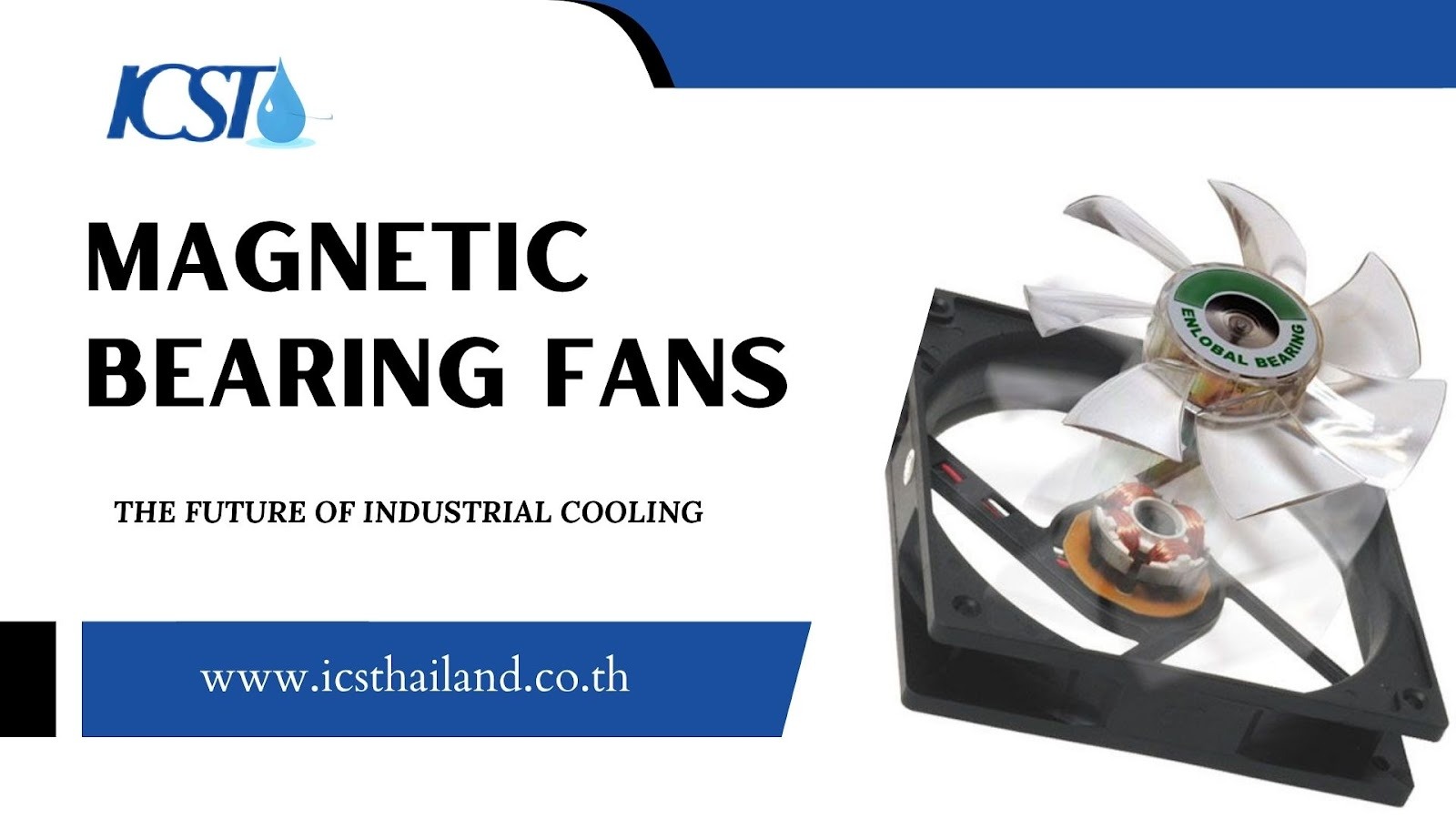
What is the weakest link in industrial cooling systems? It is often the fan drive system. This critical assembly, made up of the motor, gearbox, driveshaft, and conventional bearings, is the main cause of breakdowns, unwanted noise, and substantial energy waste.
These mechanical components require constant maintenance, consume vast amounts of energy due to friction, and are prone to breakdowns that can halt critical operations. For facilities that depend on consistent and efficient cooling, this presents a persistent operational and financial challenge.
A breakthrough in cooling technology offers a definitive solution. Industrial Magnetic Bearing Fans eliminate mechanical contact, creating a frictionless, oil-free operation. This technology suspends the fan’s shaft in a magnetic field, removing the components most susceptible to wear and tear.
This innovative approach offers the ultimate upgrade for energy-efficient cooling, delivering unparalleled reliability, precise control, and near-zero maintenance. Discover more about this core technology and its game-changing benefits in this post.
The Core Technology: How Frictionless Systems Work
The transition from conventional to magnetic systems marks a fundamental shift in how we approach industrial machinery. Understanding this change highlights the immense benefits of frictionless operation.
From Mechanical to Magnetic
How do traditional and magnetic bearings differ? It’s more than just a subtle design choice; it’s a paradigm shift in operational reliability and efficiency. Understanding this fundamental difference reveals why magnetic bearings are revolutionizing critical applications.
- Conventional Bearings: Ball or roller bearings rely on physical contact between moving parts. This generates high friction, requires continuous lubrication to function, and leads to inevitable wear and degradation over time.
- Magnetic Levitation: Magnetic bearings suspend the rotating shaft using powerful, precisely controlled electromagnets. With no physical contact, friction is eliminated, and the need for lubrication becomes obsolete.
This magnetic levitation technology works in perfect synergy with another key innovation. Industrial Bearing Fans are typically integrated into Direct Drive Cooling Tower systems. This design eliminates the gearbox, driveshaft, and couplings, creating a more streamlined and efficient unit.
The Direct Drive Advantage
Simplifying a cooling tower system by removing the gearbox, driveshaft, and coupling not only reduces complexity but also increases reliability and efficiency. Here’s how:
- Eliminates the top three sources of mechanical failure.
- Reduces power loss, improving energy efficiency.
- Enhances operational stability with fewer components.
- Requires less power to maintain the same airflow.
Unlocking Performance and Savings
While the initial investment in Bearing Fans may be higher than traditional cooling tower parts, the long-term performance benefits and operational savings make them a smart choice. This technology offers measurable advantages in energy consumption, reduced maintenance, and lower environmental impact.
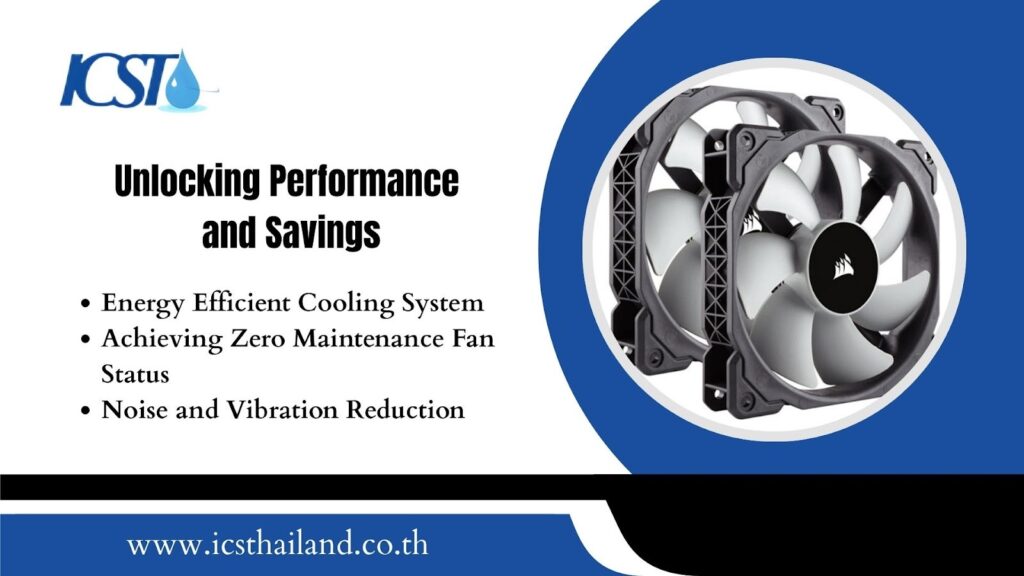
Energy Efficient Cooling System
How does this technology reduce energy consumption so dramatically? The combination of a zero-friction magnetic bearing and a Variable Speed Drive (VSD) allows for micro-adjustments in fan speed.
The system can precisely match airflow to the cooling demand in real-time, avoiding the energy waste common in fixed-speed systems. This optimization can lead to energy savings of 30-40% over traditional setups, delivering a significant return on investment through lower utility costs.
Achieving Zero Maintenance Fan Status
What does it mean to achieve “zero maintenance” status? It means eliminating the most common and costly routine tasks associated with industrial fans. Consider what is no longer necessary:
- No more oil checks or changes.
- No more bearing lubrication or replacement.
- No more driveshaft alignment checks.
This drastic reduction in maintenance slashes the Life Cycle Cost (LCC) of the equipment. It also reduces technician exposure to the hazards of working on large, elevated cooling tower structures, improving overall site safety.
Noise and Vibration Reduction
The removal of physical contact between moving parts offers another major benefit: the near-total elimination of mechanical noise and vibration. This is a critical advantage for industrial plants, especially those near residential or commercial areas.
- Quieter Operations: Significantly reduces noise pollution.
- Regulatory Compliance: Helps meet local noise ordinances.
- Improved Community Relations: Fosters better relationships with surrounding areas.
- Environmentally Conscious: An ideal solution for eco-friendly facilities.
Smart Operation: Predictive Maintenance and Control
Industrial Bearing Fans are not just mechanically superior; they are also inherently intelligent. The integrated control systems provide a level of operational insight and precision that is impossible to achieve with conventional equipment, making them a cornerstone of modern, data-driven industrial operations.
Integrated Sensing for Predictive Maintenance
How do these systems predict failures before they happen? The magnetic bearings are equipped with integrated sensors that monitor the shaft’s position, load, and performance in real-time.
This constant stream of data provides the earliest possible warning of any performance drift or potential issue. This capability represents the most advanced form of predictive maintenance available today, allowing teams to address problems proactively and avoid unexpected downtime.
Precision Airflow Control
The superior control offered by magnetic bearings enables the fan to operate with unmatched precision. This allows it to run at extremely low RPMs without stalling or vibrating, a feat that is difficult for traditional systems.
This level of control is vital for maintaining efficiency during part-load conditions, which are common in many industrial processes.
Key benefits of precision airflow control include:
- Wider Operating Range: Fans can run at very low speeds (RPMs) without the risk of stalling or vibrating, unlike traditional bearing systems.
- Enhanced Part-Load Efficiency: Maintains optimal performance even when the system isn’t running at full capacity, which is a frequent scenario in industrial applications.
- Reduced Energy Consumption: By matching airflow exactly to demand, the system avoids energy waste, leading to significant cost savings.
Reliability in Harsh Environments
Industrial environments, particularly in humid climates like Thailand, pose a significant challenge for mechanical equipment. How do Bearing Fans perform under these conditions?
The sealed, oil-free design is impervious to the humidity, dust, and contamination that rapidly degrade conventional bearings and their lubrication. This resilience makes them exceptionally reliable in heavy industrial settings, ensuring long-term performance where other systems would fail.
Final Thoughts
Magnetic Bearing Fans are a game-changer for industrial cooling. We’ve seen how their sealed, oil-free design ensures exceptional reliability, even in harsh, humid environments, by eliminating issues like dust and contamination.
This superior durability, combined with significant energy savings, fundamentally shifts the cost-benefit analysis from short-term capital expenditure to long-term operational efficiency. Investing in these fans means embracing a future of reduced maintenance, lower total cost of ownership, and consistently reliable performance. They offer a robust, cost-effective, and sustainable solution, truly transforming the landscape for energy-efficient industrial facilities.
Ready to move beyond constant gearbox maintenance and achieve true Zero Maintenance Fan reliability? Contact ICST today for a feasibility study on upgrading your cooling towers to a Direct Drive Cooling Tower magnetic bearing system.
Frequently Asked Questions
What are magnetic bearing fans?
They are industrial fans that suspend the rotating shaft using magnetic levitation instead of conventional bearings, eliminating friction, lubrication, and mechanical wear.
How do magnetic bearings differ from traditional bearings?
Traditional bearings rely on physical contact, which creates friction and requires maintenance. Magnetic bearings levitate the shaft, eliminating contact, reducing energy loss, and offering near-zero maintenance.
How much energy can magnetic bearing fans save?
Integrated with Variable Speed Drives (VSDs), these fans adjust airflow in real-time, avoiding waste and saving up to 30-40% energy compared to traditional fans.
How do magnetic bearing fans reduce noise and vibration?
Without physical contact between moving parts, mechanical noise and vibration are drastically reduced, resulting in quieter operations and better regulatory compliance.
Are magnetic bearing fans compatible with direct drive cooling towers?
Yes. They are often integrated into direct drive systems, eliminating gearboxes, couplings, and driveshafts, which simplifies the system and enhances efficiency.