Have you ever wondered if your cooling system is quietly draining your profits while leaving you exposed to steep fines? Imagine walking through your production lines on a busy day, only to discover an unnoticed compliance gap that could cost your facility up to 200,000 Baht or even force a shutdown by the Thai government.
Thailand’s cooling regulations are not just bureaucratic hurdles; they are critical standards that impact your energy consumption, operating costs, and your company’s reputation. Many overlook how complex, overlapping requirements from the Ministry of Industry, Natural Resources, and Energy can hold hidden risks and untapped advantages.
This guide will reveal how mastering Thailand’s cooling regulations transforms compliance from a costly obligation to a powerful arsenal, enhancing performance, reducing emissions, and giving your business a distinct edge.
Keep reading to learn how to stay ahead, comply with confidence, and turn regulatory challenges into your greatest industrial advantage.
The Hidden Enemy: Why Non-Compliance Is a Ticking Financial Bomb
Operating outside of Thailand’s cooling regulations is not just risky; it is expensive. The enforcement landscape in Thailand has shifted.
The Thai government now moves from simple fines to mandatory shutdown orders. Multiple departments rely on real-time monitoring, including satellite imagery and automated reporting, to identify non-compliance with energy and environment standards.
You face a double penalty when you ignore compliance. First, you must pay the fine to the relevant department or ministry. Second, you pay the compounded cost of inefficiency. Non-compliant, old air conditioning and refrigeration systems often result in 15% to 20% higher operational costs than compliant, optimized ones.
Do not wait for a notification of violation. By then, you have already lost capital and leverage, and the results can have a lasting impact for years on your office, line, and consumers.
The Codebook: Decoding Thailand’s Regulatory Triumvirate
To master Thailand’s cooling regulations, you must first understand which ministry or department is enforcing the standards your facility, office, and production lines must meet.
Here is a breakdown of key compliance parameters related to energy performance standards, environment, and industry mandates.
The Regulator’s Cheat Sheet
| Regulatory Body | Mandate | Key Requirement | Standard |
| MOEN / DEDE | Energy Conservation Promotion Act | Mandatory Energy Audit | > 1,000 Tons of Oil Equivalent (toe) annual energy consumption. |
| MNRE / PCD | Water Quality Regulations | Discharge Temperature | Must not exceed 40°C. |
| MNRE / PCD | Water Quality Regulations | Organic Pollution (BOD) | Cannot exceed 20 mg/L. |
| MNRE / PCD | Water Quality Regulations | Chemical Pollution (COD) | Limits set at 120 mg/L. |
| MNRE / PCD | Water Quality Regulations | Water pH | Must be maintained between 6.0 and 9.0. |
| MOI / DIW | Factory Act B.E. 2535 | Operational Permits | Fines up to 200,000 Baht; risk of facility closure. |
| MOPH | Public Health Mandates | Pathogen Control | Comprehensive, documented Legionella prevention program. |
Understanding these standards is the baseline to comply effectively. However, applying this knowledge within your facility drives true performance and competitiveness in Thailand.
The Secret Arsenal: Top 9 Strategies Only Elite Facilities Use
Elite facilities do not just follow rules from the ministry or department – they enhance energy performance and use compliance as a competitive edge. These nine strategies help prepare for changing standards, turn regulatory efforts into measurable ROI, improve energy efficiency, and support industry leadership.
The Permit Staggering Strategy (DIW Avoidance)
Most managers renew all operational and environmental permits at once. This approach creates spikes in capital expenditure (CapEx) and exposes your facility to administrative risk if there is a delay from any department.
Instead, stagger your permits. Spread the compliance and financial burden across the fiscal year. This strategy minimizes risk across notification periods, audit cycles, and line operations.
DEDE De-Classification Sub-Metering
If your annual energy consumption is close to the 1,000 toe threshold, implement sub-metering for non-cooling loads. Separating these lines and documenting this distinction may justify a de-classification request to DEDE or the ministry, reducing the frequency or requirement of energy audits for several years.
The Biocide Rotation Defense (MOPH)
Regular Legionella testing is not enough for the ministry. Pathogens adapt, so you need a documented, periodic biocide rotation plan. This not only complies with the MOPH mandate but also prevents costly interruptions on your production lines due to failed inspections.
Strategic Temperature Mixing Zone (PCD Bypass)
The 40°C discharge temperature limit is a core environmental regulation. Rather than investing in oversized chillers that increase energy consumption, use monitored, non-contact heat exchanger loops to cool effluent for air conditioning or process water. This reduces emissions and waste heat, satisfying water quality notification standards.
Targeted Source Control for BOD/COD
Treating BOD and COD at the end-of-pipe is inefficient. Identify sources within your production lines or office water usage. Isolate and pre-treat specific process water streams, lowering main treatment loads and enhancing overall energy efficiency.
Component TISI Chain-of-Custody
Audit failures often result from non-certified refrigeration or air conditioning components, not just main equipment. Track all TISI-certified parts, using comprehensive documentation for compliance, should the department perform a random audit.
Future-Proofing the HFC Service-Life Loophole
With HFCs like R-410A under phase-down by natural resources and environment ministries, servicing existing refrigeration and air conditioning equipment for their reasonable service life delays expensive asset replacement. Documenting proactive maintenance now prepares you for future notifications and ministry updates.
The “Pre-Audit” Rebate Play (DEDE)
Conduct an internal energy audit ahead of the ministry’s deadline. Use the data to apply for DEDE or Electricity Generating Authority incentives. This enables your office and production line to benefit from tax breaks and upgrades before audits become mandatory.
The Internal Mock Inspection Drill (DIW Readiness)
Run unannounced mock inspections to prepare your staff for aggressive department audits. These drills expose documentation weaknesses and operational gaps, ensuring your team complies confidently and calmly during real inspections.
The Advantage: Benefits and Strategic ROI
Applying these strategies allows your business to enhance performance, meet or exceed energy efficiency standards, and comply with all notifications from ministries and departments. Key advantages include:
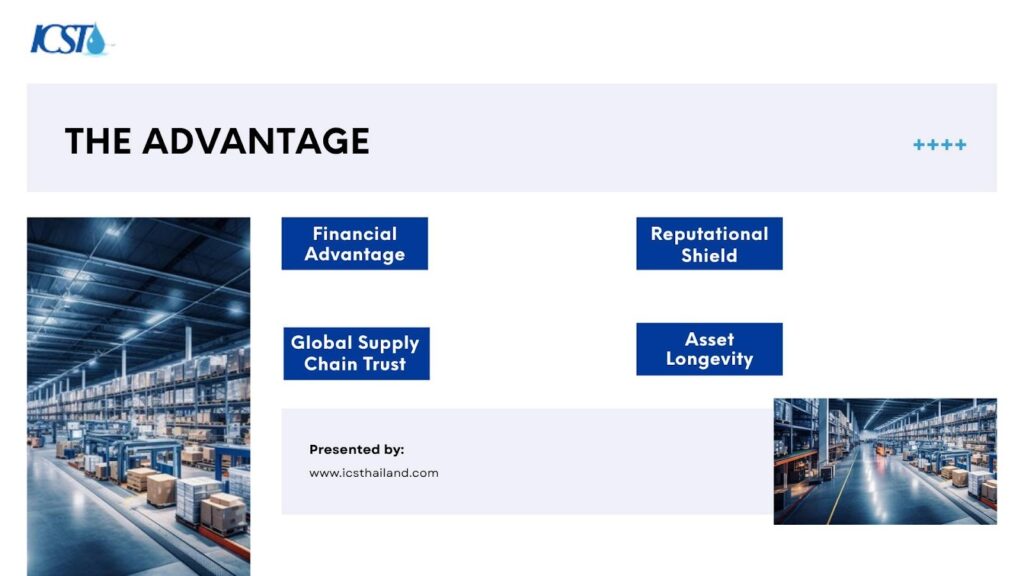
- Financial Advantage: Achieve 15% to 20% lower operating expenses through performance improvements and optimized energy efficiency.
- Reputational Shield: Protect your brand by preparing for environmental, public health, and safety expectations.
- Global Supply Chain Trust (ESG): Meet environmental, emissions, and natural resources criteria, supporting ESG reports that position your line and production favorably.
- Asset Longevity: Reduce replacement frequency by maintaining compliance, energy efficiency, and reliability in refrigeration and air conditioning investments.
Future-Proofing: Staying Ahead of the Curve Thailand’s cooling regulations will become stricter as energy standards, emissions reductions, and environmental mandates evolve. The ministry and departments will introduce tighter minimum energy performance standards, with the Electricity Generating Authority enforcing responsibility for energy use and reductions in emissions.
Prepare your office, lines, and production by staying updated through www resources and regulatory notifications. Future regulations will further focus on water conservation, recycling, waste heat recovery, and long-term sustainability in line with circular economy principles.
Conclusion: The Time to Act is Now
Compliance is not just a checkbox. It is an ongoing, strategic commitment involving every office, production line, consumer, and manager in Thailand’s industry and environment sectors.
By mastering the standards, notifications, and requirements set by each ministry and department, you proactively enhance your facility’s performance and comply with all Thai government requirements for energy, refrigeration, air conditioning, and emissions.
Contact us at International Cooling Solutions (Thailand) today for a Compliance & Efficiency Audit. Let us benchmark your cooling systems, support your transition to better standards, and deliver results for years to come.
Frequently Asked Questions
What are the main risks of non-compliance with Thailand’s cooling regulations?
Non-compliance can lead to severe penalties, including fines up to 200,000 Baht, operational shutdowns, and reputational damage. Repeat violations may result in permanent facility closure.
Which government bodies regulate cooling systems in Thailand?
Key regulators include the Ministry of Industry (DIW), Ministry of Natural Resources and Environment (PCD), Ministry of Energy (DEDE), and Ministry of Public Health (MOPH).
What are the key water discharge standards for cooling systems?
Cooling water discharge must meet strict standards: pH levels between 6.0–9.0, BOD below 20 mg/L, COD under 120 mg/L, and a maximum discharge temperature of 40°C.
How can facilities improve energy efficiency in cooling systems?
Facilities can upgrade to energy-efficient components, optimize water distribution systems, and conduct regular energy audits to identify and implement cost-saving measures.
What strategies help ensure compliance with cooling regulations?
Regular compliance audits, robust water treatment programs, and proactive maintenance schedules are essential. Additionally, leveraging advanced monitoring technologies can ensure real-time compliance.