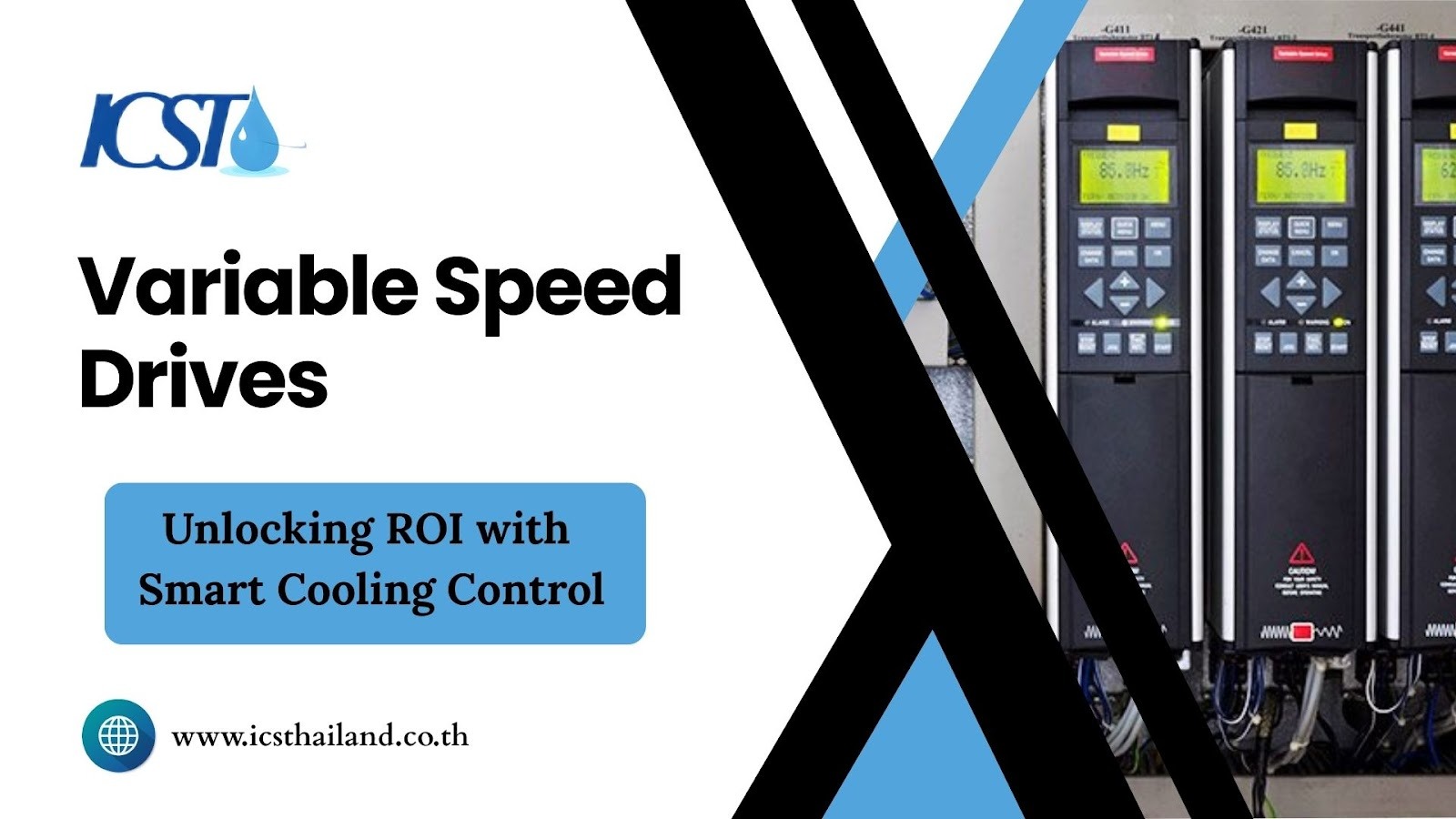
Fixed-speed motors in industrial cooling systems represent a significant source of energy waste. These motors operate at full power, regardless of the actual thermal demand. If your facility only requires 50% of its cooling capacity, a fixed-speed motor still consumes 100% of its potential energy, leading to unnecessarily high operational costs.
The solution to this inefficiency lies in Variable Speed Drives (VFDs). This technology is the definitive answer to eliminating energy waste by dynamically matching motor output to the precise load required.
An investment in a VFD often yields the highest return on investment (ROI) within a facility. The reason is simple and powerful: a mere 20% reduction in motor speed can lead to a staggering 50% reduction in power consumption. This efficiency gain translates directly into substantial cost savings and a rapid payback period.
For organisations aiming to optimise their energy usage and improve their bottom line, Variable Speed Drives are not just an upgrade; they are a financial imperative. To assess the viability of Variable Speed Drives for your current system, consult with our certified engineering team.
The Power of Precision: Understanding the Cubic Advantage
The exceptional energy savings from VFDs are not arbitrary; they are grounded in a fundamental principle of physics known as the Affinity Laws. These laws describe the relationship between the speed of a centrifugal pump or fan and its power consumption.
A. The Affinity Law in Practice
How exactly does a small reduction in speed lead to such a large drop in power usage? The relationship is cubic, meaning power is proportional to the cube of the motor’s speed (P \N). This exponential relationship is the core reason VFDs are so effective.
Consider these clear examples:
- Run at 70% Speed: If you reduce a motor’s speed to 70% of its maximum, its power consumption drops to approximately 34.3% of its full power (0.7 x 0.7 x 0.7 = 0.343).
- Run at 50% Speed: Slowing the motor to half speed (50%) reduces power consumption to just 12.5% of its maximum (0.5 x 0.5 x 0.5 = 0.125).
This demonstrates that even modest speed adjustments result in significant energy savings that are impossible to achieve with fixed-speed systems.
B. Dynamic Load Management
How do Variable Speed Drives maintain the correct temperature while saving energy? They use sensor feedback, such as signals from a cold water basin temperature sensor or a differential pressure transmitter, to automatically adjust motor speed. This ensures the system maintains the exact thermal setpoint without interruption.
This continuous adjustment offers a distinct benefit over traditional control methods. It eliminates the energy waste associated with:
- Cycling: The inefficient process of repeatedly turning motors on and off.
- Mechanical Controls: The use of restrictive devices like dampers or throttling valves creates artificial resistance and wastes energy.
System Longevity: VFDs as Mechanical Protection
Beyond energy savings, they not only cut costs but also deliver essential protection for mechanical components, preventing wear and tear. This means fewer breakdowns, less downtime, and longer equipment life, music to the ears of maintenance managers striving for reliability and efficiency. Think of it as a smart investment that pays off in performance and peace of mind.

A. Soft Start and Wear Elimination
What is the impact of a traditional motor start-up? A direct-on-line (DOL) start creates a massive electrical and mechanical shock. VFDs eliminate this stress through a “soft start” process, where they gradually ramp up the motor’s frequency and voltage.
The benefits of this controlled start-up are significant, as it extends the operational life of key components, including:
- Belts and couplings
- Bearings
- Fan assemblies
- Motor windings
B. Noise and Vibration Reduction
How can you improve the working environment and protect equipment simultaneously? By operating motors at lower speeds during off-peak hours, VFDs drastically reduce acoustic emissions and structural vibration.
This reduction provides two key advantages:
- Improved Working Conditions: A quieter plant floor enhances worker safety and comfort.
- Prevents Structural Damage: Reduced vibration minimises long-term wear on the cooling tower structure and connected equipment.
Implementation Essentials: Technical Considerations
Proper implementation is crucial for maximising the benefits of a VFD. Understanding these technical details establishes a foundation for a successful installation and long-term performance.
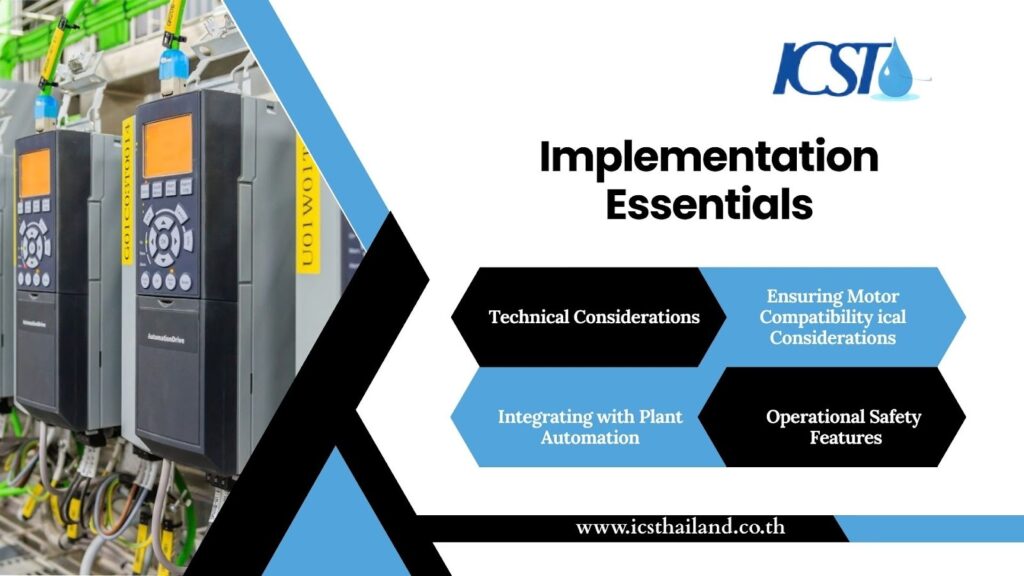
A. Ensuring Motor Compatibility (Inverter Duty)
It is essential to confirm that your motor can handle the unique electrical characteristics produced by a VFD. Variable Speed Drives can generate voltage spikes and harmonics, which may damage standard motors.
For this reason, inverter-duty motors, which feature enhanced insulation, are required. In retrofit scenarios, it is critical to verify that the existing motor is compatible or plan for its replacement to prevent premature failure.
B. Integrating with Plant Automation
Modern facilities rely on centralised control systems. How do VFDs fit into this framework? VFDs are designed to interface seamlessly with a Building Management System (BMS) or SCADA (Supervisory Control and Data Acquisition) system.
They use standard communication protocols like Modbus, BACnet, or EtherNet/IP, allowing for complete control, monitoring, and diagnostics from a central location. This integration ensures that the cooling system operates as a cohesive part of the plant’s overall automation strategy.
C. Operational Safety Features
VFDs offer more than just speed control. What other critical functions do they provide? They include advanced diagnostic and safety features that enhance reliability and operational readiness.
Key non-energy functions include:
- VFD Diagnostics: Advanced fault logging capabilities help maintenance teams quickly identify and troubleshoot issues, minimising downtime.
- Controlled Reversal: In cold climates, VFDs can slowly reverse the cooling tower fan to de-ice the blades, preventing damage and ensuring availability.
VFDs: The Future of Thermal Control
Variable Speed Drives are no longer an optional upgrade; they are an essential component of any modern, high-efficiency industrial cooling system. By precisely matching motor output to thermal demand, they deliver predictable energy savings, reduce mechanical wear, and maximise the longevity of your entire infrastructure.
Investing in VFD technology is a strategic decision that offers a swift and substantial return, solidifying your facility’s operational and financial resilience.
Move beyond simple fixed-speed operation. Contact ICS Thailand today for a detailed ROI analysis that demonstrates your facility’s potential savings from Variable Speed Drives and the expected payback period.
Frequently Asked Questions
What is a Variable Speed Drive (VFD)?
A Variable Speed Drive is a device that controls the speed of an electric motor by adjusting its frequency and voltage. In cooling systems, it allows the motor to run only as fast as needed, reducing energy waste.
How does a VFD save energy in cooling towers?
VFDs match motor speed to real cooling demand. Even a 20% reduction in speed can cut power use by up to 50% due to the cubic relationship between speed and power. This is the biggest source of savings.
Can I install a VFD on any motor?
Not always. You must confirm that the motor is inverter-duty rated or has insulation suitable for voltage spikes generated by the VFD. Otherwise, the motor may fail prematurely.
What sensors are required for a VFD in a cooling tower?
Common sensors include:
- Cold water temperature sensor
- Differential pressure transmitter
- Water flow or process feedback signals
These allow the VFD to adjust speed automatically.
Do VFDs reduce noise?
Absolutely. Running motors at slower speeds significantly reduces fan noise, vibration, and structural stress, improving workplace comfort and equipment durability.