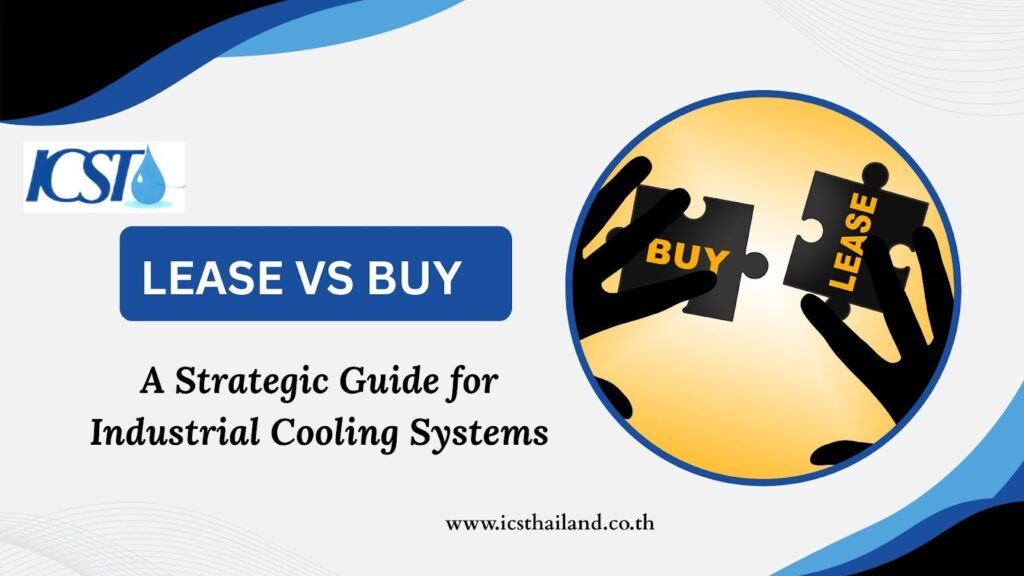
For facility managers in industrial settings, few decisions carry as much weight literally and financially as acquiring new cooling infrastructure. Whether it is a 500-ton chiller for a manufacturing plant or a fleet of cooling towers for a data center, the capital outlay is significant. But the decision is not just about the sticker price; it is a complex strategic choice between leasing and buying.
This decision impacts everything from your balance sheet to your operational reliability—if the cooling stops, so does production. When deciding whether to lease vs buy cooling system, you need to weigh upfront capital against long-term total cost of ownership (TCO), operational flexibility, and risk management.
In this guide, we will break down the financial, operational, and strategic implications of leasing versus buying industrial cooling systems, providing you with the framework to make the right choice for your facility.
Total Cost of Ownership (TCO): The Cooling Perspective
When evaluating a new cooling tower, the purchase price is only the beginning. To make an accurate comparison, you must calculate the Total Cost of Ownership (TCO) over the equipment’s expected lifespan.
TCO analysis reveals the true cost difference between leasing and buying by accounting for every dollar spent from installation to decommissioning.
Key Cost Elements
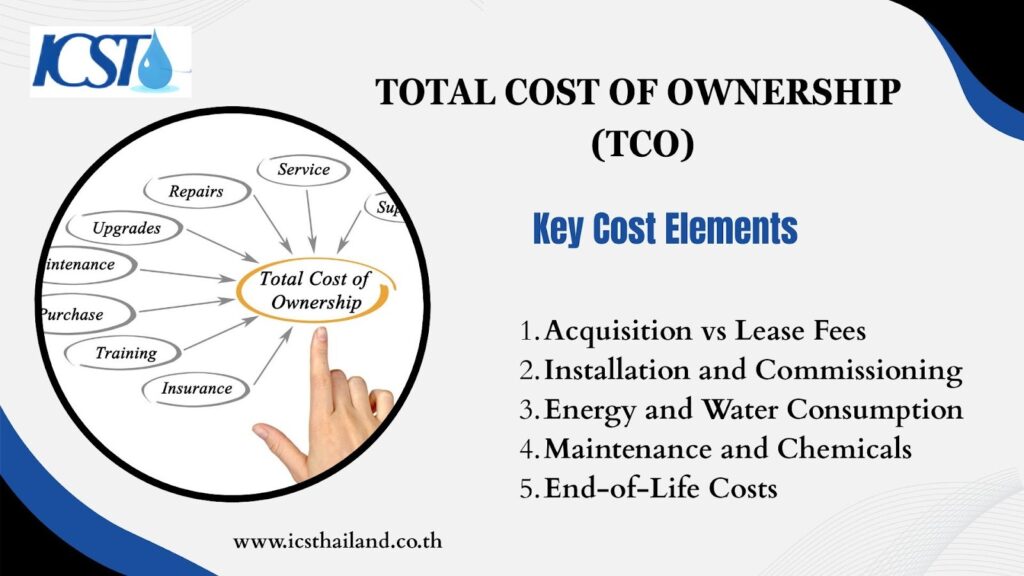
- Acquisition vs. Lease Fees: Buying requires a large upfront CAPEX (capital expenditure). Leasing spreads this cost into monthly payments, usually including interest or a premium for flexibility.
- Installation and Commissioning: Regardless of the financing method, getting the equipment running involves cranes, piping, electrical work, and specialized labor. In some lease agreements, these costs can be bundled into the monthly fee.
- Energy and Water Consumption: Industrial cooling is energy-intensive. A newer, more efficient leased unit might offer operational savings compared to buying a slightly older or less efficient model due to budget constraints.
- Maintenance and Chemicals: Cooling towers require rigorous water treatment and mechanical maintenance. Leases often include full-service maintenance packages, transferring this variable cost into a fixed monthly expense. Ownership means you bear the full brunt of unexpected repairs.
- End-of-Life Costs: Disposal of large HVAC units is expensive and regulated. Owners must pay for crane removal and environmentally safe disposal. Leases typically end with the vendor retrieving the unit.
Operational Considerations: Uptime is Money
While finance teams focus on the ledger, facility managers focus on the floor. The operational impact of your acquisition strategy is arguably more critical than the financing method.
Reliability and Downtime
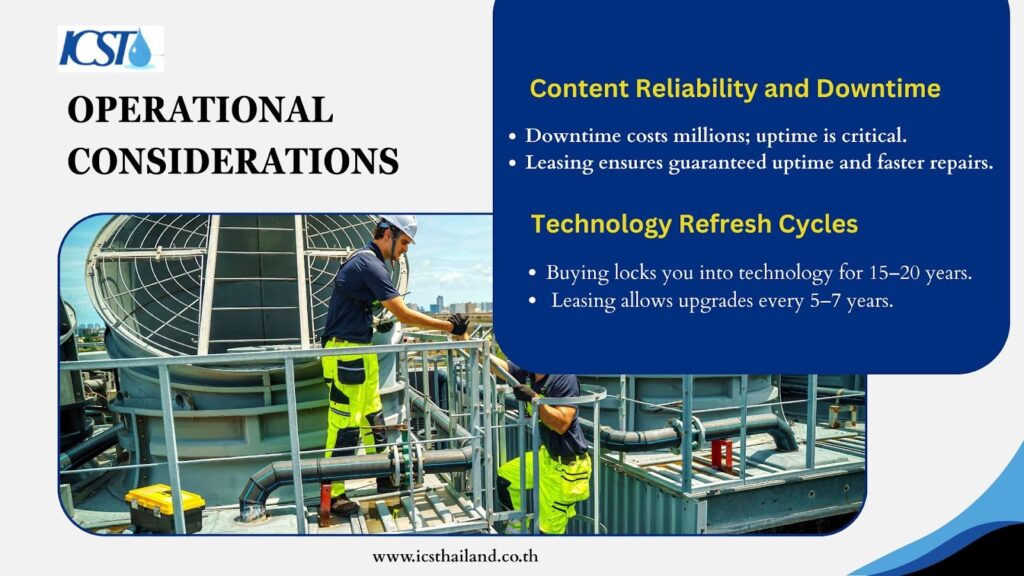
In process industries, downtime can cost thousands to millions of dollars per hour. The “leasing vs. buying cooling system” debate often hinges on this very point. If you own the equipment, the burden of uptime rests on your internal maintenance team or third-party contractors. If a compressor fails on a purchased chiller, you are on the hook for emergency repair costs and parts lead times, all while production halts.
Leasing, particularly “cooling-as-a-service” models, often shifts this burden to the provider. These contracts usually include strict Service Level Agreements (SLAs) guaranteeing response times and uptime. The vendor is incentivized to keep the equipment running perfectly because their revenue depends on it.
Technology Refresh Cycles
Cooling technology moves faster than the typical 20-year lifespan of a chiller. New refrigerants are introduced to meet environmental compliance, and digital controls improve efficiency.
- Buying: You are locked into the technology you purchase for 15-20 years. Upgrading requires a new capital project.
- Leasing: Shorter lease terms (e.g., 5-7 years) allow for technology refreshes. You can upgrade to the latest energy-efficient or eco-friendly units at the end of the term without a major capital write-off.
Financial Modeling: Crunching the Numbers
To present a solid case to your CFO, you need to speak the language of finance. This involves looking beyond simple payback periods and analyzing the Net Present Value (NPV) and cash flow implications.
The Cash Flow Impact
- Buying: Results in a massive cash outflow in Year 0. This reduces liquidity that could be used for other core business investments (like expanding production lines). However, after the payback period, the ongoing cost is lower (primarily OPEX for energy and maintenance).
- Leasing: Preserves working capital. Cash flow remains smooth and predictable. This is ideal for companies that need to keep cash on hand for inventory or R&D.
Discounted Cash Flow (DCF) Analysis
When comparing the two options, use a DCF analysis. This method accounts for the “time value of money”—the idea that a dollar today is worth more than a dollar tomorrow. Even if the total nominal cost of leasing is higher over 10 years, the NPV might be lower because you delayed the cash outflows, allowing the company to invest that capital elsewhere in the meantime.
Tax, Accounting, and Compliance
The distinction between Capital Expenditures (CAPEX) and Operating Expenditures (OPEX) is often the deciding factor for corporate leadership.
CAPEX vs. OPEX
- Buying (CAPEX): The equipment is recorded as an asset on the balance sheet and depreciated over time. This can offer tax benefits through depreciation deductions (like Section 179 in the US). However, the capital approval process is often long and rigorous.
- Leasing (OPEX): In many operating leases, payments are treated as operating expenses. This bypasses the complex capital budget approval process, often allowing facility managers to acquire equipment faster using their O&M (Operations and Maintenance) budget.
Note: Accounting standards (like ASC 842 and IFRS 16) have changed how some leases are reported on balance sheets. Always consult with your finance department to understand the specific reporting requirements for your organization.
Risk Management
Who holds the risk when things go wrong? This is the fundamental question of the lease vs. buy debate.
Contractual Protections
When you buy a chiller, your protection is limited to the manufacturer’s warranty, which typically covers cooling tower parts for 1-5 years and labor for a shorter period. Once that expires, every operational risk is yours.
Lease agreements allow you to structure risk transfer. Look for contracts that include:
- Performance Guarantees: Penalties for the vendor if temperature setpoints aren’t maintained.
- All-Inclusive Maintenance: The vendor covers all parts, labor, and emergency call-outs.
- Regulatory Compliance: The vendor ensures the equipment meets changing refrigerant and noise regulations.
Decision Matrix: When to Lease and When to Buy
There is no “one size fits all” answer when it comes to the lease vs buy cooling system debate. Use this matrix to guide your thinking based on your specific facility constraints
| Factor | LEASE if… | BUY if… |
| Cash Position | Cash is tight or needed for core business growth. | The company has strong cash reserves and a low cost of capital. |
| Technology Needs | You need the latest efficiency/refrigerants every 5-7 years. | You are comfortable with standard technology for 15+ years. |
| Maintenance Staff | You have a lean team and want to outsource maintenance risks. | You have a robust, skilled internal HVAC maintenance team. |
| Usage Duration | You have a short-term need (e.g., temporary production spike). | You have a permanent, long-term facility need. |
| Budget Type | You have flexibility in OPEX but strict CAPEX limits. | You need the tax benefits of asset depreciation. |
Action Checklist
Ready to make a decision? Follow this step-by-step framework to build your business case.
- Build Your TCO Model: Gather quotes for purchase vs. lease. Estimate energy, water, and maintenance costs for both scenarios over 10 years.
- Define Uptime Requirements: Determine the cost of downtime for your process. If it’s high, prioritize the option with the best service guarantees.
- Consult Finance: Ask your controller about the company’s preference for CAPEX vs. OPEX and the current internal hurdle rate for investments.
- Compare Vendor Proposals: Don’t just look at the price. Scrutinize the “Inclusions” and “Exclusions” in the maintenance scope.
- Negotiate: If leasing, negotiate the end-of-term options (buyout, renew, return) and the SLA terms.
- Present the Recommendation: Present a holistic view that combines the financial TCO with the operational risk profile.
Making the Strategic Choice
Deciding whether to lease or buy your industrial cooling system is a strategic move that affects your facility’s resilience and your company’s bottom line. By carefully analyzing the Total Cost of Ownership, understanding the tax implications, and assessing your appetite for operational risk, you can choose the path that best supports your production goals.
Don’t leave your critical infrastructure decisions to guesswork. If you need help modeling the costs or evaluating the technical specifications of your next cooling project, consider consulting with a trusted industry expert to guide your lease vs buy cooling system decision. Visit us at ICST to learn more and get started today!
Frequently Asked Questions
Should I lease or buy an industrial cooling system?
It depends on your cash flow, technology needs, and risk tolerance. Leasing preserves working capital and allows technology upgrades, while buying provides long-term cost savings and tax benefits.
What is the total cost of ownership (TCO) for cooling systems?
TCO includes acquisition or lease fees, installation, energy and water consumption, maintenance, and end-of-life costs. Calculating TCO helps compare leasing vs buying accurately.
How does leasing affect operational reliability?
Leased systems often include service agreements that guarantee uptime. The provider handles maintenance and repairs, reducing operational risk for your facility.
Can buying offer better long-term savings?
Yes. Once the capital is invested, ownership can lower ongoing operating costs, especially if you have skilled maintenance staff and the system is used long-term.
How does leasing help with technology upgrades?
Leases typically have shorter terms (5–7 years), allowing you to upgrade to newer, more efficient cooling systems without large capital expenditures.