Industrial cooling systems are the backbone of many operations, yet they often face neglect until a catastrophic failure occurs. The cost of such failure extends far beyond the price of repairs; it encompasses unplanned downtime, safety hazards for personnel, and potential compliance violations that can cripple a budget.
Effective cooling equipment quality management is not merely a box-checking exercise—it is the strategic link between purchasing hardware and ensuring long-term reliability and return on investment.
In this blog post, we will explore practical standards and procedures to enhance your cooling infrastructure. We’ll start by breaking down core definitions and then guide you through implementing rigorous inspection protocols.
Understanding Quality Management in Cooling Systems
Quality management in the context of cooling equipment refers to the systematic coordination of activities to direct and control an organization with regard to quality.
Unlike generic quality management, which might focus broadly on customer satisfaction, cooling equipment quality management specifically targets the mechanical integrity, thermal performance, and longevity of assets like cooling towers, chillers, and heat exchangers.
Success requires clear roles and responsibilities across the organization:
- Engineers define the technical specifications and acceptance criteria.
- The QA/QC Team verifies that these specifications are met through documentation and physical verification.
- Operations provides feedback on real-world performance to inform future quality standards.
Quality vs Compliance vs Performance
- Compliance: Ensures that equipment meets minimum regulatory requirements, such as safety standards or environmental emission limits. It’s about adhering to rules and guidelines.
- Performance: Focuses on the actual output or functionality of the equipment. For example, does the cooling tower deliver the desired design approach temperature? Performance measures whether the equipment achieves its intended purpose.
- Quality Management: Bridges compliance and performance by ensuring that equipment is properly built and installed. Quality management ensures the equipment not only meets regulatory standards but also delivers consistent performance throughout its lifecycle.
Building QA/QC Procedures for Cooling Equipment
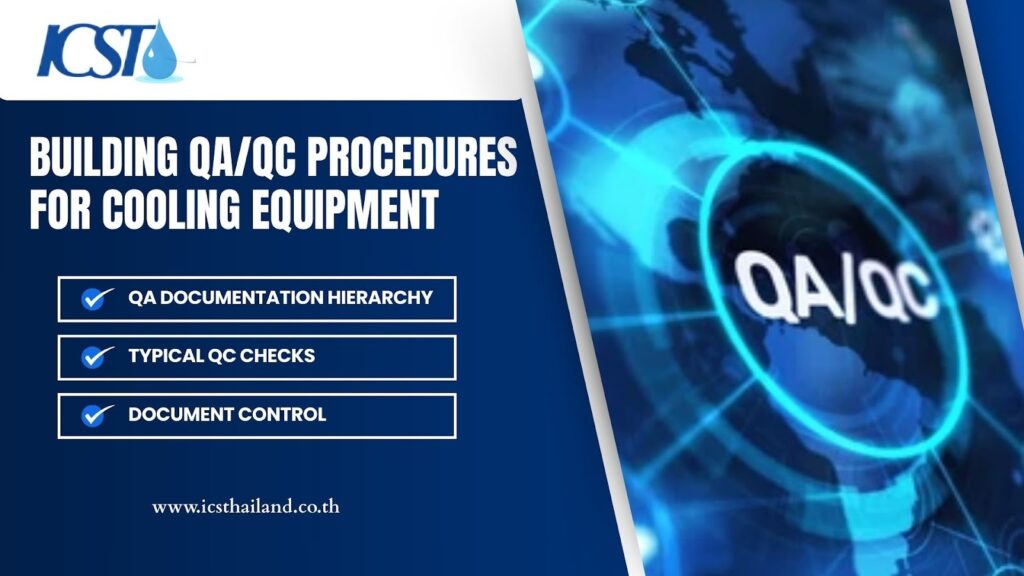
A robust quality framework relies on structured QA/QC procedures that leave no room for ambiguity. Quality Assurance (QA) focuses on the process, while Quality Control (QC) focuses on the product itself. Together, they form a safety net that catches errors before they become expensive problems.
To establish an effective system, organizations must prioritize specific documentation and physical checks:
- QA Documentation Hierarchy: Establish a clear order of precedence for specifications, drawings, and industry standards (e.g., CTI, ASME).
- Typical QC Checks: Implement mandatory hold points for material verification, surface finish inspections, and tolerance checks.
- Document Control: Maintain rigorous traceability for all certifications and test reports to ensure accountability.
Key Elements of a QA Plan
A successful Quality Assurance (QA) plan acts as the project roadmap, outlining clear standards and expectations to ensure consistent outcomes. It defines exactly what “good” looks like before work begins, setting measurable benchmarks for quality.
- Standards and Acceptance Criteria: Clearly define the pass/fail metrics for every component.
- Documentation Requirements: List every report, certificate, and log that must be submitted.
- Roles and Responsibilities: Assign specific authority for sign-offs to prevent unauthorized approvals.
Typical QC Checks for Cooling Equipment
Physical verification is the cornerstone of effective QA/QC procedures. Inspectors are tasked with confirming that the physical equipment matches the engineering design specifications precisely.
This hands-on process involves meticulously checking every component, from materials and dimensions to assembly and finishing.
- Weld Checks: Visual and non-destructive testing (NDT) to ensure structural integrity and leak prevention.
- Dimensional Checks: Verification of nozzle placement, anchor bolt alignment, and critical clearances.
- Coating Protection: Measuring dry film thickness to ensure corrosion resistance in harsh cooling environments.
Inspection Protocols That Ensure Quality
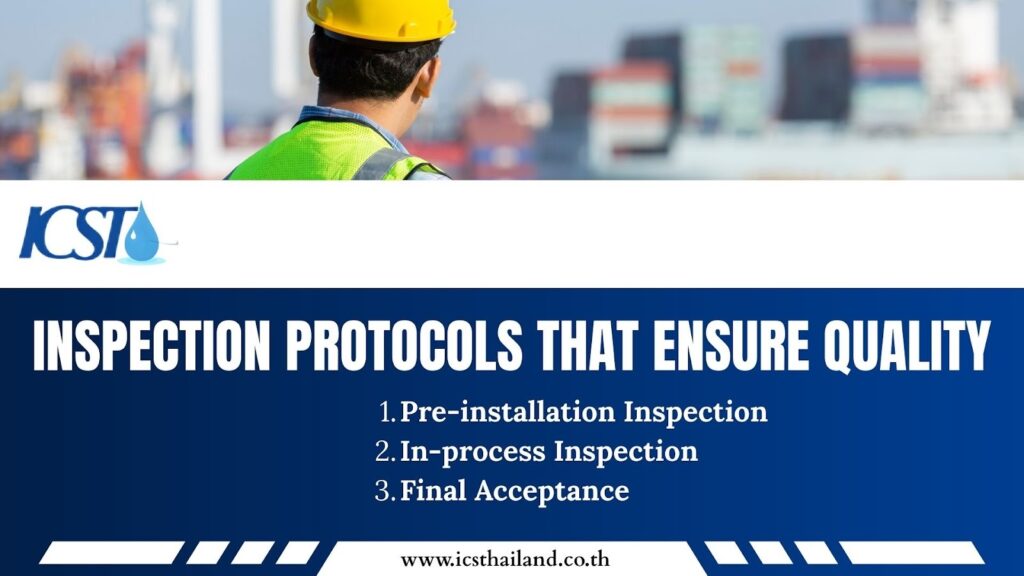
Rigorous inspection protocols are the primary defense against installing defective equipment. This process should follow a logical progression from the factory floor to the final site installation.
A phased approach ensures that defects are caught when they are cheapest to fix, before the equipment is shipped or lifted into place.
The inspection lifecycle typically involves three distinct phases:
- Pre-installation Inspection: Verification of the foundation and receiving checks for shipping damage.
- In-process Inspection: Monitoring critical assembly steps, such as fan blade pitch alignment or fill installation.
- Final Acceptance: A comprehensive walkthrough to verify the system is ready for commissioning.
What to Inspect & How
Knowing where to look is just as important as knowing how to look. To be effective, inspectors should prioritize areas known for high failure rates.
A strategic inspection plan focuses on components with the highest risk of failure and the greatest impact on system performance.
- Mechanical Systems: Check bearings for proper lubrication, shafts for alignment, and fans for tip clearance.
- Structural Components: Verify torque on bolted connections and the integrity of support frames.
- Fluid Systems: Inspect spray nozzles for coverage patterns and piping for stress-free alignment.
Non-Conformance Reports (NCR) | Handling Defects
Even with the best planning, deviations occur. Non-conformance reports (NCRs) are the formal mechanism for documenting and resolving these issues. An NCR is not just a complaint; it is a structured record that details the discrepancy between the specified requirement and the actual condition.
Writing a clear NCR requires separating the symptom from the root cause. A vague report stating “pump is loud” is unhelpful. A clear report states “pump vibration exceeds ISO 10816 limits due to misalignment,” which guides the resolution process effectively.
Response Actions & Corrective Actions
Once non-conformance reports are issued, the team must act decisively to minimize impact.
- Immediate Containment: Stop the affected work to prevent further processing of defective material.
- Root Cause Analysis (RCA): Investigate why the error occurred—was it a training issue, a material flaw, or a design error?
- Preventive Actions: Update procedures or tooling to ensure the specific defect does not recur.
Supplier Quality Assurance
The quality of your cooling system is heavily dependent on the quality of the components you purchase. Supplier quality management involves vetting vendors to ensure they have the capability and systems to deliver compliant products consistently.
This proactive approach prevents the arrival of substandard parts at your facility. Effective management requires a mix of upfront evaluation and ongoing monitoring:
- Evaluation: Assess the supplier’s internal quality manual and ISO certifications.
- Incoming Inspection: Verify that received goods match the purchase order and material certificates.
- Performance KPIs: Track on-time delivery and defect rates to objectively score supplier performance.
Supplier Audits and Approvals
Periodic audits are essential for ensuring a supplier consistently meets your quality standards over time. These evaluations go beyond initial approvals, providing a real-world check on their processes and output.
- Audit Timing: Conduct audits before awarding major contracts or when quality issues spike.
- Document Review: Request and validate Material Test Reports (MTRs) and internal inspection logs.
Managing Supplier Non-Conformances
When supplier quality falls short, the buyer must enforce accountability to maintain standards and protect their business. This involves setting clear expectations, conducting regular evaluations, and addressing issues promptly.
- Corrective Action Requests (SCAR): Formal demands for the supplier to investigate and fix root causes.
- Improvement Plans: Collaborative efforts to help a struggling strategic partner regain compliance.
- Penalties: Contractual consequences for repeated failures to meet quality standards.
Quality Metrics & KPIs for Cooling Equipment
You cannot manage what you do not measure. Establishing clear KPIs allows organizations to track the effectiveness of their cooling equipment quality management program. These metrics provide the data needed to justify budget requests for upgrades or changes in vendors.
Key measurable indicators include:
- Defect Rate: The percentage of inspections that result in an NCR.
- Rework Hours: Time spent fixing errors that should have been done right the first time.
- Field Failures: The frequency of equipment breakdowns within the warranty period.
- Reliability Correlation: Linking quality scores to long-term uptime and thermal performance.
Continuous Improvement Practices
Quality is not a destination; it is a cycle. Continuous improvement methodologies, such as the Plan-Do-Check-Act (PDCA) cycle, ensure that the quality system evolves alongside technology and operational needs. By constantly refining processes, organizations reduce waste and increase reliability over time.
To foster this environment, teams must actively seek feedback:
- Plan: Identify an area for improvement, such as reducing weld rejection rates.
- Do: Implement a new training program or welding procedure.
- Check: Measure the results against the previous baseline.
- Act: Standardize the new procedure if it works, or adjust if it does not.
How ICST Helps Ensure Quality In Cooling Equipment Projects
Adhering to complex standards requires specialized expertise. ICST provides structured QA/QC systems tailored specifically for industrial cooling applications. Our approach integrates rigorous inspection protocols with deep technical knowledge to mitigate risk.
We support your projects through:
- Expert Inspection: Deploying qualified personnel to verify fabrication and installation quality.
- Reporting: Delivering clear, actionable data on equipment status.
- Supplier Management: Assisting with vendor audits and performance monitoring.
- System Integration: Ensuring continuous improvement is built into your maintenance and operations strategy.
Conclusion
Quality management often feels like a burden of paperwork, but its true value lies in operational stability. By implementing structured cooling equipment quality management, organizations transform potential vulnerabilities into reliable assets. Adhering to strict standards, managing suppliers effectively, and learning from every defect ensures that cooling systems perform efficiently for years to come.
Need an expert QA/QC plan or inspection support? Whether you’re looking to ensure quality for cooling tower components, require repair and maintenance, or are building a new cooling tower, ICST is here to help.
Contact us today to make sure your cooling equipment meets the highest standards of quality and reliability before installation and operation!
Frequently Asked Questions
What is QA/QC in cooling equipment quality management?
QA (Quality Assurance) focuses on planning the processes to prevent defects, such as creating specifications and hiring qualified welders. QC (Quality Control) focuses on identifying defects in the finished product through testing and inspection.
How often should inspection protocols be updated?
Inspection protocols should be reviewed at least annually or whenever there is a change in industry standards (like CTI or ASME codes), a technology change, or after a significant failure event that reveals a gap in the current process.
What should be included in a non-conformance report?
A strong non-conformance report must include a description of the defect, photographic evidence, reference to the specific violated standard, the root cause of the issue, and the agreed-upon corrective action.
How do supplier quality systems affect cooling project quality?
Supplier quality is the foundation of project success. If a supplier lacks strong internal controls, they are likely to deliver defective components, leading to schedule delays, increased rework costs, and potential premature failure of the cooling system.