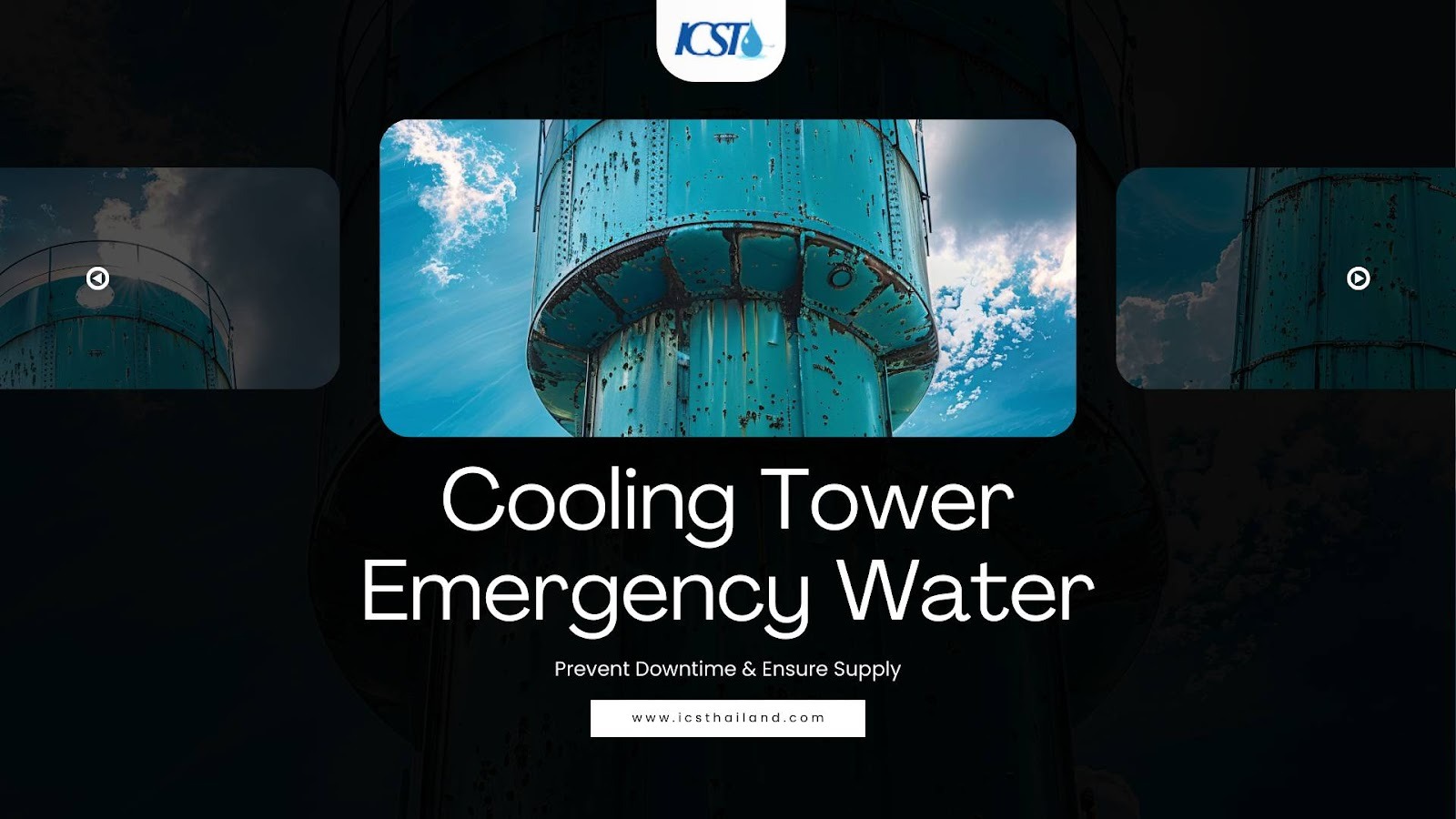
A single point of failure often destroys operational uptime. In many industrial facilities, a municipal water main break acts as that critical failure point. While engineers frequently design electrical redundancy with generators and UPS systems, they often overlook the essential need for cooling tower emergency water solutions.
This oversight creates a dangerous gap. In high-density environments, such as data centers or heavy processing plants, the “300-Second Rule” applies. If a cooling tower loses its makeup water supply, the basin volume may only support operations for five minutes before pumps cavitate or thermal limits trigger a shutdown.
At ICST, we engineer bridges over this gap. A robust cooling tower emergency water design must transition seamlessly from a primary municipal source to a backup emergency supply without manual intervention. This guide details how to calculate, design, and implement emergency water resilience for critical infrastructure.
Calculating Storage Capacity: How Much Backup Do You Need?
You must base your storage requirements on physics, not guesses. The volume of water required to sustain operations depends on precise evaporation rates and your specific recovery goals.
The Evaporation Equation
To determine actual hourly consumption, you must factor in three variables:
- Heat Load: The total heat rejection required by the process.
- Drift Loss: Water lost as mist from the tower exhaust.
- Blowdown: Water discharged to remove mineral concentration.
Only when you sum these factors do you understand the true demand on the makeup line.
The Survival Window
Define your Recovery Time Objective (RTO). This objective dictates how long the plant must run autonomously.
- 4 Hours: Suitable for sites with rapid tanker response contracts.
- 12 Hours: Recommended for facilities that require an orderly shutdown.
- 24 Hours: Mandatory for mission-critical data centers or continuous chemical processes.
Dynamic Sizing for Climate
Static calculations fail in extreme environments. In regions like the Middle East or Southeast Asia, high wet-bulb temperatures increase evaporation rates significantly. You must size your Industrial Water Storage Solutions based on seasonal peak demand, not average annual usage.
Emergency Water Source Matrix
Not all backup sources offer equal reliability. We categorize potential sources into a hierarchy of stability.
Gold Strategy: Dedicated Backup Reservoir
This involves an internal, dedicated storage tank.
- Reliability: Highest.
- Best For: Sites with zero tolerance for downtime and strict RTO requirements.
Silver Strategy: Fire Water Connection
This strategy utilizes existing, massive fire-suppression tanks as a secondary source.
- Reliability: High, but requires complex integration.
- Best For: Facilities with NFPA 20 Certified Interface capabilities and large existing tanks.
Bronze Strategy: Raw or Grey Water Backup
This approach uses secondary filtration to treat alternative water sources.
- Reliability: Moderate; depends on filtration quality.
- Best For: Rural or coastal sites with access to well water or seawater.
Emergency Strategy: Mobile Tanker Hookup
This relies on external water delivery.
- Reliability: Low (dependent on traffic and logistics).
- Best For: Short-term outages during planned maintenance using Fast-Fill Camlock Connections.
Fire Water Integration: The Dual-Purpose Strategy
Utilizing fire water tanks for cooling tower makeup requires strict adherence to safety codes. You must ensure that cooling needs never compromise fire protection capabilities.
NFPA Compliance
You must respect the dedicated volume required for fire suppression. The suction point for the cooling tower pumps must sit physically higher in the tank than the fire pump suction. This guarantees that the fire reserve remains untouched even if the cooling system drains its allocated share.
The Cross-Connection Risk
Connecting industrial water piping to fire systems introduces contamination risks. You must install Backflow Preventers, specifically Reduced Pressure Zone (RPZ) valves. These devices ensure that chemically treated tower water does not flow back into the clean fire suppression loop.
Priority Logic
Automation is essential. The control system must possess priority logic. If the fire alarm activates, the system must automatically shut off the tower makeup feed. Life safety always takes precedence over process cooling.
Hardware Redundancy: Pumps and Failover Design
Water storage provides no value if the delivery mechanism fails. The pumps moving water from the backup tank to the tower constitute the next critical link.
- N+1 Redundancy: Do not rely on a single makeup pump. You need at least one standby pump ready to operate if the primary fails.
- Automated Switchover: Electrical failures often accompany water supply failures. Integrate Automatic Transfer Switches (ATS) to ensure pumps have backup power.
- Low-Level Alarms: Install multi-stage sensing in the tower basin. These sensors must trigger backup protocols early, well before the water level drops low enough to cause air-binding in the circulation pumps.
Reliability Testing: The “Dry Run” Protocol
A system that you do not test is a system that will fail. You must validate your emergency water infrastructure regularly.
Quarterly Stress Tests
Simulate a municipal water failure once every quarter. Physically close the primary supply valve and verify that the backup system engages automatically. Confirm that valves actuate correctly and pumps start without hesitation.
Stagnation Management
Water stored for emergencies sits idle for long periods. This creates a breeding ground for biological growth, including Legionella.
- Recirculation: Continuously circulate the backup water.
- Treatment: Apply UV-C treatment or biocides to maintain water quality.
Link to Maintenance
Do not treat emergency water as an afterthought. Add emergency valve testing and pump verification to your standard Cooling Tower Maintenance Checklist.
The ICST Advantage: Bangkok Dispatch Resilience
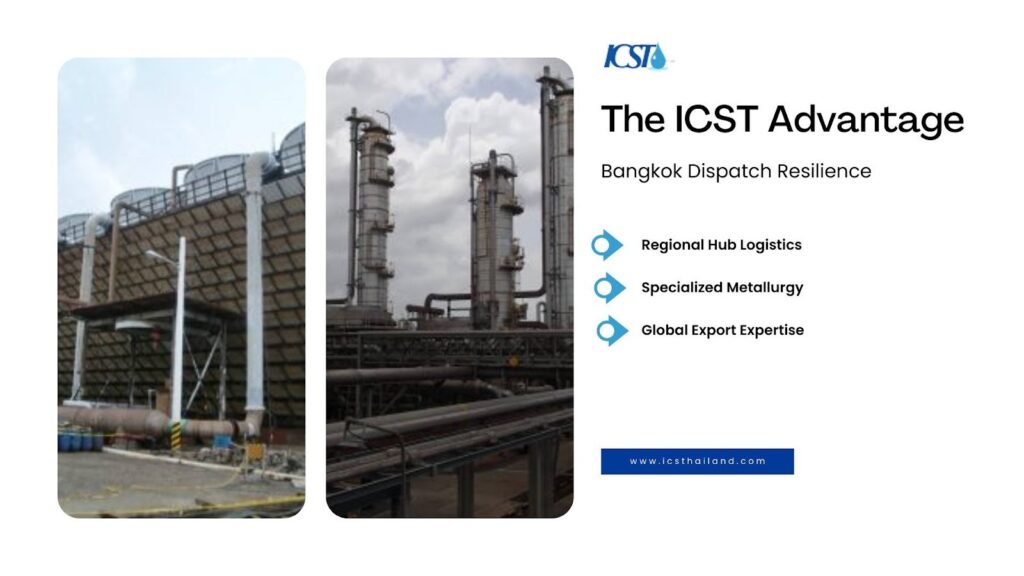
Designing for resilience requires a partner who understands local challenges and global standards.
- Regional Hub Logistics: Our Bangkok office serves as a central hub. We provide technical assistance and emergency commissioning support across Asia within hours of a request.
- Specialized Metallurgy: We design backup connections specifically for harsh environments. This includes using materials resistant to seawater or acidic conditions found in heavy industrial zones.
- Global Export Expertise: We ensure specialized makeup pumps and valves reach sites in the Middle East without costly customs delays.
Conclusion: Is Your Water Supply “Always-On”?
Cooling tower emergency water serves as the essential insurance policy for your thermal infrastructure. Without reliable access to cooling tower emergency water, you expose your operation to unacceptable risks. A resilient system does not happen by accident; it requires calculated storage, redundant hardware, and rigorous testing.
At ICST, we engineer technically feasible and sustainable solutions. We ensure your plant continues running even when the grid fails.
Ready to audit your water resilience? Contact ICST’s Bangkok hub for a custom Emergency Water Strategy today.
Frequently Asked Questions
What is cooling tower emergency water, and why is it important?
Cooling tower emergency water ensures uninterrupted cooling operations during water supply failures, preventing costly downtime and thermal shutdowns.
How do I calculate the backup water storage for a cooling tower?
Backup storage is calculated based on evaporation rates, drift loss, blowdown, and your facility’s Recovery Time Objective (RTO), ensuring sufficient water for critical operations.
What are the best emergency water sources for cooling towers?
Options include dedicated backup reservoirs, fire water connections, raw or grey water backups, and mobile tanker hookups, depending on your site’s needs and reliability requirements.
How can I integrate fire water systems with cooling tower emergency water?
Use NFPA-compliant designs with backflow preventers and priority logic to ensure fire safety while providing emergency water for cooling towers.
How often should I test my cooling tower emergency water system?
Conduct quarterly stress tests to simulate water supply failures, verify system reliability, and prevent stagnation or contamination in backup reservoirs.