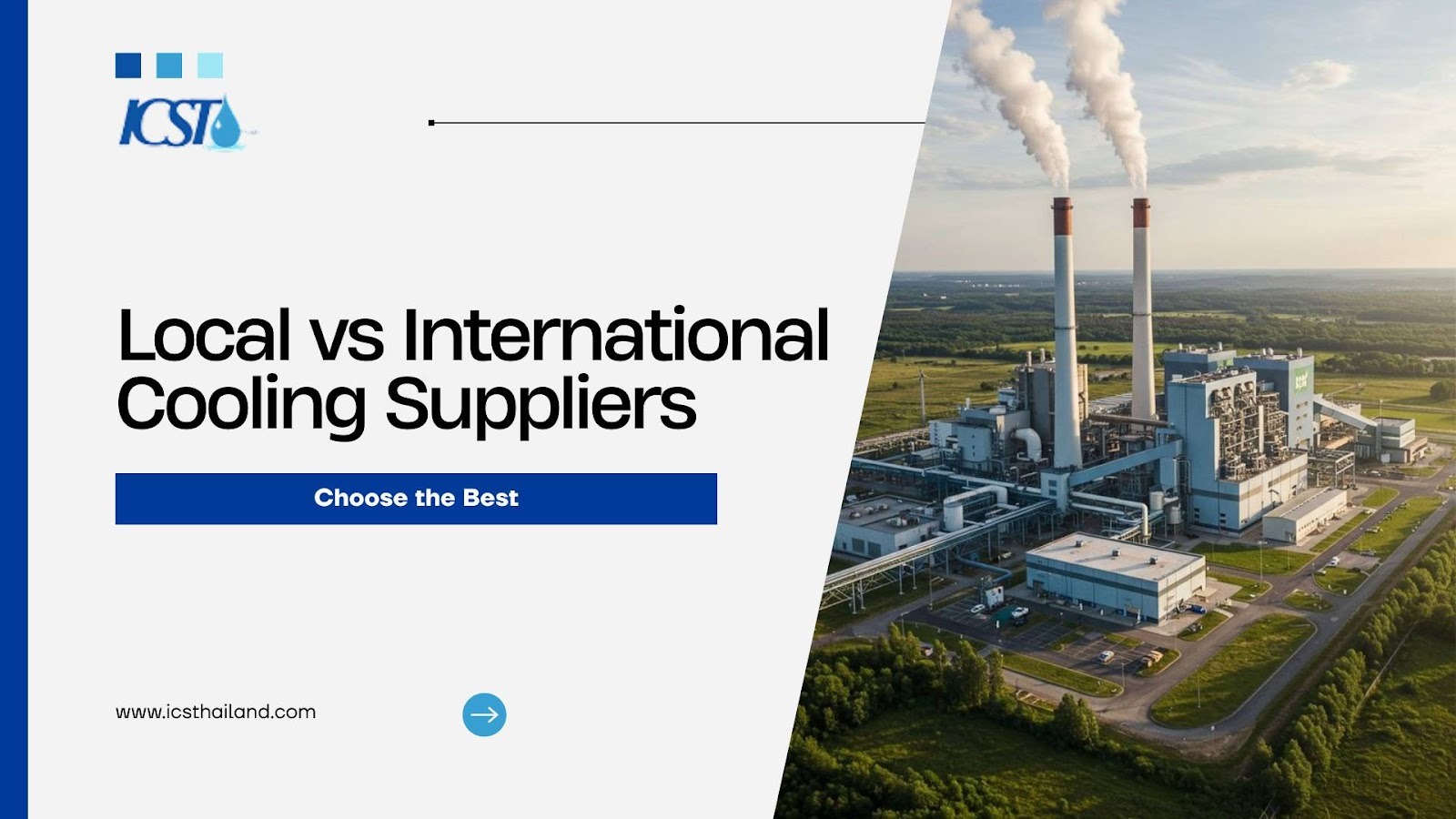
In 2026, procurement managers face a critical decision in local vs international cooling suppliers—balancing the speed and agility of local cooling vendors against the engineering depth, compliance, and reliability of international cooling brands. This ongoing trade-off continues to shape modern industrial cooling and HVAC procurement strategies.
Global sourcing trends are shifting. We see a strong move toward “nearshoring” and “friendshoring.” Companies do this to lower geopolitical supply chain risks. It is no longer enough to just buy the cheapest equipment. You must ensure that the equipment arrives on time.
This creates a decision framework for engineers and procurement officers:
- Local Support: Offers immediate convenience and physical proximity.
- Global Engineering: Offers technical superiority and certified performance.
At ICST, we advocate for the “ICST Standard.” This approach implements innovative cooling solutions that are technically feasible and sustainable. We deliver them with regional speed from our Bangkok headquarters.
Strategic Comparison: The Supplier Capability Matrix
Understanding the trade-offs is vital. We have analyzed the three main options: Local Cooling Vendors, International Brands, and the ICST “Glocal” Model.
| Feature / Capability | Local Cooling Vendors | International Brands | ICST (The Glocal Model) |
|---|---|---|---|
| Lead Times | Fast — Days to Weeks | Long — Typically 3–6 Months | Optimized — Regional stock + global pipelines |
| Bespoke / Fast-Track Design | High — Quick bespoke options with fast turnaround | Lower — Standard product focus; custom takes longer | Balanced — Modular pre-engineered + custom where needed |
| Spare Parts Availability | Basic Components On Hand | Specialized Parts (Custom only) | Regional stocking of key parts + global spare support |
| Critical 24/7 Availability | Limited | Strong (Global infrastructure) | Strongest — Mix of local presence + global escalation |
| Local Support | Immediate Physical Presence | Remote / Third-Party Tech Support | Local certified engineers + global expertise |
| Dispatch Speed (Asia / Local Regions) | Same-Day or Next-Day | Slow (Trans-border shipping) | Fast — Local hubs with strategic stocking |
| Quality Standards | Regional compliance (local standards) | Global standards (CTI, NFPA, ISO, etc.) | Global excellence with regional compliance |
| Compliance Certifications | Local regulatory focus | Broad international compliance | Certified global standard + localized compliance |
| Customization Flexibility | High (adapted to local needs) | Lower (off-the-shelf) | Moderate to high — tailored modules |
| Engineering Support | In-house local engineers | Centralized engineering (remote) | Hybrid — local + centralized expert design |
| After-Sales Service | Fast response; site visits possible | Slower; may rely on partners | Fast local support + global technical escalation |
| Cost Profile | Competitive; lower logistics costs | Higher; shipping & import costs | Competitive; balanced logistics + support |
| Risk Exposure | Lower geopolitical/logistics risk locally | Higher (cross-border) | Minimized via diversified regional presence |
| Supply Chain Resilience | Better for immediate needs | Vulnerable to global delays | Optimized / diversified buffer stock |
| Scalability | Moderate (local production limits) | Highly scalable | Scalable with regional hubs |
Local Suppliers: The Proximity Advantage
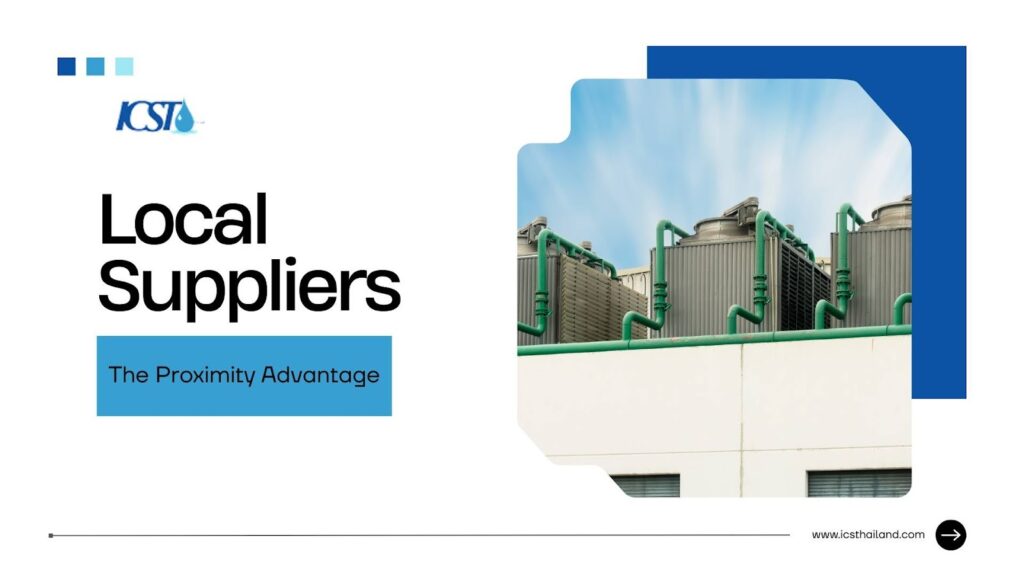
Local suppliers offer distinct logistical benefits. Their greatest strength is rapid response time. When a sudden HVAC breakdown occurs during peak tropical heat, speed is critical. A local team can often arrive on-site within hours.
You also benefit from lower logistics costs. Sourcing locally eliminates international freight charges. You avoid import duties. You do not have to navigate complex customs clearance procedures.
Cultural and language alignment also simplifies the process. Communication is direct. Accountability remains within the same time zone.
The Gap:
Local suppliers often struggle to provide comprehensive capabilities in advanced Research and Development (R&D). They may struggle with specialized requirements. These include low plume technology, low noise capabilities, or seawater-resistant metallurgy.
International Suppliers: The Engineering Pedigree
International suppliers bring elite engineering to the table. They possess advanced R&D capabilities. They can handle niche technical needs, such as liquid immersion cooling for AI data centers or geothermal thermal management, including advanced AI Cooling System Control for optimized performance.
These suppliers adhere to global product quality standards. They follow rigorous benchmarks, including:
- ASHRAE
- CTI (Cooling Technology Institute)
- ISO 9001
They also offer scalability. Their large manufacturing facilities can handle massive heavy industrial projects.
The Gap:
The downside is the “Logistics Bottleneck.” A single failed fan blade stuck in customs can cost a plant millions in downtime. International quality means nothing if the part sits in a shipping container for weeks.
Critical Success Factors: Reliability & Spare Parts
Reliability depends on your spare parts strategy. You must develop a “Critical Spares” plan. Ensure that gearboxes, motors, and nozzles are reachable within 24 hours. Waiting for a shipment from Europe or the US is often not an option during a critical failure.
Cooling Control Systems are equally important. International-standard systems with IoT integration offer superior performance. They allow for real-time monitoring. They enable predictive maintenance. This technology alerts you to problems before they cause a shutdown.
The ICST Difference: Bridging the Regional Gap
We bridge the gap between local speed and global quality. Our Bangkok Strategic Hub serves as a central command center. We dispatch personnel to any location in Asia within hours. We reach the Middle East within 24 hours.
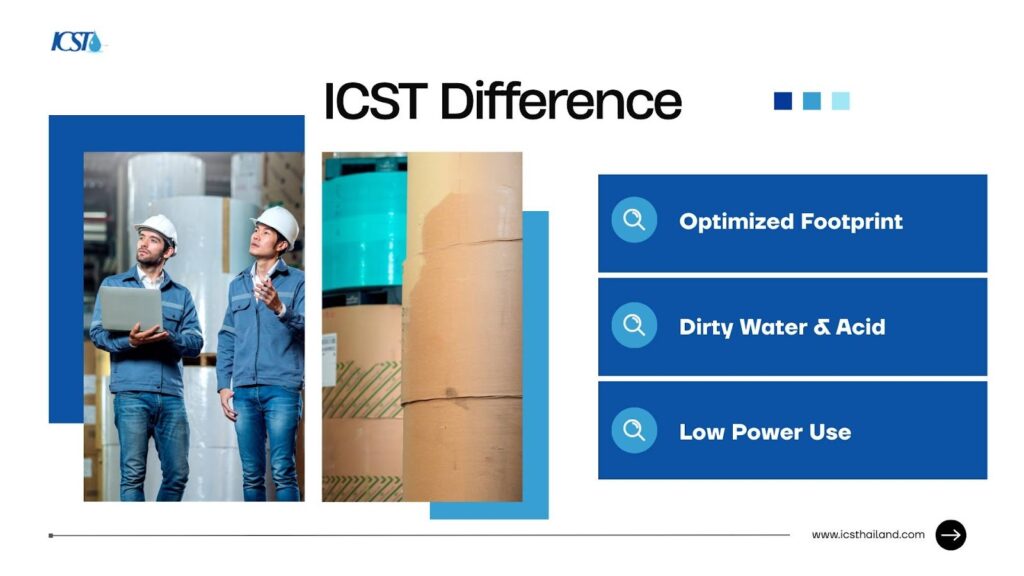
We provide specialized designs for regional extremes:
- Optimized Footprint: Designed for high-density urban industrial zones.
- Dirty Water & Acid: Engineering that resists corrosion, which local vendors often cannot replicate.
- Low Power Use: Designs that meet global ESG targets with low pump head requirements.
We also offer a robust emergency repair infrastructure. Our regional office provides the localized “safety net” that traditional international brands miss.
Sustainability & ESG in 2026
Sustainability is a key driver for 2026. Eco-friendly sourcing now involves local purchasing to reduce the carbon footprint of heavy equipment transportation. Moving heavy chillers across oceans consumes vast amounts of energy.
Energy efficiency also impacts your bottom line. Investing in high-efficiency international components reduces long-term operational expenses (OPEX). High-quality Variable Frequency Drives (VFDs) and high-efficiency fill perform better than budget local options. This long-term savings outweighs the initial cost difference.
Conclusion: Making the Data-Driven Choice
Choosing between local vs international cooling suppliers in 2026 comes down to balancing rapid support, robust quality standards, and long-term reliability. Local vendors offer fast response times and easier logistics, while international suppliers provide global engineering expertise and advanced solutions.
The “glocal” approach promises the best of both worlds: personalized local service paired with international-grade innovation and spare parts availability. By weighing these factors carefully, you equip your facility to meet both immediate and future cooling demands.
Ready to experience the ultimate blend of speed and quality? Contact ICST specialists today for a Technical Site Audit and see how a glocal partner can elevate your operations!
Frequently Asked Question
What are the key differences between local and international cooling suppliers?
Local suppliers offer faster lead times, lower logistics costs, and immediate support, while international suppliers provide advanced engineering, global quality standards, and scalability.
Why should industrial facilities choose local cooling suppliers for HVAC systems?
Local cooling suppliers are often the preferred choice for industrial HVAC systems that require fast response times, short lead times, and on-site technical support. Their close geographic presence enables quicker installations, faster maintenance, lower logistics costs, and easier coordination, making them ideal for urgent projects, retrofits, and region-specific cooling requirements.
What advantages do international cooling suppliers offer for industrial HVAC projects?
International cooling suppliers bring strong advantages in advanced research and development, global engineering expertise, and compliance with international standards such as CTI, NFPA, and ISO. They are well suited for large-scale, high-capacity, or highly specialized industrial HVAC systems where performance guarantees, long-term scalability, and global consistency are critical.
How does spare parts availability compare between local and international cooling suppliers?
In the comparison of local vs international cooling suppliers, local vendors typically maintain ready stock of essential spare parts, enabling rapid repairs and minimal downtime. International suppliers, while offering highly specialized or custom components, often rely on cross-border logistics, which can result in longer delivery times unless supported by regional warehouses.
What is the most effective strategy to balance local and international cooling suppliers?
The most effective approach is a “Glocal” cooling supplier strategy, which combines the speed, flexibility, and local support of regional suppliers with the engineering depth, global standards, and innovation of international brands. This hybrid model ensures fast-track delivery, bespoke HVAC design, reliable spare parts availability, and global-quality performance—especially critical for mission-critical industrial cooling applications.