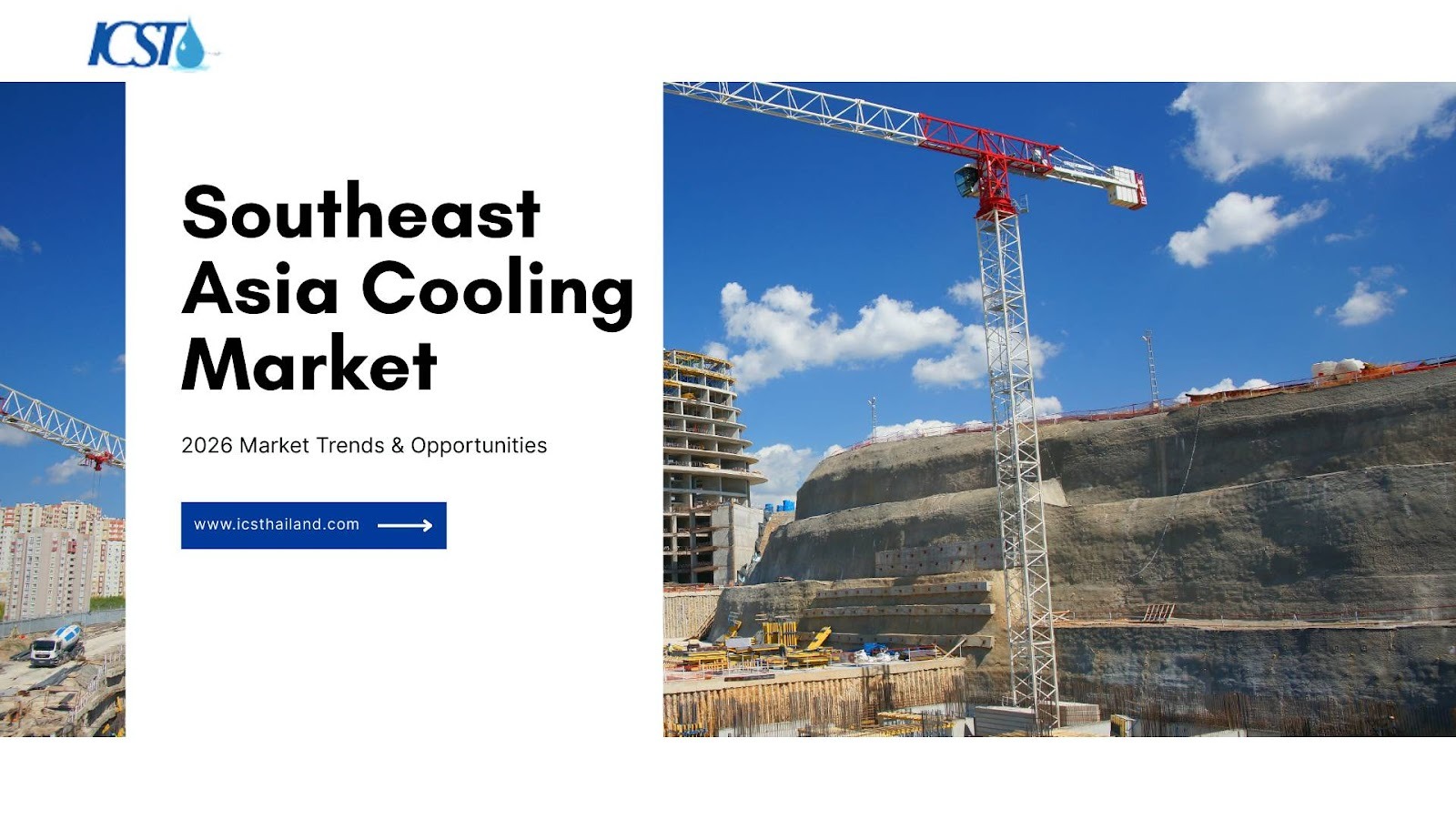
The Southeast Asia cooling market stands as the fastest-growing sector of its kind in the world today. Analysts project the market value will reach $25.41 billion by late 2026, driven by a Compound Annual Growth Rate (CAGR) of 6.9%. This surge represents more than just financial numbers. It signifies a fundamental shift in how industries manage heat.
We observe a “thermal pivot” occurring across the region. Businesses now move beyond simple equipment purchases. They seek engineered solutions that balance three critical factors: financial feasibility, technical robustness, and environmental sustainability. This is the core mission of ICST Engineering.
Our strategic location provides a distinct advantage. With our regional office based in Bangkok, we offer 24-hour dispatch to high-growth zones. We rapidly service major hubs like Jakarta, Johor, and Ho Chi Minh City. This proximity allows us to deliver immediate technical support where international competitors cannot.
Market Growth Drivers: The 2026 “Triple Threat”
Three major forces drive the cooling market in 2026. These drivers force industries to rethink their thermal strategies.
AI & High-Density Computing
The rise of high-performance data center facilities transforms the landscape. We see rack densities exceeding 100kW in Thailand and Singapore. This intensity renders traditional air-based cooling obsolete. Consequently, facilities must shift toward liquid cooling technology to manage the extreme heat generated by AI workloads.
The Water-Energy Nexus
Water scarcity policies now shape the industry. In 2026, Water Usage Effectiveness (WUE) emerges as a critical Key Performance Indicator (KPI). It stands alongside Power Usage Effectiveness (PUE) as a primary metric. Regulations in Singapore and Thailand compel operators to reduce water consumption while maintaining efficient heat management.
Urbanization & District Cooling
Rapid urbanization fuels the rise of centralized cooling networks. The district cooling system (DCS) model gains traction in Bangkok under the “Thailand 4.0” initiative. Similarly, Singapore’s “Smart Nation” plan integrates these systems to serve dense urban areas. This approach centralizes cooling production, which significantly lowers energy consumption across the grid.
2026 Market Snapshot: Southeast Asia Cooling Landscape
The Southeast Asia cooling market is diverse. Each nation presents unique investment hotspots and growth trajectories.
- Thailand (Bangkok / Eastern Seaboard): The focus here is on rapid district cooling adoption. We project a 9.8% growth in cooling infrastructure, outpacing the 1.6% GDP growth.
- Singapore (Paya Lebar / Jurong): This market emphasizes high-tech solutions. Expect strict mandates on Hybrid Quantum AI and WUE. The growth aligns with the country’s push for a smart, energy-efficient economy.
- Indonesia (Jakarta / IKN Nusantara): As the new capital city rises, demand for eco-friendly HVAC systems surges. Indonesia remains an anchor of stability with a projected 5.1% growth.
- Vietnam (Long Thanh / Da Nang): The manufacturing boom drives a 6.0% growth rate. Industrial parks actively retrofit their systems for “green” compliance.
- Malaysia (Johor / Cyberjaya): This area witnesses significant growth in hyperscale data center expansion. It serves as a crucial digital infrastructure hub with 4.2% growth.
Technical Innovations & Forecast: What Is Next for 2026?
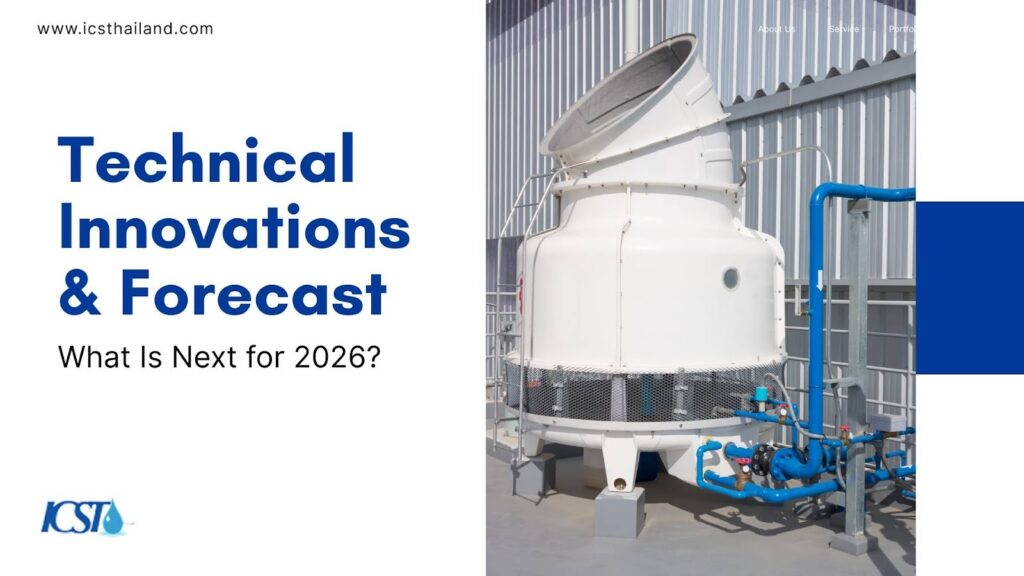
To meet the rising demand, technology must evolve. We forecast three key innovations that will dominate the market.
Liquid Immersion & Direct-to-Chip
Legacy air-cooled facilities struggle with modern high-performance computer workloads. Liquid cooling offers the solution. By transitioning to direct-to-chip or immersion cooling, data centers can handle higher densities without overheating. This technology is essential for new data centers supporting AI applications.
Membrane Cooling Technologies
Water conservation is paramount. Advanced membrane technologies allow evaporative systems to reclaim up to 90% of water. This innovation directly addresses regional water scarcity concerns and lowers operational costs.
Variable Refrigerant Flow (VRF) 2.0
Tropical climates require precise control. The next generation of VRF systems utilizes low-GWP refrigerants, such as R-32. Furthermore, these systems employ AI-driven load matching. This ensures the cooling output matches the exact need at any moment, drastically improving energy efficiency.
Local vs. International Suppliers: Navigating the Supply Chain
Choosing the right partner is critical for long-term success.
The Traditional Gap
International giants dominate the market share globally. However, they often fail in the tropics. They provide global standards but cannot offer rapid, on-site technical assistance. When a system fails in high humidity, waiting days for a technician is not an option.
The ICST Advantage
We provide a “Glocal” bridge. We combine rigorous international engineering standards with a robust local presence. Our Bangkok-based regional office ensures we understand the local context.
- Discover the difference between Local vs. International Cooling Suppliers and why ICST’s hours-away dispatch to Asia and the Middle East is the gold standard for regional support.
Regional Challenges: The Road to Thermal Resilience
Operating in Southeast Asia presents unique challenges that standard designs do not address.
The Humidity Trap
The region defines “Wet-Bulb” conditions. High humidity renders many standard European or American cooling designs ineffective. Systems must be engineered specifically to handle the heavy moisture load of the tropics. Failure to account for this leads to equipment corrosion and inefficiency.
Skilled Labor Shortages
As technology advances, the skills gap widens. There is a growing need for specialized engineers who can maintain AI-based thermal management systems. Local network service providers often lack this specific expertise.
- Mitigate operational risks with our Cooling System Requirements & Monitoring protocols.
Emergency Preparedness in High-Heat Zones
The climate in 2026 is unforgiving. Industrial corridors frequently see ambient temperatures exceed 40°C.
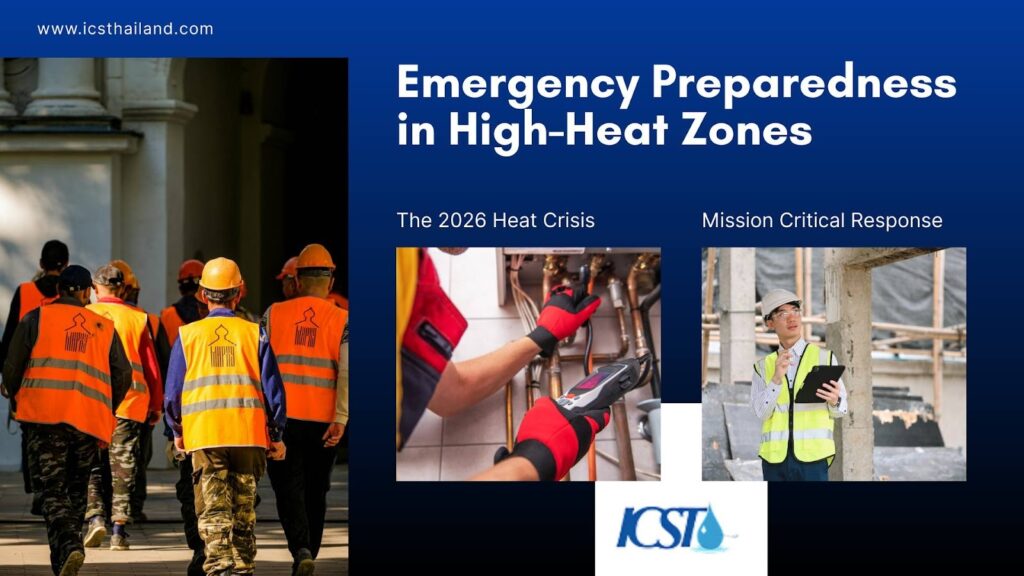
The 2026 Heat Crisis
Facilities must plan for extreme thermal events. Cooling equipment must possess the capacity to function under peak stress. Standard specifications often underestimate these temperature spikes, leading to catastrophic shutdowns.
Mission Critical Response
Industries such as heavy industrial manufacturing, geothermal energy, and acid-cooling environments require 24/7 technical assistance. Downtime results in massive financial losses. Immediate mobilization is necessary to ensure continuity.
- For urgent structural or mechanical failures, access our Cooling System Emergency Repair team for immediate mobilization.
Conclusion: Future-Proofing Your Cooling Infrastructure
The Southeast Asia cooling market continues to set new standards, with 2026 market trends demanding a strategic shift. We must move from reactive maintenance to proactive, water-efficient engineering. The Southeast Asia data center market and industrial sectors are evolving rapidly, creating both opportunities and challenges.
At ICST, we do not just supply cooling. We engineer the most sustainable thermal rejection path for your specific regional environment. We guarantee your facility is prepared to meet future demands.
Is your cooling strategy aligned with 2026 regional mandates? Contact ICST for a Technical Feasibility Study and secure your facility’s operational future.
Frequently Asked Questions (FAQs)
What is driving the growth of the Southeast Asia cooling market?
The market is expanding due to rising energy demand, urbanization, and the adoption of district cooling systems. Innovations like liquid cooling technology and water-efficient solutions also play a significant role.
Which industries benefit the most from the Southeast Asia cooling market?
Key beneficiaries include data centers, manufacturing, and urban infrastructure projects. High-performance data centers and industrial parks are witnessing significant growth in cooling demand.
What are the latest trends in the Southeast Asia cooling market?
Trends include the adoption of hybrid cooling systems, liquid immersion cooling, and the integration of AI-driven thermal management for efficient heat management.
How does the Southeast Asia cooling market address energy efficiency?
The market focuses on reducing energy consumption through advanced cooling solutions like thermal energy storage, low-GWP refrigerants, and district cooling systems.
What challenges does the Southeast Asia cooling market face?
Challenges include water scarcity, high humidity, and the need for skilled labor to maintain innovative cooling technologies in tropical climates.