The landscape of industrial cooling changed permanently in 2026. Adhering to regulations is no longer a simple box-ticking task. It is now the defining factor between operational continuity and forced shutdowns. We have entered a year where regulatory bodies do not merely suggest efficiency; they mandate it.
The Kigali Amendment moves into its most aggressive phase for “Group 1” developing nations. This includes Thailand. Simultaneously, regional benchmarks like Singapore’s carbon tax hike to S$45/tCO2e are setting new standards. This creates a challenging environment for facility managers. For industries across Asia, this represents a “Triple Threat” of carbon, water, and chemical restrictions.
International Cooling Solutions (Thailand) engineers systems that turn these pressures into advantages. We help facilities navigate this pivot year. You can move from voluntary efficiency to mandated transparency with our guidance. This post positions your facility to withstand scrutiny and thrive under new cooling environmental regulations.
Deciphering the Global & Regional Mandates
Three major regulatory forces converge in 2026. Each one carries significant financial implications for industrial operators who delay their response.
The Kigali Amendment (2026 Phase)
We are witnessing a critical milestone in the Montreal Protocol and its Kigali Amendment. The freeze on HFC consumption is now in full effect for developing nations. This means the supply of refrigerant gases with high global warming potential (GWP) will tighten rapidly.
Refrigerants such as R-404A are becoming high-cost liabilities. As supply drops to meet the 40% phasedown targets, prices will spike. Facilities that rely on these hazardous chemicals face soaring maintenance costs. Outdated models of refrigeration equipment will struggle to compete. ICST advises an immediate audit of your inventory to assess your exposure to this price volatility.
Thailand’s Building Energy Code (BEC) 2026
Thailand has updated its Building Energy Code to enforce stricter thermal standards. These rules apply specifically to new or retrofitted facilities larger than 2,000 square meters. The 2026 update focuses heavily on the building envelope and thermal comfort.
Your cooling systems play a central role here. If your cooling tower system does not meet specific energy efficiency ratings, the building will fail inspection. Compliance requires an integrated approach. The infrastructure must support the building’s total energy performance.
Singapore’s Carbon Pricing Signal
Singapore sets the pace for the ASEAN region. The carbon tax has increased to S$45 per metric ton of carbon dioxide equivalent (CO2e). This aggressive pricing signals a regional shift. Neighboring nations often follow Singapore’s regulatory lead regarding carbon emissions.
This tax renders inefficient, high-power designs obsolete. A system that was cost-effective five years ago now loses money through taxes. Industrial operators must shift toward cooling technologies that require less energy. This strategy lowers tax exposure and operational costs.
2026 Regulatory Matrix: Key Compliance Benchmarks
New rules create a complex web of requirements. We have categorized the key benchmarks that every facility manager must monitor this year.
Refrigerant Transition
- Target: GWP lower than 700 for new chillers.
- Regional Focus: Global and ASEAN markets.
- ICST Solution: We prioritize natural refrigerants. Ammonia and CO2 offer future-proof compliance. They are environmentally friendly and safe from phasedown schedules.
Leak Thresholds
- Target: Mandate for systems with over 15 lbs of HFC.
- Regional Focus: US, EU, and GCC standards influencing local policies.
- ICST Solution: We implement Automated Leak Detection (ALD). This technology provides real-time alerts. It prevents minor leaks of harmful substances from becoming major violations.
Energy Efficiency
- Target: Minimum COP/SEER benchmarks must be met.
- Regional Focus: Thailand and Israel.
- ICST Solution: High-Efficiency Variable Drives. These drives adjust motor speeds to match the exact cooling load. This prevents waste during partial load conditions and ensures high efficiency.
Water Stress
- Target: Mandatory Water Usage Effectiveness (WUE) reporting.
- Regional Focus: Middle East and Thailand.
- ICST Solution: Zero Liquid Discharge (ZLD) systems. We engineer solutions that recycle water. This drastically reduces freshwater intake and prevents water loss.
Carbon Pricing
- Target: S$45 per Tonne $CO_2e$.
- Regional Focus: Singapore and Pan-Asia.
- ICST Solution: Low-Power Geothermal and Solar integration. We offset grid power with renewable energy. This lowers the net footprint of your operations.
Proactive Compliance: Turning Risks into Strategic Advantage
Smart operators view these regulations as an opportunity. Early adopters secure a competitive edge and avoid regulatory compliance penalties.
Refrigerant Regulations and Transition
Investing in a new HFC-based system today is a financial risk. You risk purchasing electrical equipment that will be illegal or expensive to operate soon. This is the “Stranded Asset” trap. ICST guides you toward Hydrofluoroolefins (HFOs) and natural refrigerants. These alternatives safeguard your capital investment against future bans. They also possess a low global warming potential, which protects the ozone layer and prevents ozone depletion.
The “15 lb Rule” and Documentation
Documentation is now as important as maintenance. The 2026 shift introduces strict rules for leak repair. If your system holds as little as 15 pounds of HFC charge, you must maintain formal documentation.
Auditors will demand to see these logs. Inability to provide them may lead to penalties. We assist clients in setting up digital logging frameworks. This ensures regular audits go smoothly.
Emission Control for Cooling
Municipalities are cracking down on visible emissions. Plumes of drift from cooling towers are no longer acceptable in urban zones. They raise concerns about air pollution and affect nearby communities.
ICST utilizes Low Plume and Low Drift technology. Our designs minimize the visible vapor plume. This prevents water droplets from escaping the tower. This satisfies municipal air quality standards and reduces environmental impact. It also serves a crucial role in maintaining good community relations.
Strategic Advantage Through ESG
Early adopters of sustainable cooling secure lower insurance premiums. They also achieve higher Environmental, Social, and Governance (ESG) scores. Sustainable practices attract investors. In 2026, businesses that demonstrate a commitment to climate mitigation stand out.
Energy Efficiency Standards & Operational Cost
Energy-efficient operation in 2026 goes beyond simply buying a better motor. It requires a holistic view of the system.
Smart Cooling Systems
Static control systems cannot meet 2026 efficiency caps. Modern regulations require dynamic adjustments. We utilize AI-driven controls that optimize part-load efficiency. This is particularly vital for data centres that generate massive heat loads.
Systems rarely run at 100% capacity. AI controls adjust fan speeds and water flow to match the exact demand. This ensures you stay below new energy-intensity caps. It also extends the life of your equipment.
Optimized Footprint & Low Pumphead
Every watt of power you save reduces your tax exposure. We design for the “Energy-Water Nexus.” This approach recognizes that water pumps consume substantial electricity.
We optimize the physical footprint and lower the required pump head. This reduces the electricity use needed to move water. This dual saving lowers your water bill and your electricity consumption simultaneously. This approach plays a crucial role in cutting greenhouse gas emissions.
Sustainable Cooling Policies
Governments across the Middle East and Asia offer tax breaks for sustainable infrastructure. High-performance upgrades do not just avoid fines; they generate revenue through incentives. We help facilities structure their upgrades to qualify for “Green Building” status. This turns compliance costs into tax assets. It aids industries in reducing reliance on fossil fuels.
Water Stress & The “License to Operate”
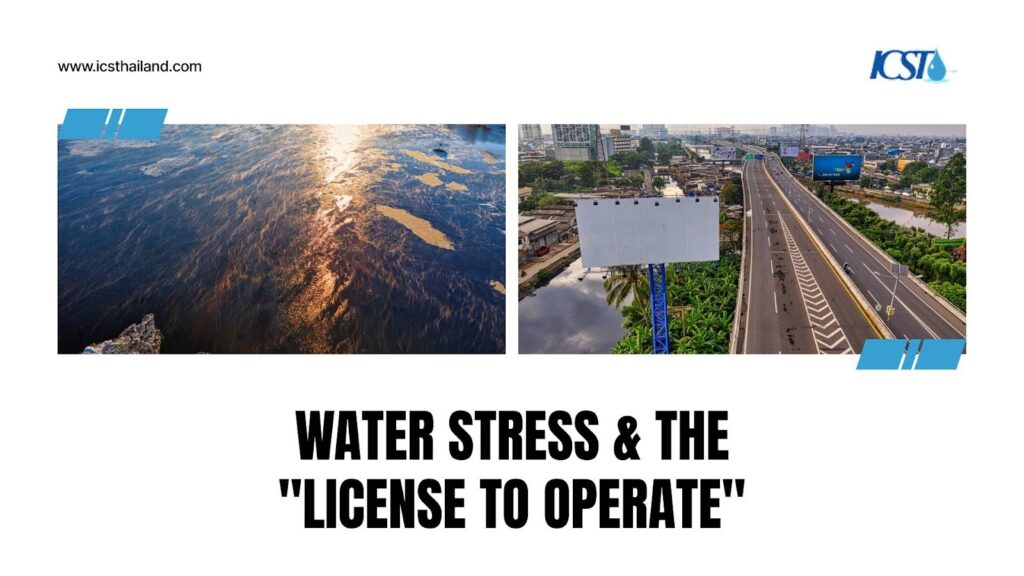
Climate change and rising temperatures make water scarcity a major concern. In drought-prone regions, your access to freshwater is your “license to operate.”
Water Conservation in Cooling
Regulators now demand transparency regarding water use. Facilities in water-stressed zones must disclose their Water Usage Effectiveness. High consumption can lead to caps on your production capacity.
You must prepare for these mandatory disclosures now. Implementing conservation technologies today ensures your numbers look good when the regulators ask to see them. This helps countries manage their resources better.
Climate Resilient Infrastructure
The Eastern Economic Corridor (EEC) in Thailand is pushing industries away from potable water. The future requirement is the use of “dirty water” or treated wastewater for heat rejection.
Standard towers clog and corrode when using low-quality water containing heavy metals. ICST engineers climate-resilient infrastructure. We design systems to handle seawater and treated wastewater. We use corrosion-resistant materials and specialized fill types. This capability preserves local freshwater supplies and ensures you meet 2026 requirements. It is a vital step in pollution control.
Conclusion: The ICST Path to Compliance
The Cooling environmental regulations of 2026 are not merely hurdles. They provide a roadmap for long-term industrial longevity. The era of cheap, inefficient air conditioning and HVAC systems has ended. The new era rewards transparency, efficiency, and innovative solutions.
Global warming drives these changes, but smart engineering provides the answer. ICST promises more than just equipment supply. We provide a strategic advantage through customized engineering. We understand the local nuance of Thai regulations and the broader pressure of international environmental standards.
Your cooling sector operations must adapt. Are your systems ready for the 2026 regulatory wave? Do not wait for a violation notice to act. Finding solutions early is the key to survival. Significantly increase your readiness today. Contact ICST for a Proactive Compliance Audit and future-proof your facility.
Frequently Asked Questions (FAQs)
What are the key 2026 cooling environmental regulations?
The 2026 regulations focus on reducing greenhouse gas emissions, transitioning to low global warming potential refrigerants, improving energy efficiency, and addressing water stress in cooling systems.
How does the Kigali Amendment impact cooling systems?
The Kigali Amendment mandates a phasedown of high-GWP refrigerants like R-404A, pushing industries to adopt natural refrigerants and energy-efficient cooling technologies.
What is Thailand’s Building Energy Code (BEC) 2026?
Thailand’s BEC 2026 enforces stricter thermal standards for facilities over 2,000 square meters, requiring energy-efficient cooling systems to meet compliance.
How can businesses reduce carbon emissions in cooling operations?
Businesses can reduce carbon emissions by adopting renewable energy-powered cooling systems, using natural refrigerants, and optimizing energy consumption with AI-driven controls.
Why is water conservation important for cooling systems in 2026?
Water conservation is critical due to mandatory water usage disclosures and increasing water scarcity. Sustainable cooling systems like Zero Liquid Discharge (ZLD) help reduce water loss and meet regulatory requirements.