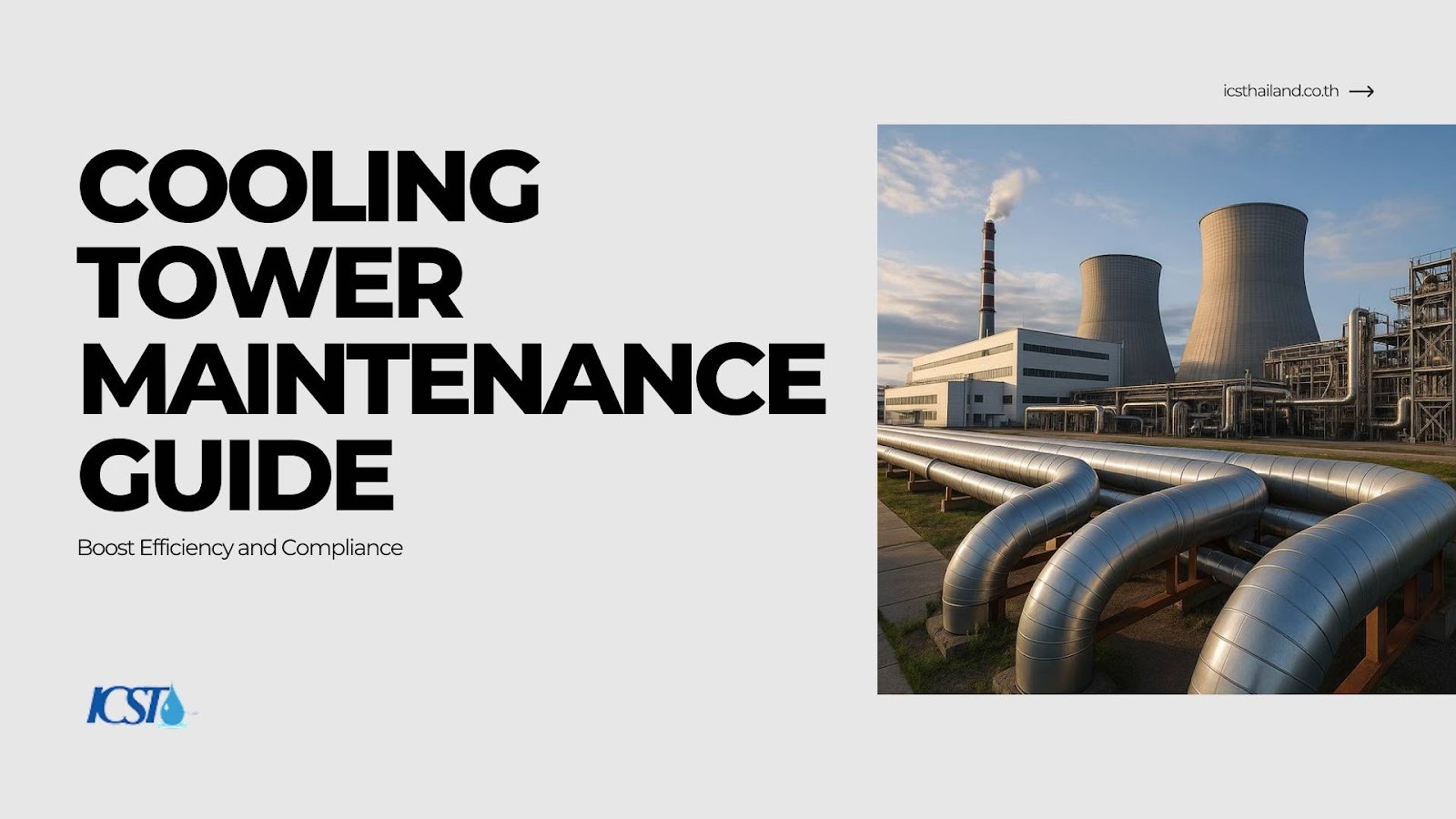
Imagine facing a sudden shutdown in the heart of peak production. Could one maintenance oversight set your entire operation back? The changing industrial landscape in 2026 demands more than routine checks. New regulations, such as Thailand’s Clean Air Act and lucrative BOI incentives, have raised the bar for liability, safety, and profitability.
This cooling tower maintenance guide reveals the strategic actions you need for both compliance and high efficiency. Outdated protocols and missed signals are costly; equip your facility with future-proof solutions and stay confidently competitive in an evolving market.
The 2026 Step-by-Step Maintenance & Service Schedule
This schedule integrates modern technology with proven engineering to meet the stringent demands of 2026. It moves beyond outdated annual checks, creating a dynamic system of oversight that identifies and corrects inefficiencies before they escalate.
Step 1: The “Digital Pulse” (Daily/Weekly)
Your first line of defense is constant, automated monitoring. We call this the “Digital Pulse” because it provides real-time feedback on your system’s core health metrics.
- IoT Conductivity Check: Automated controllers should continuously monitor and maintain Total Dissolved Solids (TDS) levels. The target is a precise 2,800 µS/cm. This prevents scale formation, which insulates heat transfer surfaces and drastically reduces efficiency.
- Motor Analysis: Your drive systems, including fans and pumps, are major energy consumers. You must verify that your motors meet the TIS 866-2561 standard for IE3 or IE4 efficiency classes. This is a non-negotiable requirement to qualify for the BOI tax incentives.
Step 2: The “Rain Zone” Audit (Monthly)
This audit focuses on the heart of your cooling tower: the water distribution system and fill media, or the “Rain Zone.”
- Nozzle Distribution Mapping: We identify and correct “dry spots” on the fill media. These areas allow air to bypass the water, a phenomenon known as thermal bypass. It is the leading cause of lost thermal efficiency in modern cooling towers. A comprehensive audit ensures uniform water coverage for optimal heat exchange.
- Drift Eliminator Inspection: To comply with the Clean Air Act, you must ensure drift rates remain below 0.001%. This prevents the release of aerosolized pathogens like Legionella and conserves water. Worn or damaged drift eliminators must be replaced immediately.
Step 3: Pathogen Defense (Quarterly)
Proactive biological control is essential for public health and system integrity. The 2026 standards render old methods obsolete.
- Rapid qPCR DNA Testing: The traditional 14-day culture method for Legionella detection is too slow. We use real-time quantitative polymerase chain reaction (qPCR) testing. This DNA-based analysis provides same-day results, allowing for immediate remediation and preventing dangerous outbreaks.
- Biocide Rotation: We have shifted to using biodegradable, PFAS-free biocidal agents. This practice is crucial for meeting the new 2026 industrial discharge bylaws, which strictly regulate water pollutants. Rotating biocides also prevents microorganisms from developing resistance.
Step 4: Structural Reinforcement (Semi-Annual)
The structural integrity of your cooling tower is fundamental to its longevity and safety, especially in harsh tropical climates.
- FRP Integrity Scan: We replace corroded steel components with Pultruded Fiber-Reinforced Polymer (FRP). This advanced composite material is immune to rust and corrosion, offering a 20-year service life even in humid, saline environments. Regular scans confirm the integrity of the tower’s framework.
The 2026 Master Maintenance Checklist
This table provides a clear overview of the required maintenance actions, their corresponding compliance standards, and the tangible impact on your bottom line.
| Component | Maintenance Action | 2026 Compliance Standard | Efficiency Impact |
| Fill Media | Scale/Biofilm Removal | 0.1mm Maximum Fouling | +10% Energy ROI |
| Drive Motors | Bearing/VFD Calibration | TIS 866 IE3/IE4 | 3-Year Payback |
| Water Quality | Real-time Blowdown | ASHRAE 188 / TIS 2134 | -20% Water Waste |
| Structure | FRP Corrosion Audit | Zero-Rust Policy | Asset Life Extension |
| Drift System | Eliminator Replacement | <0.001% Drift Rate | Clean Air Act Compliance |
The ICST “Critical Requirements” Engineering Advantage
Standard maintenance is not enough. We engineer solutions for the most demanding industrial environments in Asia.
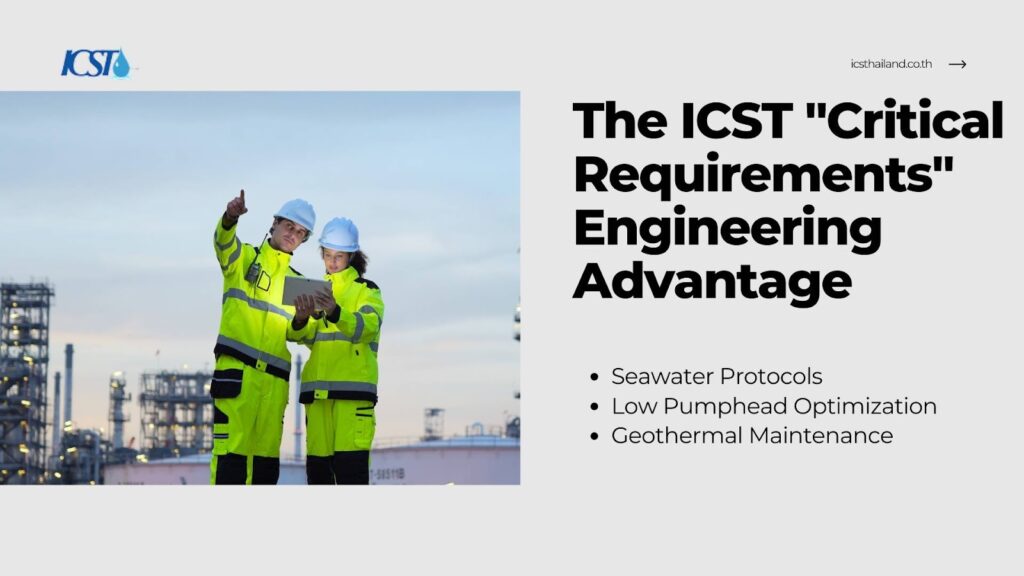
Seawater Protocols & Corrosion‑Resistant Design
We develop specialized seawater cooling system maintenance protocols for coastal industrial parks, using corrosion‑resistant materials such as Titanium heat exchanger tubing. Titanium resists chloride corrosion and extends equipment life in harsh marine environments, maintaining efficient heat transfer without frequent replacement.
Low Pumphead Optimization for Lower Operating Costs
Our engineers assess system hydraulics and re‑tune pump flow logic to reduce parasitic pumping losses. Optimizing pumphead and flow reduces electricity expenditure by up to 15%, improves energy efficiency, and enhances cooling system performance with lower lifecycle operational costs. (This reflects practical energy efficiency optimization principles in fluid systems.)
Geothermal Loop Maintenance & Scaling Prevention
We provide advanced maintenance for mineral‑rich geothermal cooling loops, employing proprietary techniques that prevent rapid scaling and fouling. These methods minimize the typical 12‑month thermal degradation cycle, preserve heat exchanger efficiency, and reduce shutdowns due to deposits and performance loss.
Preparing for the 2026 Efficiency Audit
Success in 2026 requires preparation. Your maintenance activities must be documented and aligned with official standards to secure financial benefits and prove compliance.
Baseline Thermal Scan
A Baseline Thermal Scan records your cooling tower’s current approach, which is the temperature difference between the cold water outlet and the ambient wet-bulb temperature. This measurement establishes the system’s current thermal performance, providing a reliable reference point to track efficiency improvements over time. By understanding the baseline, operators can identify underperforming units, detect early signs of fouling or scaling in the cooling tower fill media, and plan targeted maintenance or upgrades. Regular thermal scans help optimize heat transfer, reduce energy consumption, and maximize operational efficiency for industrial facilities.
Efficiency Upgrade Plan
The Efficiency Upgrade Plan is a structured roadmap that aligns your cooling tower maintenance, system enhancements, and equipment upgrades with industry best practices and regulatory frameworks, such as BOI Notification No. 5/2568 in Thailand. This plan ensures your cooling system operates at peak efficiency, minimizes energy wastage, and helps your facility qualify for potential tax incentives. By creating a formalized plan, you can prioritize high-impact upgrades, schedule preventive maintenance, and implement water and energy efficiency measures systematically. This approach not only improves cooling tower performance but also extends the life of critical components, including fill media and pumps.
Digital Logbook Integration
Digital Logbook Integration involves implementing an automated system to record all cooling tower maintenance activities, water quality measurements, and energy usage data. Unlike traditional paper logs, a digital logbook provides real-time visibility into system performance and maintenance history. It ensures compliance with environmental regulations, simplifies reporting for audits, and offers detailed insights into operational trends. By integrating sensors, IoT devices, or software dashboards, facilities can detect anomalies early, schedule timely interventions, and maintain optimal thermal performance. Digital logbooks also support predictive maintenance strategies, protecting fill media, heat exchangers, and other components from scaling, fouling, or inefficient operation.
Conclusion: Future-Proofing Your Industrial Assets
Industrial cooling tower maintenance guide in 2026 is crucial for operational success, compliance, and maximizing profitability. Adhering to new legal mandates and financial incentives, such as the Thailand Clean Air Act and BOI Notification No. 5/2568, ensures your facility meets the highest standards for efficiency, safety, and environmental responsibility.
By following a precise, proactive maintenance schedule and leveraging innovative engineering solutions, your organization can significantly reduce risks, lower costs, and extend asset lifespan.
Now is the time to transform your approach, move beyond basic upkeep, and invest in world-class industrial cooling tower maintenance. Take the lead in sustainability and performance. Ready to elevate your facility? Contact our expert ICST team today and secure your place at the forefront of industrial excellence.
Frequently Asked Questions
What is the importance of cooling tower maintenance in 2026?
Proper maintenance ensures compliance with the Thailand Clean Air Act (2026), improves energy efficiency, and reduces operational costs.
How does IoT help in cooling tower maintenance?
IoT enables real-time monitoring of Total Dissolved Solids (TDS) and motor efficiency, ensuring optimal performance and compliance with TIS 866-2561 standards.
What are the benefits of using FRP in cooling towers?
Fiber-Reinforced Polymer (FRP) resists corrosion, extends asset life, and meets the zero-rust policy for tropical climates.
How can I detect Legionella in cooling towers quickly?
Use rapid qPCR DNA testing for same-day detection, replacing outdated 14-day culture methods.
What is the impact of drift eliminators on compliance?
Drift eliminators reduce aerosolized pathogens and ensure drift rates stay below 0.001%, meeting Clean Air Act requirements.