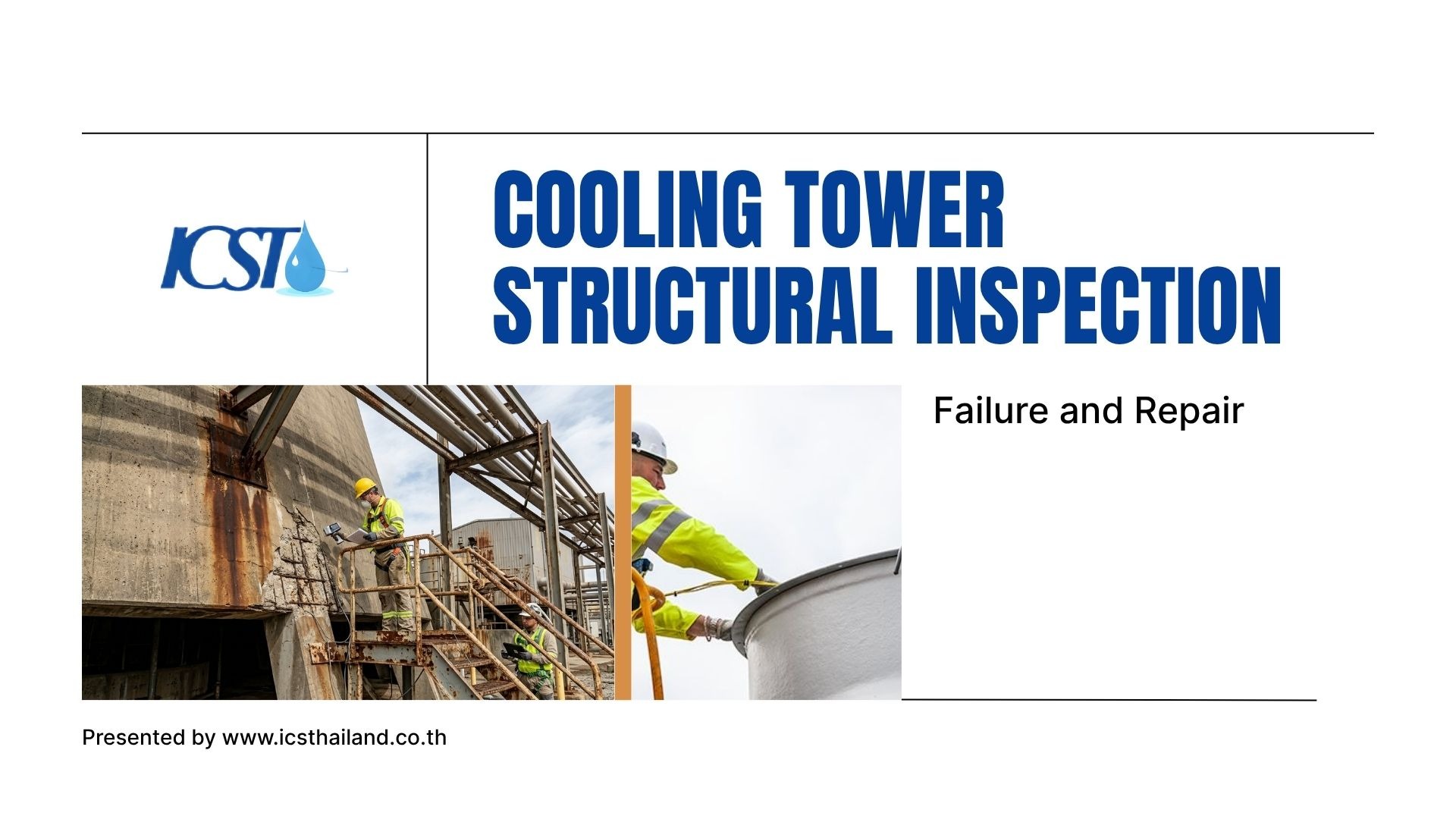
Cooling tower structural inspection is essential for preventing catastrophic equipment failure, protecting personnel safety, and maintaining long-term operational reliability. Structural deterioration often develops gradually through vibration fatigue, moisture intrusion, chemical exposure, and aging materials.
Common issues such as FRP delamination, anchor bolt corrosion, and excessive fan deck deflection can severely weaken tower stability if left undetected. Modern inspections combine CTI guidelines, vibration analysis, load calculations, and repair standards to evaluate structural integrity accurately. A systematic inspection program helps plant operators identify high-risk conditions early, minimize downtime, and extend cooling tower service life safely.
Why Cooling Tower Structures Fail Over Time
Cooling towers operate in one of the harshest industrial environments. Constant exposure to water, heat, airflow, chemicals, and vibration places continuous stress on structural components. Unlike static industrial structures, cooling towers experience dynamic loading every hour of operation.
Over time, these operating conditions slowly weaken structural members and connection points. Most structural failures do not happen suddenly. Small cracks, hidden corrosion, and material fatigue gradually expand until the structure can no longer handle operational loads safely.
Several factors accelerate structural deterioration:
- Continuous fan vibration and cyclic loading
- Moisture penetration into steel and FRP components
- Corrosion caused by chemical exposure and drift
- UV degradation of fiberglass reinforced plastic materials
- Thermal expansion and contraction cycles
- Improper maintenance practices
- Overloading after tower modifications or retrofits
High vibration levels are particularly destructive because they continuously stress bolts, welds, fan decks, and support frames. Even small imbalances can create fatigue cracks over time.
Aging FRP structures create additional concerns. Fiberglass components can lose strength internally long before visible damage appears. This hidden deterioration increases the risk of unexpected structural instability.
Structural Standards Used During Cooling Tower Inspection
Industrial guidelines dictate how engineers evaluate system safety during a cooling tower structural inspection. These engineering standards ensure inspectors apply consistent criteria across all facilities.
CTI Structural Inspection Guidelines
The Cooling Technology Institute (CTI) provides industry-recognized recommendations for cooling tower evaluation and maintenance. CTI guidelines focus heavily on structural stability, vibration monitoring, and mechanical integrity.
CTI inspections commonly evaluate:
- Fan deck condition
- Structural framing integrity
- Mechanical equipment supports
- Drift eliminator stability
- Basin and foundation condition
- Access platform safety
CTI standards emphasize proactive identification of fatigue-related failures before structural collapse occurs.
ASCE Structural Load Standards
The American Society of Civil Engineers (ASCE) establishes structural load requirements for industrial equipment and support systems.
These standards evaluate:
- Wind loading
- Seismic loading
- Dynamic fan loads
- Dead loads and live loads
- Structural deflection limits
ASCE principles help engineers determine whether cooling tower structures can safely handle operational stresses.
OSHA Safety Compliance Requirements
Cooling tower inspections must also comply with OSHA safety regulations. Unsafe access platforms, deteriorated handrails, and unstable structural surfaces create major personnel hazards.
OSHA requirements focus on:
- Structural safety
- Fall protection systems
- Safe maintenance access
- Operational stability
- Worker protection procedures
ACI and Concrete Repair Standards
Concrete basins and foundations are inspected using American Concrete Institute (ACI) standards. These evaluations identify:
- Foundation cracking
- Settlement
- Rebar corrosion
- Concrete spalling
- Structural shifting
Foundation deterioration can destabilize the entire cooling tower structure if ignored.
Critical Areas Included in a Cooling Tower Structural Inspection
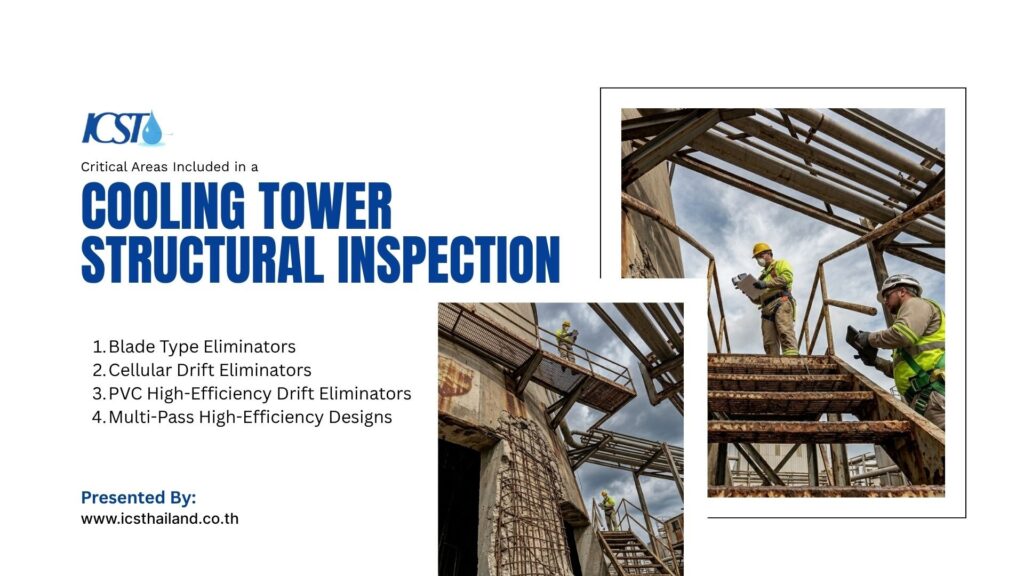
During a cooling tower structural inspection, engineers target specific zones that experience the highest stress. Evaluating these areas determines the true health of the asset.
Fan Deck Inspection
The fan deck supports rotating mechanical equipment that generates continuous vibration and dynamic loading. This area experiences some of the highest structural stress within the entire tower.
Inspectors evaluate:
- Deck deflection
- Surface cracking
- Joint separation
- Structural movement
- Water accumulation
- Mechanical support stability
Excessive deck movement often indicates weakening support members or fatigue damage. Fan deck vibration problems may also signal:
- Fan imbalance
- Gearbox misalignment
- Structural resonance
- Loose supports
Ignoring these warning signs increases the risk of catastrophic mechanical failure.
Anchor Bolt Corrosion Assessment
Anchor bolts secure the cooling tower structure to the foundation. Corrosion in these components severely compromises structural stability.
Inspection procedures evaluate:
- Rust expansion
- Bolt section loss
- Concrete cracking
- Grout deterioration
- Base plate corrosion
- Bolt loosening
Hidden corrosion beneath base plates is especially dangerous because the damage may remain invisible during routine visual inspections.
FRP Delamination Inspection
FRP delamination occurs when fiberglass laminate layers separate internally due to moisture penetration, aging, or stress loading. This failure mechanism weakens structural panels significantly.
Inspectors commonly use:
- Tap testing
- Infrared scanning
- Ultrasonic inspection
- Visual crack analysis
Delamination frequently develops around:
- Fan stacks
- Access doors
- Structural joints
- High-vibration areas
FRP components may appear intact externally while suffering severe internal deterioration.
Structural Steel and Support Frame Evaluation
During a cooling tower structural inspection, the metal framework requires precise measurements to ensure safety. Engineers measure any section loss and document heavy rust scale on the beams. They also check for joint fatigue and visible distortion across the load-bearing members.
Engineering Formulas Used in Structural Inspection
Engineers rely on mathematics to prove system stability. These calculations dictate the required repair timeline.
Fan Deck Deflection Formula
Engineers use specific equations to measure structural bending.
Where:
δ = beam deflection
w = distributed load
L = beam length
E = modulus of elasticity
I = moment of inertia
Engineers calculate excessive fan deck movement under operational loads using this equation. Excessive deflection increases fatigue risk exponentially. Vibration worsens structural stress, leading to sudden material failure.
Anchor Bolt Tensile Stress Formula
Determining fastener strength prevents sudden column detachment.
σ = F / A
Where:
σ = tensile stress
F = applied force, Cooling Tower Structural Inspection
A = bolt cross-sectional area
Engineers determine whether fasteners remain structurally safe after corrosion damage using this calculation. They replace hardware immediately when the tensile stress exceeds the safe yield strength.
Vibration Frequency Formula
Resonance destroys equipment faster than any other force.
f = (1 / 2π) √(k / m)
Where:
f = natural frequency
k = stiffness
m = mass
Engineers analyze structural resonance, fan vibration, and dynamic instability. Matching the natural frequency with the operational speed causes destructive amplification.
Step-by-Step Cooling Tower Structural Inspection Procedure
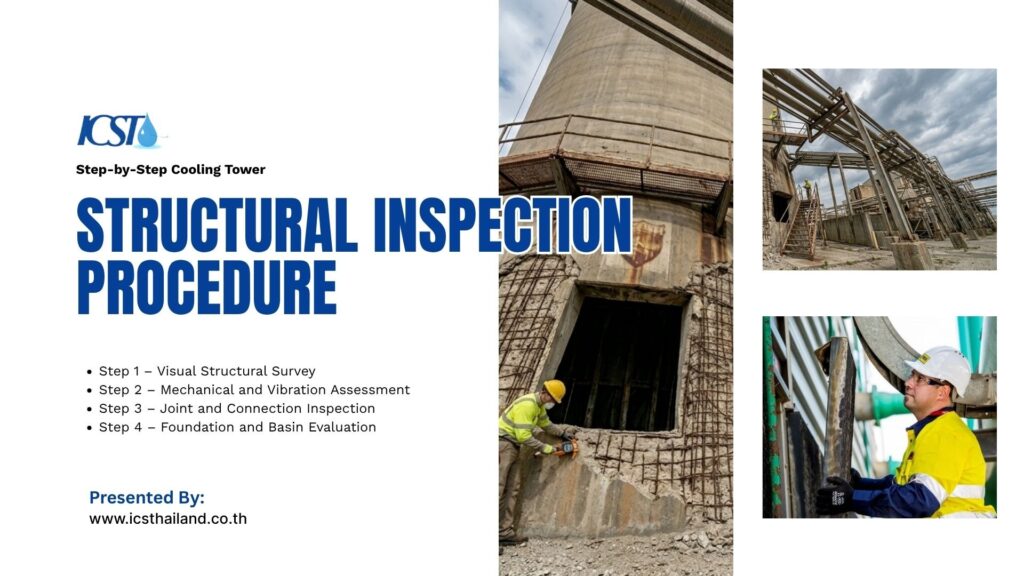
A systematic approach to a cooling tower structural inspection guarantees inspectors won’t miss critical defects. Facility managers depend on this rigid procedure to ensure safety and compliance.
Step 1 – Visual Structural Survey
The inspection begins with a complete visual evaluation of all accessible structural components. Inspectors document:
- Cracks
- Corrosion patterns
- Coating deterioration
- Structural distortion
- Water damage
- Joint separation
Visual inspections help prioritize high-risk areas requiring detailed analysis.
Step 2 – Mechanical and Vibration Assessment
Mechanical evaluations focus on rotating equipment stability and dynamic loading behavior. Inspection activities include:
- Fan current analysis
- Gearbox vibration testing
- Resonance monitoring
- Bearing evaluation
- Shaft alignment checks
Abnormal vibration patterns often reveal hidden structural problems.
Step 3 – Joint and Connection Inspection
Structural joints experience high stress concentration during operation.
Inspectors evaluate:
- Loose fasteners
- Fatigue cracks
- Bolt hole elongation
- Joint displacement
- Weld deterioration
Connection failures frequently initiate larger structural collapses.
Step 4 – Foundation and Basin Evaluation
Foundations support the entire cooling tower structure. Any instability in this area affects overall structural integrity.
Inspection areas include:
- Concrete cracking
- Settlement
- Rebar exposure
- Basin movement
- Water intrusion
Foundation deterioration often develops slowly but creates major long-term structural risks.
Cooling Tower Repair Criteria and Structural Standards
Data drives all maintenance decisions following the evaluation. Engineers classify every defect to build a targeted remediation plan.
When Minor Repairs Are Acceptable
Localized repairs remain acceptable when structural integrity is still maintained. Typical repairable conditions include:
- Surface corrosion
- Small localized cracks
- Limited FRP delamination
- Minor coating failure
- Small joint defects
Proper repairs can restore operational reliability safely.
When Full Structural Replacement Is Necessary
Severe deterioration often makes repair economically or structurally impractical. Replacement becomes necessary when inspections identify:
- Major section loss
- Progressive structural deflection
- Severe anchor bolt failure
- Widespread FRP deterioration
- Unsafe vibration conditions
- Significant foundation instability
Cosmetic repairs should never replace proper structural rehabilitation.
Repair Materials and Structural Reinforcement Standards
Using the correct materials prevents repeated maintenance failures. Engineers specify precise compounds for industrial environments.
FRP Structural Repair Systems
Composite repairs require exact resin compatibility to bond correctly. Technicians apply reinforcement layering to restore the original tensile strength. They finish the repair with UV-resistant coatings to prevent future sun damage.
Steel Reinforcement Standards
Steel repairs require durable corrosion-resistant materials. Common repair upgrades include:
- Galvanized structural steel
- Stainless hardware
- Protective coating systems
- Reinforcement welding
- Corrosion-resistant fasteners
Repair quality directly affects long-term structural reliability.
Preventive Maintenance Strategies That Reduce Structural Failure
Proactive management extends the operational lifespan of the system. Managers implement strict policies to protect their capital investments.
Scheduled Structural Audits
Annual engineering inspections catch small problems early. Regular vibration trend analysis warns operators about mechanical imbalance. Continuous structural load evaluation confirms the framework still supports the required weight safely.
Environmental Exposure Management
Controlling the water path protects the dry structural components. Drift reduction technologies and proper water containment systems limit internal splashing. Aggressive corrosion prevention programs and applied UV protection shields preserve the building materials.
Key Structural Risks to Watch For
| Inspection Area | Common Failure | Risk Level | Recommended Action | Engineering Insight |
| Fan Deck | Excessive deflection | High | Structural reinforcement | Vibration accelerates fatigue |
| Anchor Bolts | Corrosion | Critical | Replacement | Hidden deterioration spreads rapidly |
| FRP Panels | Delamination | High | Composite repair | Internal weakness reduces strength |
| Steel Supports | Section loss | Critical | Reinforcement/replacement | Load redistribution becomes dangerous |
| Basin Foundation | Settlement/cracking | High | Concrete rehabilitation | Foundation movement destabilizes tower |
Final Thoughts
A thorough cooling tower structural inspection dictates the longevity of your industrial cooling system. Engineers prevent catastrophic failures by enforcing strict repair criteria and applying advanced deflection analysis. Monitoring mechanical vibration, assessing the extent of FRP delamination, and verifying absolute anchor bolt corrosion limits keep your facility safe.
Using precise engineering formulas and executing systematic inspections eliminates the guesswork from facility maintenance. Proactive repair planning saves capital and prevents dangerous equipment collapse.
Facility operators must schedule comprehensive audits today. Contact ICST to secure expert cooling tower structural inspection services, professional vibration analysis, and complete system rehabilitation.
Frequently Asked Questions
What causes cooling tower structural failure?
Vibration from rotating mechanical equipment constantly stresses the structural joints. Aggressive corrosion attacks the metal components while prolonged moisture exposure weakens the composite materials. Fatigue loading ultimately fractures the beams over years of continuous operation.
How do inspectors identify FRP delamination?
Engineers conduct physical tap testing to hear hollow spaces within the fiberglass. They deploy infrared scanning to detect internal moisture pockets. Advanced ultrasonic inspection devices measure the exact depth of the internal laminate separation.
Why is fan deck deflection dangerous?
Excessive movement creates extreme structural instability across the upper platform. Bending beams cause severe fan misalignment, which destroys the gearbox and motor. This continuous movement generates aggressive fatigue cracking throughout the main support columns.
What structural standards apply to cooling towers?
Engineers follow CTI guidelines to evaluate the specific cooling equipment components. They apply ASCE loading standards to calculate wind and dynamic forces accurately. OSHA safety requirements and ACI repair standards dictate the safety access and concrete restoration protocols.
When should anchor bolts be replaced?
Maintenance teams must replace bolts showing severe corrosion immediately. Engineers demand new hardware when ultrasonic testing reveals significant cross-sectional area loss. Fastener replacement becomes mandatory when foundation instability causes the original anchors to loosen or bend.