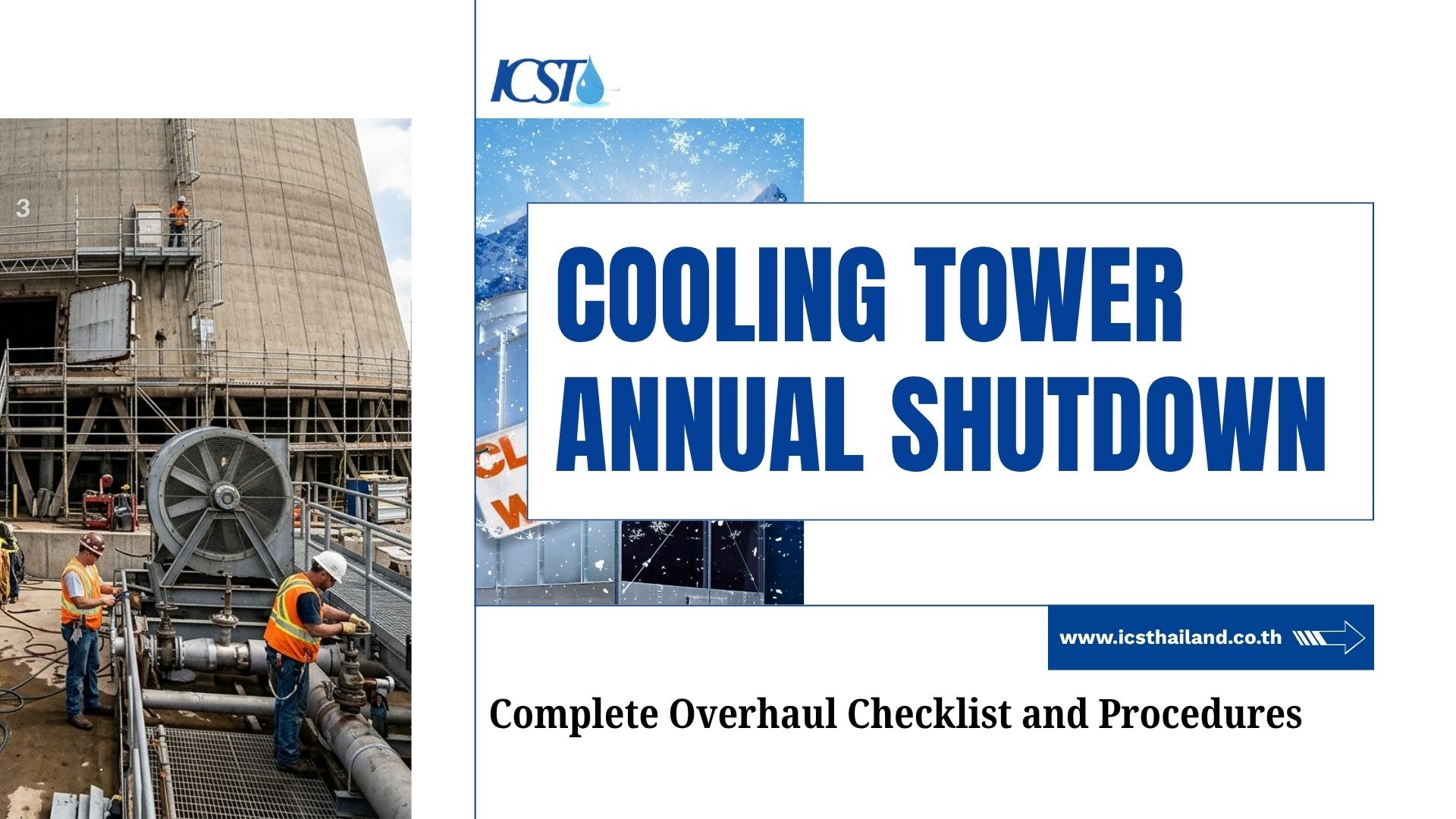
A cooling tower annual shutdown is a scheduled offline period when maintenance teams inspect and restore every part of the cooling tower system, from critical components like the gearbox and fan assembly to the basin and distribution piping.
Facility managers rely on this event to catch hidden wear that routine cooling tower maintenance cannot reach while the unit keeps running, since the tower works alongside heat exchangers as one connected cooling system. Done correctly, it prevents mechanical failure, protects against Legionella risk, and preserves operational efficiency heading into the next full cooling season.
Why Annual Cooling Tower Shutdowns Are Operationally Critical
Continuous Operation Creates Hidden Mechanical Degradation
Year-round operation causes gradual wear on all moving and static components. Without a cooling tower annual shutdown, you cannot identify hidden issues during normal operation because the equipment constantly runs under heavy loads.
Routine tower maintenance catches obvious problems, but it cannot inspect what stays hidden inside the entire system while water keeps flowing.
Regular inspections require stopping the system completely.
- Continuous running damages fan shaft bearings and creates gearbox stress over time.
- Fouling and corrosion develop quietly inside the casing.
- Unchecked vibration slowly degrades mechanical mounts.
Minor Problems Become Major Failures Without Shutdown Inspection
Small defects escalate rapidly into catastrophic breakdowns if you ignore them. Catching these anomalies early saves facilities significant repair capital. Operators must inspect internal areas carefully to find early warning signs.
- Fan imbalance destroys gearboxes and structural supports.
- Drift eliminator damage allows costly water loss.
- Structural corrosion weakens the entire tower framework.
- Water distribution blockages create severe thermal inefficiencies.
- Seal deterioration introduces water into electrical components.
Operational Risks of Skipping Annual Shutdowns
Facilities face massive financial and safety consequences when they delay major maintenance events. Skipping these procedures degrades system performance drastically. Your plant assumes unnecessary risks by avoiding scheduled downtime.
Pre-Shutdown Planning and Isolation Procedures
Successful shutdowns start long before the tower goes offline. Proper planning is essential for an effective cooling tower annual shutdown, as poor preparation often leads to incomplete inspections, extended downtime, and missed repair opportunities. Strong cooling tower management treats this planning stage as seriously as the physical work itself.
Maintenance teams should first define:
- Inspection scope
- Repair priorities
- Spare part requirements
- Safety procedures
- Shutdown timeline
Facilities operating multiple or existing towers must coordinate cooling demand carefully to prevent process interruptions during maintenance, since the shutdown process for one unit often affects backup capacity across the site.
Lockout/Tagout LOTO and Electrical Safety Requirements
Safety protocols protect personnel from fatal accidents during maintenance. Workers must apply strict isolation of motors and control systems. Everyone involved needs comprehensive safety compliance training.
- Lockout tagout prevents accidental startup by unauthorized personnel.
- Personal protective equipment requirements shield workers from chemical exposure.
- System depressurization removes stored energy hazards completely.
- Verification steps confirm zero voltage before work begins.
Basin Cleaning and Sludge Removal Procedures
Why Basin Cleaning Is One of the Most Important Shutdown Tasks
Sediment accumulation breeds dangerous bacterial growth and damages mechanical parts like seals and impellers. Performing thorough basin cleaning removes biological sludge effectively, including any remaining water left sitting in the cold water basin after the system is idled.
Eradicating scale deposits protects the entire cooling loop.
- Heavy debris damages expensive pump impellers rapidly.
- Biological growth creates severe water quality issues.
- Mud accumulation hides concrete or fiberglass structural damage.
- Clean basins improve chemical treatment effectiveness immediately.
Common Contaminants Found During Shutdown
During a cooling tower’s annual shutdown, you’ll see how towers act like a massive air scrubber, pulling atmospheric debris inside. It’s common to find mud and dirt coating the basin floor, along with heavy corrosion debris flaking off aging metal components.
- Algae growth coats wetted surfaces in sunlight-exposed areas.
- Microbiological slime creates slick surfaces and health hazards.
- Airborne pollen and leaves clog pump suction strainers.
- Chemical precipitation forms a hard scale on the bottom surfaces.
Recommended Basin Cleaning Procedure
Technicians must execute a methodical approach to restore basin hygiene. They drain the tower completely first. Workers then remove loose debris using shovels and buckets.
- Pressure wash surfaces thoroughly to remove stubborn scale buildup.
- Vacuum sludge using industrial wet extraction equipment.
- Flush the sump carefully to clear all connecting pipework.
- Inspect the coating condition closely once the surface dries.
Cooling Tower Fill Inspection and Fouling Evaluation
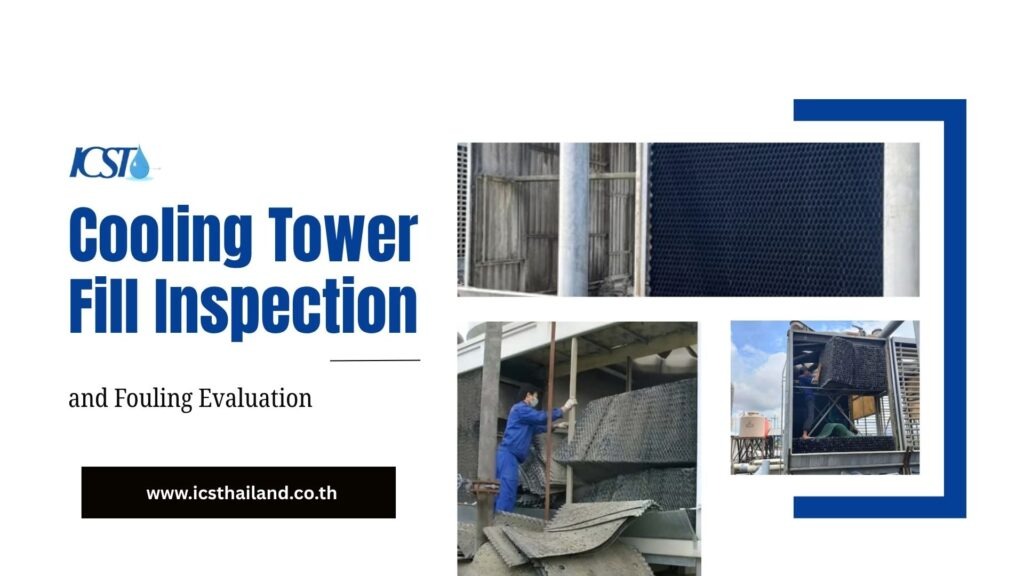
Why Fill Condition Determines Cooling Performance
Heat transfer dependency relies entirely on clean fill surfaces. The fill media maximizes the importance of air-water contact for optimal cooling. You experience reduced efficiency from fouling almost immediately.
- Clean fill allows maximum evaporation and temperature drop.
- Fouled media restricts airflow and increases fan energy consumption.
- Damaged packs channel water poorly and bypass the cooling air.
Types of Fill Fouling Found During Shutdown
Contaminants build up inside the honeycomb structure over time. Biological fouling blocks narrow passages completely. Hard scale accumulation forms when water chemistry drifts.
- Particulate Blockage: Traps dirt and airborne debris, restricting airflow.
- Oil Contamination: Coats surfaces, hindering proper water evaporation.
- Silt Deposition: The immense weight of accumulated silt can crush and collapse lower fill layers.
- Chemical Attack: Exposure to certain chemicals can make plastic components brittle, leading to premature failure.
Fill Inspection Checklist
Evaluators must physically examine the media packs thoroughly. They look for broken sheets that disrupt water flow. Checking for sagging sections reveals internal support failures.
- Airflow Restriction Measurement: Use this to identify areas with heavy fouling and blockages.
- Water Distribution Observation: Watch for uneven water patterns, which can signal blocked spray nozzles.
- Brittleness Test: Conduct this test on plastic components to estimate the remaining service life of the material.
- Sample Pack Weighing: Weighing sample packs will confirm the total weight of the scale and silt buildup.
Gearbox Inspection and Gearbox Oil Change Procedures
Why Gearbox Failures Increase After Long Operating Cycles
During a cooling tower annual shutdown, it’s crucial to inspect the gearbox. After long operating cycles, continuous thermal stress can silently degrade mechanical components. Lubrication may break down, leaving internal gears to grind against each other.
Without proper maintenance and oil changes during the shutdown, you will see accelerated gear wear.
- Bearing fatigue causes catastrophic mechanical seizures suddenly.
- High operating temperatures destroy oil viscosity rapidly.
- Water intrusion rusts precision-machined steel surfaces quickly.
- Misalignment amplifies rotational forces and destroys seals.
Gearbox Oil Inspection Procedure
Technicians evaluate the drained fluid to determine internal health. Oil discoloration indicates extreme heat exposure. Finding metal particles warns of active internal destruction.
- Milky Appearance: If the oil looks milky, it’s a sign of water contamination, which reduces its ability to lubricate.
- Burnt Smell: A burnt odor is a clear indicator that the gearbox has been severely overheating.
- Sludge Buildup: The presence of sludge can clog small internal passages, preventing proper lubrication.
- Lab Analysis: For precise data on wear and tear, send an oil sample for laboratory analysis.
Proper Gearbox Oil Change Process
Executing a flawless gearbox oil change extends mechanical life significantly. Technicians warm the gearbox slightly to improve oil flow. They drain the oil completely into approved containers.
- Check for Wear: Inspect the magnetic drain plug for any metal shavings, which can indicate internal wear.
- Clean Thoroughly: If you notice a significant amount of sludge, flush the gearbox housing to remove any buildup.
- Use the Right Oil: Refill the gearbox with the precise grade of oil recommended by the manufacturer to ensure optimal performance.
- Remove Trapped Air: Bleed any air from the external sight glass lines to guarantee accurate oil level readings.
Motor Inspection and Megger Testing Procedures
During a cooling tower annual shutdown, it’s crucial to address potential motor failures, which often stem from insulation degradation rather than mechanical damage. The constant moisture exposure inside cooling towers creates a high-risk electrical environment that needs thorough inspection.
A motor megger test evaluates insulation resistance and identifies hidden electrical deterioration before startup.
Why Motor Insulation Testing Is Mandatory During Shutdown
Cooling tower environments expose electrical equipment to constant humidity. Moisture damage attacks internal copper windings aggressively. You must prevent insulation degradation to ensure plant safety.
- Electrical failure prevention saves thousands in rewind costs.
- Wet environments promote rapid electrical short circuits.
- Testing verifies the motor can handle startup power surges.
- Documenting readings helps predict future motor failures accurately.
Understanding the Motor Megger Test
A motor megger test evaluates the internal electrical resistance. The purpose of insulation resistance testing involves pushing high voltage through windings. Technicians master voltage application techniques to avoid damaging equipment.
- Interpretation basics require comparing current readings to historical data.
- The test pushes one thousand volts into the motor leads.
- A megohmmeter measures the current leakage to the ground.
- Higher resistance numbers indicate healthier internal motor insulation.
Fan Assembly and Mechanical Drive Inspection
Fan Blade Inspection Criteria
Massive rotating blades experience extreme aerodynamic stress constantly. Inspectors look closely for leading-edge cracks. Inspectors should evaluate:
- Blade cracking
- Corrosion damage
- Pitch angle consistency
- Fastener security
- Surface erosion
Imbalanced blades increase vibration and overload bearings.
Fan Stack and Drift Eliminator Inspection
The cylinder focuses air directly through the rotating blades. Drift eliminator damage allows chemical water to escape. Fan cylinder deterioration drastically reduces aerodynamic efficiency, so a careful visual inspection of the stack belongs in every shutdown.
- Missing hardware causes the stack to vibrate violently.
- Large gaps bypass air around the designated cooling zones.
- Broken eliminator panels create environmental compliance violations.
- Ice accumulation tears lightweight components during winter operation.
Water Distribution System Inspection and Cleaning
Proper water distribution directly affects cooling efficiency. A thorough inspection during a cooling tower annual shutdown is crucial, as uneven flow creates dry spots across the fill, which can significantly reduce thermal performance.
Common Distribution Problems Found During Shutdown
Proper water flow ensures maximum heat rejection capabilities. Nozzle blockage creates dry spots on the fill media. Uneven flow starves certain sections of necessary cooling water.
- Scale deposits restrict the internal distribution piping diameter severely.
- Pipe corrosion weakens headers and branch arms.
- Silt buildup blocks the very end of distribution pipes, and clogged strainer screens upstream make the problem worse.
- Broken support brackets allow pipes to sag dangerously.
Spray Nozzle Inspection Procedure
Technicians remove nozzles to check internal mechanisms manually. They clean nozzle clogging using specialized soft-bristle brushes. Checking for orifice wear ensures proper water droplet size.
- Spray pattern verification requires running water through the system.
- Missing nozzles create massive water columns that crush fill.
- Hard water scale requires chemical soaking for complete removal.
- Damaged splash plates fail to disperse water evenly.
Hot Water Basin Inspection
Crossflow towers utilize upper basins to distribute hot water. Inspectors check structural integrity around high-stress pipe penetrations. They clear the overflow condition to prevent flooding.
- Biological growth thrives in warm, shallow water environments.
- Missing target nozzles destroy the intended water distribution pattern.
- Cracked basin floors leak hot water outside the tower.
- Debris clogs gravity-fed metering orifices completely.
Winterizing the Tower: Protecting Against Freezing Temperatures
Not every shutdown ends in a quick restart. Towers taken offline heading into colder months, or any unit sitting idle through an off season, need a separate layer of protection that routine shutdown tasks do not cover.
- Drain the system completely: Draining the cooling tower prevents freezing and corrosion, since even a small amount of standing water left in the basin, sump, or system piping can freeze, expand, and crack fittings.
- Clear low point drains and dead legs: Low point drains and dead legs in the piping trap water even after the main basin is completely drained, and both need to be opened and checked individually.
- Activate freeze-protection equipment: Motor space heaters and basin heaters keep critical components above freezing during freezing weather, and both should be tested before the cold season arrives, not after the first hard freeze.
- Protect exposed metal surfaces: Apply rust preventative to protect metal surfaces during shutdown, since bare steel exposed to condensation and freezing temperatures corrodes far faster than during normal operation.
- Plan for the extended shutdown: A tower sitting idle for an extended period needs a documented extended shutdown plan, not just a one-time drain-down, covering periodic checks until restart.
Legionella Control and NYC Local Law 77 Compliance
A shutdown protects mechanical equipment, but it can just as easily create a public health risk if water quality is ignored. Improper shutdowns can lead to Legionella growth, since idle, untreated water sitting at moderate temperatures is exactly the environment legionella growth needs to take hold.
- Understand the core risk: Legionella control depends on keeping stagnant water and microbial growth from establishing themselves anywhere in the system, including small pockets easy to overlook during a rushed shutdown.
- Follow NYC-specific rules where they apply: NYC regulations mandate a Certificate of Cleaning for cooling towers, and Local Law 77 requires detailed documentation of cooling tower procedures covering inspection, cleaning, and water treatment records.
- Know the financial stakes: Failure to file annual certification can result in $10,000 fines, a cost that dwarfs the price of proper water treatment and routine cleaning.
- Clean before you shut down, not just before you restart: Cleaning prevents Legionella growth in cooling towers, so basin and fill cleaning during shutdown does double duty for both mechanical health and public health protection.
- Disinfect before any extended restart: NYC regulations require disinfection before restarting after five days, and biocide treatment is necessary to mitigate microbial growth before restarting on any tower that sat idle longer than that.
- Protect building occupants, not just equipment: Building owners carry responsibility for both building occupants and the surrounding community, since Legionella exposure risk extends beyond the property line through aerosolized drift.
Restart Procedures After Annual Shutdown
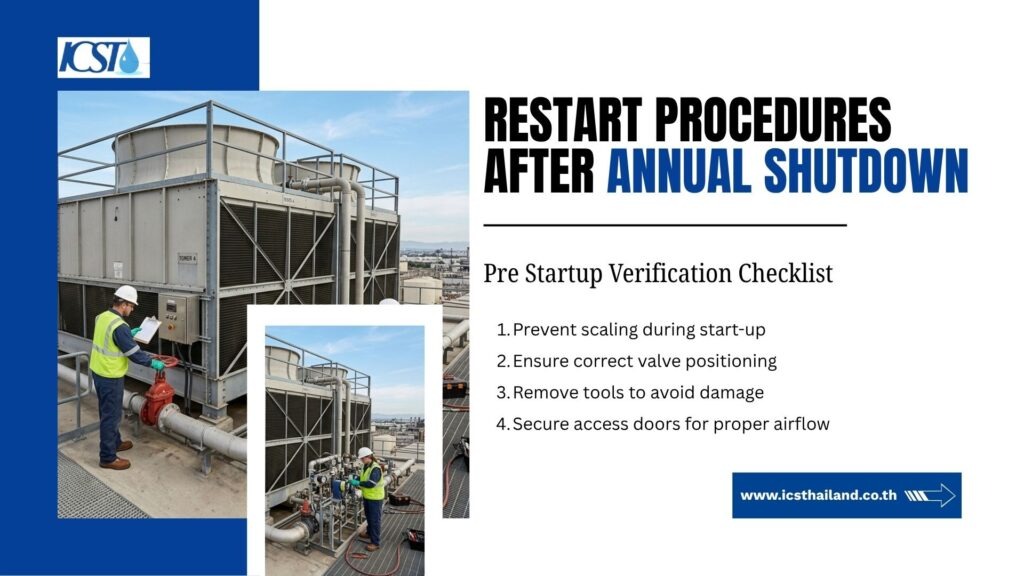
Pre Startup Verification Checklist
Before energizing equipment after a cooling tower annual shutdown, operators perform a final walk-down. They verify oil levels in all mechanical gearboxes and secure electrical clearance to ensure no workers remain inside.
- Water chemistry readiness prevents scaling during the initial heat-up.
- Proper valve positioning guarantees water flows to the correct areas.
- Removing all tools prevents foreign object mechanical damage.
- Securing access doors forces air through the fill media.
Initial Startup Monitoring
Technicians stand by to record baseline performance data. They document motor amperage to ensure proper fan loading. Monitoring fan vibration guarantees the dynamic balance remains perfect.
- Water distribution visual checks confirm nozzles operate correctly.
- Noise monitoring identifies loose hardware or failing bearings.
- Gearbox temperature tracking verifies proper oil flow and cooling.
- Checking for external leaks ensures the basin’s integrity holds water.
Cooling Tower Annual Shutdown Checklist Table
| Inspection Area | Key Tasks | Failure Risk if Ignored | Recommended Action | Priority Level |
| Basin | Sludge removal, coating inspection | Pump damage, bacteria growth | Clean and repair | High |
| Fill Media | Fouling inspection | Thermal inefficiency | Clean or replace | High |
| Gearbox | Oil change, bearing check | Gear failure | Replace oil and inspect | Critical |
| Motor | Megger testing | Electrical breakdown | Repair insulation | Critical |
| Fan Assembly | Blade inspection, vibration check | Mechanical failure | Balance and repair | High |
| Water Distribution | Nozzle cleaning | Uneven cooling | Flush and rebalance | Medium |
| Structure | Corrosion and deflection check | Structural collapse | Repair or reinforce | Critical |
Conclusion
A successful cooling tower annual shutdown protects equipment reliability, restores thermal efficiency, and reduces the risk of emergency mechanical failures during peak operating periods. Annual overhaul procedures allow maintenance teams to identify hidden deterioration that routine inspections often miss.
Critical tasks such as basin cleaning, fill inspection, gearbox oil change, structural evaluation, and motor megger testing directly influence cooling tower lifespan and operating stability.
Always perform these critical shutdowns before peak cooling demand seasons arrive to ensure maximum plant profitability and safety. For quick inspections or quality cooling tower maintenance and repair services in Thailand, visit Industrial Cooling Solution Thailand.
Frequently Asked Questions
How often do you need to shut down a cooling tower?
It is best practice to perform a full shutdown and inspection of your cooling tower once a year. This cooling tower annual shutdown allows for comprehensive maintenance. However, systems under high load or in areas with severe water conditions may need more frequent inspections, such as cleaning the basin twice a year.
Why is changing the gearbox oil important during shutdown?
Over time, the oil that lubricates your cooling tower’s gearbox degrades due to heat and becomes contaminated with metal particles. This old oil can damage the bearings. Replacing the oil during the annual shutdown protects the gearbox and ensures it runs smoothly.
What is a motor megger test for?
A motor megger test checks the health of the motor’s insulation. It can detect weaknesses or moisture that could lead to motor failure. This predictive test helps prevent unexpected breakdowns and accurately assesses electrical reliability risks.
When should you replace cooling tower fill?
You should replace the cooling tower fill if it has significant structural damage or if it’s so heavily fouled that chemical cleaning is ineffective. If you notice restricted airflow or a major loss in thermal efficiency, it’s time to invest in new fill material.
What are the risks of skipping an annual shutdown?
Skipping annual shutdown maintenance can lead to sudden mechanical failures during peak operation, resulting in high emergency repair costs, expensive rush shipping for parts, and significant production downtime. For many companies, this can translate to millions in lost revenue.
What key tasks are part of a cooling tower shutdown?
A comprehensive cooling tower annual shutdown includes several critical maintenance tasks. Key procedures involve a thorough basin cleaning, a detailed fill inspection, a gearbox oil change, structural integrity checks, and motor megger testing to ensure equipment reliability and efficiency.