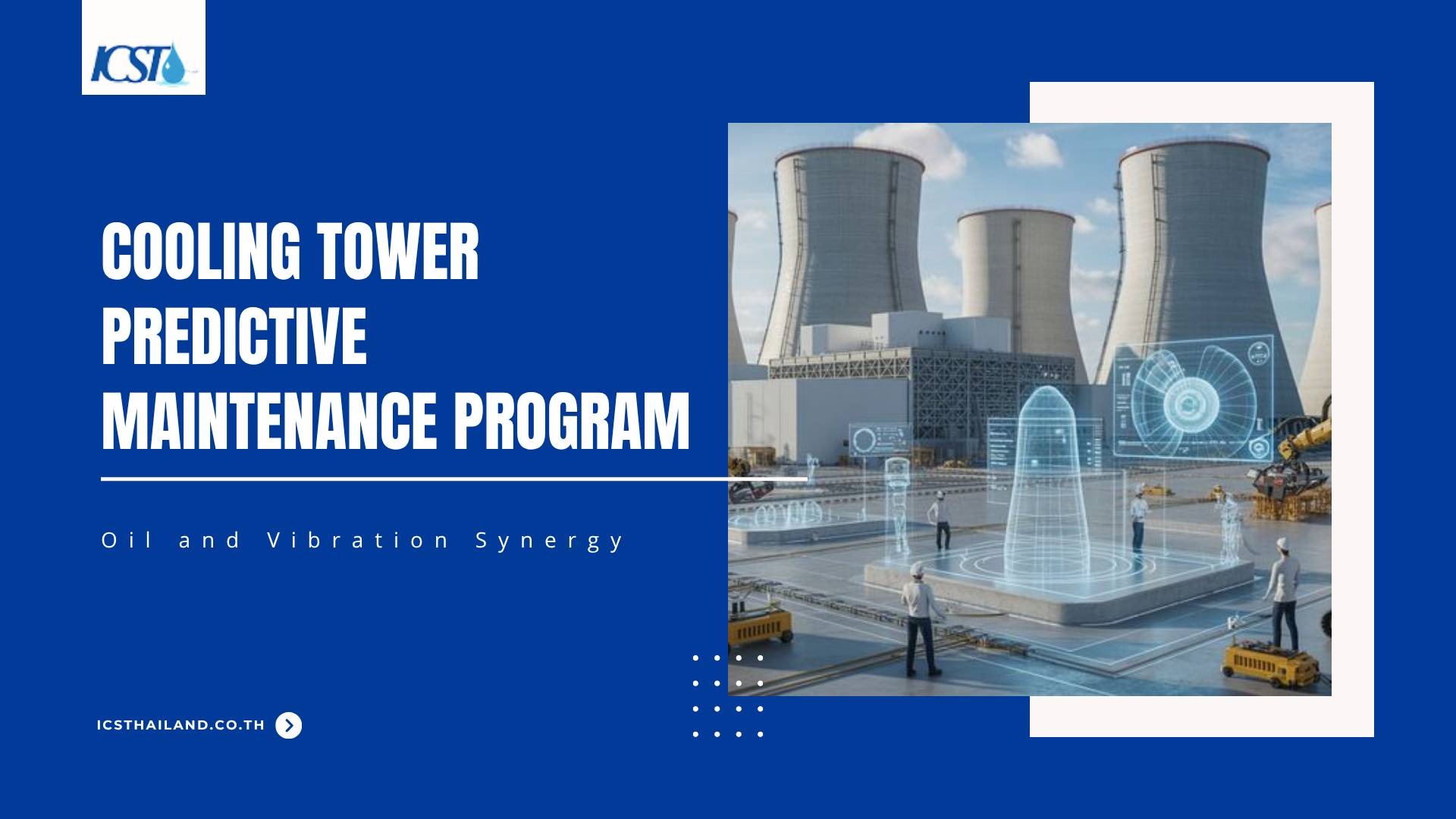
A cooling tower predictive maintenance program ensures the reliability and efficiency of industrial systems by proactively identifying potential issues before they escalate. By integrating vibration analysis, oil sampling, and infrared thermography, this program detects early signs of equipment failure, such as fan imbalance, gear wear, and thermal anomalies.
These insights allow maintenance teams to address problems during planned downtimes, reducing unplanned shutdowns and extending asset life. Implementing such a program not only minimizes maintenance costs but also optimizes energy consumption, ensuring compliance with operational standards and enhancing overall system performance.
This guide explores the exact methods needed to protect your cooling system. We will cover the strategic application of vibration analysis, oil sampling, and infrared thermography. By mastering these key components, you will reduce maintenance costs, improve energy efficiency, and eliminate unplanned downtime.
Beyond Reactive Fixes: The Predictive Advantage
The industrial landscape has fundamentally changed by the year 2026. Facility managers have moved away from basic periodic checks and reactive repairs. They now embrace Industry 4.0 standards, utilizing continuous condition monitoring to ensure mechanical reliability.
A modern preventive maintenance program delivers a massive return on investment. Facilities implementing a predictive maintenance strategy typically observe a 25 to 40 percent reduction in total maintenance costs. This savings occurs because teams avoid catastrophic breakdowns and the expensive emergency labor that follows. You also extend the overall asset life of your equipment.
The core concept relies on understanding the failure prediction lead time, known as the P-F Interval. This metric measures the time from the first signal of a fault to a complete breakdown. Early detection provides your maintenance personnel with the necessary time to plan repairs without interrupting the process.
Pillar 1: Vibration Analysis (The Machine’s Pulse)
Vibration analysis acts as the pulse of your cooling tower. Rotating parts like fans and motors operate under harsh conditions and experience constant stress. This constant movement frequently causes fan imbalance and bearing race fatigue.
Modern sensor standards now require the use of triaxial accelerometers. These advanced sensors capture vibration data in three planes simultaneously, measuring the X, Y, and Z axes. This comprehensive data collection gives your maintenance teams a precise understanding of the physical integrity of the machine.
Engineers apply rigorous ISO standards for 2026, specifically ISO 10816-3 and ISO 21940-11. These frameworks help evaluate fan balance and gear mesh health accurately.
Vibration analysis tells us exactly what is wrong with the equipment:
- Unbalance: A spike at exactly 1x RPM usually indicates a severe fan blade issue.
- Misalignment: High axial vibration spikes point to problems at the motor-to-gearbox coupling.
- Bearing Failure: Harmonic peaks and high-frequency noise signal bearing degradation.
Pillar 2: Oil Analysis (The Machine’s Blood)
If vibration is the pulse, oil analysis represents the blood of your machinery. Simply looking at the lubricant does not provide adequate information. Forensic fluid sampling utilizes laboratory-grade spectroscopy to identify potential issues hidden inside the gearbox.
Wear metal detection serves as a critical aspect of early failure prediction. When tests reveal high levels of iron or steel, it indicates active gear tooth wear. Elevated copper or lead signals the degradation of bronze-bearing components. Tracking these metal components helps you isolate internal corrosion and wear before they cause a breakdown.
Contaminant tracking identifies the silent killers inside your operating environment. Silica dust acts like sandpaper on moving parts, while water causes emulsification and destroys lubricant film strength. Viscosity trending ensures that the ISO VG 220 oil maintains proper protection. This standard remains highly important for facilities operating in Thailand, where the climate demands robust thermal stability.
Integrated Predictive Maintenance Matrix
Facility managers require clear metrics to justify the cost of new technology. This matrix outlines the primary tools required to optimize tower performance and reduce downtime.
| Predictive Tool | Detection Lead Time | Primary Target | Value Proposition |
| Vibration Analysis | 4 – 8 Weeks | Bearings, Fan Imbalance | Prevents catastrophic shaft/blade failure. |
| Oil Sampling | 6 – 12 Weeks | Internal Gear Wear | Identifies subsurface fatigue before pitting occurs. |
| Infrared Thermography | 1 – 2 Weeks | Electrical & Motor Health | Detects loose connections and “hot” motor windings. |
| Condition Monitoring | Real-Time | Operational Deviations | Triggers immediate alerts for flow/temp anomalies. |
Pillar 3: Infrared Thermography (The Machine’s Thermal Signature)
Infrared thermography exposes the invisible heat generated by electrical resistance and mechanical friction. Infrared cameras easily locate high-resistance electrical connections inside motor starters. You can identify these faults long before the components melt and cause a catastrophic system shutdown.
Monitoring motor health becomes simple with thermal imaging. Technicians identify unbalanced loads and early insulation breakdown by checking phase-to-phase temperature differences. This essential inspection method prevents unexpected electrical failures.
Thermography also spots mechanical friction on moving parts. Cameras quickly identify overheated gearbox seals or bearing housings that lack proper lubrication. Addressing this heat early prevents permanent damage to your structural supports and mechanical assets.
The Power of Integration: Root Cause Analysis
Integrating multiple diagnostic tools provides the most accurate view of your entire system. Relying on a single data point often leads to incomplete conclusions. True reliability requires combining vibration, oil, and thermal data.

Consider a case where vibration sensors show a rising noise floor. By itself, this suggests a loose bearing. However, if the oil analysis also shows high iron content, you know you have an active gear mesh failure.
This integrated approach enables purely data-driven decisions. Facility managers can schedule a targeted repair during a planned plant turnaround. This strategy eliminates the need for a forced emergency shutdown.
Optimizing Thermal Performance and Water Management
Predictive maintenance also protects the thermal performance of your HVAC systems. Reduced thermal performance forces your equipment to consume more energy to achieve the same cooling effect. You must monitor water chemistry to prevent scale buildup on your fill media and fill material.
Proper water management prevents internal corrosion and maintains ideal heat transfer rates. When water evaporates, it leaves behind minerals that coat the cold water basin and internal pipes. High conductivity trends warn operators about impending scale issues. Regular cleaning and water treatment remain essential to ensure compliance and prevent the growth of Legionella bacteria.
Optimizing the approach temperature directly improves chiller efficiency. When you maintain clean condenser water and a healthy cooling tower, you significantly reduce energy consumption. These proactive steps ensure your operation runs with maximum energy efficiency.
Implementation Roadmap for Facilities in Thailand
Building a successful maintenance program requires a clear, actionable roadmap. You must establish a baseline for your specific operating conditions. Conduct initial vibration and oil tests to define what a “healthy” state looks like for your exact equipment.

Next, prioritize sensor deployment across your facility. Transition to wireless IoT sensors for 24/7 monitoring of your most critical towers. These tools provide live data transmission, ensuring full transparency and oversight of your cooling system.
Combine this automated data with a quarterly audit. Your maintenance personnel should execute manual route-based inspections to cross-reference the sensor data. Finally, link these predictive alerts directly to your Computerized Maintenance Management System to automate work orders instantly.
Conclusion: Stop Reacting. Start Predicting.
Relying on reactive maintenance guarantees high costs and lost production. You must adopt proactive strategies to protect your industrial assets. Giving your equipment a voice ensures you catch minor issues before they become major disasters.
At International Cooling Solutions (Thailand), we combine global engineering standards with deep local expertise. We build the most robust cooling tower predictive maintenance programs in the region. Let our team upgrade your operation and secure your equipment reliability.
Frequently Asked Questions
What is a cooling tower predictive maintenance program?
A cooling tower predictive maintenance program is a proactive approach to maintaining cooling systems. It uses advanced tools like vibration analysis, oil sampling, and infrared thermography to detect early signs of equipment failure. This program helps reduce unplanned downtime, extend asset life, and optimize energy efficiency. By addressing potential issues before they escalate, facilities can ensure reliable operation and lower maintenance costs.
How does vibration analysis improve cooling tower maintenance?
Vibration analysis monitors the mechanical health of rotating components like fans and motors. It identifies issues such as fan imbalance, misalignment, and bearing wear. By detecting these problems early, maintenance teams can prevent catastrophic failures, reduce downtime, and enhance the reliability of the cooling system. This method is a critical aspect of any predictive maintenance program.
Why is oil analysis important in cooling tower maintenance?
Oil analysis provides insights into the internal condition of cooling tower components. It detects wear metals, contaminants like silica and water, and viscosity changes. These findings help predict gear and bearing failures, ensuring timely interventions. Regular oil analysis enhances the efficiency and lifespan of the cooling system, making it a key component of predictive maintenance.
What role does infrared thermography play in predictive maintenance?
Infrared thermography identifies thermal anomalies in cooling towers. It detects high-resistance electrical connections, unbalanced motor loads, and overheating components. By addressing these issues early, facilities can prevent energy inefficiencies and equipment failures. This non-invasive technique is essential for maintaining the thermal performance and reliability of cooling systems.
Can older cooling towers benefit from predictive maintenance?
Yes, older cooling towers can benefit significantly from predictive maintenance. Wireless IoT sensors and modern diagnostic tools can be retrofitted to monitor critical components. This approach ensures early detection of potential issues, reduces unplanned downtime, and extends the operational life of aging equipment. Predictive maintenance is adaptable to various systems, regardless of their age.