As energy costs rise and environmental regulations tighten, the industrial sector is under immense pressure to find sustainable cooling solutions. Traditional mechanical cooling methods, while effective, often consume excessive electricity and struggle to meet modern efficiency standards. This is where adiabatic cooling enters the conversation as a powerful alternative.
This technology bridges the gap between traditional dry cooling and wet evaporative systems. By leveraging the principles of thermodynamics, this cooling offers a pathway to significantly lower energy consumption without the high water usage typically associated with cooling towers.
In this guide, we explore the mechanics, benefits, and strategic applications of cooling systems. You will gain a deep understanding of how this technology optimizes thermal management across data centers, manufacturing plants, and large-scale HVAC operations.
What Is Adiabatic Cooling?
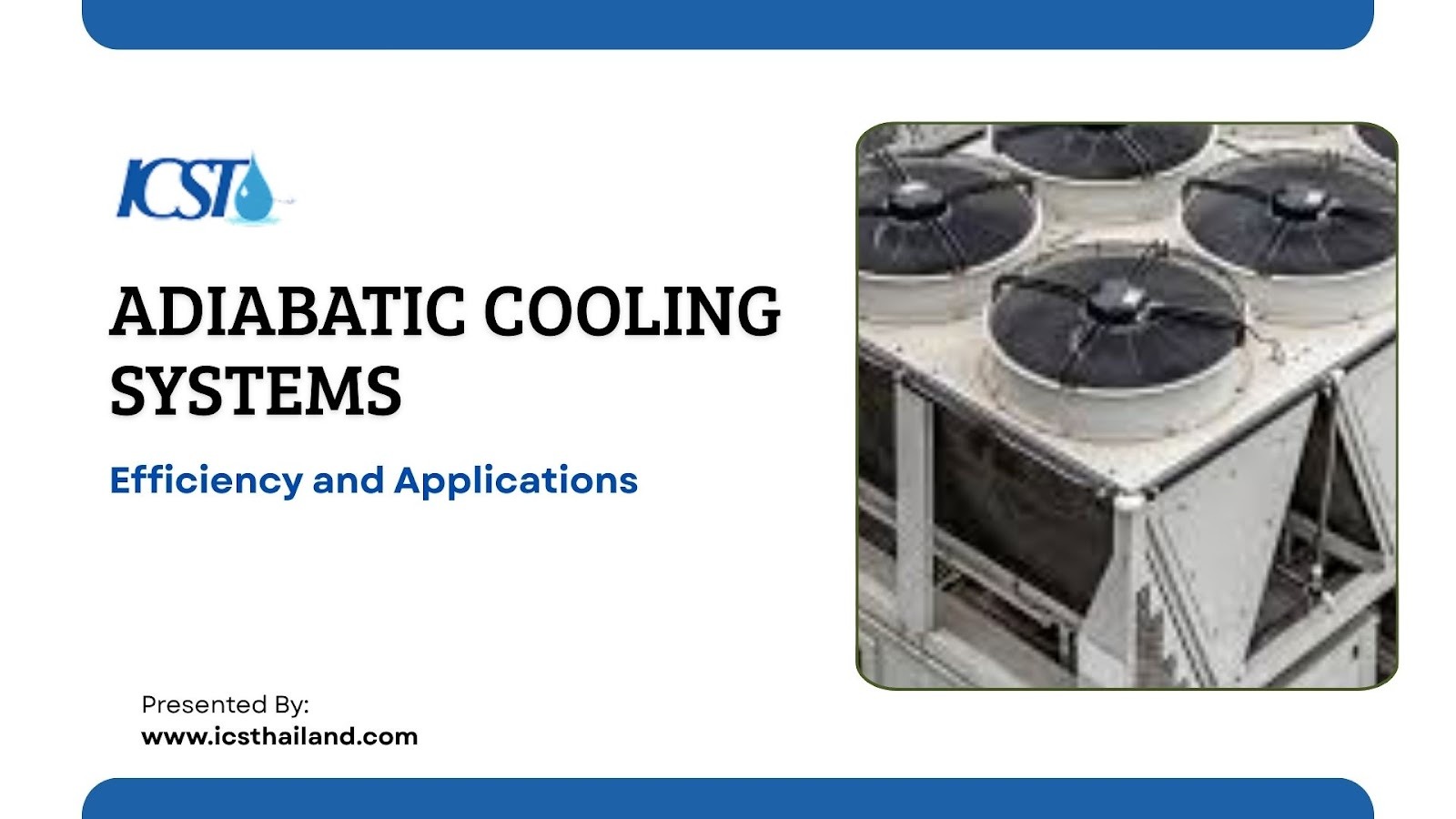
Adiabatic cooling is a thermodynamic process where air temperature decreases through a change in air pressure and volume, specifically via the evaporation of water. Unlike standard evaporative cooling, which constantly drenches a surface, adiabatic systems operate by pre-cooling the air before it interacts with the heat rejection coil.
- Definition: The term “adiabatic” describes a thermodynamic process where no heat or mass is transferred between a system and its surroundings.
- Mechanism: In practical use, systems utilize the latent heat of vaporization to lower the dry-bulb temperature of ambient air.
- Evaporation Process: By spraying water into the air stream or onto a specialized medium, the water evaporates instantly, absorbing heat from the air to create a cooler stream that boosts equipment efficiency.
- Direct Adiabatic Cooling: This method adds moisture directly to the air stream entering a facility.
- Indirect Adiabatic Cooling: This approach lowers the temperature of air used to cool a separate fluid or air stream within a heat exchanger, ensuring no moisture enters the process air.
How Adiabatic Cooling Works
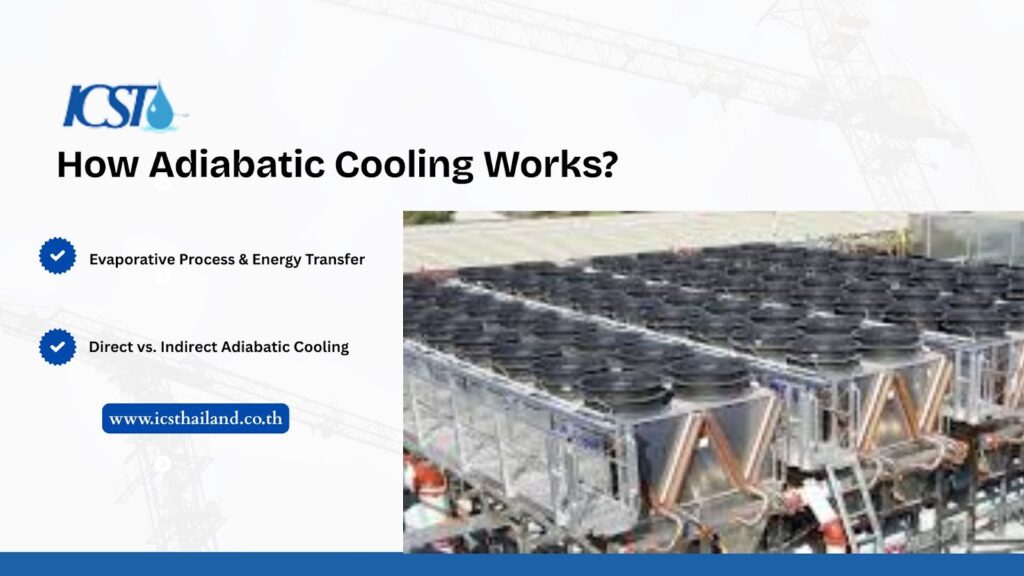
The operation of an adiabatic cooler relies on precise control of airflow and water evaporation. The process generally follows three distinct stages to maximize thermal transfer efficiency.
Pre-Cooling Stage
Before ambient air reaches the main cooling coil, it passes through an adiabatic pre-cooling section. Sensors detect when the ambient temperature exceeds a set point. At this moment, the system activates spray nozzles or wets a dedicated media pad.
The incoming warm air moves through this moisture-rich environment. The water evaporates, absorbing sensible heat from the air and significantly lowering its temperature before it reaches the mechanical components.
Evaporative Process & Energy Transfer
This thermodynamic shift is what makes adiabatic systems so energy-efficient. By harnessing the natural cooling power of evaporation, facilities can achieve significant temperature drops without the heavy energy consumption of traditional refrigeration compressors.
- Energy Conversion: The system converts sensible heat into latent heat as water transitions from a liquid to a vapor.
- Heat Absorption: Water molecules pull energy from the surrounding air to facilitate evaporation, naturally lowering the air temperature.
- Temperature Depression: This process pushes the dry-bulb temperature of the air toward its wet-bulb temperature, creating a high-efficiency cooling medium.
- Improved Heat Exchange: The resulting chilled air is significantly more effective at removing heat from process fluids, like water or glycol, compared to standard ambient air.
Direct vs. Indirect Adiabatic Cooling
Choosing the right method depends on the importance of humidity control for your facility. If maintaining specific humidity levels is critical, select a solution designed to address that need effectively.
- Direct Adiabatic Cooling: This method exposes the supply air directly to water evaporation. It is highly efficient but increases the moisture content of the air. This approach is suitable for data centers or greenhouses where higher humidity is acceptable or required.
- Indirect Adiabatic Cooling: This method uses the cooled air to remove heat from a heat exchanger containing the process fluid. The process fluid then cools the building or equipment. No moisture is added to the supply air entering the building, making it ideal for spaces that require strict humidity control.
Adiabatic Cooling Components
A robust adiabatic system relies on several key components working in unison. Each part plays a specific role in ensuring optimal heat rejection and water efficiency.
Wet Media / Pre-Cooler Pads
The wet media is the surface area where air meets water. Manufacturers typically make these pads from cellulose or specialized polymers designed to hold water while allowing air to pass through with minimal resistance.
The goal is to maximize the surface area for evaporation, ensuring the air temperature drops as much as possible before reaching the coil.
Water Distribution & Pumping
Consistent water coverage is vital for performance. The distribution system includes pumps and spray headers that ensure the pads remain uniformly wet without water carryover.
Advanced systems use pulsed water distribution to minimize consumption, wetting the pads only as needed to maintain the adiabatic effect.
Fans & Air Movement
High-efficiency fans pull ambient air through the pre-cooling pads and across the heat exchange coils. These fans often utilize Variable Frequency Drives (VFDs) to adjust speed based on the cooling load and ambient conditions.
This integration ensures the system uses only the necessary amount of energy to maintain the desired temperatures.
Filtration & Water Treatment
To prevent clogging and maintain hygiene, intake air often passes through filters to remove debris. Similarly, the water system requires treatment to prevent scaling on the pads and to inhibit biological growth, such as Legionella. UV lights or chemical dosing systems are common additions to ensure water safety and system longevity.
Comparison: Adiabatic Cooling vs Other Cooling Methods
Selecting the right cooling infrastructure requires a clear understanding of how different technologies stack up against one another.
Adiabatic vs Evaporative Cooling
Although related, these technologies differ in execution. Evaporative cooling towers recirculate water continuously and expose the process water directly to the air. Adiabatic systems separate the process fluid from the airflow and use water only for pre-cooling the intake air. This results in water-efficient cooling that poses fewer risks regarding waterborne bacteria.
Adiabatic vs Mechanical Vapor Compression
Mechanical compression is the standard for precision cooling, but it is energy-intensive. Adiabatic systems offer a passive alternative that can supplement or replace mechanical cooling depending on the load and ambient conditions. While mechanical systems work in all climates, they lack the energy efficiency of adiabatic solutions during peak heat.
Adiabatic vs Dry Cooling
Dry coolers use no water and rely solely on ambient air. They are simple but struggle when ambient temperatures are high. An adiabatic cooler overcomes this limitation by lowering the air temperature below the ambient dry bulb, allowing the system to reject heat even on the hottest days of summer.
Cooling Method Comparison
| Cooling Method | Energy Use | Water Use | Ideal Conditions | Typical Applications |
| Adiabatic Cooling | Low | Moderate | Dry/arid climates | Pre-cooling, HVAC |
| Evaporative Cooling | Lower | High | Arid climates | Large industrial units |
| Mechanical Cooling | High | None | All climates | Precision cooling |
| Dry Cooling | Moderate | None | Humid climates | Data centers, industrial |
Industrial & Commercial Applications
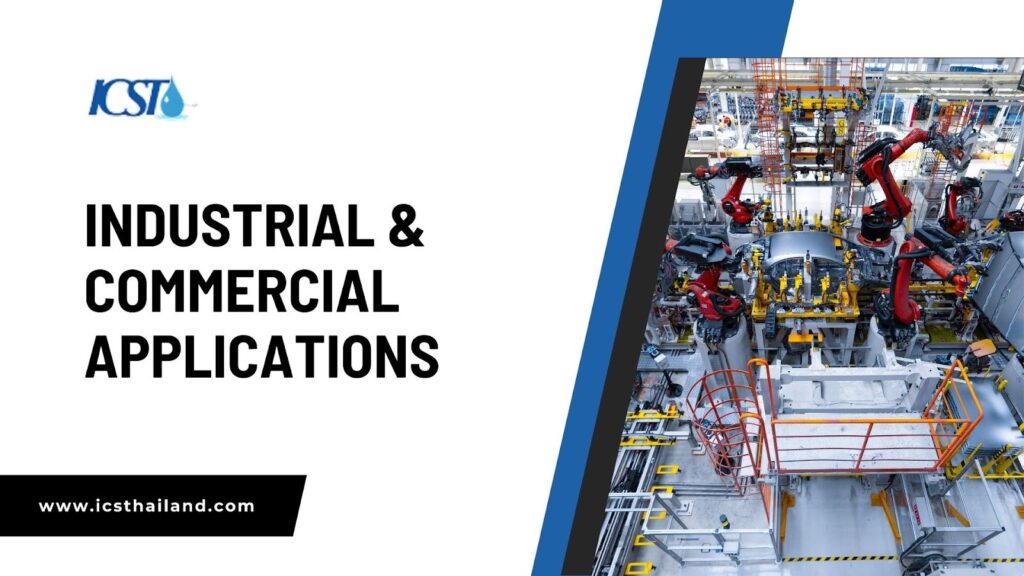
Because of its inherent versatility, adiabatic technology is becoming a staple in sectors where reliable thermal management is non-negotiable. From reducing peak energy demand in large-scale data centers to providing cost-effective climate control in expansive manufacturing facilities, these systems bridge the gap between sustainability goals and operational necessity.
HVAC Systems
Commercial buildings use evaporative pre-cooling to reduce the load on rooftop chiller units. By retrofitting adiabatic sections to existing air-cooled chillers, facility managers can extend the lifespan of aging equipment and improve comfort levels for occupants during heatwaves.
Data Centers
Data centers generate immense heat and require constant cooling. Adiabatic systems assist in achieving a low Power Usage Effectiveness (PUE). They allow data centers to utilize free cooling for more hours per year and reduce the mechanical energy required to keep servers within safe operating temperatures.
Process Cooling
Manufacturing plants, including plastics and food processing, generate heat that must be removed immediately. Adiabatic fluid coolers maintain precise fluid temperatures for injection molding machines and chemical reactors, ensuring product quality without the high operational costs of refrigeration.
Monitoring, Maintenance, and Performance Metrics
Sustained efficiency depends on a proactive maintenance strategy and real-time system visibility. By addressing potential issues before they escalate, businesses can reduce downtime and extend the lifespan of their equipment.
Key Performance Indicators (KPIs)
Operators should track approach temperature (the difference between the leaving fluid temperature and the ambient wet-bulb temperature), daily water consumption, and fan power usage. These metrics indicate if the system is providing the expected energy-saving cooling.
Monitoring Tools
Modern systems integrate with Building Management Systems (BMS). Sensors monitor spray nozzle pressure, pad saturation levels, and inlet/outlet temperatures. Automated alerts notify maintenance teams of flow irregularities or temperature drift.
Maintenance Practices
Regular maintenance preserves the adiabatic effect. Technicians must inspect spray nozzles for blockages and clean or replace wet media pads annually or bi-annually depending on water quality. Draining the system during freezing weather is also critical to prevent pipe bursts.
Conclusion
Adiabatic cooling systems represent a critical evolution in thermal management technology. By intelligently combining the simplicity of air cooling with the efficiency of water evaporation, these systems offer a sustainable path forward for high-demand industries.
Whether applied to data centers, manufacturing processes, or commercial HVAC, adiabatic technology delivers reduced electrical consumption and lowered carbon emissions. While climate and water quality remain valid design considerations, the ability to achieve water-efficient cooling makes this technology indispensable in a warming world.
Facility managers and engineers should evaluate their local climate data and cooling loads to determine if an adiabatic cooler is the right strategic investment. With proper design and maintenance, these systems provide a robust defense against rising energy costs and operational inefficiencies.
If you’re operating in Southeast Asia, don’t leave your efficiency to chance; secure the ultimate industrial cooling solution in Thailand today to future-proof your facility and slash overhead costs. Visit our website to learn more and get started!
Frequently Asked Questions (FAQs)
What is adiabatic cooling, and how does it work?
Adiabatic cooling is a process that lowers air temperature through water evaporation. Warm air passes through a wet medium or mist, where water evaporates and absorbs heat from the air. This cools the air before it enters a heat exchanger or building, reducing the load on mechanical cooling systems.
Why is adiabatic cooling energy efficient?
It is energy efficient because it utilizes the natural thermodynamics of evaporation rather than electricity-hungry compressors. By pre-cooling the air, the system allows mechanical chillers to work less or shut off entirely, leading to significant power savings.
What’s the difference between adiabatic and evaporative cooling?
Evaporative cooling typically involves a continuous water loop that directly cools process fluid or air, often consuming more water. Adiabatic cooling focuses on pre-cooling the intake air efficiently and often operates “dry” when ambient temperatures are low, activating water spray only when necessary.
Is adiabatic cooling suitable for humid climates?
It is less effective in humid climates because the air is already saturated with moisture, which inhibits evaporation. However, it can still provide some benefit during peak heat times when relative humidity drops as temperatures rise.