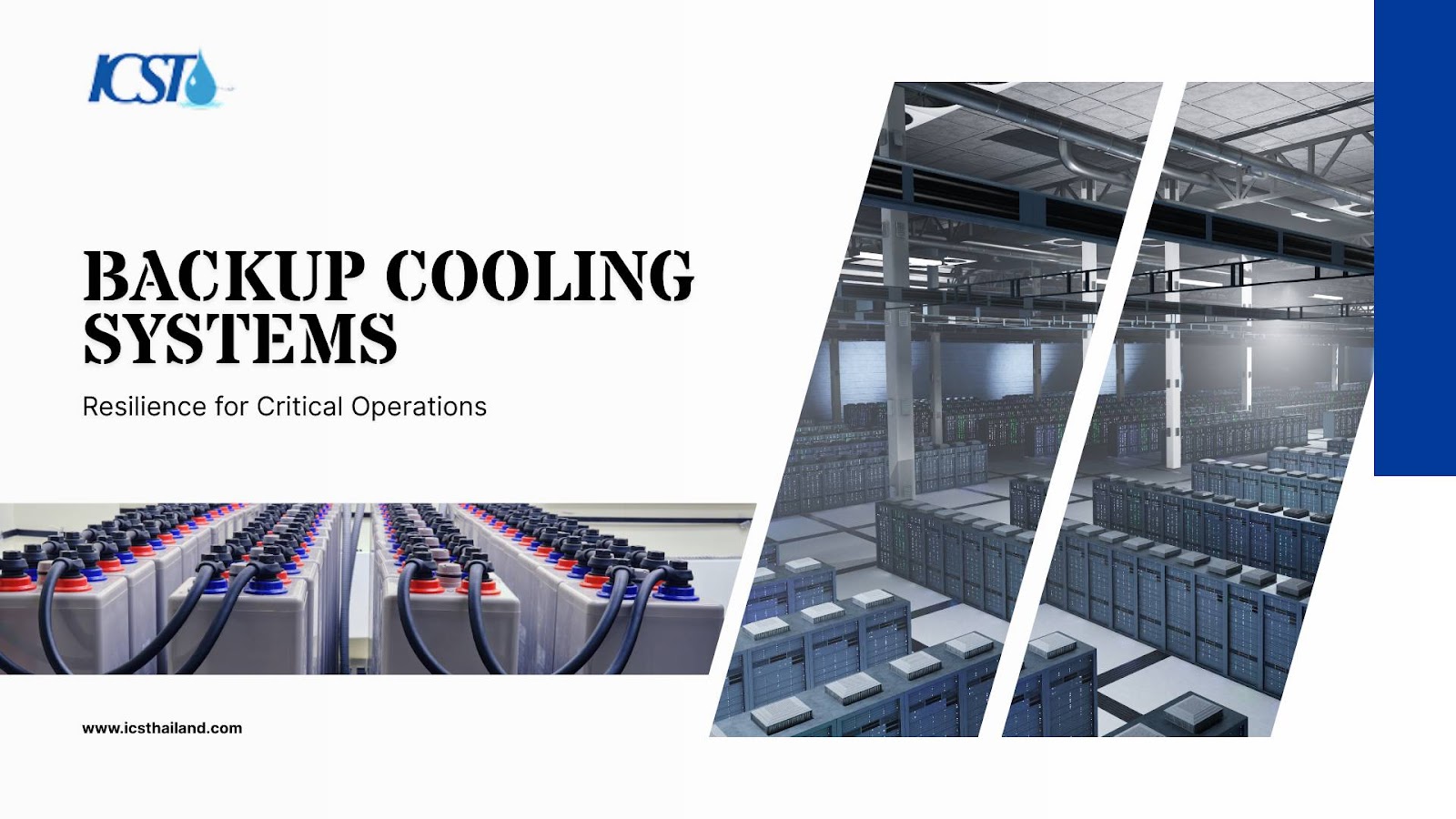
In mission-critical sectors like data centers, hospitals, and heavy industry, a cooling failure is not a minor inconvenience. It is a catastrophic event. The mandate for resilience is clear: backup cooling systems are no longer an optional upgrade but a fundamental requirement for operational continuity.
The financial impact of downtime can be staggering. Defining the “cost of one hour” of process interruption reveals potential losses from halted production lines to irreversible thermal runaway in sensitive IT equipment. A single cooling system failure can lead to costly downtime and significant damage.
At ICST, we deliver technically feasible and environmentally sustainable backup cooling systems worldwide from our regional hub in Bangkok. We ensure your critical operations are protected against the unexpected, providing reliable cooling when it matters most.
Redundancy Models: Decoding N+1 vs. 2N Failover Design
Building a resilient cooling infrastructure begins with choosing the right redundancy model. This decision directly impacts your facility’s ability to withstand equipment failure without disrupting service or risking your operations.
N+1 Redundancy: The Balanced Approach
The N+1 model provides a solid foundation for redundancy. This design involves adding one extra cooling unit to the required base capacity (N). If one of the primary units fails, the backup unit automatically takes its place, maintaining the necessary cooling capacity.
This balanced approach is a cost-effective solution, ideal for commercial HVAC and less critical applications where momentary fluctuations are tolerable. It offers a good measure of protection without the expense of a fully duplicated system.
2N & 2N+1: The Gold Standard for Critical Operations
For truly critical operations, such as data centers, the 2N model is the definitive standard for reliability. This design features a fully mirrored, independent system a complete duplicate of the primary cooling infrastructure, including all chillers, pumps, and piping. If the entire primary system fails due to power loss or major equipment malfunction, the secondary system takes over the full cooling load seamlessly.

The primary benefit of a 2N design is that it allows for routine maintenance, repairs, or upgrades on one system while the other maintains full operational capacity. This eliminates the risk of downtime during service, a crucial feature for facilities that must operate 24/7. For the highest level of protection, the 2N+1 model adds another layer of security by including an extra redundant unit in both of the mirrored systems.
Failover Automation: Ensuring Instant Response
The transition between primary and backup systems must be instantaneous to prevent any disruption. Automatic Transfer Switches (ATS) are the nerve center of this process.
When an ATS detects a power failure or a fault in the primary system’s components, it triggers an “instant discharge” from the backup cooling source.
This automation ensures a seamless and uninterrupted transfer of the cooling load, protecting sensitive equipment from even momentary temperature spikes.
Types of Backup Cooling: Tactical vs. Strategic Solutions
Different scenarios call for different backup cooling solutions. Understanding the capabilities of each type is key to designing a comprehensive resilience strategy that protects your existing infrastructure from every potential point of failure.
| System Type | Primary Use Case | Deployment Speed | Best For |
| Stratified Chilled Water | Mission-Critical (Data Centers) | Instant (t=0) | Sustaining load while backup generators/chillers ramp up. |
| Emergency Chillers | Industrial Process Backup | Permanent Install | Replacing failed central plant capacity for extended periods. |
| Portable Cooling Units | Spot Cooling / IT Racks | 2–4 Hours | Handling localized hotspots or small server rooms. |
| Temporary Systems | Planned Maintenance | Scheduled | Providing cooling capacity during system upgrades or repairs. |
The “t=0” Reality: Why Stratified Chilled Water Wins
For facilities where even a moment of downtime is unacceptable, achieving “time zero” (t=0) cooling transfer is paramount. This is where stratified chilled water storage proves its superiority, especially compared to other thermal storage methods.
Some designs rely on Phase Change Materials (PCM) or ice-based storage systems. While these systems can store significant thermal energy, they come with a fatal flaw for critical operations: a delay.
When a power outage occurs, ice must first melt before it absorbs heat from the coolant. This process can introduce a delay of up to 15 minutes before the system can begin effective heat extraction. For a data center, this gap is an unacceptable risk that can lead to server damage.
Stratified chilled water tanks, in contrast, are always “inline” and pressurized within the cooling loop. The moment primary power or a chiller fails, automated valves instantly redirect the flow. The stored volume of chilled water immediately begins absorbing the heat load with zero delay.
Furthermore, these systems enhance sustainability and offer cost savings. By charging the tank during off-peak hours when electricity is cheaper, facilities can reduce their overall Power Usage Effectiveness (PUE) and lower energy consumption through strategic load-shifting.
Specialized Backups for Harsh Environments
Critical infrastructure in demanding environments requires specially engineered backup solutions. Standard refrigeration equipment often fails when exposed to extreme heat, corrosive elements, or unique site constraints.

- Coastal and industrial site failovers: Emergency chillers for coastal and industrial locations are designed with durable titanium heat exchangers and advanced corrosion-resistant coatings to withstand the harsh effects of seawater and contaminants. These features protect the equipment from the destructive effects of salt, chemicals, and other contaminants found in non-standard water sources.
- High-Ambient Solutions: Operations in the Middle East and other hot climates demand systems that perform efficiently and reliably at ambient temperatures exceeding 50°C. We design backup units with oversized condensers and other components specifically rated to maintain cooling performance in these extreme conditions.
- Geothermal Backup: In applications where physical footprint and long-term energy use are critical concerns, geothermal systems can offer an efficient backup solution. This approach uses the stable temperature of the Earth to provide cooling. However, it requires significant upfront technical planning, geological analysis, and a larger initial investment.
Regional Dispatch: The “Physical Redundancy” Advantage
A robust design is only half the battle. True resilience also depends on rapid-response service and support. Our strategic global positioning allows us to provide an unmatched speed of service when an emergency strikes.
From our Bangkok regional hub, we can dispatch field support technicians and critical equipment to any location in Asia within hours, not days. For our clients in the Middle East, we achieve same-day or next-day technical assistance for major hubs like Riyadh and Dubai.
This “physical redundancy” is backed by a regional inventory of critical components, ensuring temporary systems and replacement parts are always ready for immediate deployment. This commitment to after-sales support and procurement ensures your facility achieves uninterrupted cooling.
Compliance and Regulations
Integrating a backup cooling system is a complex technical task that must adhere to strict local and international standards. A failure to comply can lead to project delays, fines, and an unreliable setup.
Our engineering teams ensure that all redundancy designs comply with regional Cooling System Building Codes. Furthermore, our deep knowledge of Cooling Equipment Export Regulations guarantees that any necessary backup parts or systems reach your site without customs delays. This expertise ensures easy integration and cross-border reliability, so your operations stay protected no matter where they are in the world.
Conclusion Is Your Facility Truly Resilient?
True operational resilience is not just about having backup systems in place; it is about the seamless integration of failover design and rapid response capability. Investing in robust backup cooling systems is critical for ensuring zero downtime and maintaining uninterrupted operations.
A powerful 2N cooling infrastructure is only as reliable as the team that supports it in an emergency. Zero downtime is an engineering choice, not a matter of luck. It requires careful planning, investment in the right equipment, and a partnership with experts who can deliver under pressure.
Ready to engineer a fail-safe environment? Contact ICST Thailand for a technical audit of your critical cooling redundancy today.
Frequently Asked Question
What are backup cooling systems?
Backup cooling systems are secondary cooling solutions designed to maintain optimal temperatures in critical environments during power outages or primary system failures.
Why are backup cooling systems important for data centers?
They prevent overheating of IT equipment, ensuring uninterrupted operations, protecting sensitive data, and avoiding costly downtime.
What is the difference between N+1 and 2N redundancy in cooling systems?
N+1 adds one extra unit for redundancy, while 2N duplicates the entire system, offering higher reliability for critical operations.
How do stratified chilled water systems work in backup cooling?
These systems store chilled water in layers, providing instant cooling during power failures without delays, ensuring zero downtime.
What industries benefit most from backup cooling systems?
Data centers, hospitals, manufacturing plants, and food storage facilities rely heavily on backup cooling to maintain operations and prevent losses.