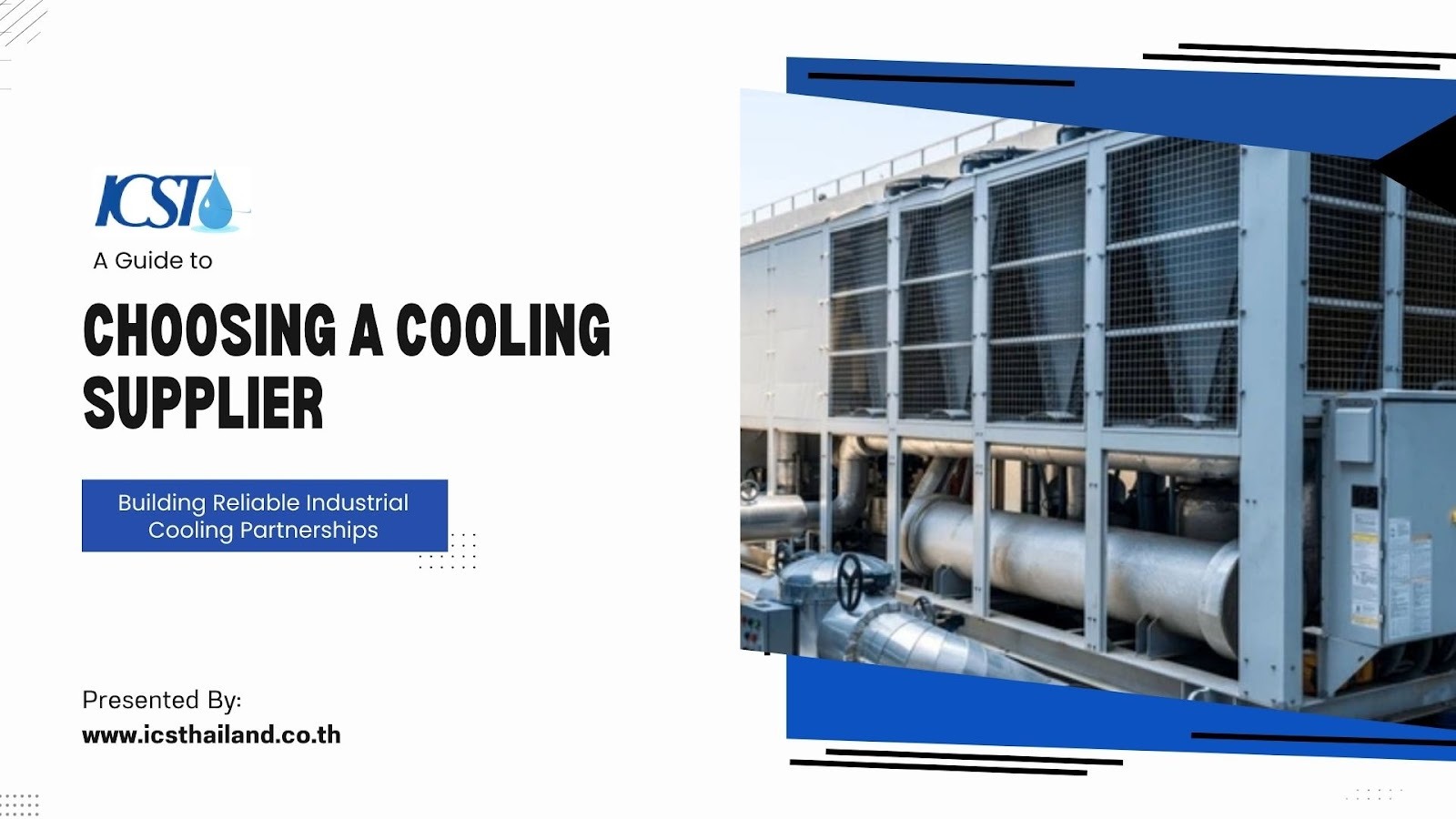
Industrial cooling systems are essential for operational success, regulating temperatures to protect equipment and maintain product quality in various facilities. System failure can lead to production halts, increased costs, and safety hazards, making your choice of a cooling supplier a critical strategic commitment.
This decision impacts efficiency, uptime, and long-term costs. While many focus on initial pricing, a thorough supplier evaluation should prioritize technical expertise, quality assurance, and robust service support.
This guide provides a comprehensive framework for choosing a cooling supplier, outlining the key criteria that distinguish reliable vendors. For those building new cooling towers and seeking the best partners, this blog will help you make an informed decision that ensures long-term reliability and operational excellence
Understanding Your Cooling Requirements First
Before you begin searching for a supplier, it’s critical to understand your specific cooling needs. This preparation ensures you receive accurate recommendations and avoid mismatched solutions that could compromise your operations.
- Assess cooling capacity: Calculate your system’s required heat load based on equipment output, ambient conditions, and production demands. Underestimating capacity can lead to overworked systems and premature failures, while overestimating results in unnecessary capital expenses and energy waste.
- Consider industry-specific demands: A food processing facility has different needs than a data center or chemical plant. Suppliers with experience in your industry will understand the unique regulatory, hygiene, and environmental standards required.
- Evaluate environmental and site conditions: Your location impacts system design and material choice. For instance, coastal areas need corrosion-resistant materials, hot climates require robust construction, and limited space might call for custom designs.
Compliance and safety are critical. Your cooling system must meet all local codes, environmental regulations, and safety standards. Ensure your supplier can prove their familiarity with these requirements.
Questions to ask before contacting suppliers:
- What is the total heat load our system must handle?
- What are the specific operational temperatures required?
- What environmental factors (humidity, ambient temperature, exposure) will affect the system?
- What regulatory and safety standards apply to our facility?
- What space constraints exist for installation?
Key data needed for accurate recommendations:
- Process flow diagrams and thermal load calculations
- Site environmental data and installation constraints
- Operational schedules and performance expectations
- Regulatory compliance requirements
- Budget parameters and lifecycle cost considerations
Key Criteria for Evaluating a Cooling Supplier
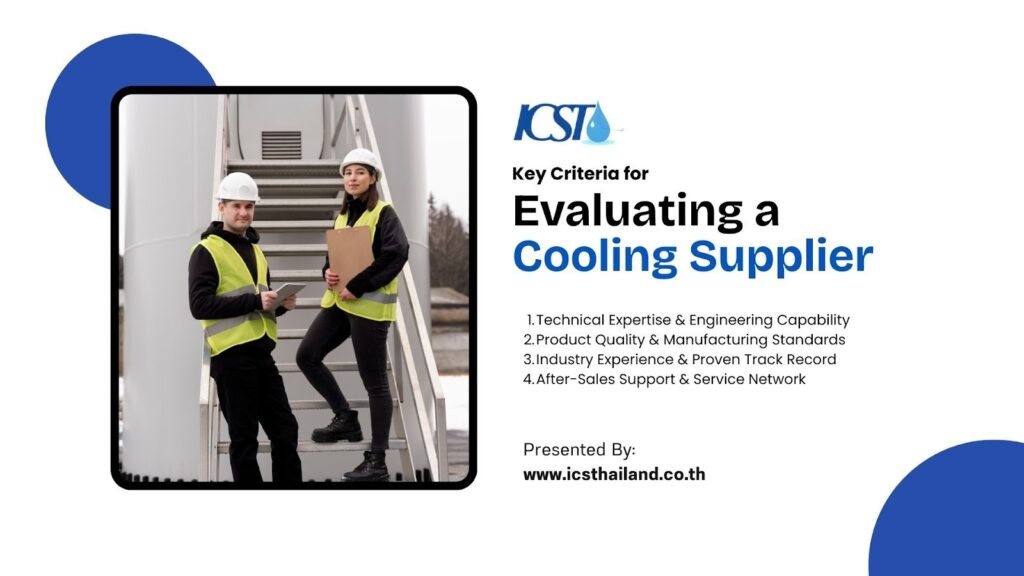
When choosing a cooling supplier, a systematic evaluation framework is essential. The following criteria help differentiate qualified partners from mere vendors who cannot support demanding industrial operations.
Technical Expertise & Engineering Capabilities
Technical expertise separates competent suppliers from exceptional ones. A qualified cooling supplier does not simply offer standard products. They provide engineering support, custom design capabilities, and system integration knowledge tailored to your operational requirements.
- Custom design capabilities: Generic systems often fall short in industrial applications where precision, efficiency, and reliability are crucial. Suppliers with in-house engineering teams can modify designs, optimize performance, and address unique site conditions to ensure the cooling solution fits your specific needs.
- System integration knowledge: Cooling systems must work seamlessly with existing infrastructure, control systems, and operational processes. A supplier with integration experience can reduce installation complexity, minimize downtime, and prevent compatibility issues.
Experience with similar industries provides valuable insight. Suppliers who have designed and installed systems for facilities like yours understand common challenges, regulatory requirements, and performance expectations.
Signs of strong engineering expertise:
- In-house design and engineering teams
- Proven ability to customize systems for specific applications
- Knowledge of industry-specific requirements and standards
- Access to simulation and modeling tools for performance verification
Questions to verify technical capability:
- Can you provide custom designs based on our operational data?
- What experience do you have with facilities in our industry?
- How do you verify system performance before installation?
- What engineering support do you offer during installation and commissioning?
- Can you share case studies or references from similar projects?
- What simulation or modeling tools do you use to validate your designs?
Product Quality & Manufacturing Standards
Product quality determines system longevity, performance, and maintenance costs. High-quality cooling systems use durable materials, robust construction methods, and rigorous testing protocols. These factors reduce failure rates and extend operational lifespan.
- Corrosion Resistance: High-quality cooling systems use materials like stainless steel and advanced composites to withstand harsh environments. This prevents degradation from chemicals, moisture, and temperature extremes, ensuring long-term performance.
- Structural Durability: Well-designed systems feature reinforced frames and precision-engineered components to handle operational stresses such as vibration and thermal cycling, ensuring they last for years.
When choosing a cooling supplier, look for performance testing and certifications that provide objective proof of their quality assurance. Reputable suppliers conduct pressure tests, thermal performance evaluations, and structural integrity assessments before shipment.
Quality indicators to look for:
- Use of high-grade, corrosion-resistant materials
- Documented manufacturing standards and quality control processes
- Third-party certifications (ISO 9001, ASME, CE marking)
- Performance test data and validation reports
Questions about testing and compliance:
- What materials are used in system construction?
- What quality control processes do you follow during manufacturing?
- Can you provide performance test results and certifications?
- What warranties do you offer on materials and workmanship?
Industry Experience & Proven Track Record
Experience matters when selecting a cooling supplier. Vendors with a proven track record in your industry bring practical knowledge, problem-solving skills, and credibility that newer or less specialized suppliers cannot match.
A supplier with industry-specific experience can anticipate challenges. For example, a supplier familiar with pharmaceutical manufacturing will understand strict hygiene requirements, while one specializing in power generation can design systems for extreme heat.
Why industry specialization matters:
- Deep understanding of sector-specific requirements and regulations
- Proven ability to address common challenges and operational constraints
- Access to case studies and references from similar facilities
- Familiarity with industry best practices and performance benchmarks
After-Sales Support & Service Network
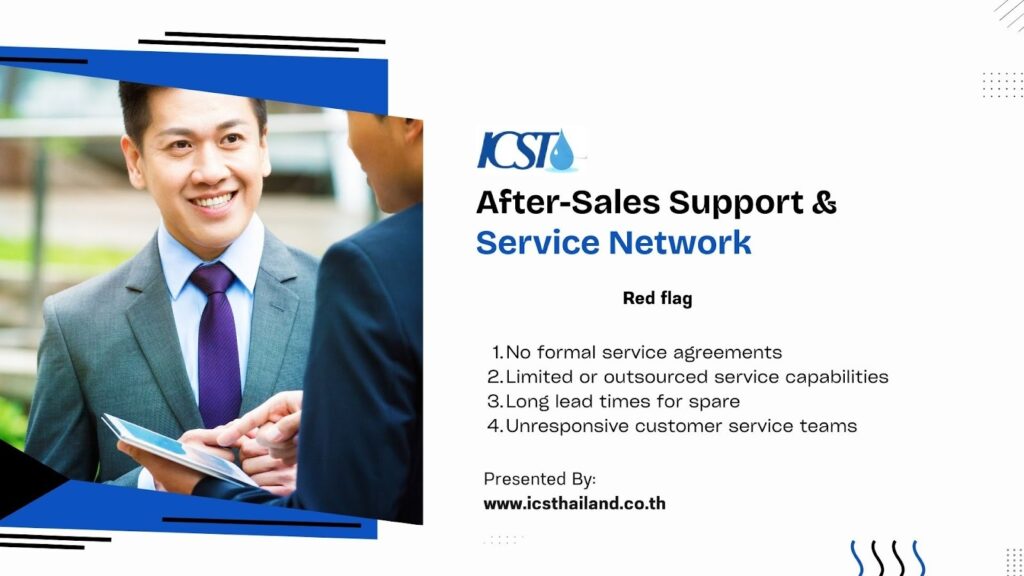
After-sales support is one of the most critical yet frequently overlooked aspects of choosing a cooling supplier. A system is only as reliable as the support infrastructure behind it. Suppliers with robust service networks, preventive maintenance programs, and responsive repair capabilities ensure minimal downtime and sustained performance.
- Preventive Maintenance: A good supplier offers structured maintenance plans with regular inspections and cleaning. This extends the system’s lifespan and prevents minor issues from becoming costly failures.
- Emergency Repairs: When unexpected failures happen, you need fast support. Look for suppliers with 24/7 support teams and quick response times to minimize costly downtime.
Choosing a cooling supplier who stocks critical components and offers fast delivery is essential to avoid extended delays in repairs. Suppliers with local warehouses or distribution networks deliver superior support compared to those that rely on international shipping for every part.
Questions to ask about after-sales support:
- Are preventive maintenance programs and service contracts available?
- What are the emergency repair response times and support coverage?
- Is there a reliable spare parts inventory, and how fast are deliveries?
- Are there training programs for in-house maintenance teams?
Red flags indicating weak support infrastructure:
- No formal maintenance programs or service agreements
- Limited or outsourced service capabilities
- Long lead times for spare parts
- Poor communication or unresponsive customer service teams
Comparing Cooling Suppliers: What Sets the Best Apart
Price alone does not determine the best supplier. While cost considerations matter, focusing solely on upfront pricing often leads to poor decisions. The best suppliers deliver value through lifecycle performance, energy efficiency, and tailored solutions that align with operational goals.
- A lower upfront cost can lead to higher long-term expenses due to energy use, maintenance, and shorter lifespan. Prioritize the total cost of ownership for a better comparison.
- Energy-efficient cooling systems reduce costs and environmental impact. Look for features like high-efficiency designs, variable-speed controls, and heat recovery to support sustainability goals.
Factors that differentiate premium suppliers:
- Proven track record of delivering lifecycle value
- High-efficiency designs that reduce energy consumption
- Flexibility to customize systems for unique requirements
- Comprehensive service and support infrastructure
Hidden costs to watch for:
- Installation complexity and associated labor costs
- Ongoing maintenance and spare parts expenses
- Energy consumption over the system’s operational life
- Downtime costs due to inadequate support or reliability issues
Quality Assurance & Compliance Standards to Verify
Quality assurance processes and compliance standards provide objective measures of supplier reliability. Reputable suppliers adhere to recognized industry standards, maintain certifications, and offer performance guarantees that protect buyers from substandard products.
- Manufacturing and quality standards: This leads to less variability, better product reliability, and a focus on continuous improvement.
- Safety and compliance: Cooling systems must adhere to electrical safety codes, pressure vessel regulations, and environmental standards. Choosing suppliers who prioritize compliance helps protect workers and equipment, reduce risks, and avoid expensive regulatory fines.
Performance guarantees ensure systems meet specified criteria like cooling capacity, energy efficiency, and reliability. They hold suppliers accountable and offer recourse for underperformance.
Top 5 Questions to Ask:
- Can you provide copies of your ISO 9001, ASME, and CE/UL certifications?
- What performance test data and validation documentation can you share for this system?
- What are the specific terms, conditions, and duration of the warranty?
- Do you provide comprehensive maintenance manuals and operational guidelines with the equipment?
- How do you ensure your products meet industry-specific standards relevant to our sector?
Warning Signs of an Unreliable Cooling Supplier
Not all suppliers meet the standards required for demanding industrial applications. Recognizing warning signs early prevents costly mistakes and protects operational reliability.
- Lack of engineering documentation: Reputable suppliers provide detailed drawings, specifications, and performance data. Vague or incomplete documentation suggests inadequate engineering capabilities.
- Poor communication or delayed responses: Responsiveness during the sales process reflects how a supplier will perform during installation and service. Slow communication indicates a weak support infrastructure.
- No performance guarantees: Suppliers unwilling to guarantee system performance lack confidence in their products. Guarantees demonstrate accountability and product reliability.
- Limited service support: Suppliers without maintenance programs, spare parts inventory, or emergency repair capabilities leave clients vulnerable to extended downtime.
- Unclear warranty terms: Ambiguous or restrictive warranty conditions suggest potential quality issues. Clear, comprehensive warranties indicate supplier confidence and commitment.
Final Questions to Ask Before Finalizing a Supplier
When choosing a cooling supplier, ask targeted questions that reveal technical capability, service quality, and long-term reliability. These questions help differentiate qualified partners from vendors who cannot meet industrial demands..
- What experience do you have in my industry? Industry experience indicates familiarity with sector-specific requirements, regulations, and operational challenges.
- What maintenance support do you provide? Comprehensive maintenance programs, spare parts availability, and responsive service teams ensure long-term reliability.
- Can you provide performance guarantees? Written guarantees covering capacity, efficiency, and uptime demonstrate confidence in product quality.
- What is the expected system lifespan? Understanding expected longevity helps evaluate lifecycle costs and replacement planning.
- How quickly can you supply spare parts? Fast spare parts delivery minimizes downtime and maintains operational continuity.
Conclusion
When choosing a cooling supplier, it’s crucial to evaluate their technical expertise, product quality, and long-term value, not just the initial price. The right partner offers more than just equipment; they provide supplier evaluation expertise, proven industry experience, and a commitment to your success through custom engineering and comprehensive after-sales support.
Effective vendor selection prioritizes lifecycle value, as systems with superior efficiency and support deliver better long-term returns. Don’t let a low upfront cost blind you to hidden expenses from poor reliability and service. Your cooling infrastructure is critical, so invest in a partner dedicated to quality and operational excellence.
Ready to partner with an industry leader in cooling tower solutions? For expert-led services and proven cooling systems you can trust, contact the ICST team today.
Frequently Asked Questions
How do I choose the right cooling supplier?
Choose a supplier with proven engineering expertise, industry experience, quality certifications, and strong after-sales support. Evaluate lifecycle costs, not just upfront pricing, to ensure long-term reliability and efficiency.
What certifications should a cooling system supplier have?
Reputable suppliers typically hold certifications such as ISO 9001 for quality management, ASME for pressure components, and CE or UL markings for safety and compliance.
What makes a cooling partner different from a vendor?
A vendor sells equipment, while a partner supports long-term performance.
Partners provide engineering support, maintenance planning, and reliability guidance.
Should I choose a local or international cooling supplier?
Local suppliers offer faster service response and spare parts availability.
International firms may provide advanced technology but can have longer support timelines.