Are you risking your facility’s productivity and your bottom line by making decisions based only on upfront costs? Imagine a production floor coming to a standstill or delicate inventory ruined, all because the cooling system failed at a critical moment.
Selecting the right industrial cooling equipment is not just a technical formality; it is a decisive factor that determines long-term success in data centers, manufacturing plants, and other demanding facilities.
This Cooling Equipment Guide exists to arm you with the insider knowledge most overlook. Inside, you will discover how to sidestep hidden expenses, boost energy efficiency, and ensure continuous, reliable operation. If you want to unlock high efficiency, lower costs, and guarantee smooth operations in various industries, read on. Your facility’s future depends on it.
Cooling 101: The Battle Against Heat
Before you start, you must understand the fundamentals of your industrial cooling system. Core concepts like temperature, heat, flow, and evaporation impact how your equipment operates and its efficiency.
- Heat Load (BTU/Hr): Total thermal energy your process generates that must be removed. Correct calculations determine system range, performance, and energy costs. Underestimate it, and your system may not safely run; oversize it, and you waste energy and costs.
- Target Temperature: The required temperature for your process fluid, influencing which type of cooling system, cooling towers, water-cooled chillers, or dry coolers best suits your application.
- Wet Bulb Temperature (Twb): The lowest temperature water can reach via evaporation. A critical factor governing cooling tower efficiency and system selection for various industries.
- Dry Bulb Temperature (Tdb): The ambient air temperature, important for selecting air-cooled chillers, dry coolers, and determining overall system efficiency.
Even a single degree difference in your approach temperature leads to significant energy and operational costs for facilities and HVAC systems. Ensuring accurately designed and maintained components avoids problems that can affect your entire system.
Key Cooling Parameters at a Glance
| Parameter | Definition | Impact on System Choice |
| Heat Load (BTU/Hr) | Total thermal energy to reject | Larger loads require greater capacity and bigger systems |
| Target Temperature | Required process fluid temp | Dictates technology: chiller, tower, or dry cooler |
| Wet Bulb Temperature | The lowest temp water can reach via evaporation | Governs cooling tower efficiency |
| Dry Bulb Temperature | Ambient air temperature | Dictates dry/fluid cooler and chiller air-side limits |
The 10 Industrial Secrets of Cooling
Industry experts know certain characteristics separate efficient, reliable cooling systems from those that merely operate. Efficient design leads to cost savings, reliability, and lower risk for facilities and industries.
The 15-Year Cost Lie
Evaluate not just CapEx but long-term OpEx. For many industrial processes, a water-cooled cooling tower system, though higher in initial cost, may result in greater overall efficiency and lower total cost than chillers if you analyze performance over 15 years.
Analyze all system costs, operating efficiency, and energy use.
The Waterless Myth of Adiabatic Coolers
Adiabatic coolers are often advertised as water-free, but their operation during high-temperature loads actually uses water, impacting water management and costs. Always consider the real water usage, not just initial promises.
The Flow Rate Failure
Industrial cooling systems must maintain not just total flow but appropriate velocity in pipes and components, minimizing debris and ensuring even mixing.
Use VFDs to ensure devices adapt flow for optimal performance and prevent issues common in various industries.
The Redundancy Rule (N+1 vs. N+2)
Regular inspection and planning for redundancy are crucial in mission-critical installations. Cooling towers and dry coolers for data centers often require N+2 redundancy, while water chillers usually only need N+1 due to different types of risk and reliability.
The 42°F Chiller Sweet Spot
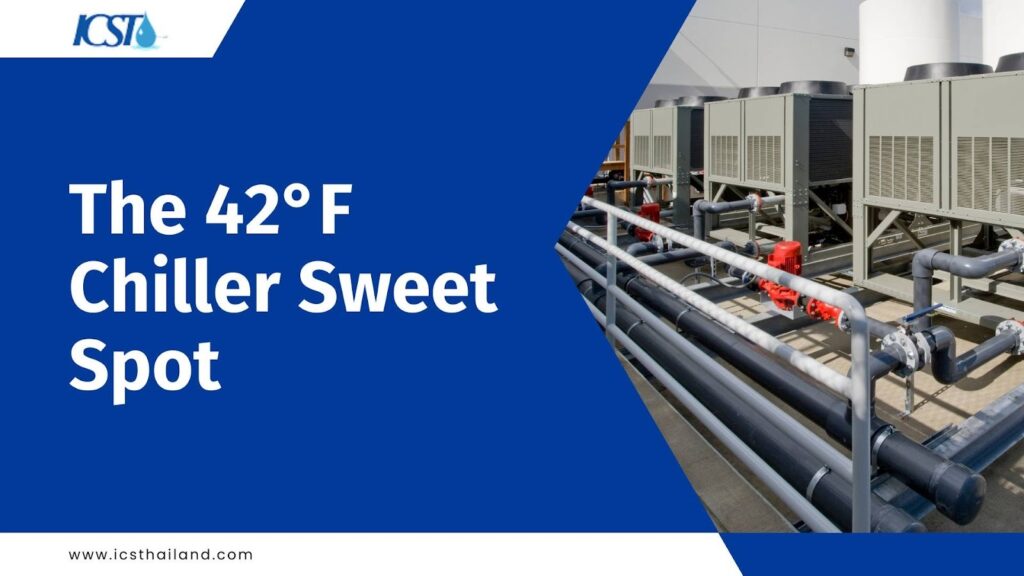
In most industries, setting the chiller’s temperature around 42°F provides the best compromise between process suitability, operational costs, and energy efficiency.
Lower temperatures often lead to higher energy costs and potential equipment issues.
The Corrosion Trap of Stainless Steel
In water-cooled or industrial applications exposed to air, form, or water with contaminants, specifying Type 316L Stainless Steel prevents corrosion and performance loss. This choice extends equipment life in industrial processes and is vital for reliability.
The Winter Windfall of Free Cooling
Use waterside economizers for thermal storage and to take advantage of cold air and lower wet bulb conditions.
This lowers energy consumption and operational costs, particularly in regions or facilities facing seasonal changes, and is suitable for many HVAC systems.
The Prognostic Edge of Remote Monitoring
Advanced BMS and predictive maintenance technology prevent downtime by detecting form, debris, or other issues before breakdown occurs.
Monitoring is essential to maintain the performance and lifespan of industrial cooling equipment and all types of HVAC systems.
The Load-Shifting Power of Thermal Storage
Thermal Energy Storage (TES) is an example of advanced technology. TES allows industries to store cooling water or energy at night when costs are lower, then use it during peak periods, dramatically improving overall system energy efficiency.
The Efficiency Hit from Glycol
Adding refrigerant glycol for freeze protection reduces the efficiency of heat transfer. You must oversize components and heat exchangers to compensate, ensuring systems operate efficiently and safely in cold or variable environments.
The Equipment Battle: Tower vs. Chiller vs. Dry Cooler
This section explores the different types of industrial cooling systems and their characteristics, applications, and importance to various industries.
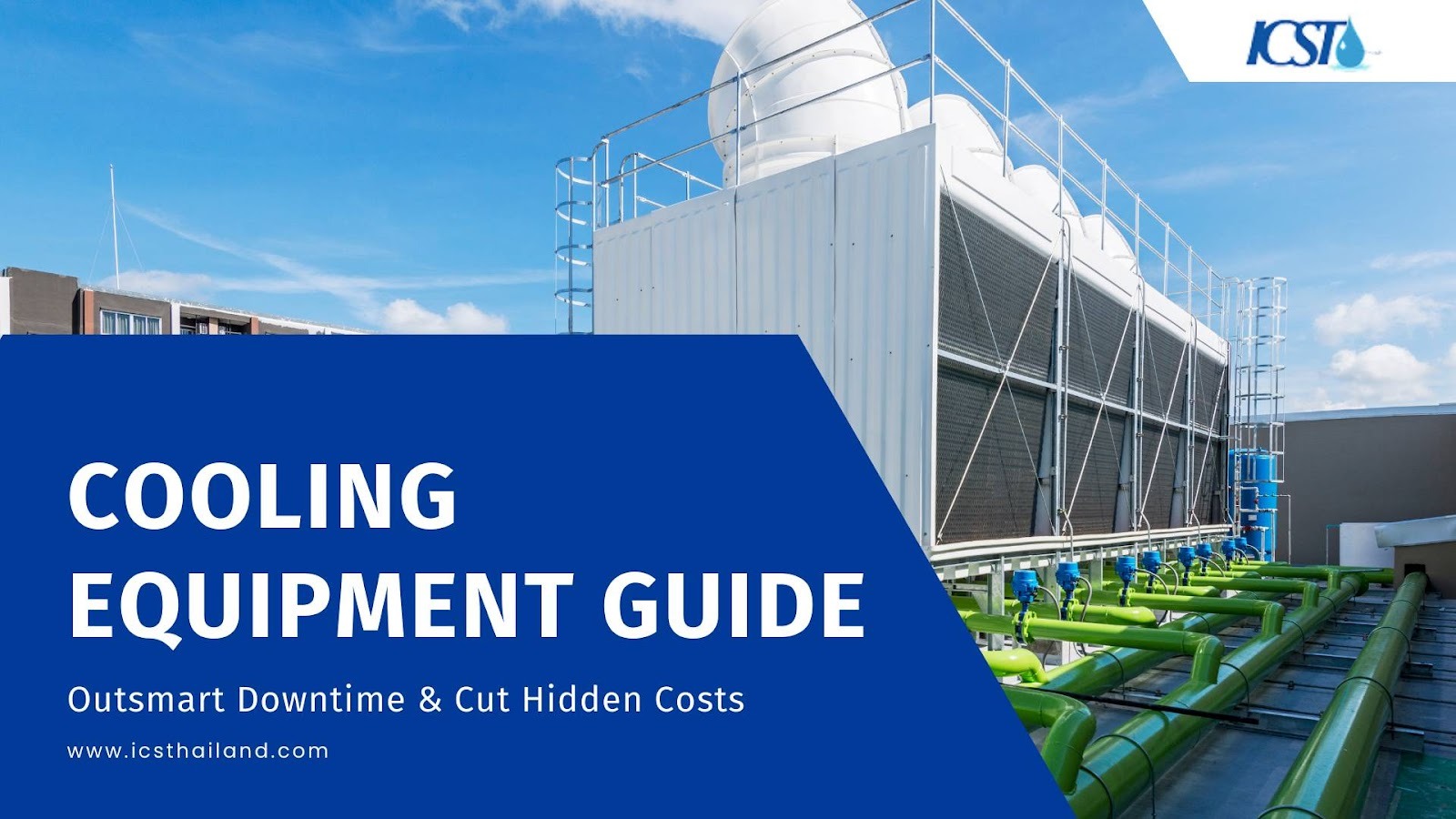
- Cooling Towers: Best for large-scale, high-volume heat rejection where water is available. Tower performance relies on air and evaporation principles. Regular inspection and maintenance are important to avoid risk, debris, and scaling.
- Water Chillers: Provide precise temperature control for applications requiring sub-ambient cooling. Chillers commonly use refrigerant; efficiency and reliability depend on suitable sizing, regular inspection, and understanding the system’s purpose.
- Dry/Fluid Coolers: Rely on ambient air for sensible heat removal. Suited for water-restricted locations or closed systems where fluid purity matters. Efficient devices in data centers and industries concerned with water use.
Strategic Mastery: From Installation to Optimization
After installation, proactive management is essential to maximize energy efficiency and high performance.

- VFD Implementation: Installing Variable Frequency Drives in fans and pumps improves part-load efficiency. This energy-saving strategy is crucial for HVAC and cooling equipment systems in various industries.
- Adaptive Setpoints: Program controls to raise setpoints as loads decrease. Even small changes lead to substantial energy and cost savings, especially in energy-intensive industries.
Your Final Checklist for Success
Your cooling equipment guide is not complete without this final review. To ensure safety, high efficiency, and reliability in your cooling systems:
- Heat Load: Have you accurately calculated for current and future demand?
- Temperatures: Do you understand all environmental and process temperature requirements?
- TCO Analysis: Have you compared all costs before purchasing?
- Implementation: Are you following the critical secrets and working with experts to maintain and operate your equipment efficiently?
Contact certified professionals, conduct regular inspections, and ensure every part of your system is designed for optimal adaptability, scalability, and reliability with ICST Thailand.
By following this guide, your facility will run efficiently, suit your applications, and lead in industrial cooling system performance.
Frequently Asked Question
What equipment is used for cooling?
Cooling equipment includes cooling towers, chillers, dry coolers, air conditioners, heat exchangers, and refrigeration units.
Which is better, 410a or R32?
R32 is generally better due to its higher energy efficiency, lower Global Warming Potential (GWP), and better cooling performance compared to R410a.
What is cooling equipment?
Cooling equipment refers to devices designed to remove heat from a space, process, or system to maintain desired temperatures.
What are the five major parts of the cooling system?
The five major parts are the compressor, condenser, expansion valve, evaporator, and refrigerant.
What are the three types of cooling?
The three types are evaporative cooling (e.g., cooling towers), refrigeration cooling (e.g., chillers), and air cooling (e.g., dry coolers).