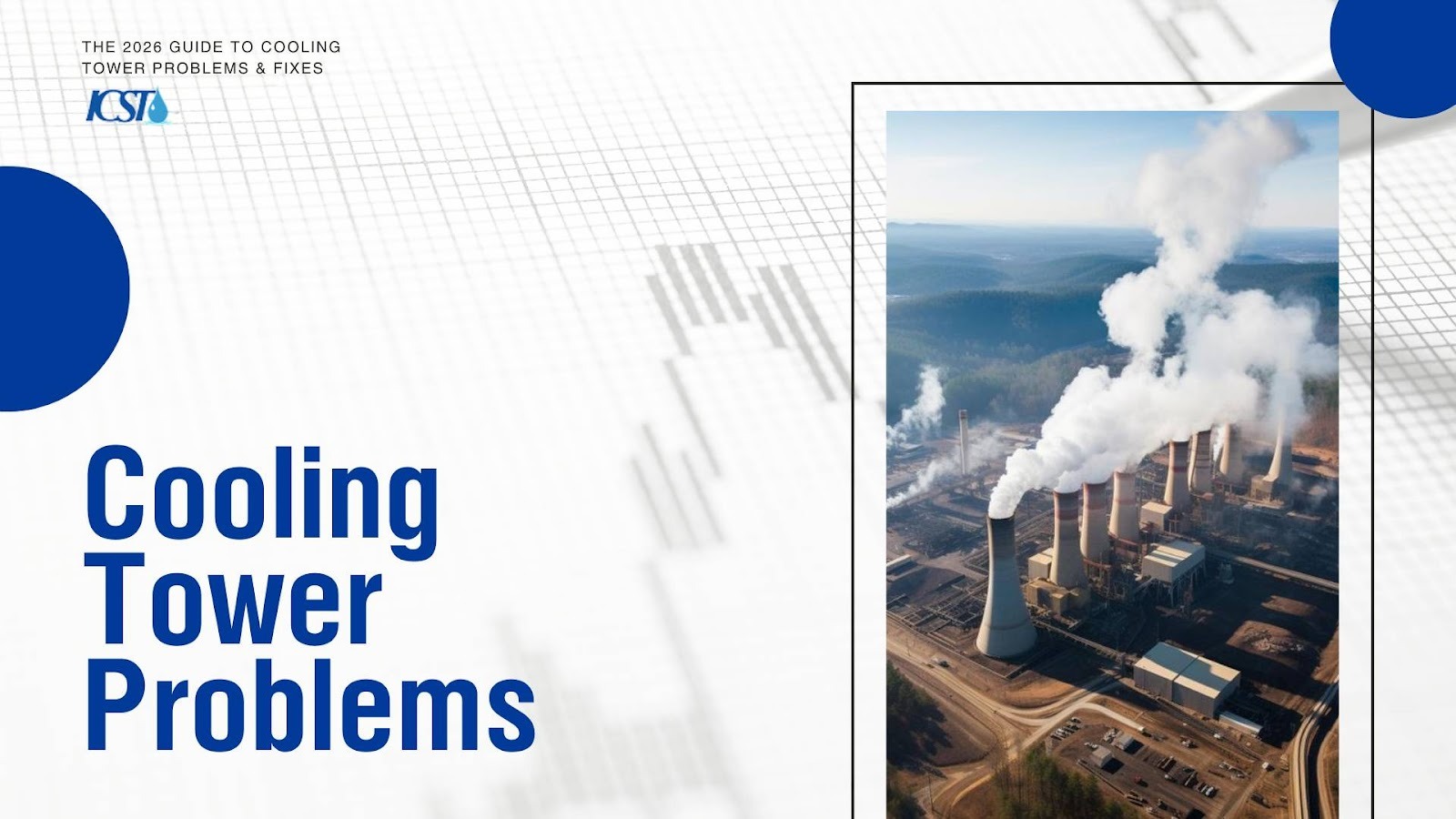
It’s the hottest day of the year, and your facility’s cooling system suddenly grinds to a halt. Production lines stop, data centers overheat, and the potential for lost revenue skyrockets with every passing minute.
This nightmare scenario is a reality for many industrial and commercial operations. Cooling system failures lead to costly downtime, soaring energy bills, and expensive emergency repairs. The good news? Most of these failures are preventable.
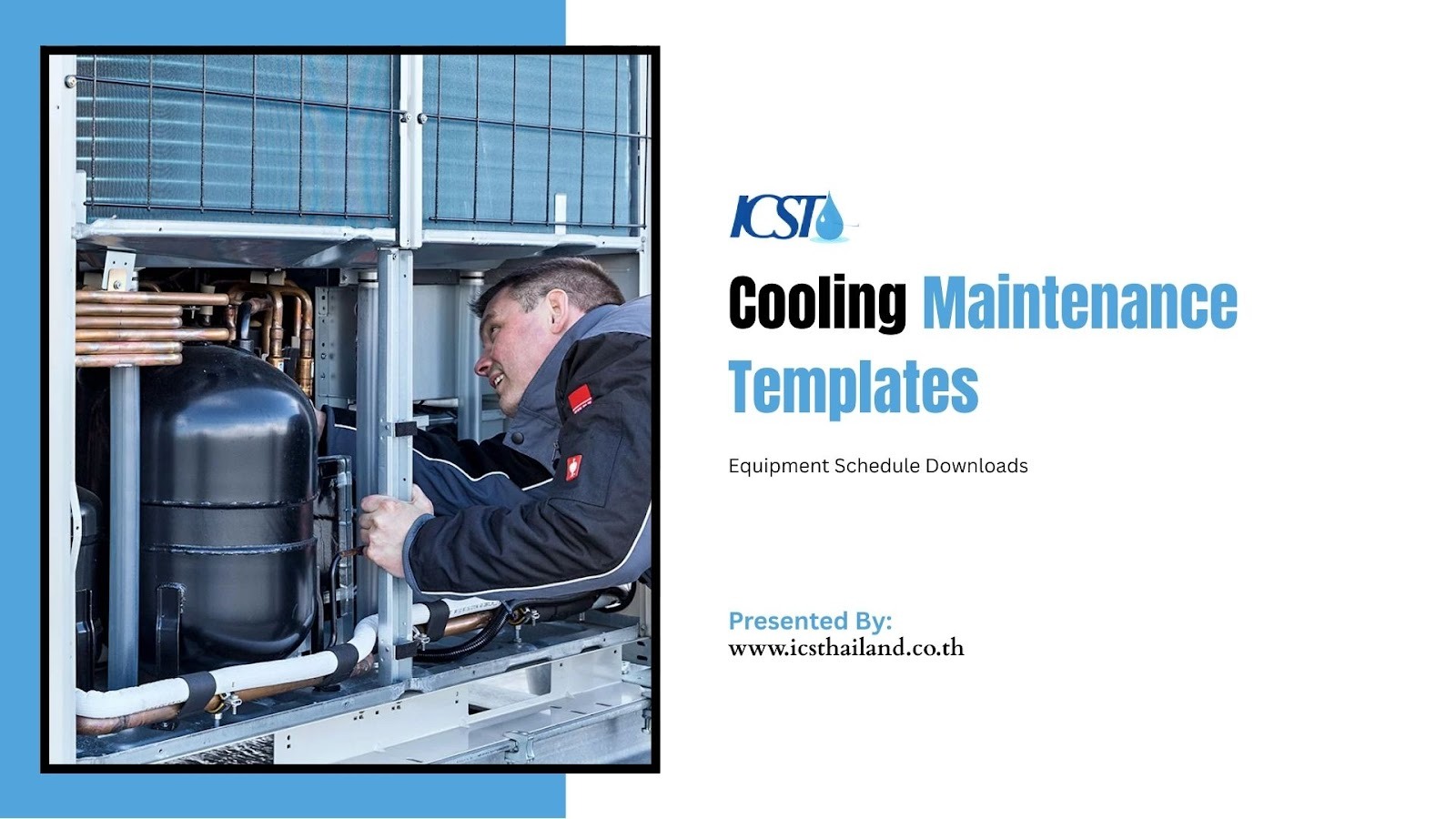
Cooling maintenance templates provide maintenance teams with a structured, repeatable way to inspect, document, and service cooling equipment before problems arise. These templates reduce guesswork and human error, creating a clear record of all maintenance activities.
A solid maintenance checklist template ensures that technicians follow the same procedures every time—regardless of shift, location, or experience level. Paired with a reliable service schedule, these tools form the foundation of a proactive maintenance program.
This blog post covers everything you need to know about cooling maintenance templates—from the types of documents used in industrial facilities to how digital platforms are changing maintenance management.
Why You Can’t Afford to Skip Cooling Maintenance Documentation
Poor documentation is one of the most overlooked causes of equipment failure. When service history is incomplete or inconsistent, maintenance teams lose visibility into recurring issues, missed inspections, and deteriorating components.
What does structured maintenance documentation actually do for your operation? It creates a system where nothing falls through the cracks.
Key benefits include:
- Consistent maintenance procedures across teams — Every technician follows the same steps, reducing variability and inspection errors
- Improved equipment reliability — Scheduled servicing catches problems before they escalate into failures
- Clear service history records — Complete logs support warranty claims, audits, and performance reviews
- Better regulatory compliance — Documentation provides evidence of adherence to safety and environmental standards
- Reduced operational downtime — Proactive maintenance prevents the unplanned stoppages that disrupt production
A structured documentation system also helps maintenance teams identify recurring issues and improve preventive strategies over time. Patterns that are invisible in isolated records become obvious when data is organized and reviewed consistently.
Types of Cooling Maintenance Templates Used in Industrial Facilities
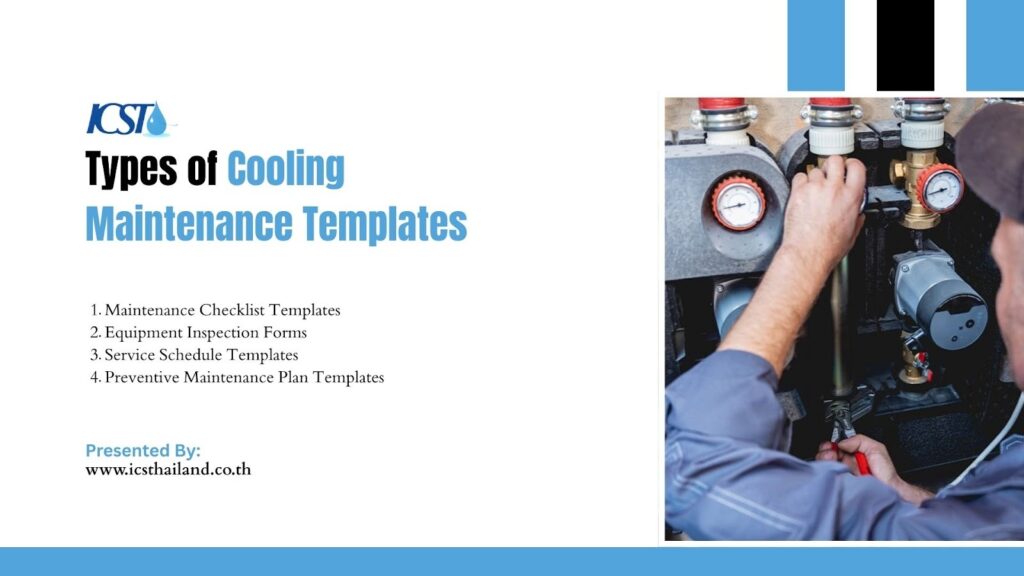
Not all cooling maintenance templates serve the same purpose. Industrial facilities typically rely on several document types, each targeting a different stage of the maintenance process.
Maintenance Checklist Templates
A maintenance checklist template is the most commonly used tool in day-to-day cooling system management. It guides technicians through routine inspection tasks in a logical, step-by-step sequence.
Typical checklist items include:
- Visual inspection of equipment components for wear, corrosion, or physical damage
- Checking fan motors and belts for tension, alignment, and signs of overheating
- Inspecting spray nozzles and water distribution systems for blockages or uneven flow
- Examining cooling tower basins and fill media for sediment buildup or biological growth
These checklists are most effective when tailored to specific equipment models and facility conditions. A generic checklist covers the basics, but a customized one catches the issues unique to your system.
Equipment Inspection Forms
These documents record the condition of the system at the time of each inspection visit.
Typical data recorded includes:
- Equipment identification number and location
- Operational readings such as temperature, pressure, and flow rate
- Observed defects or abnormalities
- Corrective actions required or already performed
Inspection forms create an accurate, timestamped record of system health. Over time, this data becomes a valuable reference for identifying trends and scheduling proactive repairs.
Service Schedule Templates
A service schedule defines when each maintenance task should occur. Without a schedule, inspections happen reactively after something goes wrong rather than proactively.
These schedules often include:
- Daily operational checks to monitor system performance
- Weekly performance inspections to verify water chemistry and equipment function
- Monthly preventive maintenance tasks, such as cleaning and lubrication
- Annual system overhauls for comprehensive assessment and component replacement
A well-structured service schedule keeps teams aligned and ensures that no maintenance interval is overlooked.
Preventive Maintenance Plan Templates
A preventive maintenance plan takes the service schedule one step further. It outlines the long-term strategy for maintaining cooling equipment across its full operational lifespan.
These plans typically include:
- Maintenance frequency for each equipment type and component
- Detailed inspection procedures and performance benchmarks
- Component replacement schedules based on manufacturer recommendations
- Performance monitoring methods to track system efficiency over time
Organizations that use documented cooling maintenance templates to create their preventive maintenance plan consistently report lower repair costs and longer equipment service life compared to those relying on reactive maintenance.
Cooling Equipment Maintenance Schedule Framework
A structured maintenance schedule ensures that inspections occur at appropriate intervals for each equipment type and system component.
| Maintenance Frequency | Typical Inspection Tasks | Equipment Components |
| Daily | Monitor operating temperature, check water levels, and inspect for vibration or noise | Cooling tower fans, pumps |
| Weekly | Check water chemistry, inspect spray nozzles, review chemical dosing systems | Water distribution system |
| Monthly | Clean basin and strainers, inspect motor connections, and check belt alignment | Fan motors, piping |
| Quarterly | Lubricate bearings, inspect fill media, and check structural components | Cooling tower structure |
| Annual | Complete system inspection, replace worn components, evaluate performance | Entire cooling system |
Maintenance tasks often include monitoring water temperature, chemical dosing systems, and equipment vibration to maintain stable operation. Each frequency tier builds on the last—daily checks catch immediate issues, while annual overhauls address the cumulative wear that shorter inspections cannot fully assess.
Key Elements of an Effective Maintenance Checklist Template
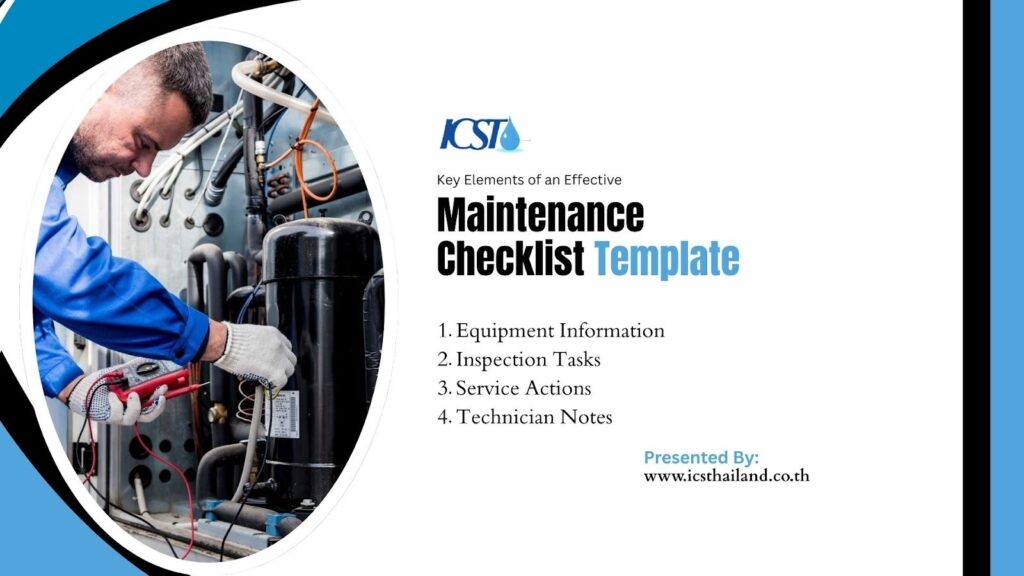
A well-designed checklist does more than just list tasks—it captures the necessary information to act on findings quickly and accurately. What separates effective cooling maintenance templates from ineffective ones?
The answer lies in its structure. Every section serves a specific purpose.
Equipment Information
This section establishes the context for every inspection. It should include:
- Equipment ID number for accurate identification and record matching
- Physical location within the facility
- Manufacturer name, model number, and installation date
Inspection Tasks
This is the operational core of the checklist. It should cover:
- Visual inspection items such as corrosion, leaks, and physical damage
- Operational checks, including temperature readings, pressure levels, and flow rates
- Cleaning procedures for filters, strainers, basins, and heat exchange surfaces
Service Actions
This section documents what was done during the visit. It should record:
- Repairs performed, including parts replaced and methods used
- Component replacements with part numbers and dates
- Calibration activities for sensors, controls, and monitoring instruments
Technician Notes
This final section captures information that does not fit neatly into structured fields. It includes:
- Technician observations about system behavior or unusual conditions
- Issues detected that require follow-up
- Recommendations for future maintenance based on current findings
These notes often contain the most valuable diagnostic information. Structured checklists capture what was done—technician notes capture what was noticed.
Inspection Forms for Cooling Equipment Monitoring
Inspection forms serve a distinct function within the broader maintenance documentation system. While checklists guide the inspection process, forms record the results in a format that supports ongoing analysis.
What information should every inspection form capture? The data fields matter as much as the inspection itself.
Important data fields typically include:
- Date of inspection and time of visit
- Technician name and certification level
- Equipment operating parameters at the time of inspection
- Water quality measurements, including pH, conductivity, and biological indicators
- Observed mechanical issues and their assessed severity
These forms create a detailed service schedule record for future analysis. When reviewed collectively, they reveal patterns—equipment that consistently runs hot, components that require frequent adjustment, or systems that degrade faster than expected.
Creating a Preventive Maintenance Plan for Cooling Systems
A preventive maintenance plan helps organizations avoid unexpected failures by performing scheduled maintenance tasks at defined intervals. How do you build one that actually works in practice?
The process is straightforward when approached systematically.
Identify Critical Cooling Equipment
Start by cataloging every piece of cooling equipment in the facility. Assign each asset a unique ID number and document its specifications and maintenance needs.
- List all assets: Compile a comprehensive list of all cooling equipment, such as cooling towers, chillers, pumps, and heat exchangers.
- Assign unique IDs: Give each piece of equipment a specific identification number for easy tracking.
- Document key details: Record the manufacturer, model, specifications, and recommended maintenance for each asset.
Define Maintenance Intervals
Establish daily, weekly, monthly, and annual maintenance schedules for each type of equipment. Your intervals should be based on the manufacturer’s recommendations, how much the equipment is used, and its operating environment.
- Follow manufacturer guidelines: Use the recommended maintenance schedule provided by the equipment manufacturer as a baseline.
- Consider operational load: Equipment that runs under heavy loads will need more frequent checks than equipment used less often.
- Assess environmental factors: Systems operating in harsh or dirty conditions may require shorter maintenance intervals to prevent issues.
Standardize Inspection Procedures
Use consistent cooling maintenance templates and checklists across all technicians and teams. Standardization ensures that every inspection produces reliable, comparable data, which simplifies training and analysis.
- Create uniform checklists: Develop detailed checklists that cover all inspection points for each type of equipment.
- Use consistent report formats: Ensure all technicians use the same template for recording their findings.
- Train your team: Make sure every team member understands and follows the standardized procedures to eliminate variation in data collection.
Track Maintenance Performance
Use maintenance records to monitor system reliability over time. Track metrics such as mean time between failures, inspection completion rates, and the ratio of planned to unplanned maintenance activities. These indicators reveal whether the preventive plan is delivering measurable results.
Digital Maintenance Documentation and CMMS Systems
Paper-based maintenance systems work—but they have clear limitations. Lost forms, illegible handwriting, and manual reporting delays can undermine even a well-designed maintenance program.
Modern facilities increasingly use digital maintenance platforms known as Computerized Maintenance Management Systems (CMMS) to manage cooling maintenance templates and service schedules.
These platforms digitize every document, automate scheduling, and centralize all maintenance data in one accessible location.
Benefits of digital documentation include:
- Centralized maintenance records accessible to all authorized team members
- Automated service reminders that trigger inspections based on calendar intervals or equipment runtime
- Real-time inspection reporting that eliminates data entry delays
- Improved maintenance accountability through digital sign-offs and audit trails
These systems help maintenance teams manage large facilities with complex cooling infrastructure. For organizations operating multiple sites or dozens of cooling assets, CMMS platforms significantly reduce the administrative burden of manual documentation.
Conclusion
Cooling equipment requires consistent monitoring and preventive maintenance to ensure reliable performance. Without structured systems in place, even well-built equipment will underperform and fail prematurely.
Cooling maintenance templates, including maintenance checklist templates, service schedules, and inspection forms, give maintenance teams the tools to stay ahead of failures, not react to them. They reduce inconsistency, improve documentation quality, and create the service history needed for smarter long-term planning.
The most effective cooling system maintenance programs aren’t about big budgets, but consistent processes. By standardizing documentation, defining inspection intervals, and using structured templates, you can ensure every technician performs their job correctly on every visit.
For expert advice and cooling tower maintenance schedules, visit the ICST website today.
Frequently Asked Questions
1. What are cooling maintenance templates?
Cooling maintenance templates are structured documents used to inspect, service, and document maintenance tasks for cooling systems. They include checklists, inspection forms, and service schedules that help teams perform consistent preventive maintenance.
2. What should a cooling equipment maintenance checklist include?
A good checklist should include equipment identification details, inspection tasks, operational readings, cleaning procedures, repair records, and technician notes to capture all maintenance activities.
3. What is a cooling maintenance schedule?
A maintenance schedule defines when inspections, servicing, and component replacements should occur to keep cooling equipment operating efficiently.
4. What is a preventive maintenance plan for cooling systems?
It is a structured plan that schedules regular inspections and maintenance tasks to prevent equipment breakdowns and extend system lifespan.
5. What are the benefits of using cooling maintenance templates?
They improve equipment reliability, reduce downtime, maintain accurate service records, and support compliance with maintenance standards.
6. What is CMMS in cooling system maintenance?
CMMS (Computerized Maintenance Management System) is software that manages maintenance schedules, inspection records, and service documentation digitally