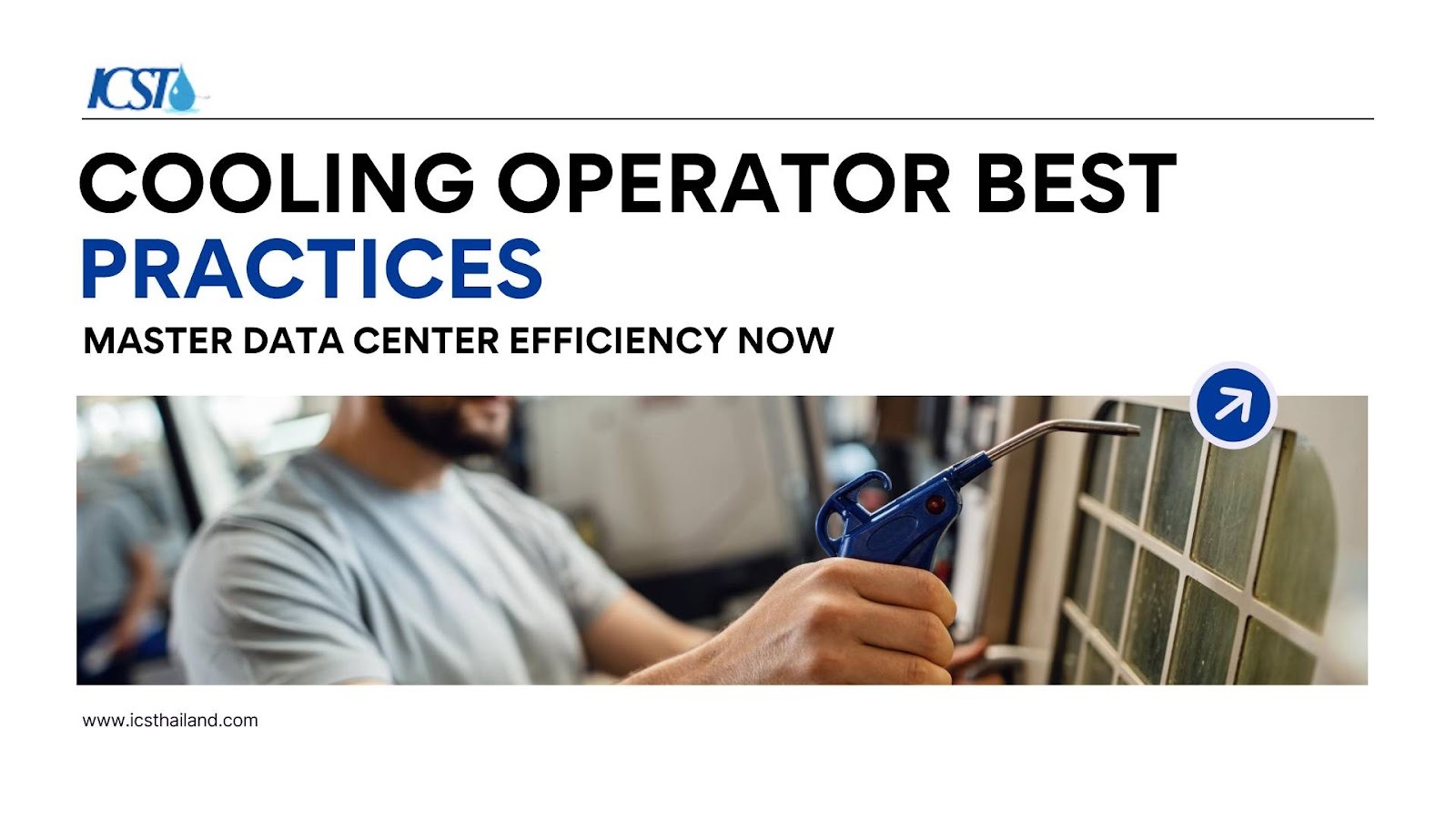
Data centers are the backbone of the modern digital economy. Inside these facilities, servers process immense amounts of information. However, this processing generates significant heat. If this heat goes unchecked, catastrophic failure occurs. The operator stands as the first line of defense against downtime and energy waste.
You are the guardian of the grid. Your role involves more than just reading gauges. You ensure the reliability of critical infrastructure. This guide serves as your strategic playbook. We will explore cooling operator best practices that transform maintenance from a routine task into a strategic advantage.
We will cover HVAC safety procedures, preventative maintenance, and advanced strategies for data center cooling systems. By mastering these elements, you ensure uptime and drive energy efficiency.
The Operator’s Playbook: Core Definition, Certification, and Strategy
To excel, you must first define the playing field. Operational excellence requires a clear understanding of what needs to be done and why it matters.
What Are Cooling Operator Best Practices and Why They Matter?
Cooling operator best practices are standardized, data-driven procedures. They ensure that HVACR and specialized IT cooling equipment operate at peak thermal efficiency. These practices prioritize safety and reliability.
Why are these practices important? They guarantee the continuous operation of IT and network equipment. They maximize asset lifespan and ensure compliance with regulations.
An effective cooling operator is a process-oriented professional. They rely on standard operating procedures (SOPs), digital logbooks, and data trending. They do not rely on intuition alone.
Top Secret Tips: Strategic Execution
Move beyond basic manual checks. Adopt these strategic execution tips to elevate your performance.
- The “Inverse Trend” Audit: Do not just look at current parameters. Pull up historical data to audit “inverse trends.” For example, look for moments when the cooling load drops, but power consumption increases. This often reveals fouling or sensor drift that most operators miss.
- The LOTO “Proof of Isolation”: Go beyond the mandatory HVAC safety procedures. Use a documented diagnostic check, such as a multimeter reading, to confirm zero energy at the connection point after locking out. Treat this confirmation as a critical step.
- The BMS “Override Watch”: Audit every manual override performed on the Building Management System (BMS) within the last 24 hours. Document the reason for each override. Frequent overrides often mask deeper control issues.
Cooling Operator Certification and Requirements
Validation of your skills is essential. Cooling Operator Certification from bodies like BOMA or NAPE, along with HVAC technician licenses, proves your proficiency. These certifications validate your ability to handle complex systems.
Integrate continuous learning into your strategy. Make certification renewal a core part of your professional development plan.
7 Strategic Benefits of Implementing Best Practices
Implementing these strategies yields tangible results.
| Advantage Category | Benefit/Feature | Key Metric Impacted |
| Cost Avoidance | Early detection of fouling prevents major repairs. | Reduced M&R Budget |
| Energy Efficiency | Optimal setpoints ensure peak thermal efficiency. | Lower Power Usage Effectiveness (PUE) |
| Safety and Legal | Strict adherence to safety procedures guarantees compliance. | Zero Incident Rate |
| Asset Lifespan | Minimizing equipment stress extends the life of chillers. | Extended MTBF |
| Process Stability | Predictable maintenance ensures consistent temperature control. | Reduced Downtime |
| Career Mobility | Documenting SOPs demonstrates management readiness. | Increased Salary |
| Data Integrity | Consistent data logging provides an accurate baseline. | Informed CAPEX Decisions |
Daily Operational Excellence: Rounds, Logs, and Discipline
Success is built on daily habits. Routine execution serves as the foundation of operational discipline.
The Four Pillars of Daily Operator Discipline
- Daily Rounds: Effective daily rounds are systematic. Inspect all critical HVACR equipment physically. Do not skip areas. Look for leaks, listen for unusual noises, and smell for burning components.
- Logbook Keeping: Master the art of the logbook. Whether digital or physical, record more than just basic readings. Annotate anomalies clearly. A detailed log helps future troubleshooting efforts.
- Startup/Shutdown Procedures: Follow detailed steps for major equipment like chillers and pumps. Standardized procedures minimize mechanical shock and stress on the system.
- Discipline: Adhere to the schedule strictly. Consistency allows you to spot deviations before they become alarms.
Airflow and Minor Troubleshooting
Manage airflow actively. Conduct a daily audit of hot and cold aisle layouts. Ensure all raised floor tiles are placed correctly. Seal any gaps to prevent air mixing.
Develop SOPs for minor troubleshooting. Address immediate low-level alarms promptly. This prevents issues from escalating into full-service calls. Resolving small problems early maintains system stability.
Component Mastery: The Cooling Tower Playbook
Cooling towers are critical components for heat rejection. Mastery of this equipment is non-negotiable for a skilled operator.
Principles and Key Components of Efficient Towers
Understand the principles of cooling tower operation. This involves evaporation and sensible heat transfer. Know the difference between crossflow and counterflow cooling towers.

Focus on the key components:
- Fill Media: Increases surface area for heat exchange.
- Drift Eliminators: Prevent water droplets from escaping.
- Fans: Drive airflow through the tower.
Water Treatment Programs: The Secret to Longevity
Robust water treatment programs are necessary. They mitigate key challenges such as scaling, fouling, and corrosion. They also prevent biological contamination, including Legionella.
Maintain water quality parameters diligently. Monitor pH levels and conductivity daily. Use appropriate biocides to keep the system clean and safe.
Energy Optimization and Performance Metrics
Use Variable Frequency Drives (VFDs) to optimize energy usage. Adjust fan speeds based on the actual cooling demand. This prevents the system from running at full power unnecessarily.
Monitor key parameters like Approach Temperature. Regular thermodynamic performance tests help detect inefficiencies. Ensure the system complies with local water usage and discharge regulations to maintain environmental compliance.
The Strategic Shift: PUE Optimization and Predictive Monitoring
Move from reactive maintenance to a proactive strategy. Focus on advanced techniques specific to data center cooling design and capacity.
PUE Optimization Strategies
Power Usage Effectiveness (PUE) is a primary metric for efficiency. Implement cooling operator best practices to manage PUE effectively.
- Adjust Set Points: Fine-tune temperatures to reduce mechanical cooling load.
- Variable Speeds: Use variable speed fans and pumps to match output to demand.
- Free Cooling: Maximize the use of economizers when ambient conditions allow.
These strategies reduce power consumption and improve overall energy efficiency.
Liquid Cooling Systems and New Technology
High-density server racks often require liquid cooling. Understand the best practices for deploying these systems. Ensure seamless integration with existing air-cooled infrastructure.
Explore advancements in air-side and water-side economizers. Adopt new equipment and technologies to stay ahead of thermal efficiency curves.
Design Integrity and Capacity Planning
Operators should participate in capacity planning. Ensure cooling unit selection minimizes hot spots. The cooling capacity must match the IT load.
Follow best practices for regular maintenance. Monitor the system proactively to identify areas for design improvement. Your insights from the floor are valuable for future design decisions.
ROI and Career Pathway: Beyond the Logbook
Invest in your skills and your facility. Rigorous adherence to best practices offers significant returns.
The Quantifiable ROI of Best Practices
Document your wins. Show how cooling operator best practices contribute to lower operating costs. Use metrics like PUE to track energy consumption reductions.
Quantify the benefits of preventative maintenance. Show how early detection saved the company from expensive repairs. This justifies the investment in optimization and training.
Career Advancement and Professional Requirements
The path to advancement requires dedication. Obtain certifications and attend specialized data center cooling courses. Experienced professionals can develop and implement effective cooling strategies.
Proficiency in PUE reporting and machine learning technologies opens doors. These skills lead to highly desirable career opportunities. Project management and facility management roles await those who master the technical and strategic aspects of the job.
Conclusion: The Commitment to Excellence
You are the guardian of the grid. Your commitment to excellence ensures the digital world keeps running.
Building Your SOP Master Plan
Turn this playbook into a living document. Create a Standard Operating Procedure (SOP) master plan for your site. Document every process, every check, and every strategy.
The Future of Data Center Operation
The role of the operator continues to evolve. You reduce operational costs and minimize environmental impact. You must stay up-to-date with the latest technologies.
Commit to continuous improvement. Adopt new equipment and refine your strategies. By doing so, you secure your career and the reliability of the data center you protect.
Ready to elevate your operational impact? Start implementing cooling operator best practices today to maximize efficiency, ensure uptime, and stay ahead in your career with ICST.
Frequently Asked Questions
What are the best cooling operator practices?
Cooling operator best practices are standardized procedures to ensure HVACR and IT cooling systems operate efficiently, safely, and reliably.
Why are cooling operator best practices important?
They maximize energy efficiency, extend equipment lifespan, ensure compliance, and prevent costly downtime in data centers.
How can I improve my cooling operator skills?
Focus on certifications, continuous learning, mastering SOPs, and adopting advanced strategies like PUE optimization and predictive monitoring.
What certifications are required for cooling operators?
Certifications like BOMA, NAPE, and HVAC technician licenses validate your proficiency and enhance career opportunities.
How do cooling operator best practices impact PUE?
They optimize energy usage by maintaining efficient cooling systems, reducing mechanical load, and improving Power Usage Effectiveness (PUE).