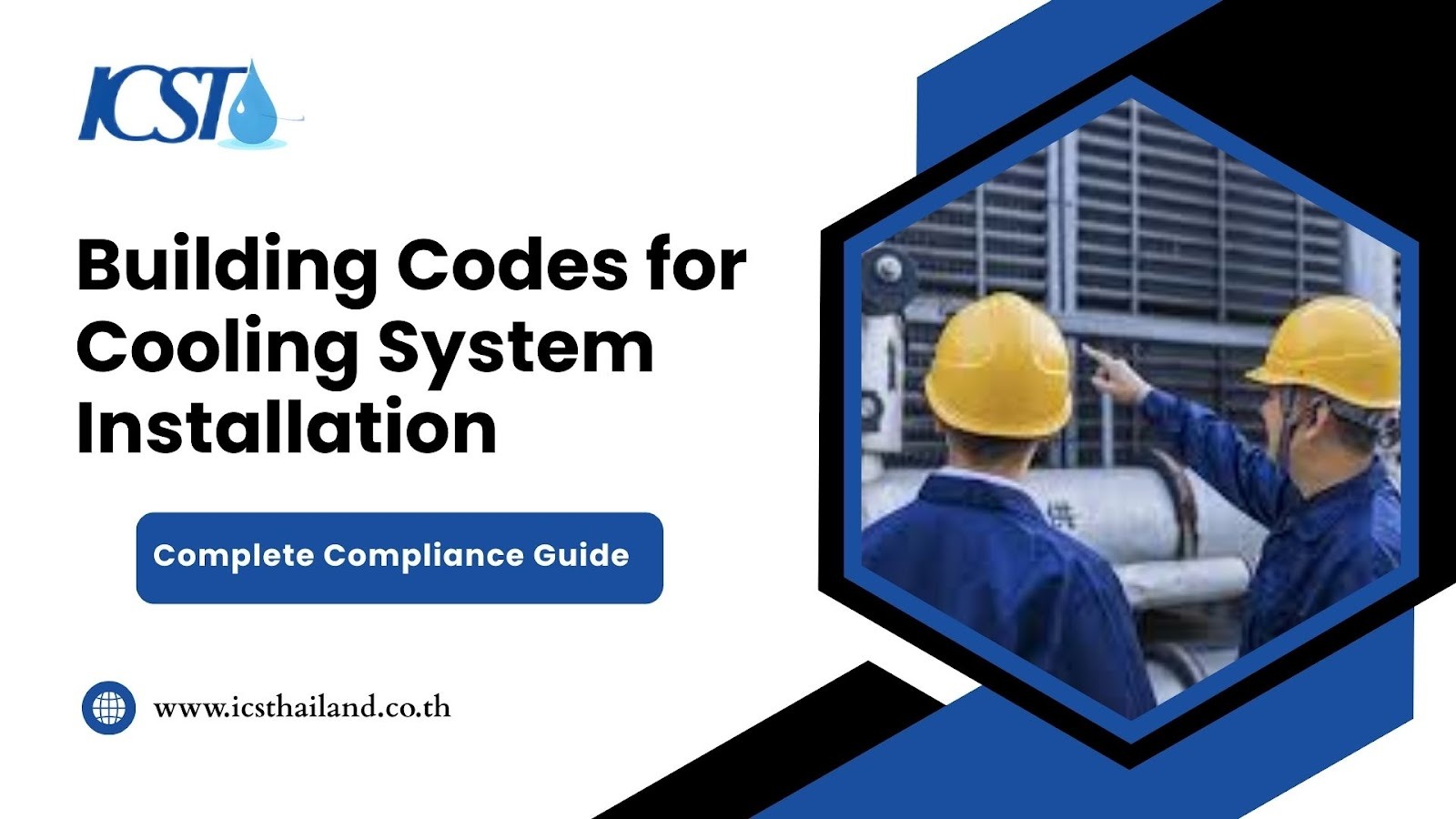
Installing a cooling system in an industrial or commercial facility isn’t just about picking the right equipment; it’s about playing by the rules. Cooling system building codes are your blueprint for safety, efficiency, and passing inspections. From structural loads and electrical wiring to plumbing, fire safety, and permits, every detail matters.
Get it right, and you’ll have a system that runs smoothly and meets every regulation. Get it wrong, and you’re looking at costly delays and risks. Let’s dive into what it takes to do it right!
Engineers, contractors, and facility managers must navigate these regulations through every stage of design and installation. Failure to do so can result in costly project delays, safety hazards, and legal complications.
This guide will deconstruct the critical codes, identify common compliance pitfalls, and provide a practical roadmap for executing a safe, code-compliant cooling system installation.
What Are Cooling System Building Codes?
Cooling system building codes define the minimum safety and performance standards required for installing HVAC and industrial cooling equipment. These regulations exist to protect public health, safety, and general welfare by ensuring that mechanical systems do not pose structural or fire hazards.
While national or international bodies create model codes, local jurisdictions often adopt and modify them. A model code, such as the International Mechanical Code (IMC), provides a baseline, but a specific city or state may add stricter amendments based on local climate or seismic activity.
- Cooling towers: Large heat rejection devices that often require specific water treatment and structural support standards.
- Chillers: Heavy mechanical units that demand precise electrical connections and refrigerant safety protocols.
- Evaporative condensers: Systems that combine water and air cooling, requiring adherence to both plumbing and mechanical standards.
- Fluid coolers: Closed-loop systems that necessitate careful integration with existing process piping and building structures.
Why Cooling System Building Codes Matter
Adherence to these standards is not merely a bureaucratic hurdle; it is a fundamental requirement for operational safety. Non-compliant installations create immediate safety risks for building occupants and maintenance personnel.
A heavy cooling tower installed without regard for structural engineering could cause a roof collapse, while improper electrical wiring creates severe fire hazards.
Beyond physical safety, ignoring regulations carries significant legal and financial consequences.
- Costly penalties: Inspectors can shut down non-compliant job sites, issue heavy fines, or mandate the removal of unauthorized equipment, which can destroy project timelines and budgets.
- Long-term efficiency: Building codes often include energy efficiency and proper airflow provisions. Following these guidelines ensures the system operates as intended, which lowers energy consumption and extends the equipment’s lifespan.
Authorities and Standards Governing Cooling System Installations
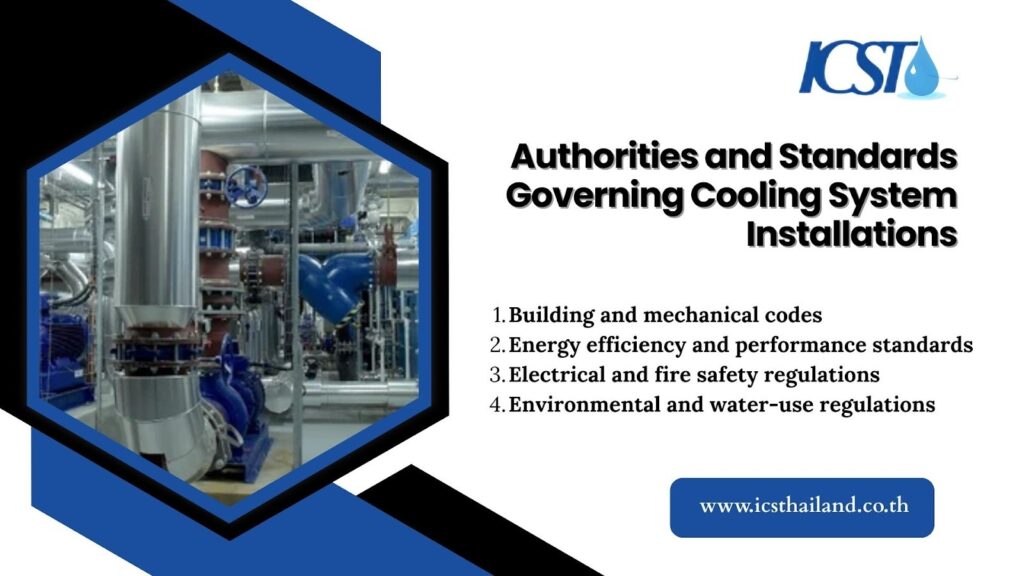
Navigating the regulatory landscape requires understanding the various bodies that enforce these rules. Building and mechanical codes usually form the backbone of compliance, dictating how systems interact with the physical structure.
Organizations like ASHRAE (American Society of Heating, Refrigerating, and Air-Conditioning Engineers) set the standard for performance and efficiency. Their guidelines frequently inform the legally binding codes adopted by local governments.
Several distinct categories of regulations converge during a single installation project. You must coordinate requirements from different disciplines to achieve full approval.
- Building and mechanical codes: These govern the physical installation, support, and mechanical operation of the unit.
- Energy efficiency and performance standards: These mandates often limit energy usage and require specific controls to minimize waste.
- Electrical and fire safety regulations: These codes ensure safe power delivery and minimize the risk of fire spread.
- Environmental and water-use regulations: These rules control water discharge, chemical treatment, and noise pollution.
The local Authority Having Jurisdiction (AHJ) holds the final say. Regardless of what a model code states, the local building official or fire marshal must approve the specific application of the rules in their territory.
Structural Load and Support Requirements
Rooftop cooling units are heavy and add stress to buildings. Engineers must confirm the roof can handle the unit, water, and servicing technicians. Structural load calculations are a key step in the permitting process.
Environmental forces add another layer of complexity to these calculations. A static load calculation is insufficient because nature applies dynamic forces that can destabilize equipment.
- Wind, seismic, and vibration considerations: Engineers must account for high winds attempting to overturn the unit or earthquakes shifting the base.
- Equipment anchoring and support framing: Codes specify exactly how to bolt the unit to the structure to prevent movement.
- Roof penetration and waterproofing coordination: Every point where a support penetrates the roof membrane must be sealed to prevent leaks and structural rot.
- Structural documentation required for approvals: You must submit stamped engineering drawings proving the building can handle the additional weight.
Mechanical and Plumbing Code Requirements
The movement of water and refrigerants within a facility falls under strict plumbing codes. These regulations ensure that the water supply remains uncontaminated and that wastewater leaves the building safely.
A cooling system is not a standalone box; it is a component that interacts with the municipal water supply.
- Cooling water supply and drainage requirements: The system must have a reliable water source and a code-compliant method for draining maintenance water.
- Blowdown, overflow, and condensate management: Codes require specific piping routes for the discharge of water to prevent damage to the roof or building foundation.
- Backflow prevention and cross-connection control: Devices must be installed to prevent chemically treated cooling water from flowing backward into the potable water supply.
- Piping materials and installation clearances: The materials used must withstand the temperature and chemical nature of the fluid, with adequate space left for inspections.
Electrical Code Requirements for Cooling Systems
Cooling systems are significant consumers of electricity and require robust power infrastructure. Electrical codes dictate how to size the wiring, protect the circuit, and ensure the safety of anyone working near the equipment.
A mismatch between the unit’s requirements and the building’s electrical capacity is a common cause of inspection failure.
- Power supply and disconnect requirements: A manual disconnect switch must usually be located within sight of the motor to allow safe servicing.
- Motor, fan, and VFD electrical considerations: Variable Frequency Drives (VFDs) introduce harmonic distortion concerns that codes may address.
- Grounding and overcurrent protection: Proper grounding protects personnel from shock, while breakers protect the equipment from damage.
- Coordination between mechanical and electrical design: The electrical drawings must reflect the actual load of the mechanical equipment selected.
Step-by-Step Code-Compliant Installation Process
Achieving compliance is a process that spans the entire project lifecycle. It begins long before the crane arrives to lift the unit and continues until the final inspection is signed off. Following a structured workflow minimizes the chance of missing a critical step regulated by cooling system building codes.
The key to success lies in methodical execution and constant communication. You must ensure that what was approved on paper is exactly what gets built on the roof.
- Pre-installation planning and design review: Review all local amendments and verify that the design meets every specific code requirement. Conduct a thorough evaluation to identify potential challenges before installation begins.
- On-site installation best practices: Mechanics and electricians must follow the approved drawings precisely without unauthorized deviations. Ensure all team members understand their roles to maintain consistency and quality.
- Coordination between contractors and inspectors: Schedule inspections at appropriate milestones so work does not have to be undone for viewing. Maintain clear communication between all parties to avoid delays or errors.
- Pre-startup inspections and documentation: Verify that all safety switches, backflow preventers, and supports are in place. Document compliance with all regulations for future reference.
- Final approval and system commissioning: Demonstrate to the inspector that the system operates safely and effectively. Provide detailed operational training to relevant personnel for ongoing safety.
Common Cooling System Code Violations to Avoid
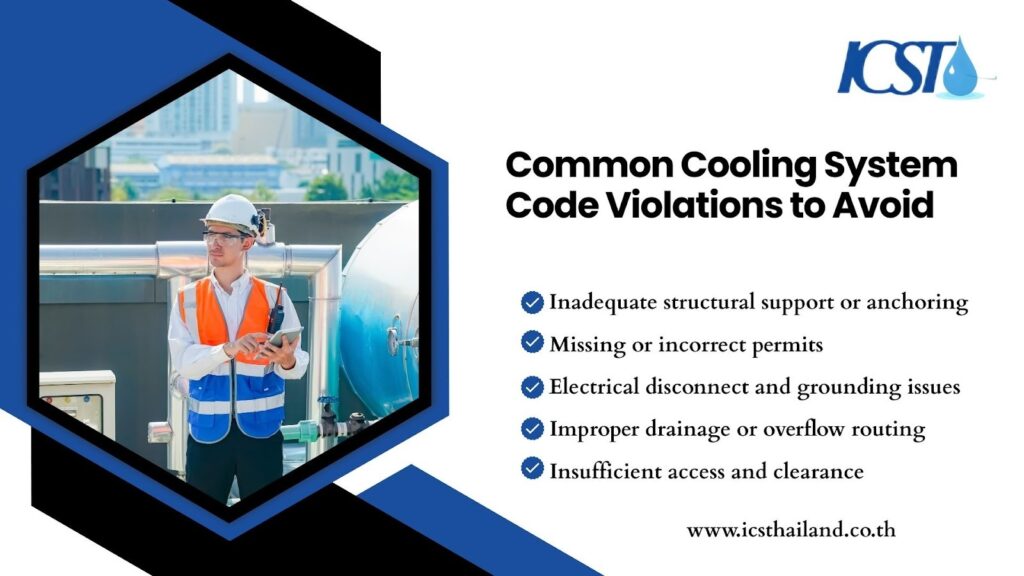
Even experienced contractors can make mistakes that lead to failed inspections. Awareness of common violations helps teams scrutinize these areas more closely. One frequent issue involves structural load; contractors sometimes assume a roof is strong enough without performing the required engineering calculations or reinforcing the framing.
Another major area of neglect involves the administrative side of the project. Ignoring permit requirements or starting work before the permit is issued will result in immediate Stop Work Orders.
- Inadequate structural support or anchoring: Using the wrong size bolts or failing to tie into the building structure correctly.
- Missing or incorrect permits: Failing to secure a specific trade permit, such as plumbing or electrical.
- Electrical disconnect and grounding issues: Placing the service disconnect switch too far from the unit or obstructing access to it.
- Improper drainage or overflow routing: allowing water to pool on the roof rather than piping it to a drain.
- Insufficient access and clearance: Installing units too close together, preventing safe passage for maintenance.
Compliance Checklist for Cooling System Installation
A checklist serves as a final defense against oversight. By systematically verifying each category, project managers can declare the site ready for inspection with confidence.
Use this list to ensure you have covered the plumbing codes, electrical codes, and fire safety codes relevant to your project.
- Design and planning checklist: Confirm AHJ requirements, secure permits, and finalize engineering drawings.
- Structural and load verification checklist: Verify roof capacity, wind load ratings, and vibration isolation.
- Mechanical and plumbing compliance checklist: Check pipe sizing, backflow prevention, and drain routing.
- Electrical and fire safety checklist: Confirm disconnect placement, grounding, and clearance from hazards.
- Final inspection and commissioning checklist: Gather all manuals, test reports, and approval documents for the inspector.
Final Thoughts
Installing a cooling system is a challenging engineering task requiring strict compliance with building codes to ensure safety. From structural calculations to electrical connections, every phase must align with regulations.
Success hinges on early planning, understanding cooling system building codes, and seamless coordination between structural, mechanical, and electrical teams. Partnering with experienced professionals ensures your project is safe, legal, and durable.
Whether you’re upgrading an existing system or building a new cooling tower, attention to code compliance and collaboration is key to long-term success. For expert assistance with cooling tower installation, upgrades, or maintenance, trust the specialists.
Visit our website for all your cooling tower needs, whether it’s maintenance, repair, or building a new system!
Frequently Asked Questions
Are cooling system building codes mandatory for all projects?
Yes, compliance is legally mandatory for all commercial and industrial installations. Exceptions are rare and usually apply only to very small, non-permanent equipment.
Do requirements differ for rooftop installations?
Yes, rooftop installations face stricter scrutiny regarding wind load, structural support, and safe access for personnel compared to ground-level units.
What happens if a cooling system fails inspection?
The inspector will issue a report detailing the violations. You must correct these issues and pay for a re-inspection before the system can legally operate.
What are common cooling system code violations?
Frequent issues include inadequate structural support, missing permits, improper electrical grounding, incorrect drainage or overflow routing, and insufficient clearance for maintenance.