Industrial facilities rely on precise temperature control to maintain peak productivity and equipment integrity. From sprawling power plants to specialized manufacturing floors, operational efficiency hinges on the reliability of specific cooling system components.
Understanding how these critical elements, such as various cooling tower parts, high-performance heat exchangers, and heavy-duty cooling pumps, interact is essential for any facility manager or engineer aiming to optimize thermal performance. These systems work tirelessly to dissipate excess heat, protecting expensive machinery from catastrophic failure.
This article provides a comprehensive overview of the major parts within these complex networks, explaining how they function together to ensure operational longevity and safety in the most demanding environments. Explore the vital mechanics behind industrial cooling today.
What Is an Industrial Cooling System?
An industrial cooling system removes excess heat from a process or facility to prevent overheating. The basic operation involves a transfer of thermal energy from a heat source to a fluid, which then travels to cooling equipment for rejection into the atmosphere. This cycle allows machinery and chemical processes to operate within safe temperature limits.
Engineers typically design these systems in two primary configurations:
- Open cooling towers: Water comes into direct contact with the air to facilitate evaporation.
- Closed-loop systems: The process fluid remains isolated inside tubes or plates, protecting it from atmospheric contamination.
Cooling Tower Components (Core Structure)
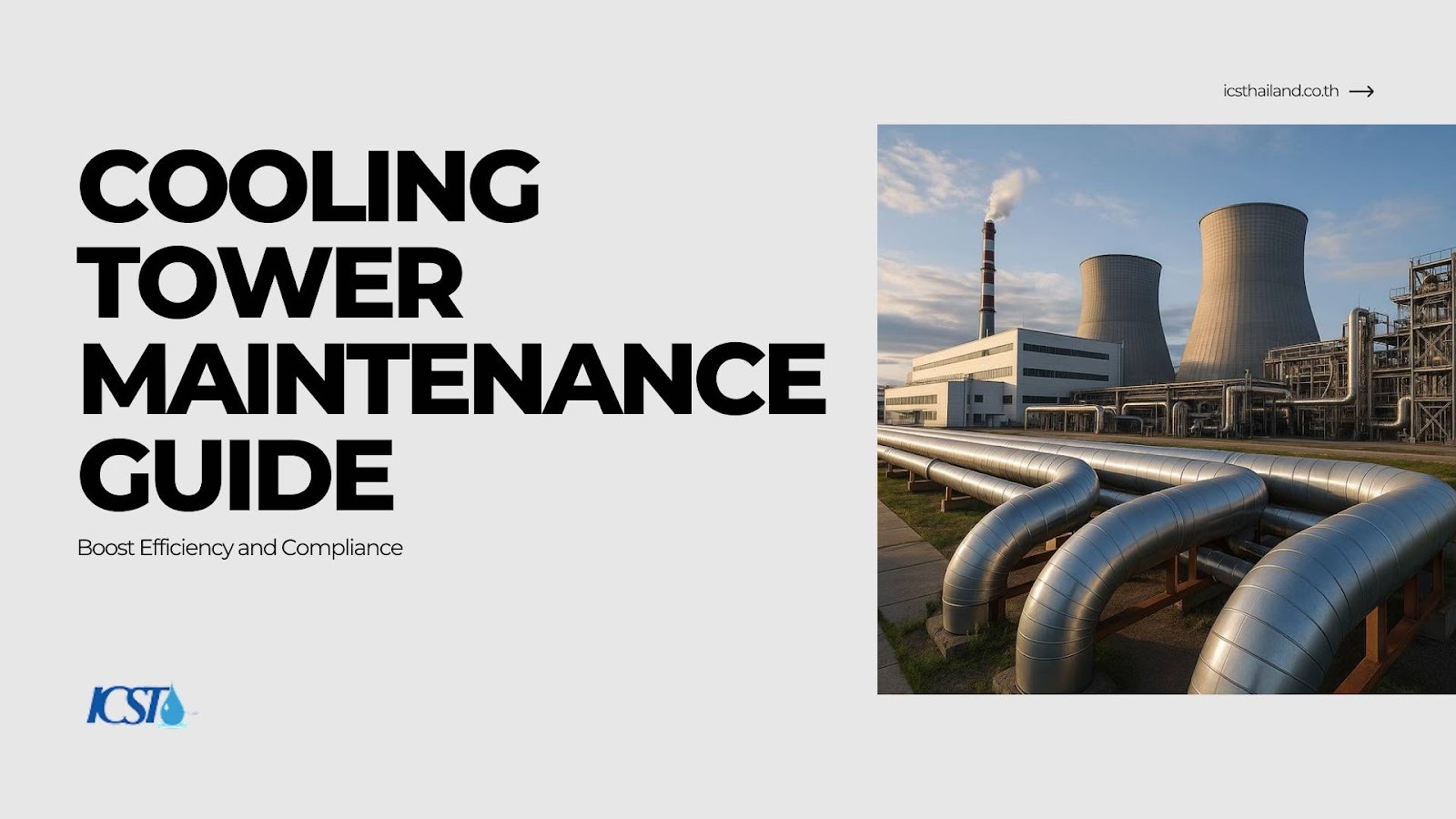
The cooling tower is one of the most critical cooling system components, serving as the central hub for heat rejection. Its structure houses various subsystems designed to maximize contact between air and water, accelerating the cooling process.
Fill Media
Fill media acts as the primary heat transfer surface within the tower. By spreading water into thin films or droplets, it increases the surface area available for evaporation.
Engineers select specific fill types based on water quality and thermal requirements:
- Film fill: This consists of thin plastic sheets that spread water into a thin layer, offering high efficiency b, to clogging in dirty water applications.
- Splash fill: This type breaks water into droplets using a series of horizontal bars, making it ideal for water with high suspended solids.
Biological growth and fouling are significant operational concerns for fill media. Without proper water treatment, debris can accumulate on the surface, severely reducing airflow and heat transfer capabilities.
Heat Exchanger
The heat exchanger is vital for closed-loop systems where the process fluid must remain isolated. Plate and shell-and-tube designs are common, facilitating thermal transfer between hot process fluid and cooling water without mixing them.
Several factors influence the efficiency of a heat exchanger:
- Surface area: Larger surface areas allow for greater heat transfer between the two fluids.
- Fluid velocity: Higher turbulence typically improves heat transfer rates but increases pressure drop.
- Fouling resistance: The design must account for potential scaling that inhibits thermal conductivity.
Cooling Pumps
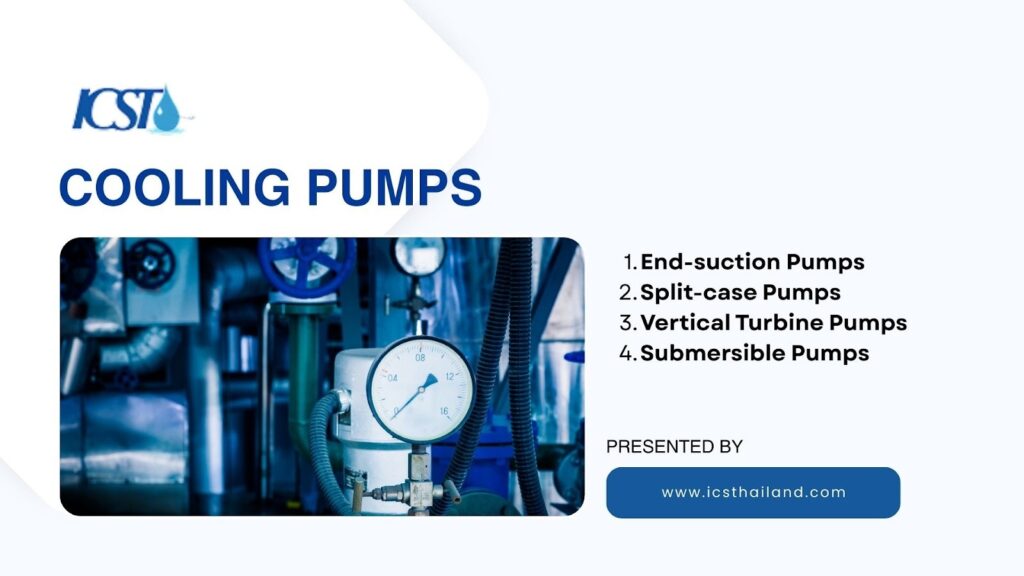
The cooling pump is one of the most vital cooling system components, as it drives the circulation of water throughout the entire loop. Selecting the right pump involves analyzing flow rates and pressure head requirements to ensure the fluid reaches all necessary parts of the system.
Common pump designs used in industrial cooling include:
- End-suction pumps: These are cost-effective and reliable for general-purpose cooling applications.
- Split-case pumps: Ideal for high-flow applications, these pumps are easy to maintain since the casing can be opened without disturbing the piping.
- Vertical turbine pumps: These submersed pumps push water up from a basin and are highly efficient for cooling towers.
- Submersible pumps: Designed to be fully submerged in the cooling fluid, these are often used in deep wells or sumps.
Operators must monitor the cooling pump for signs of cavitation. This failure mode occurs when low pressure causes bubbles to form and collapse against the impeller, causing severe structural damage over time.
Drift Eliminators
A drift eliminator captures water droplets entrained in the discharging air stream. These cooling system components are critical for conserving water and preventing the escape of chemically treated water into the environment.
Effective drift elimination serves two primary purposes:
- Water conservation: It keeps process water inside the tower, reducing the need for makeup water.
- Environmental compliance: It prevents chemicals and particulate matter from leaving the tower and settling on surrounding areas.
- Energy efficiency: Helps optimize the cooling process, reducing energy consumption.
- Equipment longevity: Minimizes scaling and corrosion, extending the lifespan of the cooling system.
Distribution System (Nozzles & Piping)
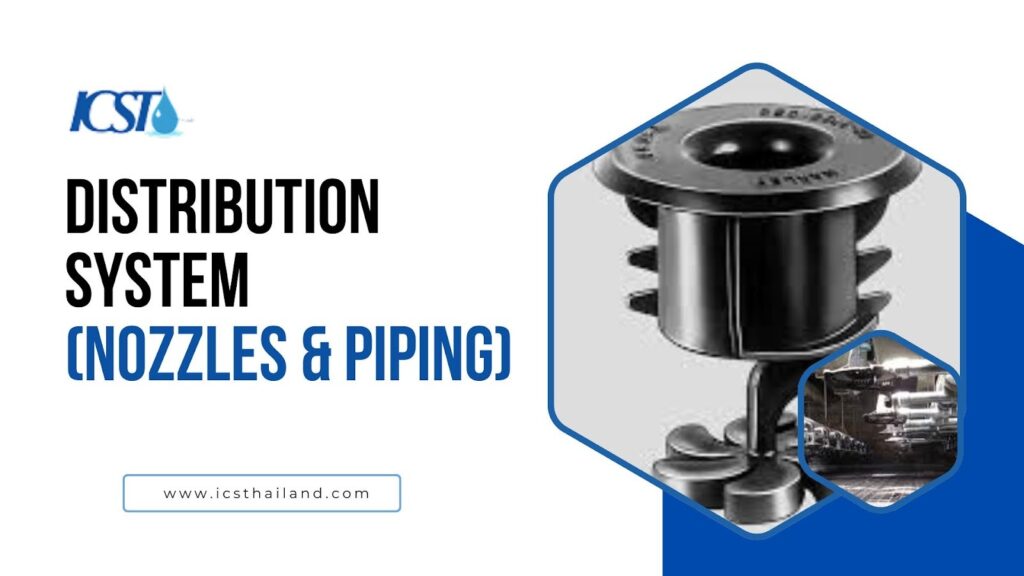
Efficient cooling requires uniform water coverage over the fill media. The distribution system utilizes piping manifolds and spray nozzles to ensure water spreads evenly, preventing dry spots that reduce thermal performance.
Key considerations for distribution system design include:
- Nozzle selection: The nozzle must produce the correct spray pattern and droplet size for the specific fill type to maximize the air-water interface.
- Pressure management: The piping must deliver water at the correct pressure to ensure the nozzles operate within their design parameters and prevent uneven distribution.
- Clogging prevention: Design must allow for easy access to nozzles for cleaning to avoid bypass and hotspots caused by sediment buildup.
- Material compatibility: Piping should be constructed from corrosion-resistant materials like PVC, FRP, or galvanized steel to withstand various water treatment chemicals.
- Hydraulic balancing: The layout should ensure equal flow across all cells to maintain thermal efficiency across the entire cooling tower footprint.
Fan and Airflow Components
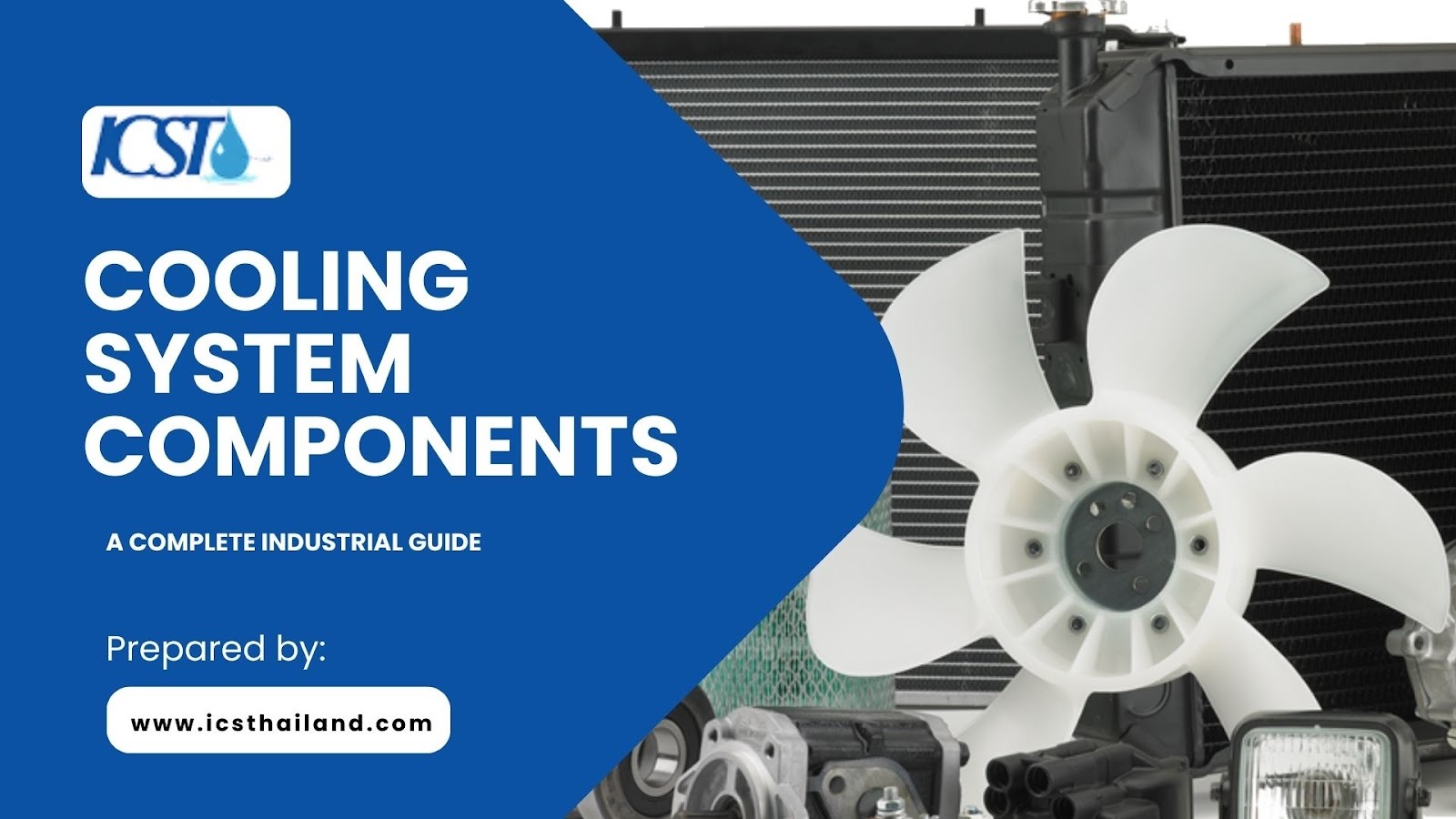
Mechanical draft towers are key cooling system components that rely on fans to move air through the fill. Whether using induced draft (pulling air through) or forced draft (pushing air through) designs, the fan blades and drive systems play a crucial role in determining the airflow rate and overall cooling capacity.
Fan assemblies consist of several critical parts:
- Fan blades: These are pitched to move air efficiently and are typically constructed from lightweight, corrosion-resistant materials like fiberglass or aluminum.
- Drive systems: Gearboxes or belt drives transfer power from the motor to the fan, requiring routine lubrication and tension adjustments to ensure longevity.
- Fan motor: The power source for the entire assembly, often equipped with variable speed drives (VFDs) to optimize energy consumption based on cooling demand.
- Fan cylinder/stack: The aerodynamic housing that surrounds the fan to minimize air turbulence and maximize the efficiency of the airflow discharge.
- Drive shaft: Connects the motor to the gearbox, designed to withstand torque and maintain alignment across the fan assembly.
Basin and Structural Components
The cold water basin collects cooled water at the tower base before recirculation. Proper basin design includes sumps and drains to manage sediment and ensure clean suction for the pumps.
Structural integrity helps the tower withstand environmental stressors:
- Material selection: Frames are often constructed from galvanized steel, stainless steel, or fiberglass to resist corrosion.
- Debris control: Screens and sumps prevent large debris from entering the pump suction line.
- Vibration isolation: Specialized mounts reduce mechanical noise and protect the structural frame from fatigue.
- Access platforms: External walkways and ladders provide safe entry for technicians during routine maintenance inspections.
Auxiliary Components
Filtration systems and chemical feeds are vital cooling system components that maintain water quality, while vibration switches protect mechanical parts. These components are essential for preventing scale and biological growth.
Auxiliary components that extend system life include:
- Side-stream filtration: This continuously filters a small percentage of the circulating water to remove suspended solids.
- Vibration switches: These sensors shut down the fan motor if excessive vibration is detected, preventing catastrophic mechanical failure.
- Temperature sensors: These monitor water temperature to ensure optimal system performance and prevent overheating.
Maintenance Best Practices for Each Component
Routine maintenance must include visual inspections of fill and drift eliminators. Technicians should verify sensor calibration and check pump seals regularly to maintain efficiency.
A robust maintenance schedule includes the following tasks:
- Visual inspections: Check the drift eliminator and fill for blockages or scale buildup monthly. Clean with a soft brush or low-pressure water if necessary to prevent performance issues.
- Mechanical service: Lubricate fan bearings and check motor alignment every quarter. Additionally, inspect belts for wear and tension, and tighten or replace them as needed.
- Water quality management: Test water chemistry regularly to prevent scaling and corrosion. Use appropriate water treatment solutions to maintain optimal system performance.
- System monitoring: Keep a log of maintenance activities and performance metrics to identify trends and address potential issues early.
- Seasonal prep: Before peak operating seasons, perform a thorough system check, including all mechanical and water components, to ensure reliability.
Conclusion
Optimizing industrial operations requires a deep understanding of your cooling system components. By meticulously maintaining critical elements like cooling tower parts, the heat exchanger, and the cooling pump, facilities ensure reliable heat rejection and peak performance. Regular attention to these parts is the only way to guarantee long-term system efficiency and structural longevity.
Whether you are addressing fill media degradation or upgrading a drift eliminator to reduce water loss, proactive management is the ultimate key to minimizing costly downtime. Don’t leave your operational reliability to chance.
Ensure your facility stays ahead of the curve by sourcing high-quality components and expert advice. Visit the ICS Thailand website today to explore our premium solutions and take the first step toward a more efficient cooling future.
Frequently Asked Questions (FAQs)
What are the main components of a cooling tower?
The main cooling system components within a tower include the fill media, the cold water basin, the air inlet louvers, the fan system, the water distribution nozzles, and the drift eliminator.
Why is fill media important in a cooling system?
Fill media creates a massive surface area for the water, which maximizes contact with air and significantly improves the rate of evaporation and heat rejection.
How do cooling pumps affect system performance?
The cooling pump dictates the flow rate of the water; if the pump is undersized or failing, the system cannot circulate enough water to remove the heat generated by the process.
What is a drift eliminator?
A drift eliminator is a series of baffles that trap water droplets, leaving the tower to save water and prevent chemicals from escaping into the surrounding environment.