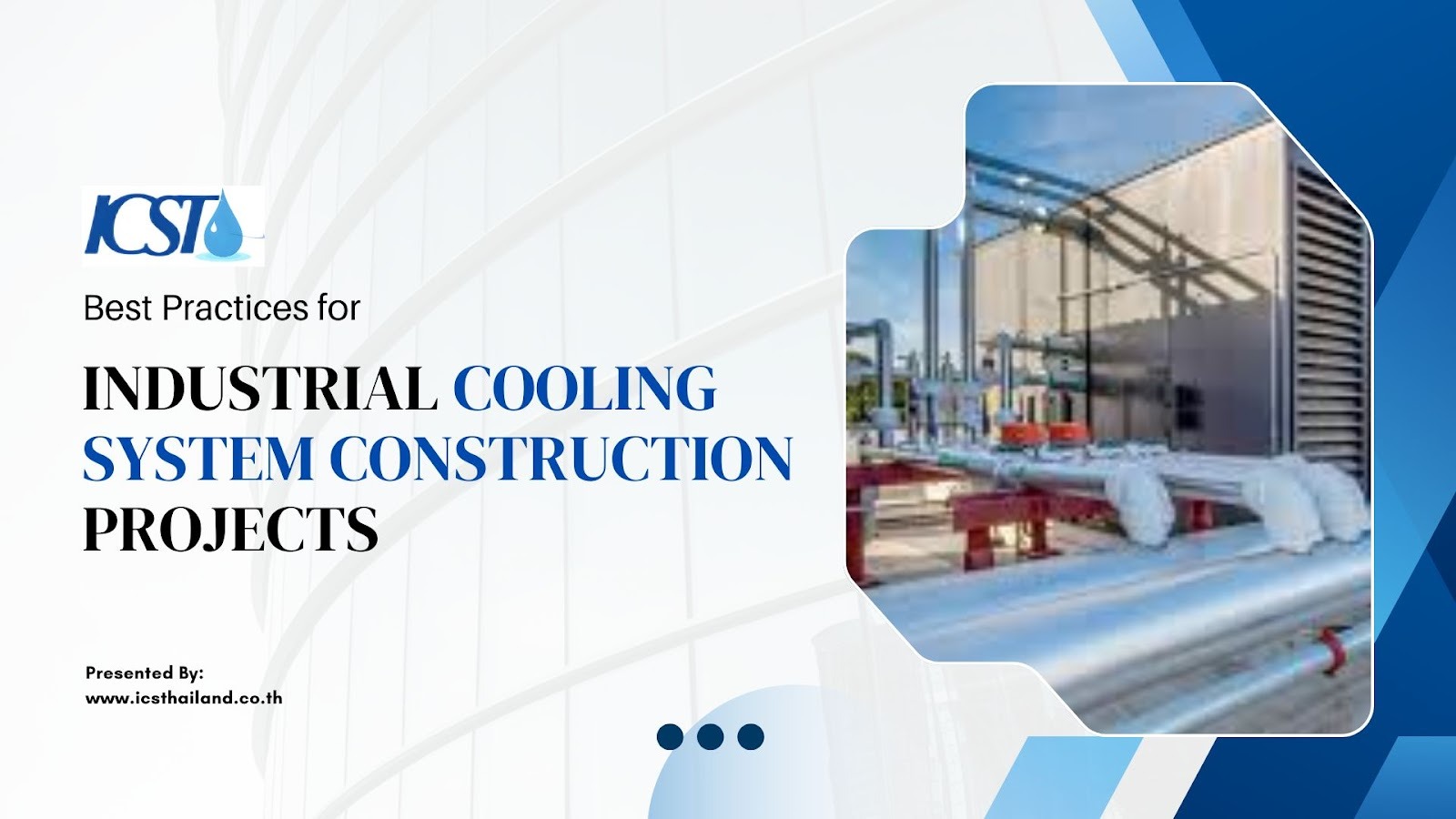
Industrial cooling system construction is a complex, high-stakes endeavor that demands precision, coordination, and rigorous adherence to standards. Whether you are building a new cooling tower installation, retrofitting a chiller system, or managing a large-scale thermal management project, understanding the best practices that govern cooling system construction is essential for long-term performance and operational reliability.
This guide provides a comprehensive framework for engineers, project managers, and contractors involved in industrial cooling system projects. It covers critical aspects such as site preparation, installation best practices, quality assurance protocols, safety measures, and commissioning practices.
By following these guidelines, you will be better equipped to avoid common pitfalls, ensure compliance with construction standards, and deliver systems that meet design specifications and performance expectations.
Understanding Industrial Cooling System Construction
Cooling system construction refers to the physical installation and integration of equipment and infrastructure designed to remove heat from industrial processes or building environments.
This includes a wide range of components such as cooling towers, chillers, pumps, heat exchangers, piping networks, electrical systems, and control instrumentation.
Following best practices is crucial for several reasons:
- Reduces risk: It lowers the chance of equipment failure and minimizes costly rework.
- Improves safety: Adhering to proven methods enhances safety outcomes on the project site.
- Ensures peak performance: It guarantees the system operates at maximum efficiency, preventing issues like increased energy consumption and premature equipment wear.
- Prevents downtime: In high-demand industrial settings, any deviation can lead to significant operational disruptions.
Pre-Construction Planning & Project Setup
Successful cooling system construction begins long before the first piece of equipment arrives on site. Pre-construction planning establishes the foundation for the entire project and ensures that all stakeholders are aligned on scope, budget, timeline, and deliverables.
Key considerations during this phase include:
- Design-build versus design-bid-build approaches: Determine which project delivery method best suits your timeline, budget, and risk tolerance.
- Constructability review sessions: Engage field personnel early to identify installation challenges before construction begins.
- Value engineering opportunities: Look for ways to optimize material selection, equipment placement, and construction sequences without compromising system performance.
- Project management team roles and responsibilities: Clearly define who is responsible for procurement, scheduling, quality control, safety oversight, and client communication.
- Budgeting and cost estimating: Develop realistic budgets that include contingencies for unforeseen conditions, change orders, and supply chain delays.
- Procurement planning: Coordinate equipment orders, material deliveries, and subcontractor mobilization to avoid delays and storage issues.
A well-structured pre-construction phase sets the tone for a smooth and efficient construction process. It also provides a framework for accountability and clear communication throughout the project lifecycle.
Site Preparation Best Practices
Proper site preparation is a critical step that directly impacts the quality and efficiency of the construction process. Before any equipment is installed, the site must be surveyed, cleared, and prepared to support the mechanical and structural demands of the cooling system.
Essential site preparation activities include:
- Earthwork and grading: Excavate and level the site to create a stable foundation for equipment pads, piping trenches, and access roads.
- Setting benchmarks and control points: Establish reference points for elevation, alignment, and layout accuracy throughout the construction process.
- Utilities location and clearance verification: Identify and mark the location of existing electrical, water, gas, and telecommunications lines to prevent accidental damage.
- Access roads and staging areas: Create temporary roads and storage zones that allow for safe and efficient movement of heavy equipment, materials, and personnel.
- Environmental protection measures: Implement erosion control, stormwater management, and spill prevention protocols to comply with environmental regulations and minimize site impact.
Thorough site preparation reduces the likelihood of delays, rework, and safety incidents. It also ensures that the installed system is properly aligned, supported, and integrated with the surrounding infrastructure.
Construction Standards & Codes Compliance
Compliance with construction standards and codes is not optional. It is a legal and ethical requirement that protects workers, building occupants, and the public. Industrial cooling systems must be designed and installed in accordance with a range of mechanical, structural, electrical, and safety codes.
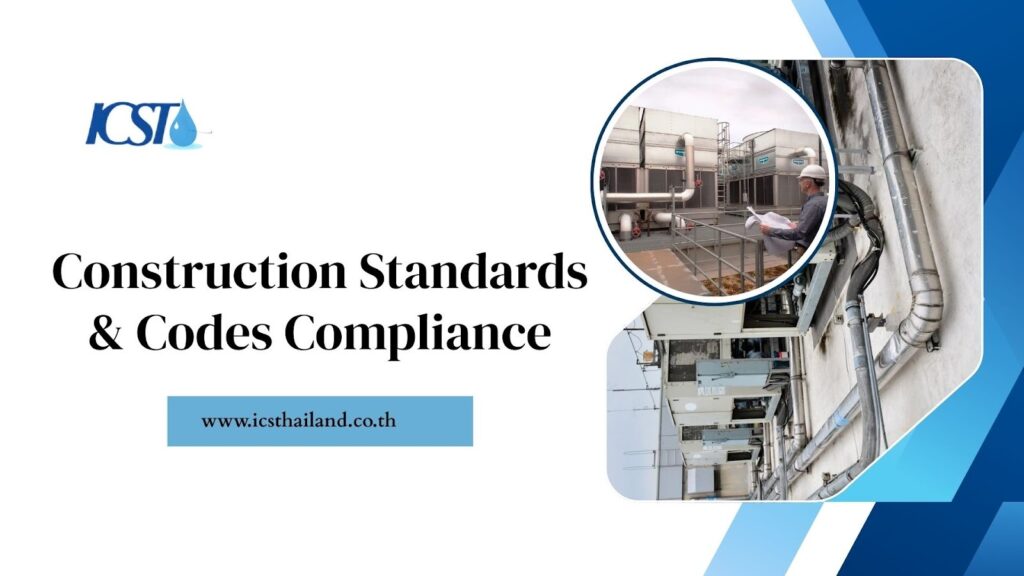
Which codes apply to your project? The answer depends on the project location, system type, and industry sector. Common standards include those published by ASHRAE (American Society of Heating, Refrigerating and Air-Conditioning Engineers), ANSI (American National Standards Institute), and ISO (International Organization for Standardization). Local building codes, fire codes, and environmental regulations may also apply.
Key compliance considerations include:
- Mechanical and structural codes: Ensure that equipment supports, foundations, and piping systems meet load requirements and seismic design criteria.
- Electrical codes: Follow wiring methods, grounding practices, and circuit protection requirements to prevent electrical hazards.
- Safety codes: Implement lockout/tagout procedures, guarding for rotating equipment, and fall protection measures where required.
- Documentation and submittals: Prepare and submit shop drawings, product data sheets, operation manuals, and test reports as required by the authority having jurisdiction.
Non-compliance can result in project delays, costly corrections, and legal liability. It can also compromise system safety and performance. Make code compliance a priority from the earliest stages of planning through final inspection and approval.
Installation Best Practices for Core Components
The quality of component installation directly determines the reliability and efficiency of the cooling system. Each piece of equipment must be installed with attention to alignment, support, accessibility, and integration with adjacent systems.
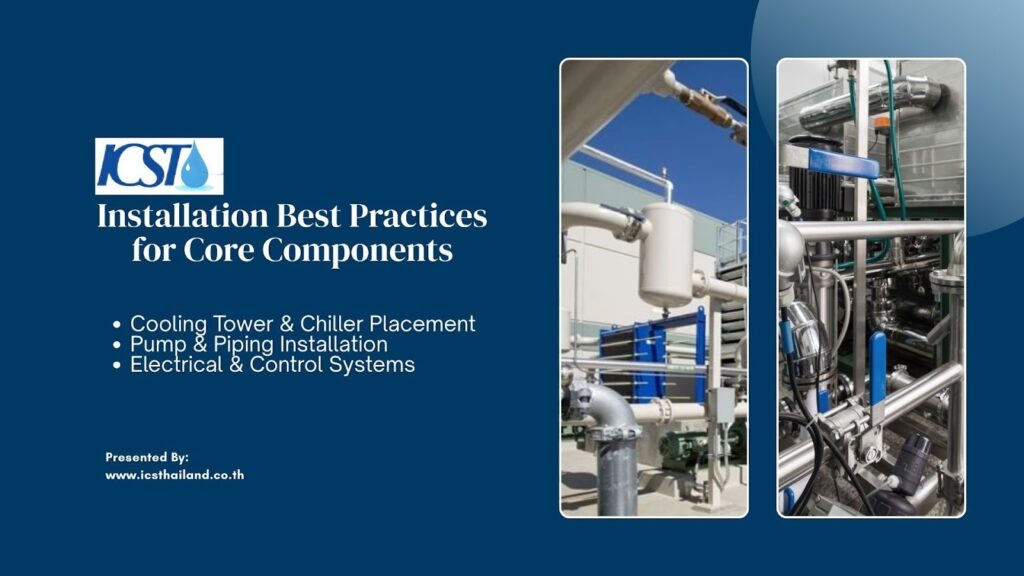
Cooling Tower & Chiller Placement
Cooling towers and chillers are often the largest and most visible components of an industrial cooling system. Proper placement requires careful consideration of airflow, structural support, vibration isolation, and maintenance access.
Cooling Towers:
- Place them in areas with clear airflow to maximize heat rejection.
- Avoid locating towers near building air intakes or pedestrian zones to prevent issues with mist and noise.
Chillers:
- Install them on vibration-isolated bases to keep mechanical vibrations from transferring to the building structure.
- Ensure the foundation is level, stable, and strong enough to support the equipment’s full weight (including water or refrigerant).
- Leave enough space around the equipment for maintenance tasks like tube cleaning, motor replacement, and refrigerant servicing.
Pump & Piping Installation
Pumps and piping form the circulatory system of the cooling network. Improper installation can lead to cavitation, noise, leaks, and premature wear. Align the pump suction and discharge flanges carefully to avoid stressing the pump casing. Use flexible connectors or expansion joints where necessary to accommodate thermal expansion and contraction.
Key tips for ensuring a properly installed and efficient piping system:
- Install piping with the correct slope to ensure proper drainage and eliminate air pockets.
- Use suitable hangers, supports, and anchors to prevent sagging and excessive movement.
- Include expansion loops or bellows to account for thermal growth.
- Test all joints and connections for leaks before insulating and commissioning the system.
Electrical & Control Systems
Electrical systems provide power and control signals to motors, valves, sensors, and controllers. Position control panels in dry, accessible locations that are protected from direct sunlight and environmental contaminants.
- Route conduit and cable along logical paths to minimize interference and allow for future modifications.
- Install motor starters, variable frequency drives (VFDs), and soft starters as per manufacturer specifications.
- Verify that all grounding and bonding connections are secure and comply with electrical codes.
- Clearly label all circuits, panels, and disconnects to aid in safe maintenance and troubleshooting.
Quality Assurance & Inspection Protocols
Quality assurance is the backbone of a successful construction project. It ensures that materials, workmanship, and installation methods meet design specifications and industry standards. Without rigorous QA protocols, defects and deviations can go unnoticed until they cause costly failures or safety incidents.
Create a detailed quality assurance plan covering all construction phases. This plan needs to outline procedures for material traceability, receiving inspections, and in-process checks at key milestones.
Key quality assurance activities include:
- Material receiving inspection: Check equipment nameplates, material certifications, and packaging for damage or discrepancies.
- Weld and joint inspection procedures: Inspect welds visually and using non-destructive testing methods such as radiography or ultrasonic testing where required.
- Hold points and milestone inspections: Define critical stages where work cannot proceed until inspection and approval are complete.
- Document control and QA records: Maintain detailed records of inspections, test results, non-conformances, and corrective actions.
Quality assurance is not just about catching defects. It is about building accountability, transparency, and confidence in the finished product. A robust QA program reduces the risk of rework, supports regulatory compliance, and enhances the reputation of all project stakeholders.
Safety and Risk Management
Safety is a fundamental responsibility on every construction site. Industrial cooling system construction involves heavy equipment, elevated work, electrical hazards, and confined spaces. Without proactive safety planning and enforcement, workers face serious injury or death.
Critical safety considerations include:
- Hazard assessments: Identify and evaluate hazards associated with each work activity, including falls, electrical shock, struck-by incidents, and exposure to hazardous substances.
- Permit requirements: Obtain and enforce permits for hot work, confined space entry, electrical lockout/tagout, and excavation activities.
- PPE and safety training: Provide hard hats, safety glasses, gloves, hearing protection, and fall protection equipment as required by the hazard assessment.
- Risk mitigation for heavy lifts and overhead hazards: Use qualified riggers, inspect lifting equipment before use, and establish exclusion zones beneath suspended loads.
A strong safety culture protects workers, reduces liability, and demonstrates commitment to ethical and responsible construction practices. Safety should never be compromised in the pursuit of schedule or cost savings.
Coordination Between Trades & Effective Communication
Large cooling system construction projects involve multiple trades working in the same space at the same time. Mechanical, electrical, civil, and structural contractors must coordinate their activities to avoid conflicts, delays, and rework.
Effective contractor coordination is essential for keeping the project on schedule and within budget. Building Information Modeling (BIM) and coordination software can help identify conflicts before they occur in the field.
Key coordination practices include:
- Clash resolution: Address conflicts between mechanical, electrical, and civil systems early in the construction process.
- RFI and submittal workflows: Establish clear procedures for submitting and responding to requests for information and shop drawings.
- Client and owner communication protocols: Keep the project owner informed of progress, challenges, and changes through regular updates and meetings..
Testing, Commissioning & Handover Procedures
Commissioning practices are the final step in verifying that the cooling system operates as designed. Commissioning involves a series of tests and checks that validate the performance of individual components and the integrated system as a whole.
Essential commissioning activities include:
- Pre-start checks: Verify that all equipment is installed correctly, electrical connections are secure, and safety devices are operational.
- Functional testing: Test pumps, fans, valves, and controllers individually to confirm proper operation.
- Control system validation: Verify that control sequences, setpoints, and alarms function as intended.
- Performance acceptance testing: Measure system performance under full load conditions to confirm compliance with design specifications.
- Punch list close-out: Document and resolve all outstanding deficiencies before final acceptance.
- Owner training and documentation handover: Provide training to operations staff and deliver complete as-built drawings, operation manuals, and warranty documents.
Commissioning is not a formality. It is a critical process that ensures the system is safe, efficient, and ready for long-term operation. Skipping or rushing commissioning can lead to equipment failures, energy waste, and dissatisfied clients.
Documentation & Compliance Records
Thorough documentation is essential for supporting long-term operation, maintenance, and compliance. Accurate records provide a roadmap for troubleshooting, modifications, and future upgrades. They also serve as evidence of compliance with codes, standards, and contractual requirements.
Prepare and deliver complete documentation packages that include:
- As-built drawings: Reflect all field changes, deviations, and modifications made during construction.
- Warranty documents: Provide warranty information for all equipment and materials.
- Operation and maintenance manuals: Include detailed instructions for operating, maintaining, and troubleshooting the system.
- Test reports: Document the results of all inspections, tests, and performance measurements.
- Quality logs and inspection checklists: Maintain records of all quality assurance activities and corrective actions.
Good documentation supports regulatory compliance, facilitates efficient maintenance, and protects all parties in the event of disputes or claims. Treat documentation as an integral part of the project, not an afterthought.
Final Thoughts
Executing an industrial cooling system construction project successfully requires a blend of meticulous planning, technical know-how, and strict oversight. From initial site preparation to final commissioning practices, each stage must adhere to proven installation best practices and stringent construction standards.
Strong project management and proactive safety protocols are essential for navigating complexities and ensuring compliance. By implementing robust quality assurance and maintaining effective contractor coordination, you can deliver a reliable system that meets performance goals. Whether you’re an engineer or project manager, your dedication to excellence is key.
Ready to ensure your next project meets the highest standards of safety and efficiency? Visit the ICST website to learn how our expertise can lead you to success.
Frequently Asked Questions
What are cooling system construction best practices?
They include detailed pre-construction planning, proper site preparation, strict code compliance, precision equipment installation, structured quality assurance, and thorough commissioning. These practices ensure safety, efficiency, and long-term reliability.
How long does cooling system construction take?
Timelines vary by project size and complexity. Small systems may take a few months, while large industrial installations can take 6–12 months, including planning, procurement, installation, and commissioning.
Which codes apply to cooling system construction?
Common standards include those from ASHRAE, ANSI, and ISO, along with local building, electrical, and fire codes. Compliance is mandatory for safety and approval.
What safety risks exist in cooling system construction?
Key risks include electrical hazards, heavy lifting operations, confined spaces, fall exposure, and hot work. Strict safety protocols and hazard assessments are essential to reduce incidents.