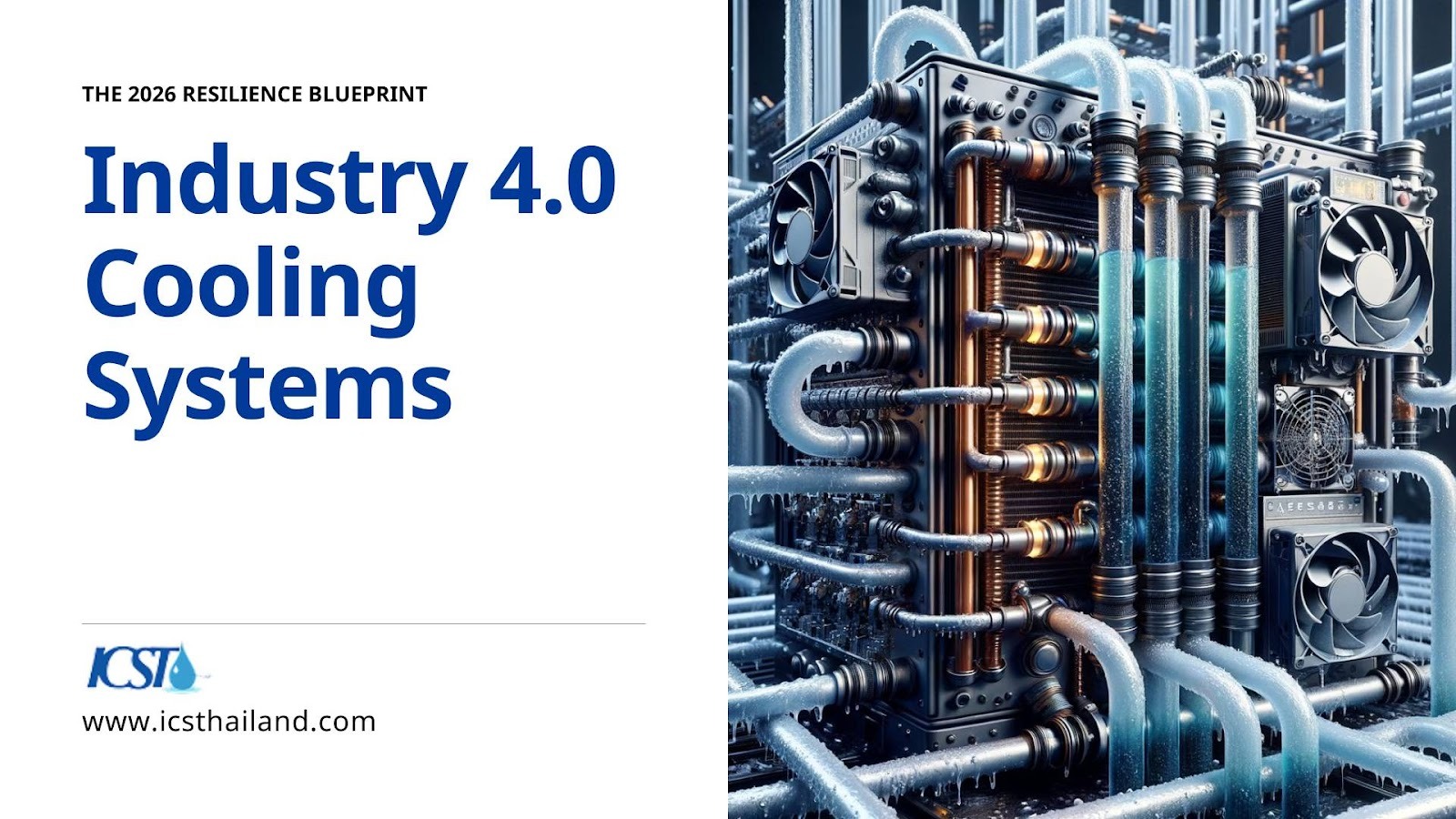
Cooling systems often represent the largest portion of a facility’s energy bill, yet they frequently operate well below peak efficiency due to undetected faults and aging components. A systematic cooling system energy audit checklist is the most effective way to identify these hidden costs and restore optimal performance.
This guide provides a structured approach to auditing your cooling infrastructure. By following these checklists, facility managers can uncover inefficiency indicators, streamline data collection forms, and implement targeted improvement opportunities that lower operating expenses and extend equipment life.
What Is a Cooling System Energy Audit?
A cooling system energy audit is a comprehensive assessment designed to evaluate how efficiently a building’s cooling infrastructure uses energy. It goes beyond standard maintenance by analyzing performance data against design specifications and industry benchmarks.
The primary objective is to identify where energy is being wasted and to propose actionable solutions. For facility managers, the benefits are substantial:
- Lower Energy Costs: Identifying and fixing inefficiencies directly reduces utility bills.
- Improved Performance: Optimized systems provide more consistent temperature control and comfort.
- Extended Equipment Life: Reducing strain on components prevents premature failure and costly replacements.
A checklist is critical for this process because cooling systems are complex. Without a structured guide, auditors might miss subtle issues like sensor drift or partial load inefficiencies.
A robust cooling system energy audit checklist ensures that every component, from chillers to pumps, is evaluated consistently, providing a reliable roadmap for improvement.
Who Should Use This Cooling System Energy Audit Checklist
This guide is designed for professionals responsible for building performance and operational efficiency. While the technical depth suits engineers, the structured format remains accessible for broader management roles.
Who benefits most from this structured approach?
- Facility Managers: To oversee operational costs and justify budget requests for upgrades.
- Maintenance Engineers: To transition from reactive repairs to predictive maintenance strategies.
- Energy Auditors: To standardize data collection forms and ensure comprehensive reporting.
- Sustainability/ESG Teams: To calculate carbon footprint reductions accurately.
- HVAC Technicians: To diagnose complex performance issues that routine service visits might miss.
Audit Preparation: Planning and Data Collection Setup

Successful audits require thorough preparation before any physical inspection occurs. Jumping straight into measurements without defining the scope often leads to incomplete data and inconclusive results.
Define Scope
You need to determine which physical assets are part of the review and understand the operational context of the facility.
To effectively define the scope, consider these factors:
- Equipment Included: List every major component, such as cooling towers, chillers, distribution pumps, and air handling units, to ensure complete coverage.
- Operating Hours: Specific schedules determine when the system is under load, which helps in identifying the best times to measure performance.
- Seasonal Considerations: acknowledge that a cooling system energy audit checklist executed in winter will yield different data than one performed in summer, requiring normalization of results.
- System Boundaries: Decide if you will include secondary loops or terminal units, as this impacts the number of measurement points you need to verify.
Gather Documentation
Historical data serves as the baseline for all future comparisons and calculations. Without access to original design specifications and past performance records, it is impossible to determine if a system is degrading or simply operating as designed.
Gather the following documents to build a solid foundation for your audit:
- Design Specifications: Review the original engineering intent to understand the expected performance metrics at full and partial loads.
- Manufacturer Manuals: Consult these guides to confirm optimal operating ranges and recommended maintenance intervals for specific equipment models.
- Previous Maintenance Reports: Analyze past work orders to identify recurring failures or parts that have been recently replaced.
- Past Audit Reports: Look for previously identified improvement opportunities to see if they were implemented and if they achieved the projected savings.
Tools and Instruments
Accurate data collection requires precise instrumentation that is properly calibrated and suitable for the task. Using the wrong tools can lead to erroneous conclusions and wasted investment in incorrect solutions. Auditors must verify they have the necessary equipment to measure electrical, thermal, and hydraulic parameters.
Ensure you have access to these essential tools for the audit:
- Power Meters: Use these to measure voltage, amperage, and power factor, which allows you to calculate the true energy consumption of motors and compressors.
- Thermal Cameras: These devices help detect insulation failures and verify heat transfer efficiency by visualizing temperature gradients across heat exchangers.
- Flow Meters: Non-invasive ultrasonic meters define the water flow rates through chillers and towers, which are essential for calculating thermal loads.
- Data Loggers: Deploy these for long-term monitoring to capture trends and inefficiency indicators that occur only during specific load conditions.
Pre-Audit Data Collection Checklist
Use this checklist to create a comprehensive snapshot of the physical assets within the cooling loop. Beyond basic identification, documenting the specific age, efficiency ratings, and recent maintenance history of each component allows you to pinpoint hidden energy drains.
Pre-Audit Data Collection Checklist
| Item | Description | Status (✔/✖) | Notes |
| System drawings available | P&IDs, layout diagrams | ||
| Equipment specifications | Chillers, pumps, towers | ||
| Historical energy bills | Last 12 months | ||
| Maintenance records | Repairs & failures | ||
| Operating schedules | Load & seasonal data |
Why this checklist matters:
Missing documentation often leads to incorrect benchmarking. For example, without knowing design capacity or operating schedules, it is impossible to judge whether high energy consumption is justified or excessive. This table ensures the audit starts with a solid technical foundation.
Cooling System Equipment Inventory
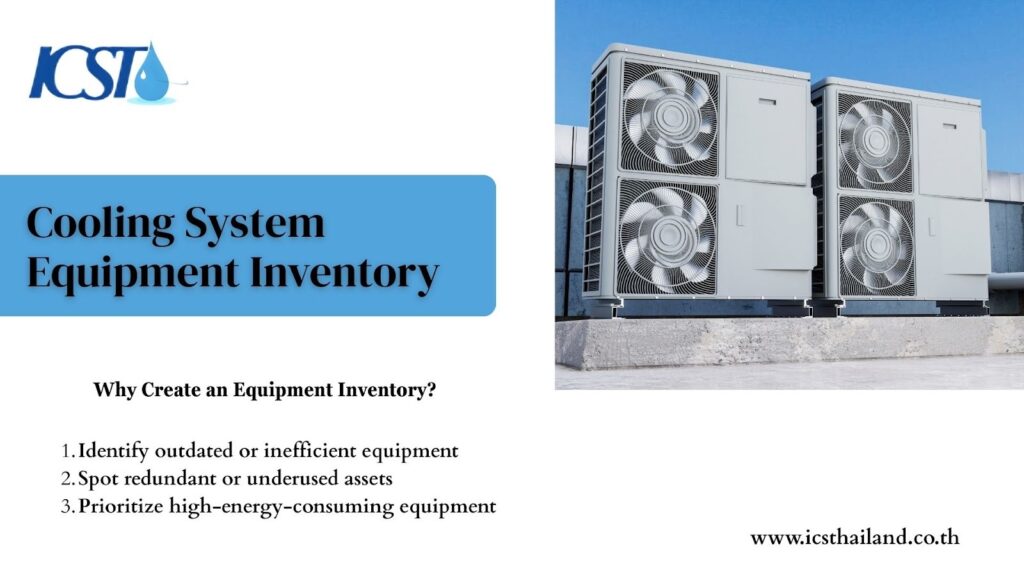
An energy audit cannot be effective unless every major component is clearly identified and documented. Equipment age, capacity, and condition directly influence efficiency and energy consumption.
Creating an equipment inventory helps auditors:
- Identify outdated or oversized equipment: Old motors and compressors are often far less efficient than modern equivalents.
- Spot redundancy or underutilization: Running two pumps when one suffices is a common waste of energy.
- Prioritize assets for detailed analysis: Focus effort on the largest consumers of power.
Equipment Inventory Checklist
Use this checklist to create a comprehensive snapshot of the physical assets within the cooling loop.
Equipment Inventory Checklist:
Make sure the data in this checklist is for reference only; you must enter your own data.
| Equipment | Capacity | Age (Years) | Operating Hours | Condition | Remarks |
| Chiller | 150 Ton | 8 | 24/7 | Fair | Consider an efficiency check |
| Cooling Tower | 500 GPM | 12 | 24/7 | Poor | Scale removal needed |
| Pumps | 50 HP | 10 | 16/7 | Fair | Optimize speed settings |
| Heat Exchanger | N/A | 6 | 24/7 | Good | Inspect for fouling |
| Fans | 10 HP | 5 | 24/7 | Good | Check vibration |
How to use this data:
Equipment that is old, oversized, or operating continuously at partial load often becomes a major source of energy waste. This checklist allows auditors to link energy consumption directly to asset characteristics, highlighting immediate improvement opportunities.
Energy Performance Evaluation
Once equipment is documented, the next step is to measure how efficiently it operates. Performance indicators reveal whether the system is delivering the expected cooling output for the energy consumed.
Energy Performance Checklist
This section focuses on the quantitative relationship between input power and cooling output.
Energy Performance Checklist
| Parameter | Acceptable Range | Observed Value | Status | Action Required |
|---|---|---|---|---|
| kW per Ton | ≤ Design limit (≈ 0.65 kW/TR) | 0.82 kW/TR | Not OK | Clean heat exchangers and optimize chiller loading |
| COP / EER | As per specification (COP ≥ 5.5) | COP = 4.6 | Not OK | Improve heat transfer and review control strategy |
| Fan energy consumption | Normal | 15% above baseline | Not OK | Check fan alignment and optimize speed control |
| Pump efficiency | ≥ Rated (≥ 80%) | 68% | Not OK | Repair pump, balance system, or adjust VFD settings |
| Heat rejection efficiency | Normal approach temperature | High approach temperature | Not OK | Descale cooling tower and improve water flow |
Why this checklist is critical:
A rise in kW per ton or a drop in COP often indicates fouling, poor heat transfer, or improper control strategies. Tracking these values allows engineers to quantify inefficiency rather than relying on assumptions.
These measurement points provide the hard data needed to calculate ROI for potential upgrades.
Identifying Inefficiencies and Red Flags
Energy losses often appear as symptoms before failures occur. Identifying these early helps prevent expensive breakdowns and reduces unnecessary energy use.
Inefficiency Indicators Checklist
Visual and physical inspections often reveal issues that data logs miss. This checklist guides the auditor to look for specific physical signs of degradation.
Inefficiency Indicators Checklist
| Indicator | Yes / No | Severity (Low / Med / High) | Observations |
|---|---|---|---|
| Excessive power draw | Yes | Medium | Chiller and pumps operating above expected kW due to partial loading and fouling |
| Low temperature difference | Yes | High | Supply–return ΔT lower than design, indicating inefficient heat transfer |
| Scaling or fouling | Yes | High | Visible scale observed in cooling tower and heat exchanger surfaces |
| Abnormal vibration/noise | No | Low | No abnormal vibration detected during inspection |
| Frequent on/off cycling | Yes | Medium | Chiller short cycling during low-load periods due to poor control settings |
| Uneven water distribution | Yes | Medium | Uneven flow across cooling tower fill and distribution headers |
How to interpret the results:
High-severity indicators should be addressed immediately, while medium-severity issues can be scheduled for corrective maintenance. This checklist helps prioritize actions based on energy impact, not just visibility. These are key inefficiency indicators that justify the cost of the audit.
Turning Audit Findings into Action
An energy audit delivers value only when findings lead to improvements. The data collected must translate into a report template that stakeholders can understand and act upon.
Based on checklist data, actions may include:
- Cleaning heat transfer surfaces: Removing scale from condenser tubes can instantly lower energy use.
- Optimizing pump and fan speeds: Installing Variable Frequency Drives (VFDs) matches motor speed to actual load.
- Improving control logic: Adjusting setpoints prevents systems from fighting each other (e.g., simultaneous heating and cooling).
- Adjusting operating schedules: ensuring equipment turns off during unoccupied hours.
- Planning equipment upgrades: Replacing an aging chiller with a high-efficiency model.
The cooling system energy audit checklist ensures that recommendations are evidence-based, not speculative. This leads to clear improvement opportunities that are easier to defend during budget discussions.
Best Practices for Using an Energy Audit Checklist
To maximize results and ensure long-term efficiency, it’s crucial to treat energy audits as a cyclical process, not a one-time event. This approach involves regularly reviewing performance, identifying new savings opportunities, and adapting to changes in building use or equipment.
- Conduct audits annually or seasonally: Performance drifts over time; regular checks catch degradation early.
- Perform audits at peak and partial loads: Systems behave differently under low stress; partial load efficiency is often where the biggest savings lie.
- Maintain historical audit records: Comparing current data collection forms against past years reveals long-term trends.
- Use consistent measurement methods: Always measure at the same points using calibrated tools to ensure data validity.
- Combine audits with preventive maintenance plans: Let audit findings drive the maintenance schedule.
A disciplined approach transforms audits into a continuous improvement process.
Conclusion
A structured cooling system energy audit checklist is one of the most effective tools for reducing energy waste and improving system reliability. By combining detailed checklists with technical analysis, facilities can uncover hidden inefficiency indicators, lower operating costs, and extend equipment life.
Energy audits are not just compliance exercises; they are strategic tools that protect assets, reduce expenses, and improve sustainability. When used correctly, a checklist-based audit delivers measurable, long-term value. Whether you are using simple data collection forms or advanced measurement points, the key is consistency.
Start using a cooling system energy audit checklist today to identify improvement opportunities and take control of your facility’s energy future. For expert cooling tower maintenance, repairs, and inspections, visit the ICST website to see how we can help optimize your system.
Frequently Asked Questions
What is a cooling system energy audit checklist?
A cooling system energy audit checklist is a structured list used to evaluate the energy efficiency of cooling equipment. It helps identify inefficiency indicators, measure performance data, and highlight improvement opportunities to reduce energy costs.
Why is a cooling system energy audit important for facilities?
- Identifies hidden energy losses
- Reduces electricity and operational costs
- Improves system reliability and performance
- Extends equipment lifespan
- Supports sustainability and ESG goals
What equipment is covered in a cooling system energy audit?
A typical cooling system energy audit includes chillers, cooling towers, pumps, fans, heat exchangers, and associated control systems. The checklist ensures that both major energy consumers and supporting components are evaluated consistently.
What is a Cooling System Energy Audit Checklist?
A Cooling System Energy Audit Checklist evaluates HVAC equipment efficiency, operating conditions, and performance indicators to identify energy losses and improvement opportunities.
What does a Cooling System Energy Audit Checklist include?
It includes equipment details, kW per ton, COP, pump and fan efficiency, heat rejection performance, and visible inefficiency indicators like fouling or short cycling.