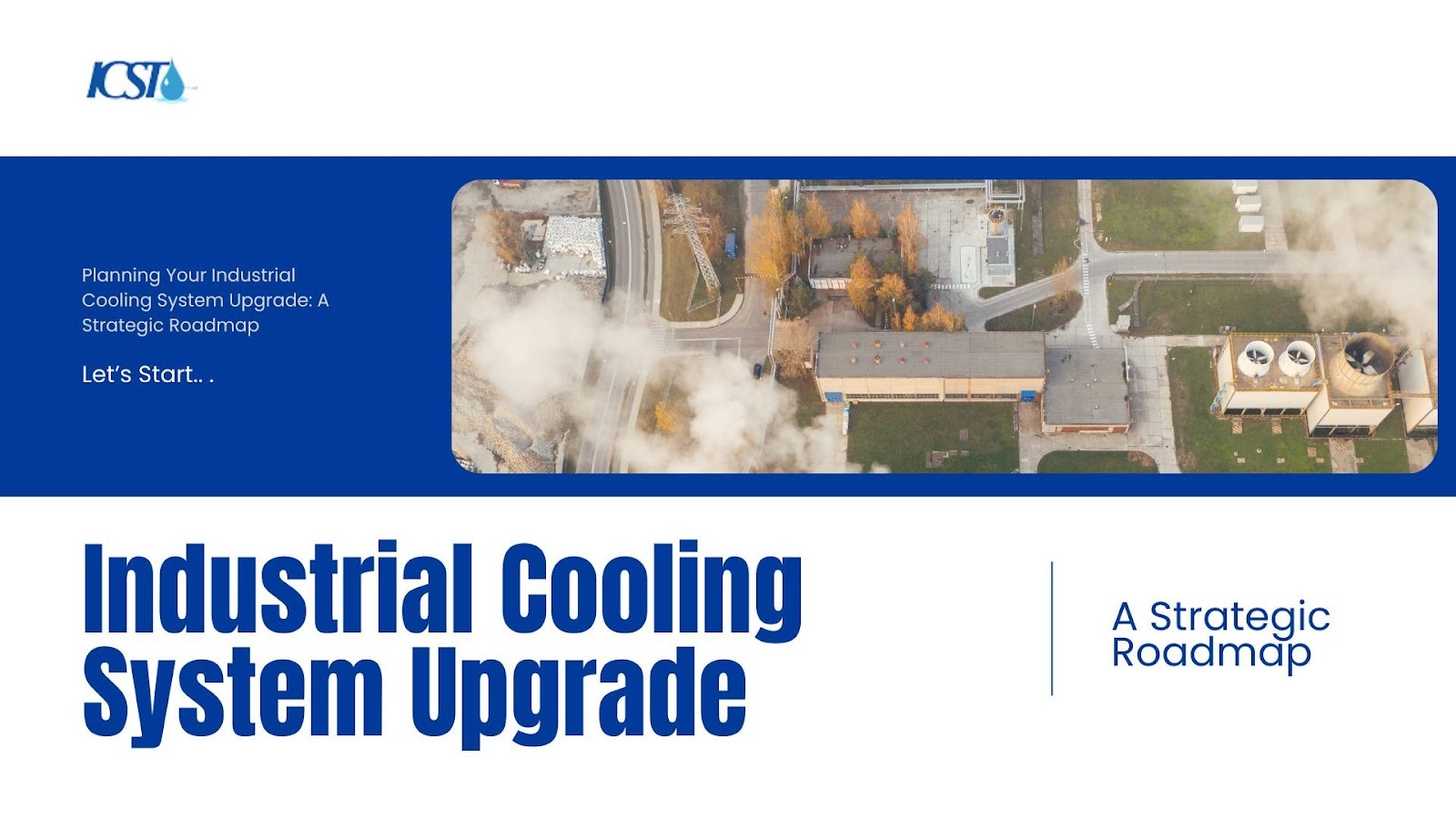
Industrial cooling systems are the hardworking heart of many operations, yet they are often overlooked until a crisis occurs. With 2026 bringing new efficiency standards and refrigerant phase-downs, a proactive approach to upgrading your system is no longer just good practice; it is a competitive necessity.
A modernized system ceases to be a simple utility cost and transforms into a performance-driving asset that enhances reliability and boosts your bottom line. This guide provides a strategic roadmap for planning and managing your industrial cooling system upgrade.
Phase 1: Retrofit Planning and Load Auditing
The foundation of a successful upgrade is a deep understanding of your facility’s specific needs. Simply replacing old components with new ones is not enough. A thorough planning phase ensures that your investment delivers maximum returns for years to come.
Dynamic Load Profiling
Begin by moving beyond outdated design specifications. We use advanced data analytics to perform dynamic load profiling, measuring your actual heat loads throughout various operational cycles.
This process reveals the true performance demands on your system, identifying areas of inefficiency and opportunities for optimization. Understanding your actual load profile prevents over-specification and ensures the new system is perfectly sized for your needs.
Capacity Expansion Strategy
Your business will not stand still, and neither should your cooling system. When planning your upgrade, think about your growth trajectory through 2030 and beyond. We help you design a modular system that can be easily expanded in the future.
This forward-thinking approach allows you to make an initial investment that meets current needs while providing a clear and cost-effective path for future capacity add-ons without requiring a complete overhaul.
Material Selection for Harsh Environments
Industrial environments are demanding. Whether your facility is near the sea or uses acidic process fluids, material durability is paramount. We recommend materials specifically chosen for their resilience.
For instance, pultruded Fiber-Reinforced Polymer (FRP) offers superior corrosion resistance compared to traditional galvanized steel. Pairing this with nanofluid-ready heat exchangers creates a robust system built to withstand the harshest conditions, significantly extending its operational lifespan.
Phase 2: Project Management and Execution
With a solid plan in place, the focus shifts to execution. A well-managed project minimizes disruption and integrates the new system seamlessly into your existing infrastructure.
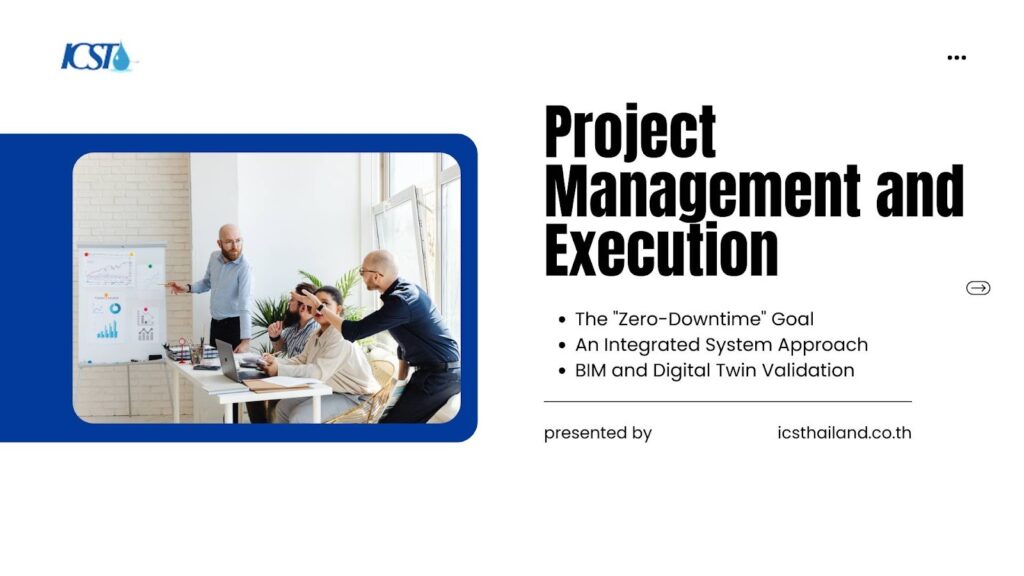
The “Zero-Downtime” Goal
For most industrial operations, production downtime is not an option. We prioritize a “zero-downtime” installation process. This is achieved through carefully planned phased installations and the use of temporary cooling bypasses.
These strategies allow sections of the new system to be brought online incrementally while your production continues to run, ensuring a smooth transition without impacting your output.
An Integrated System Approach
A cooling system is more than a collection of individual parts; it is an interconnected network. Upgrading only one component, such as the fan, without considering the pump and piping, can create new problems like hydraulic bottlenecks.
This mistake negates potential efficiency gains. We advocate for an integrated system approach, analyzing how each component works together to create a balanced and highly efficient network.
BIM and Digital Twin Validation
Before any physical work begins, we use advanced tools to validate the project’s success. Building Information Modeling (BIM) and digital twin technology allow us to create a virtual model of your upgraded system.
We use sophisticated cooling system design software to simulate the upgrade’s impact on the entire plant’s thermal balance. This virtual validation step identifies potential issues and optimizes the design, guaranteeing performance before a single bolt is turned.
2026 Technical Standards: cooling system upgrade
The evolution of cooling technology is stark. A modernized system compliant with 2026 standards offers significant advantages in performance, efficiency, and reliability over legacy systems.
| Element / Solution | Legacy / Standard (Pre-2022) | Modern / Upgrade (2026) | Key Benefit / Use Case |
|---|---|---|---|
| Air Movement | Standard AC Axial Fans | ErP 2026 Bionic EC Fans | 35% energy savings; 15dB noise reduction |
| Water Control | Manual Valve / Bleed | Smart ZLD / Automated Chem | 20-30% reduction in water waste |
| Thermal Media | PVC / Wood Fill | Nano-coated / High-density FRP | +15-year extended lifespan |
| Intelligence | Reactive Alarms | Edge-IoT Predictive AI | 99.9% uptime with predictive maintenance |
| Materials | Galvanized Steel | Pultruded FRP Retrofit | Zero corrosion; acid-ready |
| Traditional CRAH/Air | Air (Chilled Water) | — | Moderate efficiency; Legacy Enterprise |
| Direct-to-Chip (D2C) | — | Liquid (Cold Plate) | High efficiency; AI Training Clusters |
| Immersion Cooling | — | Dielectric Fluid | Extreme; HPC & Supercomputing |
| Rear-Door Heat Exchangers (RDHx) | — | Liquid/Air Hybrid | High; Retrofitted Colocation |
| Adiabatic / Free Cooling | Ambient Air + Water | — | Very High; Edge & High-Latitude Sites |
| Overhead / Raised-Floor Airflow | Air | — | Moderate; Standard Enterprise |
| In-Row Cooling Units | Air (Chilled Water) | — | High; High-Density Racks |
| Liquid Immersion Rack Cooling | — | Dielectric Fluid | Extreme; Supercomputing / GPU Clusters |
| Cold Aisle Containment | Air | — | High; High-Density Enterprise |
| Hot Aisle Containment | Air | — | High; High-Density Enterprise |
| Overhead Spray / Evaporative Cooling | Water / Air Hybrid | — | Very High; Hot-Climate Data Centers |
| Chilled Beam Cooling | Liquid (Chilled Water) | — | Moderate; Office / Small Data Rooms |
| Hybrid Air-Liquid Cooling | Liquid + Air | — | Very High; HPC / Edge Sites |
| Modular / Containerized Cooling | Air or Liquid | — | High; Rapid-Deployment Data Centers |
Phase 3: Financial ROI and Sustainability Reporting
An upgrade is a significant financial decision. Understanding the full return on investment (ROI) and leveraging available incentives are key components of the final phase.
Calculating the True ROI
The financial benefits of a modernized cooling system extend far beyond simple energy savings. When calculating your ROI, you must factor in a comprehensive set of advantages. These include:
- Reduced Energy Consumption: Lower utility bills from high-efficiency components.
- Carbon Credit Eligibility: Potential revenue or compliance credits from documented emission reductions.
- Lower Maintenance Costs: Predictive AI and durable materials reduce the frequency and cost of upkeep.
- Elimination of Emergency Repair Spend: Increased reliability prevents costly emergency call-outs and unplanned downtime.
Green Financing in 2026
Governments and financial institutions are increasingly supporting industrial sustainability. Significant green financing opportunities, including sustainability grants, are available for industrial electrification and efficiency projects.
These programs can substantially offset the initial capital investment, making a state-of-the-art upgrade more financially accessible. We can guide you in identifying and applying for these valuable incentives.
Conclusion: Engineering the Future of Industrial Cooling
Effective cooling system upgrade management is the bridge between an aging, inefficient facility and a future-proofed, high-performance operation. By focusing on detailed planning, integrated execution, and a clear financial strategy, you can transform your cooling system into a powerful asset. From the tropical climates of Asia to the desert heat of the Middle East, a well-engineered upgrade delivers lasting value and a distinct competitive advantage.
Ready to future-proof your operations? Contact ICST today to schedule a consultation or to learn more about how our engineering solutions can help you achieve your performance, sustainability, and cost-saving goals.
Frequently Asked Questions (FAQs)
What are the benefits of upgrading an industrial cooling system in 2026?
Upgrading ensures compliance with 2026 efficiency standards, reduces energy costs, minimizes water waste, and extends system lifespan. It also improves reliability and positions your facility for future growth.
How can dynamic load profiling improve cooling system efficiency?
Dynamic load profiling analyzes actual heat loads versus design specifications, helping to optimize system sizing and prevent inefficiencies, ensuring the system meets real operational demands.
What materials are best for harsh industrial environments?
Pultruded FRP and nanofluid-ready heat exchangers are ideal for corrosive environments like seawater or acidic applications, offering durability and extended operational life.
How does predictive AI enhance cooling system performance?
Predictive AI uses real-time data to forecast maintenance needs, ensuring 99.9% uptime, reducing emergency repairs, and optimizing overall system performance.
What financial incentives are available for cooling system upgrades?
Green financing options, including sustainability grants in Southeast Asia and the Middle East, can significantly offset upgrade costs while promoting energy efficiency and carbon reduction.
Why is a cooling system upgrade essential for modern data centers?
A cooling system upgrade improves energy efficiency, supports higher rack density, reduces operational costs, enhances reliability, integrates advanced technologies like liquid cooling, and ensures predictive maintenance for sustainable, high-performance data center operations.
What benefits can a cooling system upgrade provide?
A cooling system upgrade delivers precise temperature control, lowers energy and water usage, extends equipment lifespan, enables high-density deployments, incorporates smart monitoring, and optimizes performance for enterprise, AI, and HPC workloads.