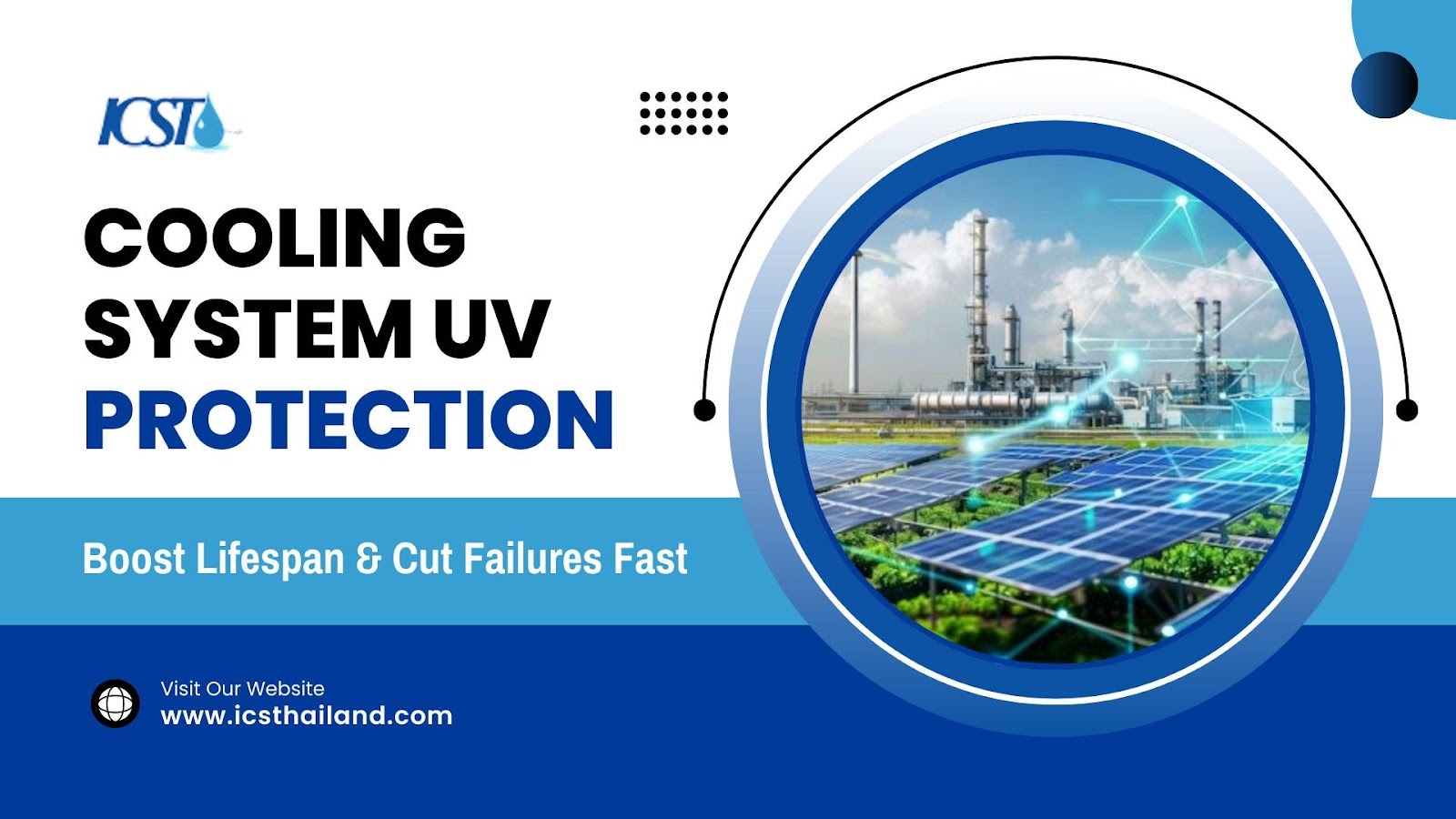
Solar ultraviolet (UV-A and UV-B) radiation is the number one non-operational threat to cooling towers worldwide. UV rays break down core tower polymers like PVC, FRP, and ABS. This damage causes cracks, water loss, and early failure of costly parts. Without a strong cooling system and UV protection, your component longevity is at risk.
Meeting every cooling system requirement, especially for large-scale applications or integration with an industrial heat pump, depends on the reliability of each component. Protecting your cooling system delivers direct savings on Capital Expenditure (CAPEX) and Operational Expenditure (OpEx).
In this guide, we will discuss cooling system UV protection, discover targeted strategies to increase component lifespan, reduce maintenance, and secure your infrastructure investment.
8 Technical Secrets for Cooling System UV Protection
Apply these proven approaches to safeguard your cooling tower components and maximize their longevity.
- 1. Use Carbon Black Polymers: For hidden parts such as piping, opt for carbon-black infused polymers. This offers strong, built-in UV protection.
- 2. Choose the Right Coatings: Avoid standard epoxies. Select high-performance aliphatic polyurethane or fluoroelastomer coatings for lasting UV resistance.
- 3. Install Sun Shields: Place dark, UV-blocking covers above drift eliminators to double their service life.
- 4. Block Harmful Rays Internally: If you spot bleaching or chalking on PVC fill media, add UV-resistant louvers to cut direct sunlight.
- 5. Test FRP Casing: Perform an annual chalk test. If you find white powder, coat the surface promptly for better longevity.
- 6. Cover Components During Downtime: Use UV-stable black tarps to protect exposed basins and piping when towers are offline.
- 7. Specify UV-Stabilized Fasteners: Always choose stainless steel or polymer fasteners with integrated UV stabilizers such as HALS.
- 8. Demand UV Stabilizers in New Materials: When ordering PVC or ABS components, require proof of high-content UV-stabilizing additives like TiO₂ or HALS.
Polymer Degradation: How UV Damages Components
Understand why cooling system UV protection matters. UV light attacks polymers in these ways:
- Chalking: White powdery buildup signals surface oxidation and loss of integrity.
- Color Loss: Materials fade and lose protective properties.
- Embrittlement: Polymers become brittle, crack, and break.
Key vulnerable assets include fill media, casing panels, distribution parts, and exposed piping. Failed drift eliminators can increase water loss, raising costs.
Ensuring component resilience is a vital cooling system requirement, particularly when operating alongside advanced equipment like an industrial heat pump.
Strategies to Extend Component Lifespan
Optimize cooling system UV protection and component longevity with three key steps:
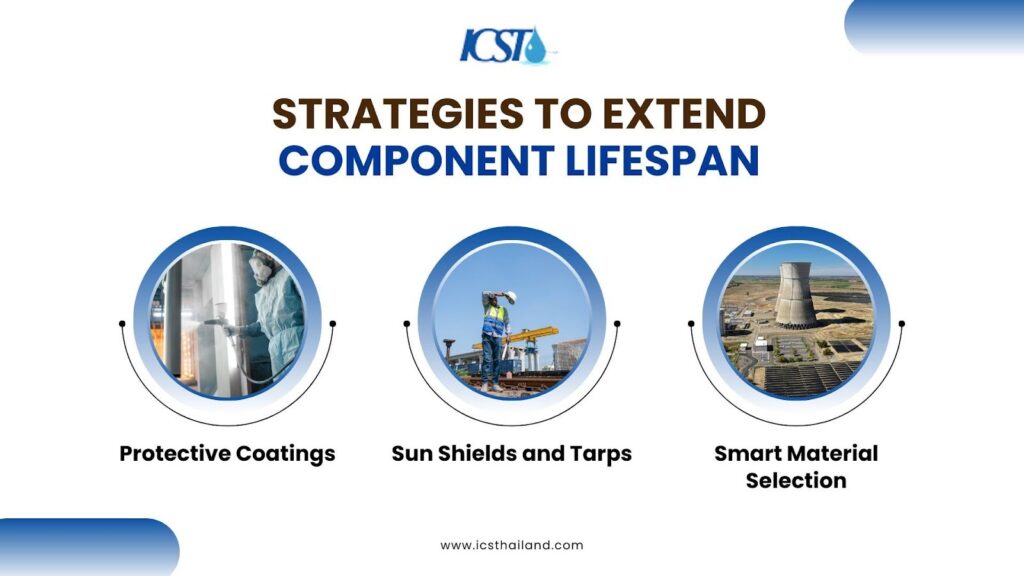
Protective Coatings
- Sand and clean FRP surfaces before applying coatings.
- Use aliphatic polyurethane to maximize UV defense.
Sun Shields and Tarps
- Install opaque louvers and sun shields on air intakes.
- Cover out-of-service assets with UV-stable tarps to prevent polymer degradation.
Smart Material Selection
- Choose HDPE with carbon black where feasible.
- Demand documentation confirming powerful UV stabilizer content in new polymers.
Benefits: High ROI from Protection
A sound UV protection plan for your cooling system brings measurable returns:
- Longer Component Lifespan: Replacement cycles of fill and eliminators can double.
- Water and Chemical Savings: Well-maintained drift eliminators cut water and chemical costs.
- Lower Maintenance: Fewer repairs and less patching.
- Better Appearance: Surfaces stay clean and intact.
- Stronger Structures: Prevents casing and fill failures.
- Reliable Performance: Maintains airflow and cooling efficiency.
- Fewer Emergencies: Encourages proactive, scheduled maintenance.
UV Protection Audit: Keep Your System in Top Shape
Build cooling system UV protection into your regular maintenance:
- Inspect casing edges, piping, and drift eliminators annually.
- Set up a five-year re-coating cycle for FRP and a ten-year inspection schedule for PVC parts.
A proactive UV protection plan will help your cooling tower stand strong for the long term and meet every cooling system requirement, whether it supports basic operations or robust solutions like an industrial heat pump.
Take the next step now, implement these strategies to safeguard your assets, or reach out to a cooling system specialist to ensure your system receives expert UV protection at ICST.
Frequently Asked Questions
What is cooling system UV protection?
It is a maintenance strategy to prevent sun damage to your cooling tower’s components. It involves using specialized coatings, sun shields, and UV-resistant materials to block solar radiation, extending the life of parts made from PVC, FRP, and other polymers.
Why is UV protection important for cooling towers?
Ultraviolet (UV) radiation from the sun degrades plastic and composite components, causing them to become brittle, crack, and fail prematurely. This leads to costly repairs, water loss, and reduced operational efficiency. Proactive protection saves money and extends asset lifespan.
What are the first signs of UV damage?
Look for “chalking” (a white, powdery residue on surfaces), color fading or bleaching on panels and louvers, and small surface cracks (crazing) on fiberglass (FRP) components. These are early warnings that the material is degrading.
What is the most effective way to protect our cooling system?
A multi-layered approach is best. Use aliphatic polyurethane coatings on exposed surfaces, install sun shields over highly vulnerable parts like drift eliminators, and specify materials with built-in UV stabilizers (such as carbon black or HALS) when ordering new components.
How often should we inspect for UV damage?
Perform a visual inspection at least once a year. Check for chalking, cracks, and discoloration on all exposed surfaces, paying special attention to the top edges of the tower casing and drift eliminators. A consistent inspection schedule helps you catch damage early.