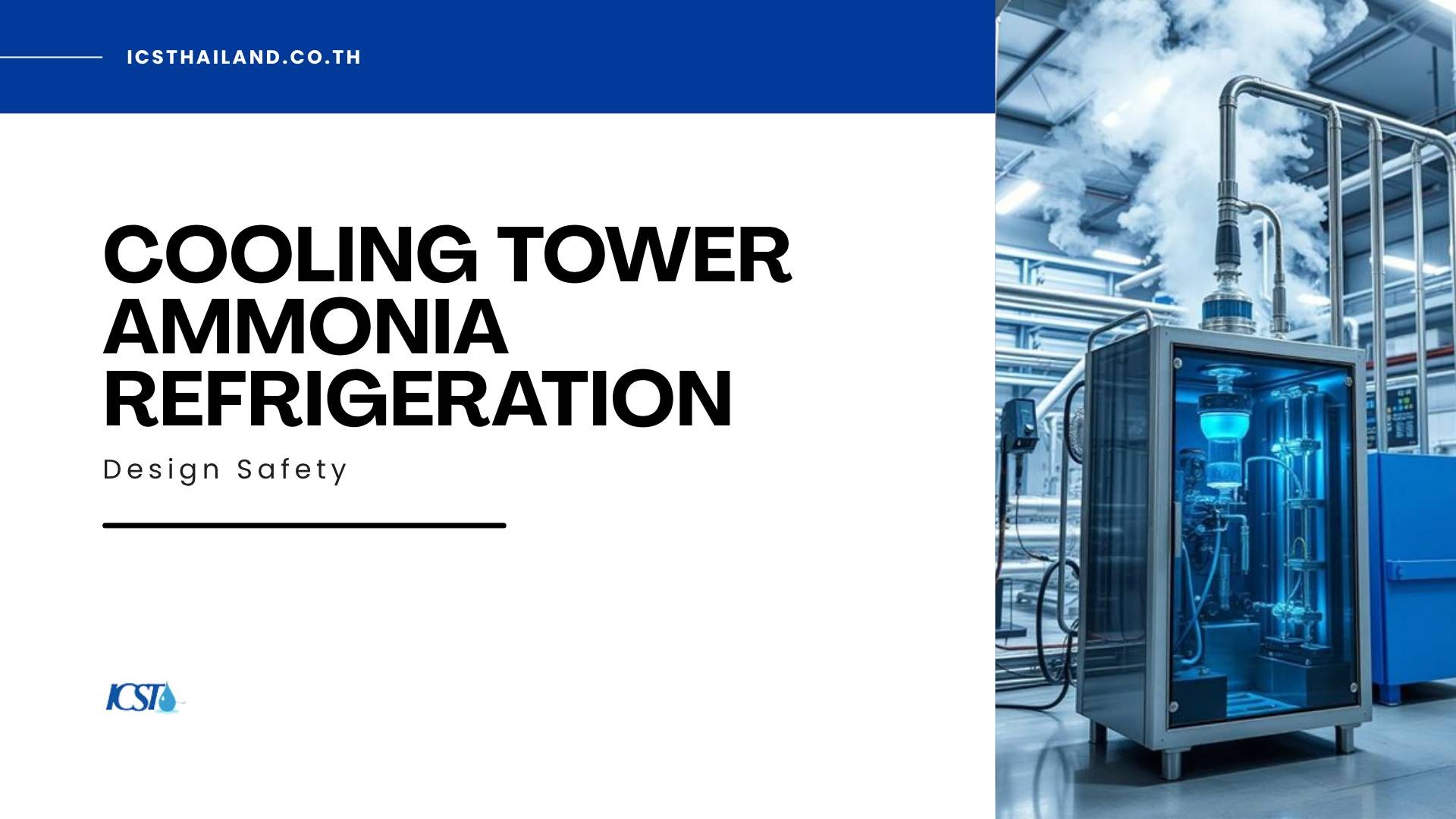
A cooling tower ammonia refrigeration system must meet ASHRAE 15 and ANSI/IIAR 2 standards, using ammonia-compatible materials like stainless steel and FRP to prevent corrosion. Advanced leak detection systems, such as pH and conductivity sensors, ensure early leak identification.
Proper structural clearance and airflow design protect against toxic vapor exposure. These safety measures optimize system reliability, energy efficiency, and compliance, making ammonia refrigeration ideal for industrial applications like food processing and cold storage.
Regulatory and Compliance Foundations: ASHRAE 15 and ANSI/IIAR 2
Engineers must navigate a strict regulatory framework to permit and operate an industrial refrigeration system safely. You cannot design a compliant cooling system without understanding the primary safety codes.
- Refrigerant Classification (B2L): Under ASHRAE Standard 34, ammonia gas is classified as a B2L natural refrigerant. This rating indicates high toxicity and low flammability. Because of these hazards, engineers must place evaporative cooling units outdoors to ensure safe atmospheric dispersion.
- The Interlocking Legal Codes: ASHRAE Standard 15 (Safety Standard for Refrigeration Systems) works directly with ANSI/IIAR 2 (Safe Design of Closed-Circuit Ammonia Refrigeration Systems). These codes mandate specific mechanical isolation and venting requirements to prevent toxic exposure within the refrigerated space.
- OSHA PSM and EPA RMP Thresholds: Large industrial applications require massive cooling capacity. If your total system charge exceeds the 10,000-pound boundary, you trigger mandatory OSHA Process Safety Management (PSM) protocols. You must size your closed-loop cooling tower carefully to manage compliance obligations and operating expenses.
Sizing Security: Safety Control and Material Matrix
Every physical component interacting with an R-717 closed circuit loop must possess complete chemical resistance. You must implement active electronic containment to prevent catastrophic failures.
Here is a comprehensive comparison of the safety control measures essential for ammonia cooling towers:
| Safety Vector | Structural / Engineering Mandate | Target Code Metric | Critical Failure Mode Prevented |
| Coil Metallurgy | Monolithic 304/316 Stainless Steel or heavy HDG steel (no copper). | ASME Section VIII Pressure Rated | Zinc stripping, copper pitting, and sudden refrigerant-to-water rupture. |
| Casing & Basin | Premium Fiber-Reinforced Polymer (FRP Material) or Stainless Steel. | Non-porous, corrosion-inert | Structural pitting and basin leaks from alkaline water shifts. |
| Leak Detection | Continuous inline optical pH or automated electrical conductivity probes. | Response time ≤ 5 seconds | Undetected tube cracks venting toxic vapors into exhaust plumes. |
| Electrical Enclosure | Class I, Division 2, Group D explosion-proof fans and motors. | NEC Article 500 / NEMA 7 | Arc-flash ignition of trapped ammonia gas pockets inside the tower fan deck. |
Here are the critical safety vectors for ammonia cooling towers:
- Coil Metallurgy: You must specify monolithic 304/316 stainless steel or heavy hot-dip galvanized steel. The design must adhere to ASME Section VIII pressure ratings to prevent sudden refrigerant-to-water ruptures.
- Casing and Basin: Premium fiber-reinforced polymer (FRP material) or stainless steel provides a non-porous, corrosion-inert foundation. This prevents structural pitting caused by alkaline water shifts.
- Leak Detection: Install continuous inline optical pH sensors or automated electrical conductivity probes. The system must achieve a response time of five seconds or less to detect tube cracks before they vent toxic vapors into the ambient air.
- Electrical Enclosures: Utilize Class I, Division 2, Group D explosion-proof fans and large fan motors. Following NEC Article 500 guidelines prevents arc-flash ignition of trapped ammonia gas pockets inside the tower.
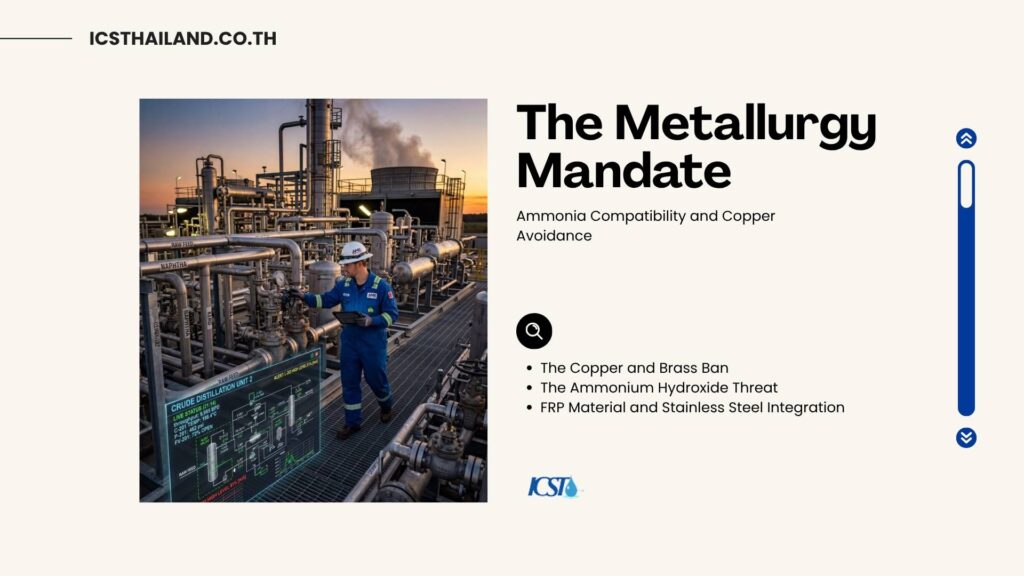
The Metallurgy Mandate: Ammonia Compatibility and Copper Avoidance
Selecting the correct metals is non-negotiable for system reliability. You must master ammonia compatibility to ensure efficient operation and long equipment shelf life.
The Copper and Brass Ban
You must avoid copper entirely in ammonia refrigeration. Liquid ammonia aggressively dissolves copper and its associated alloys, such as brass and bronze. If you introduce copper into the refrigeration cycle, it will suffer from rapid stress-corrosion cracking and catastrophic structural failure.
The Ammonium Hydroxide Threat
When ammonia gas leaks into cooling water, the elements react to form ammonium hydroxide. This highly alkaline chemical rapidly strips the zinc coating off standard galvanized steel heat exchangers. Once the zinc deteriorates, the metal experiences severe “white rust” oxidation, which destroys the heat transfer efficiency of the evaporative condensers.
FRP Material and Stainless Steel Integration
To maintain high energy efficiency and withstand chemical exposure, integrate structural fiberglass (FRP) basins and stainless steel tube sheets. These materials ensure your cooling tower frame survives routine chemical cleanings and accidental refrigerant leaks without degrading.
Active Monitoring: Early Stage Leak Detection Architecture
Proactive containment prevents minor leaks from becoming environmental disasters. You must install early-stage leak detection architecture to secure your industrial cooling operations.
The Atmospheric Vapor Risk
If a high-pressure ammonia coil leaks inside an open cooling tower, the large fans will instantly vaporize the toxic liquid into the outside air. This dynamic creates a severe environmental hazard for nearby commercial structures and personnel.
Automated Sump Telemetry
You must integrate electronic sensors directly into the cold-water basin to monitor water evaporation and chemical balance in real-time.
- pH Sensors: These detect immediate alkalinity spikes when acidic water shifts past a neutral pH due to dissolved ammonia gas.
- Conductivity Transmitters: These track sudden increases in total dissolved solids caused by refrigerant contamination.
Automated Isolation Interlocks
You must program the building management system (BMS) to act immediately upon detecting a leak. The system should automatically trip motorized safety valves, dump the water basin, and shut down the fan motor to halt energy consumption and contain the hazard.
Structural Clearance, Airflow, and Exhaust Safety Geometry
Proper physical placement impacts heat exchange efficiency and overall safety. You must stage your system correctly to protect the surrounding environment.
- ASHRAE 15 Distance Rules: The code mandates strict horizontal and vertical clearance footprints. You must maintain at least 6 meters (20 feet) of separation between the cooling tower exhaust and building fresh air intakes, windows, or emergency exits.
- Prevailing Wind and Air Staging: You must configure multi-cell installations based on local wind patterns. Atmospheric crosswinds must carry potential emergency relief valve discharges safely away from public spaces and personnel walkways.
- Dual-Valved Pressure Relief Headers: You must engineer high-pressure safety relief piping that extends significantly above the fan cylinder deck. These headers must discharge vertically into the atmosphere using specialized rain caps to ensure safe dispersion.
Secure Your Industrial Process Safety Today
Industrial process safety allows zero margin for error. Designing a cooling tower ammonia refrigeration system requires absolute compliance with complex material, environmental, and mechanical codes. Facility owners must prioritize proactive leak detection, correct metallurgy, and precise structural spacing.
At International Cooling Solutions (Thailand), our certified industrial engineers specialize in fully code-compliant, high-performance ammonia cooling towers built to survive demanding industrial applications. Do not leave your facility vulnerable to chemical hazards and regulatory fines.
Contact our engineering office today to review your plant safety protocols and material layout.
Frequently Asked Questions (FAQs)
What is a cooling tower ammonia refrigeration system?
A cooling tower ammonia refrigeration system is a highly efficient industrial cooling solution that uses ammonia as a natural refrigerant. It absorbs heat from processes like food storage or manufacturing and transfers it to the atmosphere through water evaporation. Known for its excellent thermodynamic properties and zero ozone depletion potential, it is widely used in cold storage and food processing plants.
Why is ammonia compatibility critical in refrigeration systems?
Ammonia compatibility ensures the longevity and safety of refrigeration systems. Ammonia reacts aggressively with copper and zinc, causing corrosion and equipment failure. Using materials like stainless steel and fiber-reinforced polymer (FRP) prevents chemical reactions, ensuring system reliability and efficient operation. Proper material selection is essential for industrial refrigeration systems to maintain optimal performance and reduce operating costs.
How does leak detection improve ammonia cooling tower safety?
Leak detection systems in ammonia cooling towers monitor pH levels and conductivity in real-time. These sensors instantly detect ammonia leaks, triggering automated isolation valves and shutting down fans to prevent toxic vapor release. This proactive approach minimizes environmental risks, protects personnel, and ensures compliance with safety regulations like ASHRAE 15 and ANSI/IIAR 2.
What are the benefits of using ammonia as a refrigerant?
Ammonia offers exceptional cooling capacity, energy efficiency, and zero ozone depletion potential. It is a natural refrigerant with excellent thermodynamic properties, making it ideal for industrial applications like food processing and cold storage. Ammonia refrigeration systems also reduce energy consumption and operating expenses, making them a sustainable choice for long-term use.
Why is structural clearance important for ammonia cooling towers?
Structural clearance ensures safe airflow and exhaust dispersion in ammonia cooling towers. ASHRAE 15 mandates minimum distances between cooling towers and building air intakes to prevent toxic ammonia fumes from entering indoor spaces. Proper spacing also optimizes heat exchange, reduces noise levels, and ensures compliance with safety standards, enhancing overall system efficiency and safety.