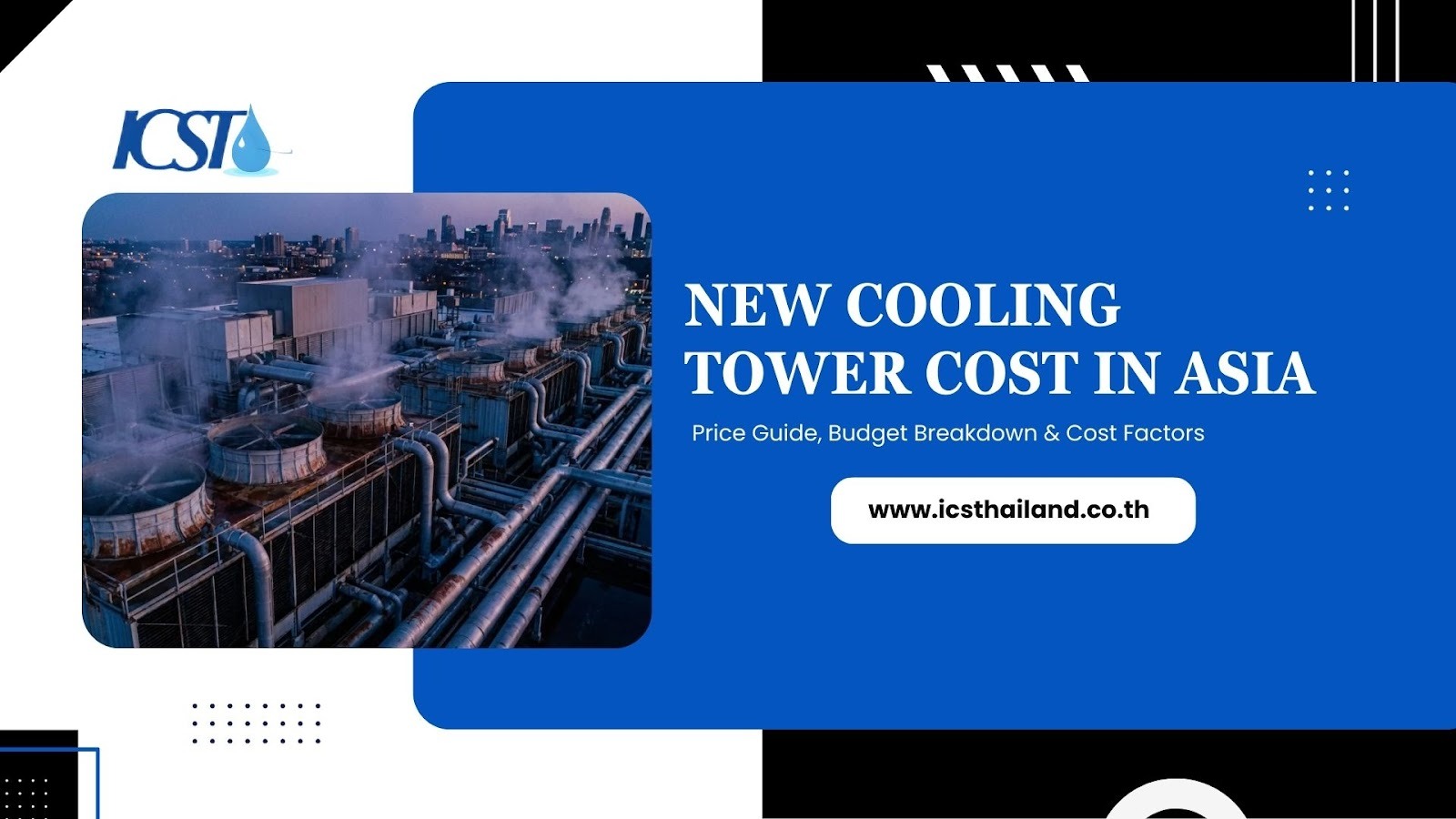
Asia’s industrial sector is expanding at a pace that few regions can match. Manufacturing hubs, power generation facilities, data centers, and petrochemical plants are scaling up across Southeast Asia, East Asia, and South Asia. Each of these facilities depends on reliable thermal management, and cooling towers sit at the center of that requirement.
For project managers, procurement teams, and facility engineers, understanding cooling tower cost in Asia is not optional. It is a foundational step in capital planning. Misjudge the cost early, and the ripple effects travel through your entire project timeline and budget.
This guide exists to close that knowledge gap. It covers:
- The growth of industrial facilities is driving cooling tower demand across Asia
- How cooling towers represent a significant capital expenditure (CAPEX) in sectors like power, chemicals, and manufacturing
- Why are accurate, realistic cost estimates critical before any procurement decision
Whether you are budgeting for a new facility or replacing aging infrastructure, the numbers and frameworks in this guide will help you plan with confidence.
Cooling Tower Cost Overview: What Influences Price
No two cooling tower projects carry the same price tag. The variance is not arbitrary — it is driven by a specific set of technical and commercial factors. Understanding these variables is the first step toward building an accurate budget.
What forces shape the Cooling Tower Cost in Asia? Here are the primary cost drivers:
- Capacity and cooling tonnage: Larger cooling loads demand larger equipment, more structural material, and greater engineering input, all of which increase cost.
- Cooling tower type: Open circuit, closed circuit, and hybrid towers differ significantly in complexity and component requirements, with closed and hybrid systems generally commanding higher prices.
- Materials of construction: Fiber-reinforced plastic (FRP), stainless steel, and galvanized steel each carry different price points. FRP is widely used for corrosion resistance in humid climates; stainless steel suits aggressive process environments but costs more.
- Design complexity and custom engineering: Standard package units are more affordable. Custom-engineered field-erected towers built to specific thermal performance requirements carry a premium due to additional design, fabrication, and testing costs.
- Brand and manufacturer reputation: Established international manufacturers price their equipment higher than regional suppliers, though they often offer stronger warranties, technical support, and performance guarantees.
Most cost guides list prices without explaining the “why” behind the variance. That context matters enormously when you are comparing quotes across suppliers.
Typical Price Ranges for New Cooling Towers in Asia
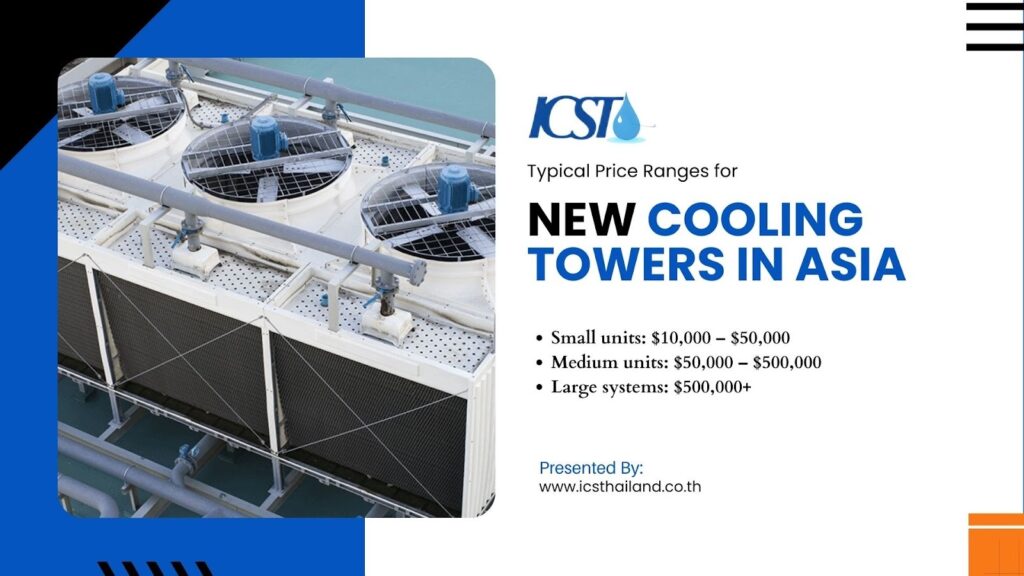
Price ranges for cooling towers span a wide spectrum. The right figure for your project depends on capacity, type, and the specific market you are operating in.
Here are realistic estimates aligned with the cooling tower cost in Asia:
Small commercial and light industrial units:
USD 10,000 to USD 50,000. This price range typically includes low-capacity package towers designed for specific applications such as HVAC systems, small manufacturing facilities, or process cooling.
These towers are ideal for setups with limited thermal loads and smaller-scale operations. They provide an efficient and cost-effective solution for managing cooling needs in compact environments.
Medium industrial units:
The cost of these towers typically ranges from USD 50,000 to USD 500,000. This price range applies to mid-capacity crossflow and counterflow cooling towers. These towers are commonly utilized in industries such as chemical plants, food processing facilities, and mid-scale power generation operations. Their versatility and efficiency make them a popular choice for various industrial applications.
Large field-erected industrial systems:
Projects starting at USD 500,000 and above are designed to meet the demanding needs of heavy industries, large-scale power plants, and petrochemical facilities. These custom-engineered structures are built to deliver exceptional thermal performance, ensuring efficiency and reliability.
With a focus on durability, they are crafted to support long operational lifespans in challenging environments. Each solution is tailored to meet the unique requirements of these critical industries.
When evaluating the total Cooling Tower Cost in Asia, it’s important to note that these figures represent the initial equipment costs. They do not include additional expenses such as installation, civil works, or ancillary systems, which will be addressed in the sections below.
Cost Breakdown: CAPEX vs OPEX
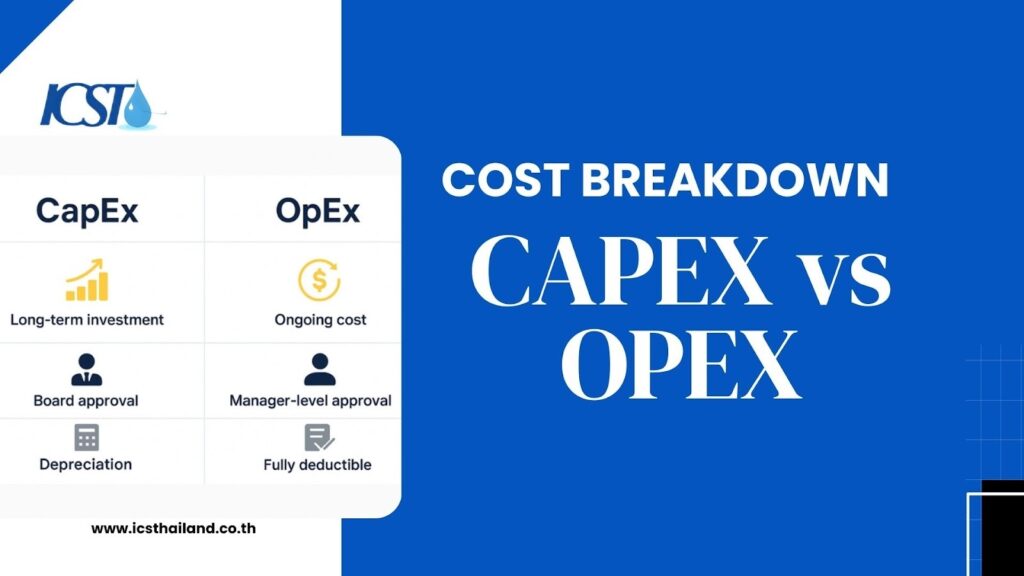
A common mistake in cooling tower budgeting is focusing exclusively on the purchase price. The true financial picture requires understanding both cooling tower CAPEX and OPEX (capital expenditure and operating expenditure) across the project lifecycle.
Cooling tower CAPEX and OPEX represent two distinct financial commitments. What goes into each category?
CAPEX (Capital Expenditure):
- Equipment and tower purchase
- Transport and freight to the site
- Installation and mechanical assembly
- Piping, basin connections, and ancillary equipment
OPEX (Operating Expenditure):
- Energy consumption — the dominant ongoing cost; fan motors, pump systems, and control panels run continuously
- Water treatment chemicals and consumables
- Routine maintenance, inspections, and labor
- Replacement of wear components such as fill media, nozzles, and drift eliminators
Electricity bills frequently represent 60–70% of a cooling tower’s total cooling tower operating expenses over its lifespan. A lower-priced tower with poor energy efficiency can cost significantly more over ten years than a premium unit with high-efficiency fans and variable frequency drives (VFDs).
Regional Pricing Differences Across Asia
Asia is not a single market. Labor rates, import duties, local manufacturing capacity, and regulatory environments vary considerably from one country to the next. These differences directly affect the cooling tower installation cost Asia-wide.
Why does geography matter so much when calculating industrial cooling tower pricing in Asia? Consider these regional variables:
- Labor cost differences: Installation labor in Vietnam, Bangladesh, or Indonesia costs substantially less than in South Korea, Japan, or Singapore. This affects both installation and ongoing maintenance budgets.
- Material sourcing and import duties: Countries with strong local manufacturing ecosystems, such as China, India, and South Korea, offer competitive pricing on locally produced towers. Markets that rely on imports face additional freight and customs costs.
- Local manufacturing vs. imported systems: Locally manufactured towers can reduce lead times and logistics costs, but may carry different performance standards compared to internationally certified equipment.
- Regional standards and compliance costs: Compliance with local environmental, safety, and water discharge regulations varies across markets, adding cost layers that differ by jurisdiction.
Buyers procuring in markets with higher import reliance should build a buffer of 10–15% above base equipment cost to account for duties, freight, and compliance-related expenses.
Hidden Costs You Need to Know About
Beyond the headline price, several site-specific and technical factors can influence the final Cooling Tower Cost in Asia. Many procurement teams overlook these variables until late in the project cycle, which often causes budget overruns.
What are the hidden cost drivers that inflate project totals? These factors often catch buyers by surprise:
- Prepare the foundation and site: Ground conditions, soil bearing capacity, and drainage requirements directly impact civil preparation costs. Poor site conditions can significantly drive up expenses.
- Build structural support and complete civil work: Large towers need reinforced concrete basins, structural steel supports, and access platforms, all of which increase the civil budget.
- Install control systems and automation: Basic float-controlled systems cost much less than fully integrated SCADA-compatible control panels with remote monitoring capabilities.
- Add efficiency enhancers: Incorporating variable frequency drives (VFDs), high-efficiency drift eliminators, and low-noise fan systems increases upfront costs but lowers cooling tower operating expenses in the long run.
- Choose custom configurations over standard models: Custom configurations require more engineering hours, longer fabrication timelines, and premium materials, making them more expensive than off-the-shelf package units.
How to Estimate Your Cooling Tower Budget
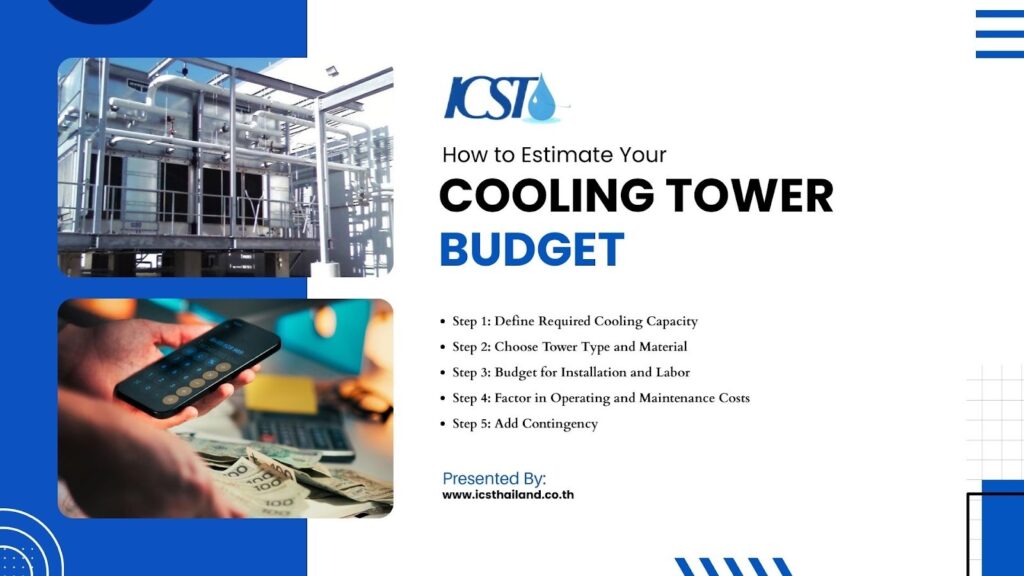
A structured approach to budgeting eliminates guesswork and protects your project from cost surprises. Follow this five-step framework to build a credible estimate.
How do experienced engineers approach the cooling tower cost estimation in Asia? Here is a proven, step-by-step method:
Step 1: Define Required Cooling Capacity
Start by calculating the heat rejection load in tons of refrigeration (TR) or megawatts (MW). This step is critical as accurate thermal load data ensures that every subsequent decision aligns with your cooling needs. Misjudging the cooling capacity can lead to inefficiency or underperformance, so take the time to gather precise data.
Step 2: Choose Tower Type and Material
Selecting the right cooling tower type and material is key to balancing cost and performance. Consider your process requirements, local environmental conditions, and water quality to ensure the tower meets the demands of your system.
The material choice directly impacts durability, maintenance needs, and long-term cost efficiency, so evaluate your options thoroughly.
Step 3: Budget for Installation and Labor
When creating a budget, don’t overlook installation costs. These are influenced by local labor rates, site conditions, and project complexity. For most projects in Asia, installation typically adds 20–40% on top of the equipment cost. Accounting for these expenses upfront prevents surprises during project execution.
Step 4: Factor in Operating Costs and Maintenance
To understand the true cost of your cooling tower, build a five- to ten-year operating expense (OPEX) model. This should include energy consumption, water treatment, and regular maintenance. A comprehensive lifecycle cost analysis allows you to compare options and choose a tower that minimizes long-term expenses.
Step 5: Add Contingency
Always include a 10–20% contingency buffer in your budget to cover scope changes, unexpected site conditions, or market price fluctuations. For projects in remote locations or complex environments, use the higher end of this range to ensure you’re prepared for any challenges that may arise. A well-planned contingency reduces the risk of budget overruns and keeps your project on track.
Cost by Cooling Tower Type
The table below summarizes typical price ranges by tower type to support quick comparison and budget alignment.
| Tower Type | Typical Price Range (USD) | Best Use Case | Notes |
| Small Package | $10,000 – $50,000 | Light industrial | Good for compact systems |
| FRP Crossflow | $30,000 – $100,000 | Commercial/plant | Corrosion resistant |
| Closed Circuit | $50,000 – $250,000 | Industrial load | Water savings benefits |
| Large Field Erected | $500,000+ | Heavy industry/power | Custom engineered |
Use this table as a starting reference point. Actual prices will vary based on capacity, material specifications, regional factors, and supplier selection.
How to Cut Cooling Tower Project Costs (Without Cutting Corners)
Optimizing your cooling tower cost in Asia doesn’t have to mean compromising on performance. Strategic decisions at the design and procurement stage can deliver meaningful savings without sacrificing reliability.
Where can project teams reduce costs without increasing operational risk? These proven strategies are worth reviewing before finalizing your budget:
- Choose locally manufactured towers: Local manufacturers in China, India, and Southeast Asia offer competitive pricing on standard configurations, with shorter lead times and lower freight costs.
- Optimize design for energy efficiency: Selecting high-efficiency fill media, low-pressure nozzles, and variable-speed fan drives reduces long-term cooling tower operating expenses substantially.
- Plan installation in lower-cost labor regions: Where project logistics allow, scheduling installation in markets with competitive labor rates reduces total installed cost.
- Use modular designs for scalability: Modular cooling towers allow phased capacity expansion, avoiding the cost of oversizing at the initial build stage.
- Evaluate lifecycle cost, not just upfront price: A tower priced 15% higher but with 30% lower energy consumption may deliver better total value over a ten-year operating period.
Conclusion
Budgeting for a cooling tower project in Asia involves more than just the equipment’s price. Key factors like capacity, tower type, and construction materials heavily influence the Cooling Tower Cost in Asia, but these only account for the initial capital expenditure (CAPEX). To truly understand the cost, it’s important to also factor in long-term operating expenses (OPEX), such as energy use and maintenance.
Regional variations in labor, logistics, and compliance also significantly impact the final price. Investing more upfront in energy-efficient models can lead to substantial long-term savings. Accurate, site-specific planning is crucial to avoid cost overruns and ensure you select the right tower for your needs.
For expert advice or a detailed quote for your new cooling tower installation, visit the ICST website today.
Frequently Asked Questions
What is the average cost of a new cooling tower in Asia?
The average cooling tower cost in Asia ranges from USD 10,000 for small commercial units to over USD 500,000 for large field-erected industrial systems. The final cost depends on capacity, tower type, materials, and regional factors, including labor rates and import duties.
Which factors affect cooling tower prices the most?
Cooling capacity, tower type (open vs. closed circuit), construction materials, and custom engineering requirements have the greatest impact on industrial cooling tower pricing Asia. Regional labor rates and local manufacturing availability also play a significant role.
What factors influence Cooling Tower Cost in Asia?
Cooling Tower Cost in Asia depends on tower type, capacity, materials, location, installation complexity, energy efficiency requirements, and compliance standards. Labor rates, transportation logistics, climate conditions, and custom engineering specifications also significantly impact total project pricing across different Asian markets and industries.
How much does a Cooling Tower Cost in Asia on average?
The average Cooling Tower Cost in Asia ranges from $10,000 for small industrial units to over $1,000,000 for large power plant systems. Pricing varies by cooling capacity, design configuration, brand, automation features, and country-specific manufacturing and installation expenses.
Does installation affect Cooling Tower Cost in Asia?
Yes, installation significantly impacts Cooling Tower Cost in Asia. Site preparation, crane rental, piping integration, electrical connections, water treatment systems, and skilled labor increase total expenses. Remote locations and strict regulatory requirements can further elevate installation and commissioning costs.
Which type offers the best Cooling Tower Cost in Asia?
The best Cooling Tower Cost in Asia depends on application needs. Induced draft towers offer energy efficiency and durability, while crossflow towers simplify maintenance. Fiberglass reinforced plastic models reduce corrosion costs, improving long-term return on investment for industrial facilities.
How much do installation and civil works cost?
Cooling tower installation cost Asia-wide typically adds 20–40% to the base equipment price, depending on site complexity, civil preparation requirements, and local labor costs. Remote or challenging sites can push this figure higher.