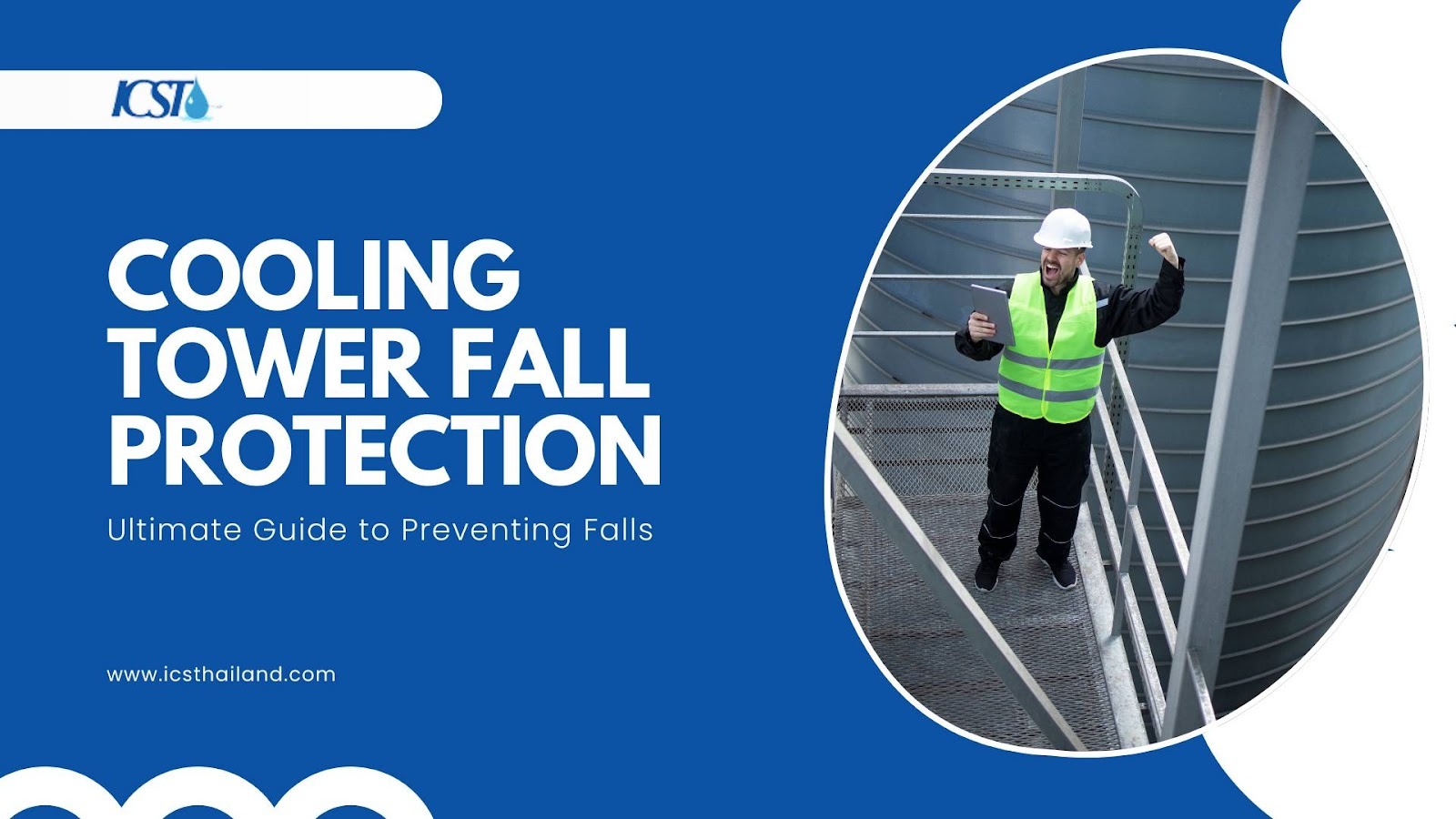
Cooling tower fall protection is a critical priority for anyone overseeing tower maintenance and facility management. Cooling towers pose challenges far beyond those of conventional rooftops, including persistent wet-bulb humidity, high vibration from powerful fans, and algae-slick, slippery surfaces that increase the risk of falls and accidents. Even one misstep in these demanding environments can have severe consequences for both personnel and operations.
As we move into 2025, compliance with evolving safety regulations has never been more important. Facility managers must now meet not only global standards like OSHA and ANSI, but also account for local environmental conditions.
Choosing and implementing the right cooling tower fall protection strategies ensures your site is equipped for both regulatory compliance and operational continuity. When you invest in robust safety solutions, you are taking measurable steps to protect workers and prevent costly incidents.
Cooling Tower Fall Protection: System Comparison
When it comes to cooling tower fall protection, you have two primary categories: passive and active systems. Understanding the difference is critical for implementing the correct safety measures and protecting workers effectively.
Passive Systems (Guardrails & Walkways)
Passive fall protection systems are the preferred first line of defense. They require no special action from the user to be effective.
- User Involvement: Zero. The protection is always in place.
- Best For: Routine access to areas like fan decks and basins where maintenance personnel perform regular inspections.
- Material Choice: Fiberglass Reinforced Plastic (FRP) or 316 Stainless Steel (316SS) is ideal for its corrosion resistance.
- Maintenance: Requires only minimal visual inspection to ensure integrity.
- OSHA Priority: These systems are the primary recommendation according to the Hierarchy of Controls.
Active Systems (Harnesses & PFAS)
Active systems, often called Personal Fall Arrest Systems (PFAS), require the worker to take specific actions to be protected.
- User Involvement: High. This includes proper training, donning a full-body harness, and connecting to an anchor point.
- Best For: Tasks like internal plenum work or fill replacement where passive systems are not feasible.
- Material Choice: Typically involves synthetic webbing for safety harnesses and steel components for anchors and lifelines.
- Maintenance: High. Annual recertification by a competent person is often required.
- OSHA Priority: Considered a secondary measure or a last resort when passive systems cannot be implemented.
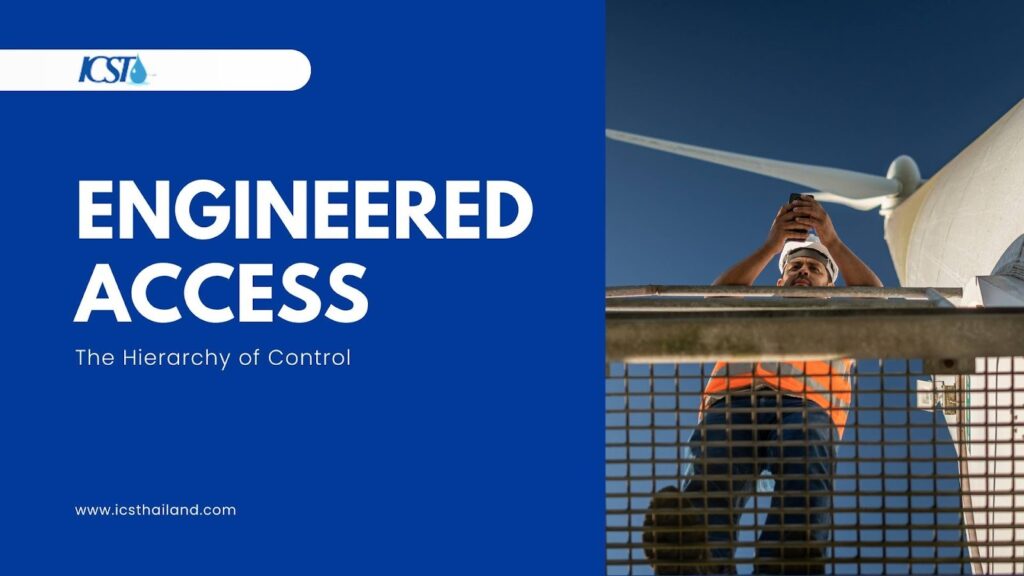
Engineered Access: The Hierarchy of Control
A robust safety strategy follows the Hierarchy of Control, an OSHA-endorsed model for mitigating risks. The most effective safety procedures eliminate the hazard.
First, we look at elimination and substitution. We can reduce the need for workers to access heights by integrating advanced Cooling System Monitoring technologies. This allows for remote hazard identification and reduces the frequency of manual handling and on-site maintenance.
This simple device eliminates one of the most common causes of falls: an unprotected opening. For cooling tower facilities in dense urban or industrial zones, we design access platforms and catwalks with optimized footprints. This ensures safe passage for maintenance personnel without impeding the critical thermal airflow necessary for equipment operation.
Ladder Safety & Personal Fall Arrest Systems (PFAS)
Ladders are a major source of potential hazards. OSHA’s 24-Foot Rule (1910.28) mandates a shift away from cages on fixed ladders taller than 24 feet. Instead, facilities must install Ladder Safety Systems, such as vertical lifelines, to provide superior fall protection.
When Personal Fall Arrest Systems (PFAS) are necessary, a critical 2025 update focuses on the “Proper PPE Fit” rule. This ensures that safety harnesses are correctly sized and adjusted to the individual. A proper fit is essential for the system to absorb shock effectively and prevent injury during a fall.
Furthermore, a compliant safety plan must include specific emergency procedures for rescue. Relying solely on “Call 911” is no longer considered an adequate rescue plan. For mission-critical sites, you must implement a prompt retrieval plan to rescue a suspended worker quickly and prevent further injury. When selecting a safety harness, consider the environment. Chemical-resistant webbing is the correct choice for heavy industrial and acid applications to prevent material degradation.
Unique Hazards: Internal vs. External Access
The risks associated with cooling towers change depending on whether the work is internal or external. Inside an induced draft tower, maintenance personnel must navigate the “Vortex Effect” from the fan and contend with constantly wet surfaces inside these confined spaces.
Externally, chemical drift from the tower can severely degrade standard steel anchors and structural components. This chemical exposure makes 316 Stainless Steel or FRP the only technically feasible choices for long-term, reliable fall protection equipment. If you discover a structural safety breach, it is crucial to consult our Cooling System Emergency Repair protocols for rapid stabilization before any repair work begins.
Regional Resilience: The Bangkok Hub Advantage
In an emergency, speed is essential for both safety and operational continuity. Our Bangkok hub provides a strategic advantage for clients across Asia. We can dispatch safety auditors and engineering teams to your site within hours to conduct a risk assessment and begin implementing solutions.
This logistical strength extends to the Middle East, where our team expertly navigates GCC customs. We can deliver safety-compliant spare parts and modular access platforms for same-day or next-day tower repair, minimizing downtime.
To mitigate risks during high-pressure incidents, we strongly advise reviewing our Cooling System Emergency Shutdown procedures. Securing the site and preventing accidental energization of electrical components is a vital first step before technicians ascend the tower.
Sustainability in Safety Design
Modern safety design incorporates principles of environmental sustainability. We practice low-power-use engineering by specifying lightweight FRP access systems. These systems reduce the overall structural load on the cooling tower and the supporting facility, which can lower the energy consumption needed to operate the cooling systems.
We are also moving away from toxic coatings and paints. We favor materials like integral-color FRP, which requires zero repainting or chemical treatment over its lifespan. This choice reduces the release of harmful chemicals into the environment and lowers long-term maintenance costs.
Conclusion: Safety as a Performance Metric
Modern cooling tower safety starts with the right approach to cooling tower fall protection. Effective fall protection is much more than a checklist; it is a specialized engineering discipline. Success requires a deep understanding of materials science, structural loads, environmental conditions, and human factors.
Implementing robust cooling tower fall protection systems protects your workforce from cooling tower operators to maintenance personnel and serves as the foundation for technical feasibility and operational continuity across your facility.
Is your plant’s height safety infrastructure compliant with 2025 standards? Contact ICST for a Technical Fall Hazard Audit and experience the power of glocal safety engineering.
Frequently Asked Questions
What is cooling tower fall protection?
Cooling tower fall protection refers to safety measures and systems designed to prevent falls during maintenance or operation of cooling towers, ensuring worker safety.
Why is fall protection important for cooling towers?
Cooling towers pose unique hazards like slippery surfaces and confined spaces. Fall protection systems mitigate risks, protect workers, and ensure compliance with safety standards.
What are the types of fall protection systems for cooling towers?
Fall protection systems include passive options like guardrails and walkways, and active systems like personal fall arrest systems (PFAS) with safety harnesses.
How do you ensure compliance with cooling tower safety protocols?
Compliance involves using OSHA-approved fall protection equipment, conducting regular inspections, and providing proper training for maintenance personnel.
What materials are best for cooling tower fall protection systems?
Corrosion-resistant materials like FRP (Fiberglass Reinforced Plastic) and 316 Stainless Steel are ideal for long-term safety in cooling tower facilities.