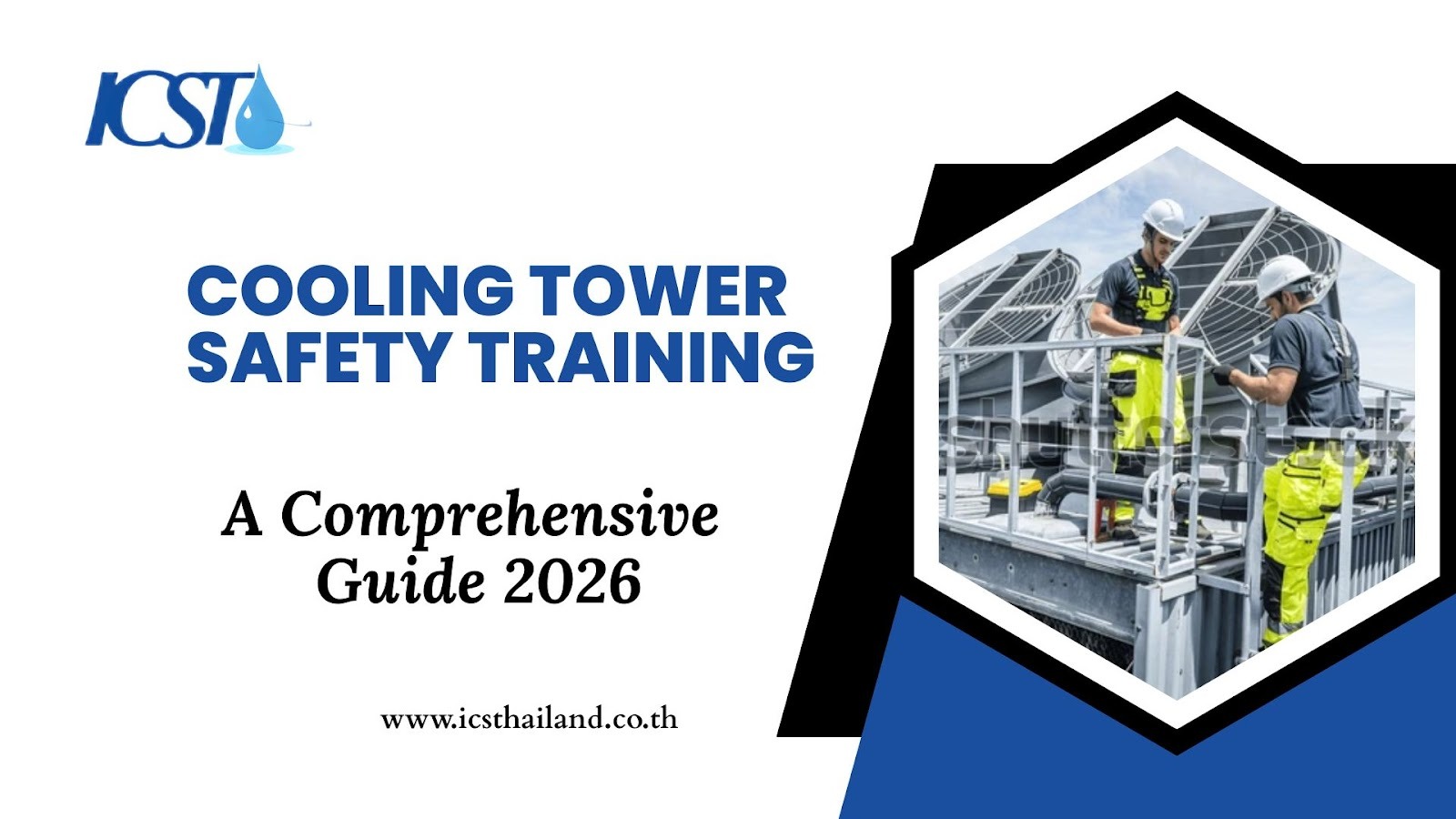
When cooling towers fail, the consequences can be severe. These systems, essential for many industrial processes, harbor a unique combination of mechanical, electrical, chemical, and biological hazards. Without robust and dedicated cooling tower safety training, maintenance staff are exposed to significant risks.
Effective training is not merely a compliance task; it is a fundamental pillar supporting worker safety, regulatory adherence, and operational continuity. Properly trained teams can mitigate the risk of Legionella outbreaks, prevent catastrophic equipment failure, and ensure every maintenance task is performed safely and efficiently.
In this blog post, we’ll guide you through a complete framework for developing and implementing a safety program that protects your people, your assets, and your reputation. Let us be your step-by-step resource to ensure your safety program is effective and comprehensive.
The Importance of Cooling Tower Safety Training
So why should organizations invest in dedicated training for cooling tower safety? Beyond the obvious need to protect personnel from physical harm, a well-structured training program fulfills critical legal, business, and ethical duties.
It moves safety from a reactive checklist item to a proactive operational standard, creating a resilient and responsible workplace culture. The reasons for making this a priority are clear:.
- Legal & Regulatory: Authorities mandate strict safety protocols. This includes compliance with OSHA’s confined-space entry rules, CDC and ASHRAE guidance on Legionella control, and general workplace safety laws.
- Business Imperatives: Proactive training prevents costly unscheduled downtime. It also helps organizations avoid liability claims, regulatory fines, and the significant reputational damage that follows a serious safety incident or disease outbreak.
- Human Factor: Most importantly, training protects your workers. Staff face numerous dangers, including drowning or engulfment in sump pits, inhalation of hazardous chemical vapors or pathogens, and severe injury from electrical and mechanical systems.
Core Risks for Cooling Tower Maintenance Staff
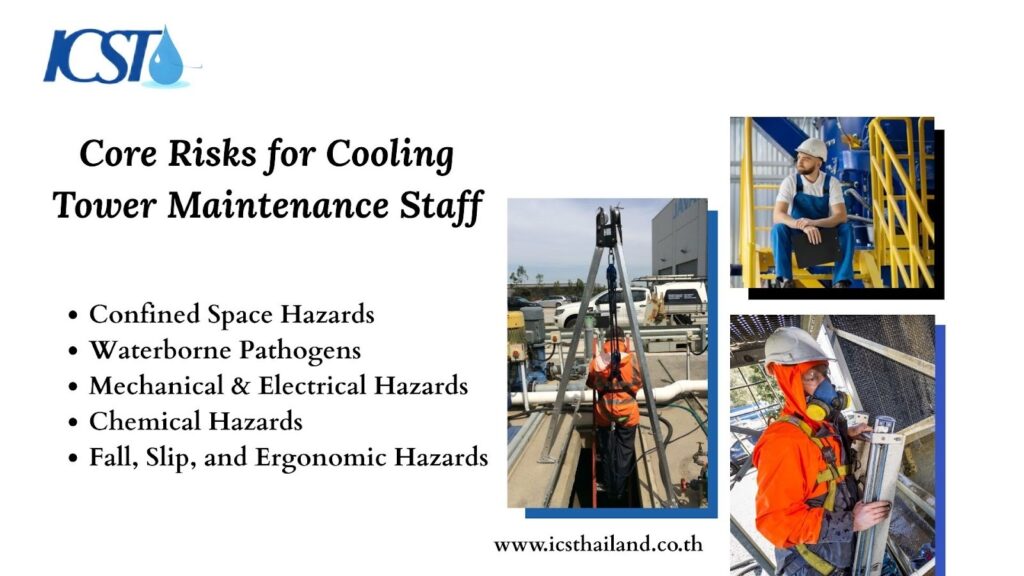
What specific dangers do maintenance teams face daily? Without proper awareness and training, these environments are ticking time bombs of unseen hazards. A comprehensive training program is non-negotiable and must directly address these five core hazard categories to prevent catastrophic incidents.
Confined Space Hazards:
Many areas within a cooling tower, like basins and plenums, are permit-required confined spaces. They feature limited entry and exit points, can contain hazardous atmospheres (low oxygen or toxic gases), and house powerful moving parts. Confined space entry protocols are essential.
Waterborne Pathogens:
New Cooling towers are ideal breeding grounds for bacteria, most notably Legionella pneumophila. Aerosolized water droplets can spread the bacteria, causing Legionnaires’ disease. Workers are at risk during sampling, cleaning, and maintenance.
Mechanical & Electrical Hazards:
High-powered fans, belts, driveshafts, gearboxes, and motors pose extreme mechanical risks. Electrical systems present a constant threat of shock or electrocution if not properly isolated through lockout/tagout procedures.
Chemical Hazards:
Water treatment involves biocides, corrosion inhibitors, and pH-adjusting acids or alkalis. Chemical safety training is crucial in preventing burns, respiratory damage, and environmental spills.
Fall, Slip, and Ergonomic Hazards:
Wet surfaces, access ladders, and work at height create constant slip and fall risks. Manual handling of heavy components or chemicals can also lead to serious ergonomic injuries.
Training Learning Objectives
Comprehensive safety training goes beyond basic awareness; it equips workers with practical, life-saving skills. Effective cooling tower safety training ensures that participants can confidently demonstrate key competencies by the end of the course.:
- Understand and apply all procedures for permit-required confined space entry, including atmospheric testing and rescue planning.
- Correctly execute lockout-tagout (LOTO) and other energy control procedures to achieve a zero-energy state before work begins.
- Safely handle, store, and apply all water treatment chemicals, including reading Safety Data Sheets (SDS) and using the correct Personal Protective Equipment (PPE).
- Recognize Legionella risks and perform basic control checks and safe water sampling techniques.
- Respond effectively to emergencies, including non-entry rescue, chemical spills, fires, and provide initial first aid.
Ideal Course Outline & Timeline
This training is best structured as a modular curriculum. This approach allows for focused learning and practical application, ensuring participants thoroughly master one critical subject before moving on to the next.
Module 1: Introduction to Cooling Tower Systems & Hazard Awareness
This foundational module provides a comprehensive overview of cooling tower components from the fill media and drift eliminators to the basin and fan assembly and their specific functions.
It introduces common physical, chemical, and biological hazards associated with each part of the system, such as slips on wet surfaces, exposure to water treatment chemicals, and the inhalation of aerosols.
Participants will learn to establish clear protocols for reporting safety concerns and near misses, forming the essential basis for proactive hazard identification and risk assessment.
Module 2: Confined Space Entry & Permit-to-Work Program
This in-depth module breaks down the OSHA criteria for classifying and entering permit-required confined spaces. Participants will learn to conduct pre-entry atmospheric monitoring for oxygen levels, flammability, and toxic gases using multi-gas detectors.
The training will clearly define the critical roles and responsibilities of the entrant, attendant, and entry supervisor. The session culminates in a hands-on permit simulation where teams develop a comprehensive rescue plan and complete a full permit-to-work document before simulating an entry.
Module 3: Lockout-Tagout (LOTO) & Hazardous Energy Control
In this module, participants learn to identify all sources of hazardous energy within the cooling tower system, including electrical, mechanical, and hydraulic power. The module provides detailed instructions on the proper application and removal of locks, tags, and isolation devices.
It walks through the critical “6 Steps” of a LOTO procedure, emphasizing the crucial verification step to ensure a zero-energy state has been achieved. A practical drill on sample equipment, such as a pump motor, reinforces these life-saving skills.
Module 4: Chemical Safety, Water Hygiene & Legionella Control
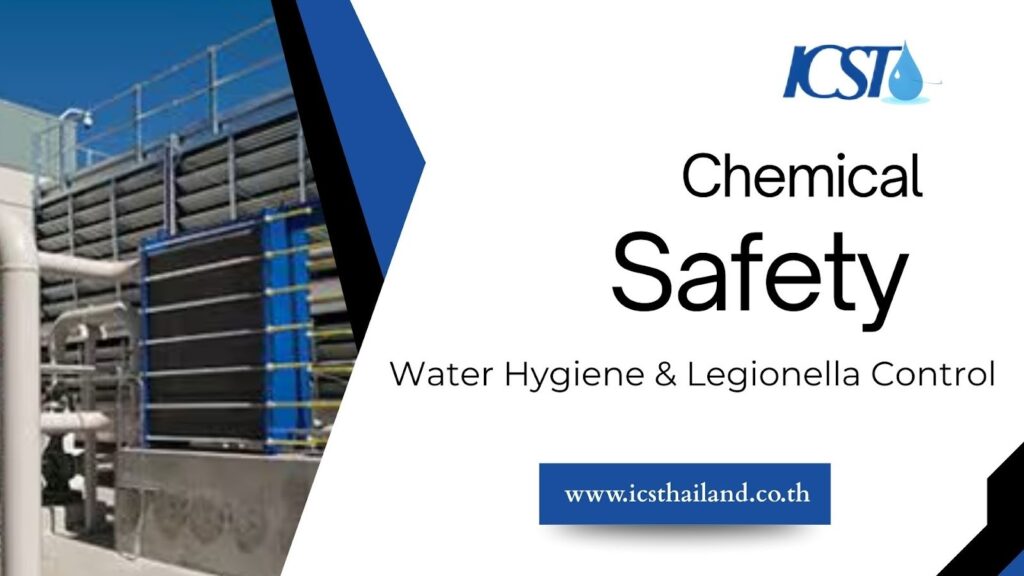
This module focuses on the principles of chemical safety when handling water treatment agents like biocides and corrosion inhibitors. It teaches staff how to read and interpret Safety Data Sheets (SDS), select appropriate PPE, safely manage chemical dosing systems, and respond effectively to spills.
It also provides a detailed overview of Legionella risks, covering the environmental conditions that promote its growth and the critical control measures, such as maintaining proper biocide levels and regular system cleaning, needed to mitigate them.
Module 5: Mechanical Safety & Working at Height
Here, the focus is on safely servicing and maintaining mechanical components like fans, gearboxes, pumps, and belts. The training covers safe access protocols for working at height, including the proper use of ladders, scaffolding, and fall protection equipment.
Participants will learn proper techniques for high-risk tasks like shaft alignment, belt tensioning, and gearbox maintenance, all while adhering to strict mechanical safety protocols to prevent unexpected equipment startup.
Module 6: Emergency Procedures & First Response
This critical module prepares staff to respond effectively to worst-case scenarios. It covers the fundamentals of non-entry rescue from confined spaces, basic CPR and first aid for common industrial injuries, and clear emergency communication protocols.
Participants will learn how to activate alarms, contact emergency services, and provide clear information to first responders. The module also establishes the formal process for incident reporting and investigation, as effective emergency procedures are key to preventing future occurrences.
Module 7: Final Assessment & Competency Certification
The final module validates the knowledge and skills acquired throughout the training. Participants will complete a written examination covering key safety concepts and a practical, hands-on skills assessment observed by the instructor.
Practical Hands-On Exercises & Drills
Hands-on exercises help turn theoretical knowledge into real-world skills, building muscle memory for essential safety tasks. By simulating real-life scenarios, trainees gain confidence and are better prepared to respond quickly and correctly in critical situations.
- Confined-Space Permit Drill: Teams complete a full permit-to-work form, conduct live atmospheric monitoring with multi-gas detectors, and simulate an entry procedure.
- LOTO Execution on Fan Motor: Participants practice isolating, locking, tagging, and verifying a zero-energy state on an actual fan motor or a simulator.
- Chemical Spill Drill: A simulated spill requires staff to don appropriate PPE, use containment materials, apply neutralizers, and properly handle waste.
- Non-Entry Rescue Drill: Teams practice using retrieval systems, such as a tripod and winch, to safely extract a mannequin from a confined space without entering.
- Legionella Sampling Demo: Instructors demonstrate the correct technique for collecting a water sample and filling out a chain-of-custody form to ensure sample integrity.
Standard Operating Procedures & Permit Templates
What documents are essential for daily operations? Having clear, standardized templates is key to ensuring consistency and efficiency in your processes. For example, checklists for equipment maintenance help keep machinery running smoothly, while incident report forms ensure problems are documented and addressed promptly.
Together, these resources help reduce risks, improve compliance, and create a safer, more organized work environment.
- Confined-Space Entry Permit: Must include fields for location, authorized entrants, atmospheric test results, necessary PPE, and rescue plan details.
- LOTO Checklist: A step-by-step guide for isolating and verifying zero energy for specific equipment.
- Chemical Handling & Spill Response Card: A laminated, pocket-sized card detailing PPE, handling steps, and immediate actions for spills.
- Legionella Sampling Chain-of-Custody Form: A formal document to track sample collection, handling, and transfer to the laboratory.
- Emergency Contact & Escalation Flowchart: A visual guide showing who to call and in what order during an emergency.
PPE, Tools & Monitoring Equipment
Looking to ensure safe maintenance of cooling towers? Here’s what you need in your toolkit: personal protective equipment (PPE), reliable monitoring tools, and rescue gear. These essentials aren’t just recommended, they’re critical for performing maintenance safely and effectively.
- PPE: This includes respirators (N95 or higher), chemical splash suits, appropriate gloves (nitrile, neoprene), safety harnesses, and face shields.
- Monitoring Gear: Essential tools include multi-gas detectors (O₂, LEL, CO, H₂S), personal gas monitors, and water quality testers for pH and conductivity.
- Rescue & Fall-Arrest Equipment: This category features tripod rescue systems, self-retracting lifelines, and inert gas rescue kits designed for specific environments.
Building a Safer Workplace
For plant and facility managers, implementing a comprehensive cooling tower safety training program is a non-negotiable responsibility. You can start by following this seven-step action plan:
- Conduct a thorough hazard audit of your cooling tower systems.
- Build training modules based on the identified risks.
- Run a pilot course with a small group to gather feedback.
- Assess and refine the content based on the pilot.
- Roll out the training to all relevant personnel.
- Schedule and track annual refresher courses.
- Regularly audit on-the-job practices to ensure compliance.
Conclusion
The safety and maintenance of cooling towers should be a top priority for any organization that utilizes them. Without proper training and procedures in place, these essential systems can become a major liability.
Investing in high-quality cooling tower safety training not only ensures compliance with regulations but also protects your personnel, operational uptime, and organizational reputation. By implementing regular audits and best practices, companies can minimize risk and foster a strong safety culture within their workforce.
At ICST, we understand the importance of keeping your cooling tower system safe and well-maintained. Our comprehensive training programs cover all aspects of cooling tower safety and equip your team with the necessary knowledge to effectively manage risks. Don’t wait until it’s too late – invest in safety and protect your business today.
Frequently Asked Questions
How often should staff refresh LOTO training?
OSHA requires annual refresher training for lockout/tagout procedures to ensure employees maintain proficiency. Retraining is also required if job duties change, new equipment is introduced, or an incident occurs.
Can contractors perform confined-space entry without our training?
No. Contractors must either provide proof of equivalent training that meets or exceeds your company’s standards or complete your site-specific training module before performing any confined space entry.
What PPE is mandatory for chemical dosing?
The specific PPE depends on the chemical, but it typically includes chemical-resistant gloves, splash-proof goggles, a face shield, and sometimes a chemical-resistant apron or suit. Always consult the Safety Data Sheet (SDS) for definitive requirements.
Who signs the confined-space permit?
The entry supervisor is responsible for reviewing the permit, verifying that all safety precautions are in place, and signing to authorize entry.