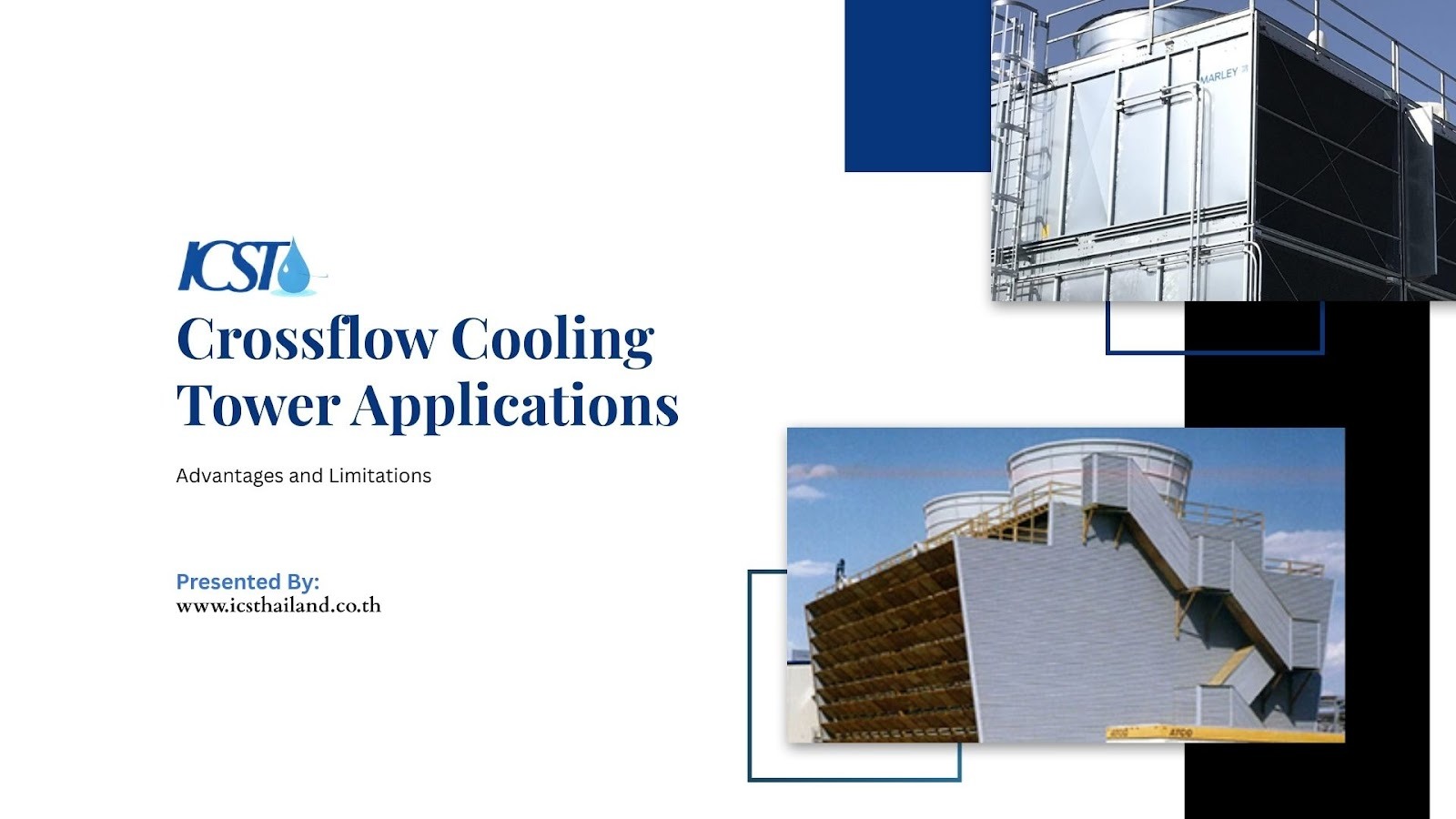
Understanding crossflow cooling tower applications is critical for facility managers. These systems rely on horizontal airflow and a simple gravity distribution system to cool hot water. Industrial plants and commercial buildings use them heavily. They offer significant benefits like low pump energy requirements and easy maintenance access.
They do have some limitations. They require a larger footprint and provide lower thermal efficiency compared to counterflow models. You will often find them in HVAC systems, commercial cooling setups, and industrial plants.
What Is a Crossflow Cooling Tower?
A crossflow cooling tower is a key piece of heat rejection equipment that cools water by bringing it into direct contact with moving air. In this design, air moves horizontally across the water as it falls vertically through the tower.
This process facilitates heat transfer primarily through evaporation, efficiently cooling the water for various industrial and commercial applications.
Basic Principle
- Horizontal Airflow: The design directs air to move horizontally across the cooling tower.
- Vertical Water Flow: Hot water enters from the top and falls vertically downwards through the tower.
- Evaporative Cooling: As the air and water intersect, heat is transferred from the water to the air through evaporation, which cools the water.
Key Components of Crossflow Towers
A cooling tower relies on several key parts to function correctly and efficiently. These components work together to facilitate the evaporative cooling process, ensuring the system is both effective and reliable.
- Fill Media: This material, often made of PVC, increases the surface area for water evaporation, which is the primary mechanism for heat transfer.
- Hot Water Basin: Located at the top of the tower, this component receives and evenly distributes hot water over the fill media.
- Cold Water Basin: Situated at the bottom, this basin collects the cooled water after it has passed through the fill media, before it is recirculated back to the system.
- Air Intake Louvers: Positioned on the sides, these louvers allow air to enter the tower horizontally while preventing water from splashing out.
- Fan System: A large mechanical fan, located at the top of the tower, draws air horizontally across the fill media and expels it upwards.
- Drift Eliminators: These are placed above the fill media and before the fan system to capture water droplets carried by the exiting air stream, minimizing water loss.
- Nozzles: These spray the hot water from the basin evenly across the fill media to ensure uniform distribution.
How Crossflow Design Impacts Performance
The tower’s physical structure is fundamental to its cooling performance. In particular, the design’s simplicity and operational efficiency make it a popular choice for many crossflow cooling tower applications, influencing everything from energy consumption to maintenance needs.
Airflow Dynamics: Horizontal vs. Vertical
The direction of airflow is a critical factor in a cooling tower’s efficiency and energy consumption. Crossflow towers utilize a horizontal airflow path, which offers distinct advantages over the vertical airflow found in counterflow designs.
- Lower Air Resistance: Horizontal airflow encounters less obstruction, which means the fan doesn’t have to work as hard. This directly translates to lower energy usage and reduced operational costs.
- Heat Transfer Efficiency: While energy-efficient, the horizontal path provides slightly less effective heat transfer compared to the direct opposition of air and water in vertical counterflow systems.
Water Distribution: Simplicity by Gravity
A key feature of the crossflow design is its gravity-fed water distribution system, which simplifies operation and maintenance. This system uses gravity to ensure an even spread of water over the fill media, which is crucial for consistent cooling.
- Natural Downward Flow: Hot water is pumped into a basin at the top of the tower. It then flows down through small holes in the basin floor, spreading uniformly across the fill.
- Reduced Clogging and Pumping Needs: This simple, hole-based design is less prone to clogging than the pressurized spray nozzles used in other systems. It also reduces the required pump head, further saving energy.
Maintenance and Accessibility
The open, accessible layout of crossflow cooling towers is one of their most significant operational advantages. This design makes routine inspections, cleaning, and maintenance tasks safer and more straightforward for service personnel.
- Easier Access to Components: The internal components, including the fill, drift eliminators, and water basin, are typically easier to access without requiring extensive disassembly.
- Safer Working Conditions: Technicians can often perform maintenance from internal walkways, reducing the risks associated with working in confined or hard-to-reach spaces.
Footprint and Structural Design
The physical shape and size of a cooling tower influence where it can be installed and how it integrates with existing infrastructure. Crossflow towers generally have a lower profile but a larger footprint compared to counterflow units of similar capacity.
- Larger Installation Area: Because the air inlets are on the sides, crossflow towers require more horizontal space. This can be a deciding factor for facilities with limited ground area.
- Lower Overall Height: Their shorter stature makes them suitable for locations with height restrictions, such as rooftops or areas where aesthetic considerations are important.
Where Are Crossflow Cooling Towers Used?
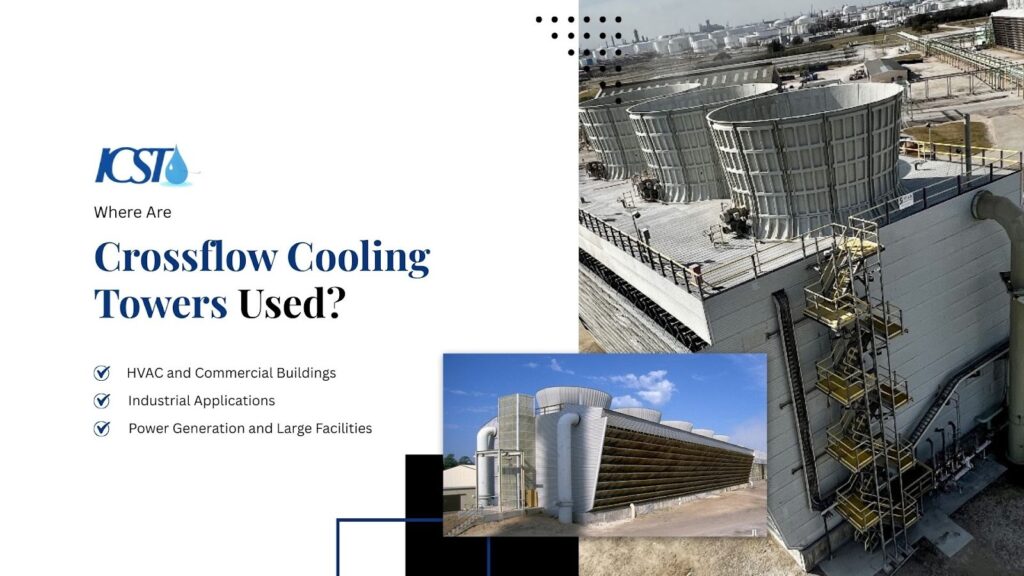
Crossflow cooling towers are essential across various sectors due to their efficient and cost-effective design. Let’s explore some of the most common crossflow cooling tower applications to understand their versatility and importance in modern infrastructure.
HVAC and Commercial Buildings
Crossflow cooling towers are crucial for maintaining reliable temperature control in commercial spaces.
- Shopping Malls: Keep shoppers comfortable.
- Hospitals: Provide critical climate control for sensitive areas.
- Office Buildings: Support daily HVAC requirements for a pleasant working environment.
Industrial Applications
In heavy industry, where significant heat is generated, crossflow towers are vital for process cooling and safety.
- Chemical Plants: Cool down manufacturing processes.
- Food Processing: Essential for refrigeration and preserving product quality.
- Oil Refineries: Help maintain safe operating temperatures.
Power Generation and Large Facilities
Power plants and other large facilities that require constant heat rejection benefit from the robust design of crossflow towers.
- Power Plants: Manage the immense thermal load generated during electricity production.
- Large-Scale Cooling Systems: Ideal for handling continuous operation environments effectively.
Why Choose a Crossflow Cooling Tower? Key Benefits
Crossflow cooling towers offer distinct operational advantages that can lead to significant long-term savings. Their design minimizes energy consumption for both pumping and fans, directly translating to lower operational costs.
Lower Pump Energy Requirements
Unlike systems that require high pressure to force water through spray nozzles, the gravity-fed design of a crossflow tower only needs to lift water to the top basin. This minimal pump head requirement dramatically reduces pumping energy consumption and operational costs.
Reduced Fan Power Consumption
The horizontal airflow path in a crossflow design offers less static pressure resistance compared to the vertical path in a counterflow tower. This lower pressure drop allows the fan to move the required volume of air with less energy, significantly reducing fan horsepower requirements.
Easy Maintenance Access
The open, accessible plenum and large internal walkways provide excellent visibility and access to critical components like the fill, drift eliminators, and mechanical systems. Technicians can safely perform inspections and routine maintenance, often while the tower remains operational. This design minimizes downtime and associated maintenance costs.
Flexible Operation with Variable Loads
These towers handle fluctuating thermal loads and water flow rates with remarkable efficiency. The gravity-fed distribution system naturally adapts to changes in flow, ensuring even water distribution across the fill material without requiring complex nozzle adjustments. This makes them ideal for applications with variable process demands.
Lower Noise Levels
Crossflow designs generally operate more quietly than their counterflow counterparts. The combination of lower air velocities through the fill and a larger plenum area reduces air turbulence and the resulting fan noise. This often eliminates the need for expensive sound attenuation measures, making them suitable for noise-sensitive locations.
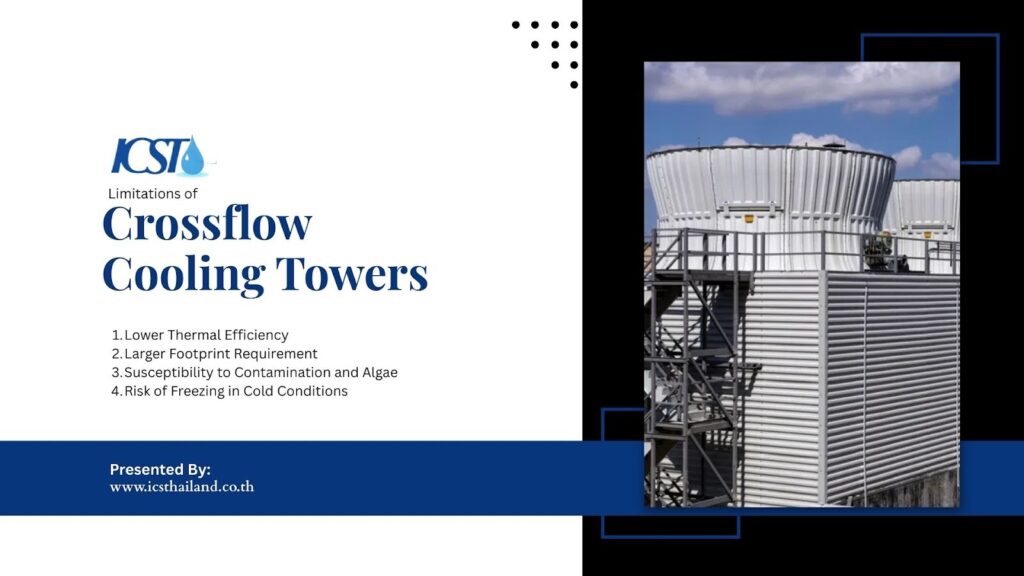
Limitations of Crossflow Cooling Towers
Lower Thermal Efficiency
One of the most significant drawbacks of crossflow cooling towers is their reduced thermal efficiency compared to counterflow models. The horizontal airflow has less contact time with the falling water, leading to less effective heat exchange. .
- Ineffective Heat Exchange: Air travels horizontally across the falling water, resulting in less efficient heat transfer.
- Higher Operating Costs: To achieve the same level of cooling as a counterflow unit, a crossflow tower may need to be larger or run for longer, increasing energy consumption.
Larger Footprint Requirement
The physical design of crossflow towers necessitates a wider structure to accommodate the horizontal air intake. This translates into a larger footprint, requiring more ground space for installation. For facilities with limited available area, this can be a major constraint.
- Wider Base: The side-mounted air inlets extend the unit’s width.
- Space Constraints: This design is less suitable for dense industrial sites or rooftops where space is at a premium.
Susceptibility to Contamination and Algae
The hot water basin in a crossflow tower is typically open to the elements, which introduces a higher risk of contamination. This exposure to direct sunlight and airborne debris creates an ideal environment for algae growth, which can clog the system and reduce its effectiveness over time.
- Open Basin Design: The open top allows sunlight and debris like leaves, dust, and pollutants to enter the water.
- Promotes Algae Growth: Sunlight is a key ingredient for photosynthesis, encouraging algae and other biological growth within the basin and fill.
Risk of Freezing in Cold Conditions
During colder months, the design of crossflow towers can make them more vulnerable to freezing. The fill media has a large surface area exposed to the ambient air, and if the airflow is not properly managed in freezing temperatures, ice can form quickly, potentially damaging the fill and impeding performance.
- Exposed Fill Media: The large, open louvers allow cold air to easily access the fill material.
- Potential for Ice Damage: Ice buildup can block airflow, reduce thermal efficiency, and even cause structural damage to the tower’s internal components.
Crossflow vs Counterflow Cooling Towers
| Feature | Crossflow Cooling Tower | Counterflow Cooling Tower |
| Airflow Direction | Horizontal airflow | Vertical airflow |
| Water Distribution | Gravity-based | Pressurized spray |
| Pump Energy | Low | Higher |
| Thermal Efficiency | Moderate | High |
| Maintenance Access | Easy | Limited |
| Footprint | Larger | Compact |
| Cost | Lower initial cost | Higher cost |
Design Considerations for Crossflow Cooling Towers
When designing a crossflow cooling tower, engineers must carefully consider several factors to ensure optimal performance and longevity. Proper planning and design are crucial for maximizing the unit’s lifespan and operational efficiency.
This involves a detailed assessment of site conditions, load requirements, and environmental factors.
Airflow Design Optimization
Proper airflow design is critical to prevent recirculation, where discharged air is drawn back into the tower, reducing efficiency. Engineers must ensure a uniform velocity profile across the entire fill media. This prevents dead zones and ensures all water is evenly cooled, maximizing thermal performance.
Fill Selection and Inspection
Selecting the correct fill material and type is vital for thermal efficiency and longevity. Factors like water quality and potential for fouling influence whether film-fill or splash-fill is more appropriate.
Routine inspections are necessary to detect and address any clogging, scaling, or damage, which can severely impede airflow and heat transfer.
Fan Placement and Draft Type
The choice between induced draft (fans at the top pulling air through) and forced draft (fans at the bottom pushing air through) designs significantly impacts performance. Induced draft systems offer a more uniform airflow and are less prone to recirculation.
In contrast, forced draft systems are more accessible for maintenance but can have higher exit velocities, potentially leading to more recirculation.
Water Quality Management
Effective water quality management is crucial for protecting the tower’s internal components from damage. A robust filtration system is needed to handle suspended solids that can cause blockages and abrasion.
A chemical treatment program is also essential to prevent scaling, corrosion, and biological growth, which can reduce efficiency and shorten the equipment’s lifespan.
When Should You Choose a Crossflow Cooling Tower?
Selecting the right tower depends on your specific facility needs. Let us look at the best and worst use cases.
Best Use Cases
These towers fit specific project profiles. Why might they be the perfect choice? Look for these project requirements.
- Budget-sensitive projects: The initial cost is generally lower.
- Large installations: They easily scale up for high-capacity needs.
- Easy maintenance priority: The open design allows quick repairs.
When to Avoid Crossflow Towers
Some environments require a different approach. Avoid crossflow designs in these situations.
- High-efficiency critical applications: Counterflow towers perform better here.
- Space-constrained environments: Crossflow units take up too much room.
- Extremely cold climates: The exposed water creates freezing hazards.
Conclusion
Knowing when to use crossflow cooling towers helps you make smart equipment choices that fit your needs and budget. They offer a cost-effective, low-maintenance solution for large-scale commercial and industrial settings where easy access and simple upkeep are key. While less thermally efficient, their mechanical simplicity and lower initial cost can be a major advantage.
Proper system design and regular maintenance are essential for many crossflow cooling tower applications. By taking advantage of their lower pump head requirements, you can significantly reduce energy costs and see a faster return on your investment.
If you’re considering a new cooling tower installation or need expert maintenance to ensure your current system operates at peak efficiency, trust the professionals. Visit the ICST website today to explore our comprehensive cooling tower services and learn how we can help you build or maintain the perfect cooling solution for your facility.
Frequently Asked Questions
What are crossflow cooling tower applications?
Crossflow cooling tower applications include commercial HVAC systems, large hospitals, and shopping malls. Industrial plants use them for chemical processing and food manufacturing. Power generation facilities also utilize them to manage large continuous heat loads safely.
How does horizontal airflow affect cooling performance?
Horizontal airflow moves sideways across the falling water. This reduces air resistance and lowers the energy required by the fan. However, it provides a less intense heat exchange compared to vertical airflow, resulting in moderate thermal efficiency.
Why do crossflow towers use gravity water distribution?
They use gravity water distribution to lower operational costs. The pump simply lifts the water to the top basin. The water then falls naturally through holes in the basin. This eliminates the need for high-pressure spray nozzles and saves significant pump energy.
Are crossflow cooling towers energy efficient?
Yes, they are energy efficient in specific ways. They use very low pump energy because of the gravity-fed basin. They also use less fan power due to lower air resistance. However, their overall thermal efficiency is lower than that of counterflow designs.
What are the main limitations of crossflow cooling towers?
The main limitations include a larger physical footprint and lower thermal efficiency. The open hot water basin is susceptible to sunlight, which encourages algae growth. They also present a higher risk of freezing in cold climates due to the exposed water surface.