The cooling industry faces a persistent challenge regarding verified performance. Manufacturers frequently market cooling towers with capacity claims that their equipment cannot achieve in real-world conditions. This discrepancy leaves facility owners with systems that run hotter than designed, consume excess energy, and shorten equipment lifespans.
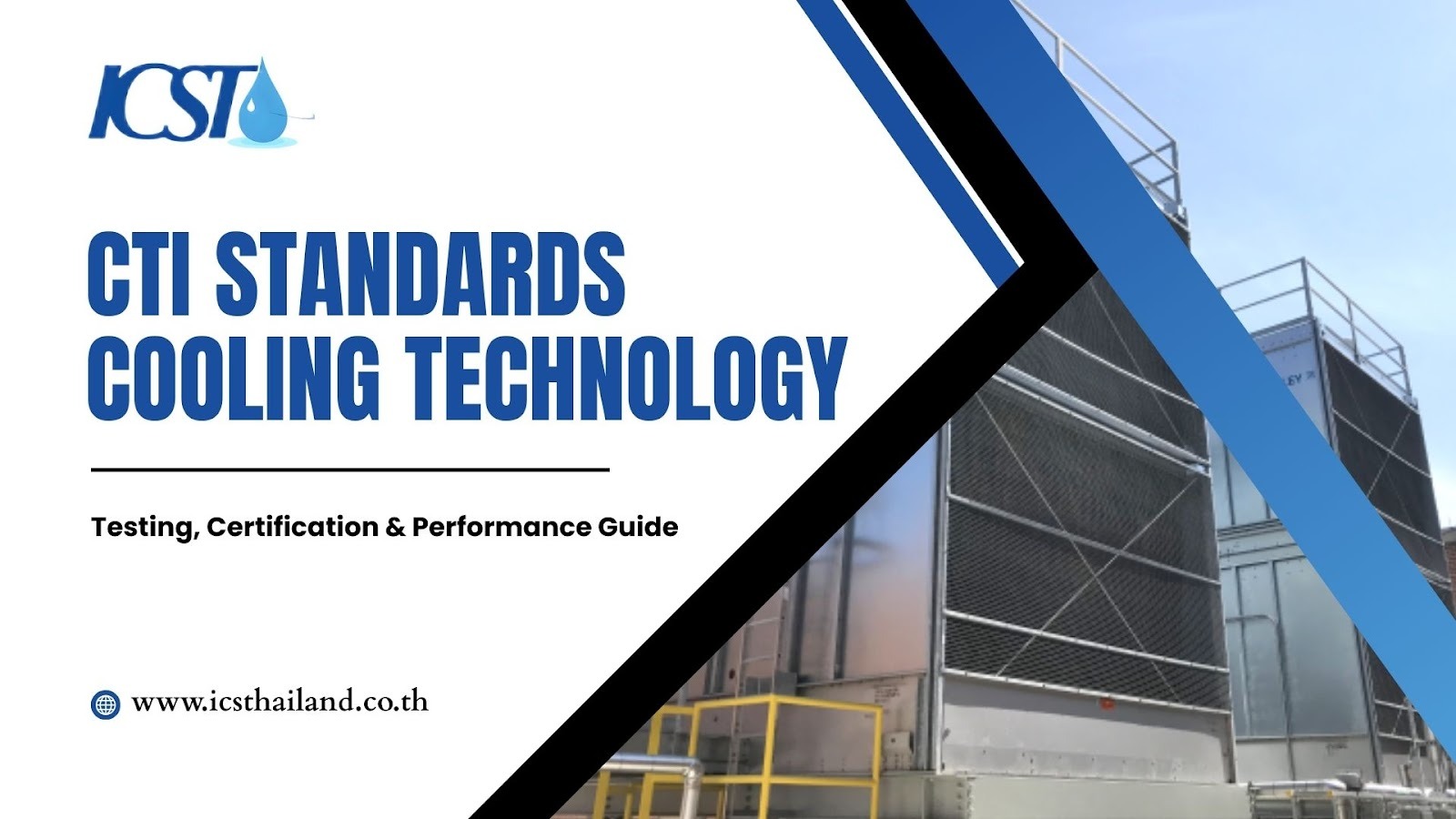
Independent verification serves as the only reliable shield against these costly inefficiencies. The Cooling Technology Institute (CTI) establishes the benchmarks that separate marketing optimism from engineering reality. By adhering to CTI standards cooling technology, stakeholders gain assurance that the equipment they purchase will perform exactly as specified.
What Are CTI Standards in Cooling Technology?
The Cooling Technology Institute acts as the primary advocate for thermal performance verification in the global market. Since its founding, the organisation has dedicated its resources to creating a transparent environment where buyers can trust technical specifications. Their standards provide a universal language for engineers and manufacturers.
What distinct functions do these standards serve within the industry?
- Performance Verification: They create rigorous protocols to measure whether a tower rejects heat as promised under specific wet bulb and flow conditions.
- Design vs. Testing: They distinguish between theoretical design capabilities and actual, measurable output through standardised testing methods.
- Global Consistency: They allow buyers to compare products from different manufacturers on a level playing field without unit conversion errors or differing methodologies.
Why CTI Standards Matter for Cooling Tower Performance
A cooling tower that misses its thermal target by even a small margin creates a ripple effect of inefficiency throughout an entire facility. The chiller must work harder to compensate for higher condenser water temperatures, which drives up electrical costs immediately.
CTI protocols exist to mitigate these financial and operational risks before installation occurs. Why should facility owners and engineers prioritise verified compliance?
- Operational Impact: An underperforming tower forces production processes to slow down during peak summer heat, directly reducing revenue.
- Financial Protection: Verified performance prevents the capital expense of retrofitting or replacing undersized equipment shortly after commissioning.
- Contractual Enforcement: Adherence to standards provides a legal and technical baseline for enforcing performance guarantees in procurement contracts.
Overview of CTI Performance Test Codes
Measurement accuracy defines the credibility of any thermal rating. The CTI established performance test codes to standardise how technicians measure water flow, air flow, temperature, and power consumption. These codes ensure that a test performed in Texas yields comparable results to one performed in Germany.
The Code ATC-105 is the industry benchmark for acceptance testing and includes:
- Specific instrumentation requirements and data collection intervals for a valid test.
- Distinct procedures for field testing (fluctuating environmental variables) and laboratory testing (controlled conditions).
- Adherence to these performance test codes ensures data is not corrupted by external factors or poor measurement practices.
CTI STD-201 Certification Explained
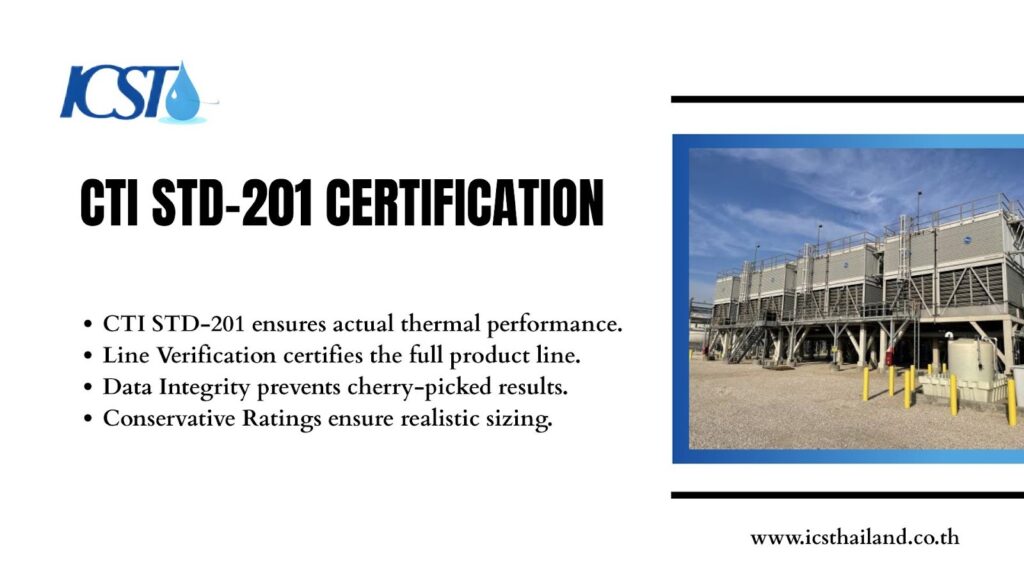
Engineers often specify certification without fully grasping the scope of the standard. CTI STD-201 serves as the certification standard for commercial cooling towers. It focuses specifically on thermal performance, ensuring that the published capacity ratings match the actual capabilities of the equipment.
How does STD-201 certification protect the buyer?
- Line Verification: It certifies an entire line of cooling towers based on rigorous testing of representative models within that product family.
- Data Integrity: It prevents manufacturers from selecting only their “best day” data points; the certification requires consistent performance across the designated operating range.
- Conservative Ratings: It forces manufacturers to rate their towers honestly, often resulting in larger, more realistic unit sizing compared to non-certified competitors.
Specifiers must note that STD-201 applies to the thermal capacity of the product line. It serves as a pre-purchase assurance that the model design is sound.
Overview of the CTI Certification Program
The certification program managed by CTI involves far more than a single test. It is a continuous surveillance system designed to maintain high standards over the life of a product line. Manufacturers cannot simply pass a test once and retain the certification indefinitely without further scrutiny.
What does the certification program require from participants?
- Initial Qualification: The manufacturer must submit extensive technical data and undergo a physical test of a randomly selected unit from their production line.
- Annual Re-verification: A CTI-appointed independent testing agency selects a model from the manufacturer’s line each year for re-testing to ensure ongoing compliance.
- Documentation Audits: The institute reviews published literature and selection software to confirm that marketing materials reflect the certified performance data accurately.
Material Approvals Under CTI Standards
Thermal performance relies heavily on the structural integrity and longevity of the tower components. CTI standards extend to material approvals to ensure that the physical tower can withstand the harsh, corrosive environment of recirculating water systems. If the fill media degrades or the structure sags, thermal performance vanishes.
Why are material approvals critical for long-term reliability?
- Component Durability: They verify that materials like fiberglass reinforced plastic (FRP) and PVC fill meet specific strength and flammability requirements.
- Corrosion Resistance: They establish guidelines for metallic components to resist oxidation and chemical attack typical in cooling water loops.
- Lifecycle Assurance: They ensure that the tower maintains its geometry and airflow characteristics, which preserve thermal efficiency over decades of operation.
ATP Acceptance Test: Verifying Performance On-Site
While STD-201 certifies a product line, it does not guarantee that a specific installation functions correctly. Errors in assembly, piping, or siting can compromise performance. The ATP acceptance test (Acceptance Test Procedure) validates the performance of the actual unit installed at the customer’s facility.
When should an engineer specify an ATP acceptance test?
- Contractual Proof: It serves as the final milestone for project handover, proving that the contractor delivered the cooling capacity specified in the purchase order.
- Complex Installations: It identifies issues caused by external factors, such as recirculation from nearby buildings or improper pump sizing, which factory tests cannot predict.
- Penalty Avoidance: It provides definitive data to trigger penalty clauses if the equipment fails to meet the guaranteed cold water temperature.
Common Misconceptions About CTI Certification
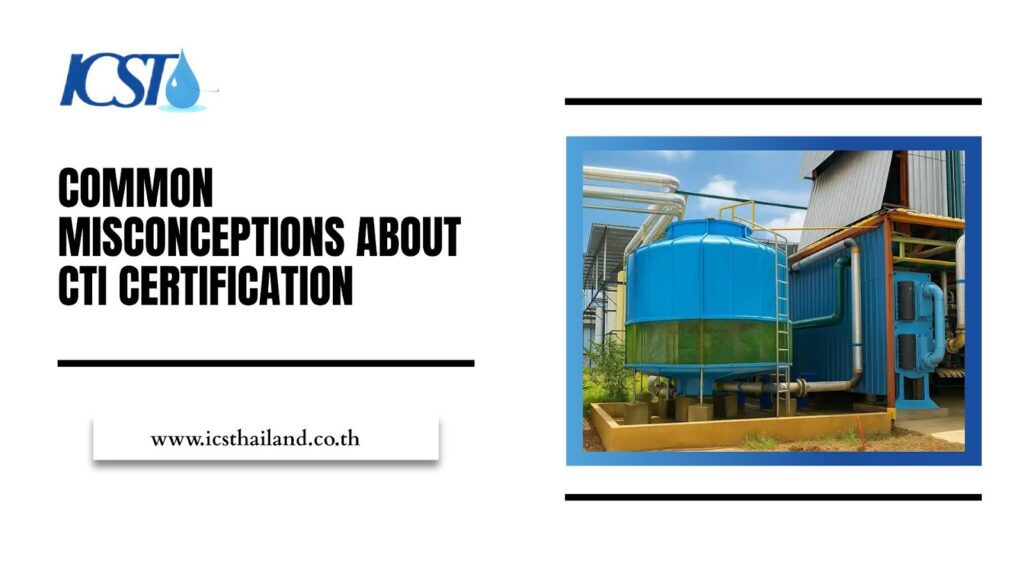
Misunderstanding the scope of certification leads to improper expectations. Certification focuses on thermal performance, yet many buyers assume it covers every aspect of the equipment. Clarifying these myths helps engineers make better decisions.
What are the most frequent errors in interpreting CTI status?
- Risk Elimination: While CTI certification helps reduce thermal risk, it does not mean “CTI-certified means zero risk.” Mechanical failures in motors, gearboxes, or fans can still occur, and certification alone cannot address these issues.
- Uniform Performance: The claim that “all CTI towers perform the same” is false. Even with certification, two towers from different brands can vary in noise levels, drift, or energy efficiency.
- Field Test Replacement: The idea that “certification replaces field testing” is also false. A factory certification does not eliminate the importance of field testing for critical infrastructure. Variables like installation and site-specific conditions can still impact overall performance.
- Clarifying CTI Standards: CTI standards are valuable for ensuring thermal performance, but they have limits. They do not account for mechanical reliability, energy efficiency variations, or real-world installation factors, underscoring the need for a comprehensive evaluation beyond certification.
How Engineers and Buyers Should Use CTI Data
Data provides value only when used correctly during the selection process. Engineers should use CTI data not just for sizing, but as a comparative tool to evaluate the honesty of a manufacturer’s engineering.
How can professionals leverage this data effectively?
- Bid Normalisation: Use certified ratings to equalise bids; if one vendor offers a smaller, non-certified tower, they are likely under-sizing the equipment.
- Specification Enforcement: Explicitly state in tender documents that only CTI-certified equipment is acceptable to filter out low-quality suppliers early.
- Guarantee Validation: Reference specific CTI codes in the performance guarantee section of the contract to define exactly how success will be measured.
When CTI Testing and Certification Are Required
Certain applications allow for zero margin of error. In these scenarios, relying on unverified manufacturer data constitutes negligence. High-stakes environments demand the certainty that standards provide.
Which sectors necessitate strict adherence to these protocols?
- Data Centres: Cooling failure results in immediate server shutdowns and massive financial losses, making verified capacity non-negotiable.
- Process Industries: Chemical plants and refineries require precise temperature control to maintain product quality and safety, requiring absolute thermal certainty.
- Regulatory Compliance: Some jurisdictions and energy codes now mandate the use of certified cooling equipment to ensure energy efficiency targets are met.
Conclusion
The cost of a cooling tower is just a small part of the system it supports, but its performance determines the efficiency of the entire operation. Relying on unverified claims can lead to long-term risks and inefficiencies.
This blog highlights the importance of prioritising CTI standards cooling technology to ensure reliable, high-performing cooling assets. At ICST, we approach cooling challenges with a steadfast commitment to engineering integrity. We don’t just provide equipment—we validate solutions against the highest industry benchmarks.
Our process ensures every project meets the strict CTI standards, providing owners and engineers with verified data they can trust—not just marketing claims. Whether you need cooling tower maintenance, repairs, or are building a new cooling tower, we’re here to help. Contact us today!
Frequently Asked Questions
What are CTI standards in cooling technology?
CTI standards are industry benchmarks developed by the Cooling Technology Institute to verify the thermal performance, testing methods, certification, and material quality of cooling towers.
What is CTI STD-201 certification?
CTI STD-201 is the thermal performance certification standard for commercial cooling towers. It confirms that a manufacturer’s published capacity ratings are based on verified testing and represent realistic, repeatable performance, not optimistic design assumptions.
What are CTI performance test codes like ATC-105?
CTI performance test codes define how cooling towers must be tested, including instrumentation, data collection, and procedures. ATC-105 is the most widely used code for field and laboratory acceptance testing, ensuring test results are accurate and repeatable worldwide.
What is an ATP acceptance test in cooling towers?
An ATP (Acceptance Test Procedure) acceptance test verifies that the actual installed cooling tower meets the guaranteed thermal performance. It is commonly used as contractual proof during project handover or to resolve disputes over cooling capacity.