Maximizing energy efficiency in an industrial setting is not just about environmental responsibility; it is a critical business strategy. For facility managers, controlling operational expenditures is paramount, and energy consumption often represents a significant portion of those costs.
This is where Energy Star industrial cooling systems deliver a decisive advantage. These certified systems are engineered to reduce energy consumption, lower utility bills, and enhance operational resilience, offering a clear path to a stronger bottom line.
This guide will explore the mechanics of Energy Star-certified cooling, the financial benefits of implementation, and the strategic edge it provides. We will break down how these systems work, why the certification matters, and how you can optimize them for peak performance in your facility.
The Secret to Energy Star Industrial Cooling Efficiency
Many decision-makers focus on a cooling unit’s maximum power draw. However, the true key to Energy Star performance lies in a less obvious metric: part-load optimization. Industrial cooling systems rarely operate at full capacity. The real test of efficiency is how a unit performs when running at a fraction of its potential.
Energy Star-certified equipment excels in this area. These systems are designed to maintain a high energy efficiency rating even when operating at just 20% capacity. This is largely achieved through the use of high-grade Variable Frequency Drives (VFDs).
A VFD adjusts the motor’s speed to match the real-time cooling demand, preventing the massive power spikes common during the startup of standard units. This smooth operation drastically cuts “demand charges” on your utility bill, which can save thousands of dollars annually.
Anatomy of Excellence: How Energy Star Industrial Cooling Works
What distinguishes an “industrial grade” cooling system from a commercial one? The difference lies in its robust construction, capacity to handle extreme heat loads, and its design for continuous, 24/7 operation. Energy Star certification adds another layer of engineering excellence to this foundation.
The Engineering Core
The superior performance of Energy Star industrial cooling is rooted in its advanced components:
- Advanced Heat Exchange Surfaces: These systems often use microchannel coils. This technology increases the surface area for heat exchange without enlarging the unit’s physical footprint, allowing it to remove more heat with less energy.
- High-Efficiency Fan Arrays: Aerodynamically designed fan blades and motors reduce “static pressure” drag. This means the fans can move more air with less effort, directly lowering electricity consumption.
- Intelligent Pumping Systems: In evaporative cooling stages, smart water-flow management minimizes the strain on pump motors. The system only uses the precise amount of water needed, conserving both water and the power required to pump it.
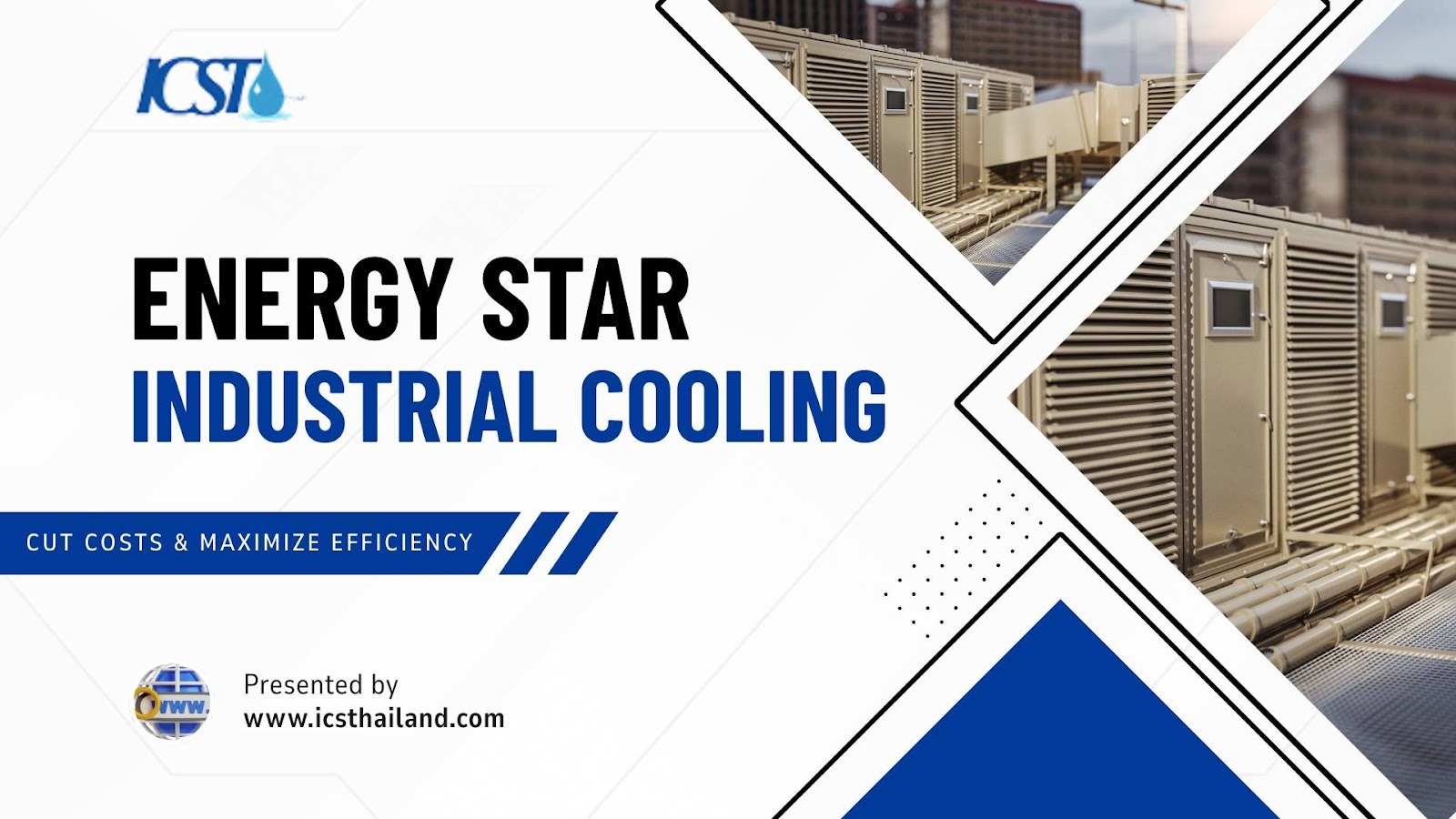
Physically, you can identify this certified equipment by the blue Energy Star label, an integrated IoT control panel for advanced monitoring, and a modular design that simplifies installation and maintenance.
The Critical Importance of Certification
The Energy Star label is more than just a sticker; it is a seal of verified performance and financial opportunity. This certification is the gold standard for eligibility in many federal and state tax incentive programs. Investing in certified products often unlocks access to significant tax credits and rebates that can shorten the return on investment period.
Furthermore, Energy Star-certified cooling improves operational resilience. By consuming less power, these efficient systems reduce the thermal load on your facility’s electrical grid. This simple reduction helps prevent localized brownouts and protects sensitive equipment from failure during periods of high energy demand.
Understanding the Energy Star Partner Program
The Energy Star partner program provides valuable resources for businesses committed to energy efficiency. By joining, your facility gains access to powerful benchmarking tools, such as the Energy Performance Indicator (EPI).
The EPI allows you to compare your building’s energy performance against similar facilities nationwide, helping you identify opportunities for improvement and set realistic reduction goals. To qualify, a cooling system must meet stringent criteria, primarily focusing on its thermal performance relative to its power consumption.
Calculating Your Energy Savings

To understand the financial impact of an upgrade, you can use a simple formula to estimate annual savings.
(Old Unit kW – New Energy Star kW) x Hours of Operation x Utility Rate = Annual Savings
Let us break this down. Using a Cooling Energy Savings Calculator, first determine the difference in kilowatt (kW) consumption between your old system and the new Energy Star unit. Multiply that by the number of hours the system operates each year. Finally, multiply that result by your commercial electricity rate.
This calculation reveals direct energy cost savings. However, there is also a hidden variable: the “Maintenance Alpha.” Because Energy Star-certified equipment uses higher-quality components, facilities often see a 15-20% reduction in annual repair and maintenance costs. When you factor this into your ROI calculation, the financial argument becomes even more compelling.
7 Key Benefits of Implementation
Adopting Energy Star industrial cooling brings a wide range of benefits that extend beyond simple energy savings.
- Direct Energy Cost Savings: The most immediate impact is a reduction in your monthly kWh usage and lower utility bills.
- Extended Equipment Lifespan: Better thermal management reduces wear and tear, meaning motors and compressors can last up to 30% longer.
- Enhanced Employee Productivity: A stable and comfortable temperature on the factory floor reduces “heat fatigue,” leading to a safer and more productive workforce.
- Improved Corporate Sustainability (ESG) Scores: Demonstrating a commitment to reducing greenhouse gas emissions boosts your brand’s green credentials for investors, customers, and stakeholders.
- Rebate Eligibility: Many local utility companies offer cash-back programs exclusively for certified hardware, further reducing the initial investment.
- Reduced Noise Pollution: High-efficiency fans operate at lower decibels, contributing to a quieter and safer workplace.
- Future-Proofing Your Facility: These systems often use refrigerants with a low Global Warming Potential (GWP), helping you meet upcoming EPA refrigerant regulations ahead of schedule.
Comparative Analysis: Energy Star vs. Standard Cooling
The differences between standard and certified industrial cooling systems are stark. This table highlights the key distinctions.
| Feature | Standard Industrial Cooler | Energy Star Certified Cooler |
| Average EER/IPLV | 10–12 EER | 14+ EER / High IPLV |
| Motor Technology | Standard AC Induction | BLDC or Permanent Magnet Motors |
| Control Logic | On/Off or Step-Control | Stepless Variable Speed (AI Integrated) |
| Refrigerant Type | Standard (e.g., R-410A) | Low GWP |
| ROI Period | 5–7 Years | 2–4 Years (including rebates) |
Optimizing Your System for Peak Performance
Even a top-tier Energy Star unit requires optimization to maintain its efficiency. An unmonitored system can lose up to 5% of its efficiency each year. To prevent this, you must monitor the “Delta T,” the temperature difference between the air entering and leaving the unit.
Here are steps to improve and maintain peak performance:
- Sensory Integration: Add enthalpy sensors to your system. These sensors measure both temperature and humidity, allowing the control logic to decide when to use “free-cooling” mode (using cool outside air) instead of running the compressor.
- Renewable Energy Integration: Pair your Energy Star cooling equipment with a solar PV array or other renewable energy solutions. This approach leverages Renewable Energy to help you move toward “net-zero” cooling, where your on-site energy generation meets or exceeds your cooling system’s energy consumption.
- Load Balancing: Program your system to shift demanding cooling tasks to off-peak hours when utility rates are lower. This strategic energy use can deliver significant cost reductions without impacting comfort.
Industry-Specific Improvements
The principles of Energy Star cooling can be adapted to meet the unique challenges of different industrial environments.
- Warehousing: For facilities with high ceilings, use strategies to combat air stratification. This involves circulating air to ensure the cool air delivered by the system reaches the floor level where people are working.
- Manufacturing: In environments with high-latent heat loads from machinery, focus on precision cooling. Position cooling units to directly address heat sources and efficiently remove warm air.
- Data Centers: These facilities require precise temperature and humidity control. Energy Star standards provide the framework for creating a stable environment that protects sensitive servers while minimizing energy use.
Conclusion: The Competitive Edge of Certified Cooling
Choosing Energy Star industrial cooling is more than a simple equipment purchase; it is a strategic business decision. This investment strengthens your financial position through direct energy savings, reduced maintenance costs, and access to rebates. It also enhances your operational durability, improves employee well-being, and positions your company as a leader in corporate sustainability.
Before your next facility upgrade or equipment replacement cycle, consult the official Energy Star product listing. Making an informed choice will deliver benefits for years to come, giving your business a lasting competitive edge with ICST.
Frequently Asked Question
What is Energy Star industrial cooling?
Energy Star industrial cooling refers to certified cooling systems designed to maximize energy efficiency, reduce energy costs, and lower greenhouse gas emissions.
How does Energy Star certification benefit my facility?
It ensures energy cost savings, extended equipment lifespan, eligibility for rebates, and compliance with environmental regulations.
What makes Energy Star cooling systems more efficient?
These systems use advanced technologies like Variable Frequency Drives (VFDs), high-efficiency fans, and intelligent pumping systems to optimize performance.
Can Energy Star cooling systems reduce utility bills?
Yes, they significantly lower energy consumption, reducing monthly utility bills and demand charges.
How do I know if a cooling system is Energy Star certified?
Look for the blue Energy Star label, which guarantees the system meets strict energy efficiency and performance standards.