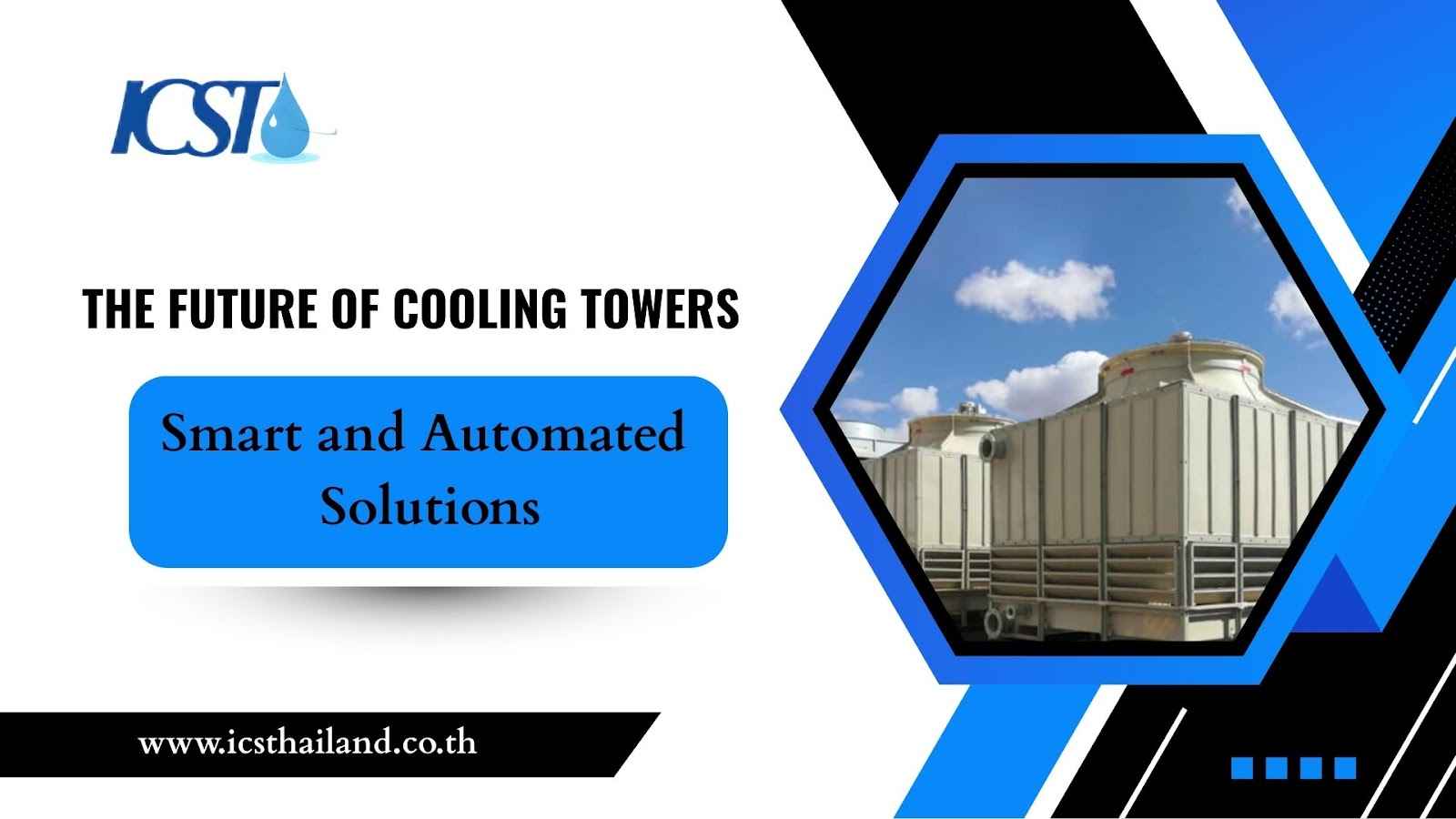
What if cooling towers could automatically adapt and make decisions on their own? Imagine industrial giants that not only cool efficiently but also optimize themselves in real-time to save energy, reduce costs, and comply with tough environmental regulations.
The future isn’t about reinventing their design; it’s about making them smarter. Enter the era of smart cooling towers, where advanced automation, AI, and the Industrial Internet of Things (IIoT) are transforming how these critical systems operate.
In this blog, we’ll uncover how these cutting-edge technologies tackle challenges like soaring energy expenses, regulatory compliance, and unplanned downtime. Smart cooling towers are transforming the industry with predictive maintenance and energy optimization, offering unprecedented efficiency, reliability, and sustainability.
Let’s explore how this breakthrough innovation is shaping the future of cooling towers and driving the next revolution in industrial cooling.
Why Automation is the Future: The Driving Forces
Multiple converging factors are accelerating the adoption of smart cooling tower technologies across industries. These pressures create compelling business cases for automation that extend far beyond simple operational improvements.
The Push for Unprecedented Energy Efficiency
Cooling systems represent one of the largest energy consumers in industrial facilities. They typically account for 30-50% of a facility’s total energy consumption, making them prime targets for efficiency improvements.
- Even small efficiency improvements can lead to significant cost savings.
- Example: A 10% reduction in cooling energy use at a mid-sized industrial facility can save tens of thousands of dollars annually.
– For large operations or multi-site organizations, these savings can be transformational. - Smart cooling towers achieve efficiency gains by:
- Precisely controlling fan speeds and pump operations.
– Optimizing heat transfer processes. - Traditional systems often waste energy by:
- Operating at fixed speeds, regardless of actual cooling demand.
– Consuming excess energy during periods of reduced load.
Global Mandates for Water Conservation
Water scarcity and environmental regulations are forcing companies to dramatically reduce water consumption. Cooling towers, which traditionally consumed vast quantities of water through evaporation and blowdown, face particular scrutiny from regulators and sustainability initiatives.
Industrial facilities in water-stressed regions face usage restrictions, higher costs, and public pressure to minimize their environmental footprint. Smart cooling tower systems address these challenges by optimizing cycles of concentration, minimizing unnecessary blowdown, and precisely controlling chemical treatments.
Companies that proactively adopt water-saving technologies position themselves ahead of compliance requirements while reducing operational costs.
The High Cost of Unplanned Downtime
- Cooling system failures can shut down entire facilities within hours.
- Unplanned downtime can cost tens of thousands of dollars per hour, excluding equipment damage, product loss, or safety incidents.
- Traditional maintenance relies on scheduled intervals or reacting to visible issues.
- Indicators such as reduced performance, unexpected vibrations, or imbalanced water chemistry are frequently detected only after damage has already occurred.
- Predictive maintenance shifts operations from reactive to proactive.
- Planned maintenance can then be scheduled during regular downtime, preventing unexpected failures.
The Core Technologies of a Smart Cooling Tower

Modern smart cooling towers integrate multiple advanced technologies that work together to create intelligent, self-optimizing systems. Understanding these core components helps facilities make informed decisions about their cooling infrastructure investments.
The Industrial Internet of Things (IIoT)
What parameters should a cooling tower monitor to achieve true intelligence? How can facilities gain complete visibility into system performance and health?
IIoT sensors form the foundation of smart cooling tower operations by continuously collecting real-time data across multiple system parameters:
- Water quality monitoring through pH, conductivity, and oxidation-reduction potential (ORP) sensors
- Mechanical health tracking via vibration sensors on fans, motors, and pumps
- Performance metrics, including flow rates, temperatures, and fan speeds
- Chemical treatment levels and distribution system status
This continuous data stream enables operators to understand system behavior patterns, identify optimization opportunities, and detect anomalies before they become problems. The data also feeds into AI algorithms that learn from historical performance to predict future conditions and requirements.
Artificial Intelligence (AI): The Brain of the System
How can facilities move beyond simple data collection to actionable intelligence? What makes AI-driven cooling towers fundamentally different from traditional automated systems?
AI and machine learning algorithms analyze the massive datasets generated by IIoT sensors to provide three critical capabilities:
- Performance optimization that adjusts operations based on real-time conditions and weather forecasts
- Fault detection and diagnosis that automatically flags anomalies human operators might miss
- Energy optimization through intelligent load balancing and demand response
The AI system continuously learns from operational data, improving its predictions and recommendations over time. This creates a cooling tower that becomes more efficient and reliable as it operates.
Advanced Automation: The Hands-On Control
What automated systems can act on AI insights to optimize cooling tower performance? How do these systems translate data into improved operations?
Advanced automation components execute the optimizations recommended by AI analysis:
- Automated blowdown control systems that use conductivity sensors to release water only when mineral concentration exceeds optimal levels
- Variable frequency drives (VFDs) that automatically adjust fan and pump speeds to match exact cooling loads
- Automated chemical feed systems that dose treatments based on real-time water quality data
- Smart valve controls that optimize water distribution across cooling tower cells
- Integrated building management system connections that coordinate cooling with facility-wide energy management
These automation systems operate continuously, making thousands of micro-adjustments daily to optimize performance, efficiency, and reliability.
Key Benefits: The Business Case for Smart Cooling Towers
Smart cooling tower technologies deliver quantifiable benefits across multiple operational areas. These improvements create compelling return on investment calculations that justify the initial technology investments.
Significant Energy and Cost Savings

How much energy can smart cooling towers save compared to traditional systems? What financial impact do these savings create?
AI optimization and variable frequency drives can reduce cooling tower energy consumption by 20-30% compared to traditional fixed-speed operations.
- Fan energy optimization through intelligent speed control based on actual cooling requirements
- Enhanced pump performance through accurate flow regulation and pressure control
- Heat transfer enhancement through optimized water distribution and air flow patterns
- Demand response participation that reduces energy costs during peak pricing periods
- Power factor improvements that may qualify for utility rebates and reduced demand charges
The energy savings compound over time, creating substantial cost reductions that often pay for the technology investments within 2-3 years.
Proactive Water Management and Sustainability
What water conservation benefits do smart cooling towers provide? How do these systems support environmental compliance and sustainability goals?
Automated water management can reduce makeup water consumption by up to 20% through precise control of cycles of concentration and blowdown timing:
- Optimized cycles of concentration that maximize water reuse while preventing scale formation
- Precise chemical treatment that minimizes water waste from over-treatment
- Weather-based optimization that adjusts operations based on humidity and temperature forecasts
- Compliance monitoring that ensures water discharge meets environmental regulations
Enhanced Reliability and Predictive Maintenance
How do smart systems improve cooling tower reliability? What maintenance advantages do predictive technologies provide?
AI-powered predictive maintenance can reduce unplanned downtime by 30-50% by identifying developing problems before they cause failures:
- Bearing and motor health monitoring that predicts failures weeks in advance
- Water chemistry management that prevents corrosion, scale, and biological growth
- Performance trend analysis that identifies gradual efficiency degradation
- Safety monitoring that tracks Legionella risk factors and water treatment effectiveness
- Maintenance scheduling optimization that coordinates repairs during planned downtime
This proactive approach protects against expensive emergency repairs while extending equipment lifespan and maintaining peak performance.
A Comparison of Smart Cooling Tower Features
| Smart Feature | Core Function | Primary Benefit | Impact on Business |
| IIoT Sensors | Real-time monitoring of key parameters | Unprecedented visibility into system health | Prevents small issues from becoming major failures |
| AI Optimization | Analyzes data to predict and adjust | Maximized energy efficiency & uptime | Reduces operational costs and risks |
| Automated Blowdown | Controls blowdown based on conductivity | Water conservation & reduced chemical use | Lowers utility bills and improves sustainability |
| VFDs | Automatically adjusts fan speed | Significant energy savings | Reduces power consumption and carbon footprint |
| Digital Twins | Virtual replica for simulation | Risk-free testing & operational insights | Optimizes design and long-term performance |
| Remote Diagnostics | Off-site monitoring and troubleshooting | Faster response times & reduced technician trips | Improves maintenance efficiency and reduces costs |
The Journey to Automation: Implementation and Best Practices
Understanding common challenges and proven approaches helps ensure project success and maximizes return on investment.
The Challenge of Legacy Systems
How can facilities integrate advanced technologies with existing cooling tower infrastructure? What obstacles do legacy systems present for smart upgrades?
Most industrial facilities operate cooling towers installed years or decades ago. These legacy systems present unique integration challenges that require careful consideration:
- Compatibility assessments to determine which existing components can support new technologies
- Infrastructure upgrades, including electrical power, control networks, and communication systems
- Phased implementation approaches that minimize operational disruptions
- Training requirements for operators and maintenance staff
- Budget considerations for both technology costs and implementation expenses
A gradual, phased approach often works best, allowing facilities to prove return on investment while building internal expertise with smart cooling tower technologies.
Best Practices for Modernization
What steps should facilities take to successfully implement smart cooling tower solutions? Effective smart cooling tower implementations adhere to established best practices that minimize risks and speed up the realization of benefits.
- Comprehensive feasibility studies that identify the highest-impact improvement opportunities
- Pilot project approaches that demonstrate ROI on a single tower before facility-wide deployment
- Expert partnership selection with experienced providers who understand both traditional cooling systems and advanced technologies
- Detailed performance baselines that enable accurate measurement of improvement benefits
- Operator training programs that ensure staff can effectively use new capabilities
- Ongoing optimization support that continuously improves system performance over time
Companies that follow these practices typically achieve faster implementation timelines, higher success rates, and greater long-term satisfaction with their smart cooling tower investments.
Conclusion
Smart cooling towers are no longer just a tech upgrade; they’re a must-have for industries aiming to stay competitive. With rising energy costs, stricter environmental regulations, and the need for reliable operations, investing in intelligent cooling systems is a game-changer.
The proven ROI, mature technology, and strong vendor support make adopting these solutions easier than ever. Early adopters have already paved the way, showcasing the benefits and minimizing risks for future projects.
Ready to optimize your operations? Contact ICST today for a consultation. Our experts will assess your current systems, uncover opportunities, and create a tailored plan to transform your cooling tower operations for maximum efficiency and ROI. Let’s get started!
Join us in shaping the future of cooling towers and ensuring your facility stays ahead of the curve.
Frequently Asked Questions
What is a “smart” cooling tower?
Smart cooling towers integrate IoT, AI, and automation to collect data, predict issues, and self-optimize for efficiency and reliability.
What does AI do in smart cooling towers?
AI analyzes IIoT data for predictive maintenance, optimizes fan/pump speeds, and detects anomalies, leading to continuous self-optimization.
How do smart towers save energy?
Smart towers save energy via AI optimization and VFDs, which precisely match fan/pump speeds to cooling loads, preventing excess power consumption.
How do smart towers conserve water?
They conserve water through automated blowdown control (based on conductivity), advanced treatment, and real-time leak detection..
What are the main challenges in implementing smart cooling?
Challenges include initial investment, integrating with legacy systems, and training staff for new digital technologies.