Industrial cooling systems are essential for manufacturing plants, data centers, and power generation facilities, where reliable heat rejection is critical. Without them, equipment overheats, production halts, and operational costs skyrocket.
However, determining the true industrial cooling system cost goes beyond initial equipment quotes. The total project cost includes installation, infrastructure, energy consumption, and maintenance expenses over decades. Many facility managers focus solely on equipment pricing, but a low upfront cost can be misleading. Oversized systems waste energy, while undersized ones struggle during peak loads. What seems like a good deal often results in higher long-term operating costs.
This guide breaks down every factor influencing industrial cooling system cost, helping you make informed decisions that balance upfront investment with long-term value.
What Is an Industrial Cooling System?
Industrial cooling systems remove heat from processes, equipment, and facilities to maintain safe and efficient operations. These systems use water, air, or a combination of both to transfer heat away from critical components.
- Cooling towers use evaporative cooling to reject heat from process water. Open-loop systems circulate water directly through the tower, while closed-loop designs use a heat exchanger to separate process fluid from cooling water.
- Chillers use refrigeration cycles to cool water or air. Water-cooled chillers rely on cooling towers for heat rejection, while air-cooled chillers use fans to dissipate heat directly into the atmosphere.
- Hybrid cooling systems combine cooling towers and chillers to optimize energy efficiency and water conservation. These systems switch between wet and dry cooling modes based on ambient conditions, reducing operating costs while meeting sustainability goals.
Understanding the differences between these systems is essential for accurate cost estimation and long-term performance.
Average Industrial Cooling System Cost Range
The cost of an industrial cooling system varies significantly based on its capacity, design, and specific application. When evaluating prices, it’s important to consider not just the initial purchase price but also the long-term operational costs, including energy consumption, water usage, and maintenance requirements.
Factoring in these variables will give you a more accurate total cost of ownership. Below are realistic pricing ranges for different system sizes.
- Small systems serve laboratories, small manufacturing plants, and commercial HVAC applications. These systems typically cost between $15,000 and $100,000, depending on capacity and materials. Factory-assembled cooling towers and packaged chillers fall into this category.
- Medium industrial systems support mid-sized production facilities, food processing plants, and chemical manufacturing operations. Total project cost for these installations ranges from $100,000 to $750,000, including equipment, installation, and auxiliary systems.
- Large-scale facilities require massive cooling capacity for power plants, petrochemical refineries, and steel mills. These projects often exceed $750,000 and can reach $5 million or more, depending on site conditions, redundancy requirements, and regulatory compliance.
Capacity is measured in tons of refrigeration or cubic meters per hour (m³/hr). A single ton of cooling removes approximately 12,000 BTU per hour. Larger systems require more pumps, piping, electrical infrastructure, and structural support, which drives up total project cost.
Cooling Tower Price Breakdown
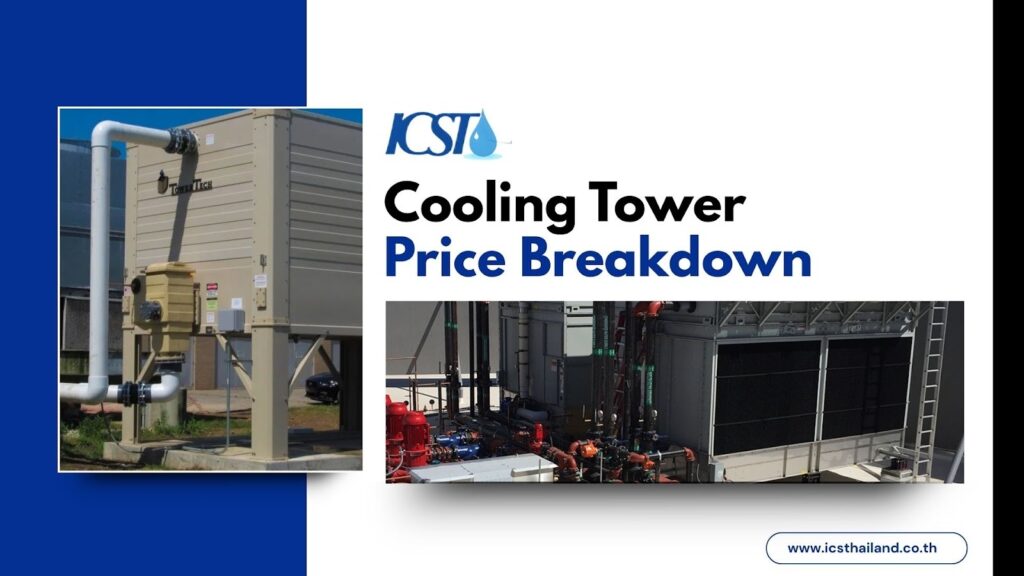
Cooling tower price depends on several factors, including tower type, construction materials, and capacity. Different designs serve different industrial applications, and each has unique cost implications.
Factory-Assembled Cooling Towers
These systems come fully assembled, which means they cost less upfront and take less time to set up compared to ones built on-site. They are simple, reliable, and a great option for small to medium-sized facilities.
Value-added benefits:
- Cost-effective: Lower initial costs save money right away.
- Quick installation: Fully assembled units reduce setup time.
- Reliable performance: Designed for consistent, hassle-free use.
- Ideal for smaller facilities: Perfectly suited for small to medium operations.
Field-Erected Cooling Towers
Built on-site, these towers are designed for large industrial plants to manage massive heat loads and accommodate specific space constraints. Though they come with higher upfront costs, their durability and capacity make them perfect for power plants, refineries, and heavy manufacturing.
Value-added benefits:
- Customizable design: Tailored to fit specific site and performance needs.
- High capacity: Capable of handling very large heat loads.
- Durable construction: Built to last in demanding industrial environments.
- Ideal for large-scale operations: Best suited for power plants, refineries, and heavy manufacturing.
Closed-Circuit Cooling Towers
Unlike open-circuit towers, these systems use a heat exchanger. This component keeps the process fluid separate from the cooling water, offering several key advantages. While closed-circuit cooling towers typically have a higher initial cost compared to open-circuit models, their design leads to cleaner operation and reduced long-term maintenance costs.
- Prevents contamination: The separation of fluids protects against contaminants.
- Reduces scaling: Minimizes mineral buildup inside the system.
- Extends equipment life: Cleaner operation leads to longer-lasting components.
The construction material greatly impacts the cooling tower’s price. Fiberglass-reinforced plastic (FRP) towers are cost-effective and resist corrosion. Galvanized steel offers strength at a moderate price, while stainless steel provides maximum durability at a premium. Choosing the right material ensures long-term performance and helps control costs.
Major Cost Factors That Influence Pricing
Several variables determine the total industrial cooling system cost. Understanding these cost factors helps facility managers make informed purchasing decisions and avoid budget overruns.
System Capacity
The size of your cooling system directly impacts equipment pricing, installation complexity, and operating expenses. Larger heat loads require more powerful pumps, fans, and piping networks. Oversizing a system wastes energy and increases upfront costs, while undersizing leads to inadequate cooling and equipment failure.
Materials of Construction
Corrosion-resistant materials extend system lifespan but increase initial investment. Stainless steel components prevent rust and scaling, reducing maintenance costs over time. Facilities with aggressive water chemistry or harsh environmental conditions benefit from premium materials despite higher upfront costs.
Location and Climate
High ambient temperatures reduce cooling efficiency and require larger systems to achieve the same performance. Facilities in hot, humid regions need more cooling capacity than those in moderate climates. Site altitude also affects performance, as air density decreases at higher elevations.
Water Quality Requirements
Poor water quality increases treatment costs and accelerates equipment degradation. High mineral content causes scaling, which reduces heat transfer efficiency. Biological growth leads to fouling and blockages. Investing in proper water treatment systems prevents costly repairs and extends equipment life.
Energy Efficiency Requirements
High-efficiency cooling systems cost more upfront but reduce energy consumption and operating expenses. Variable-frequency drives (VFDs), advanced controls, and optimized fan designs lower electricity bills. Facilities with high energy costs or sustainability goals should prioritize efficiency over initial price.
Redundancy and Backup Systems
Critical facilities require backup cooling capacity to prevent downtime during maintenance or equipment failure. Redundant systems increase total project cost but protect against production losses and safety risks. Data centers, pharmaceutical plants, and hospitals often invest in backup cooling infrastructure.
Equipment Pricing vs Total Project Cost
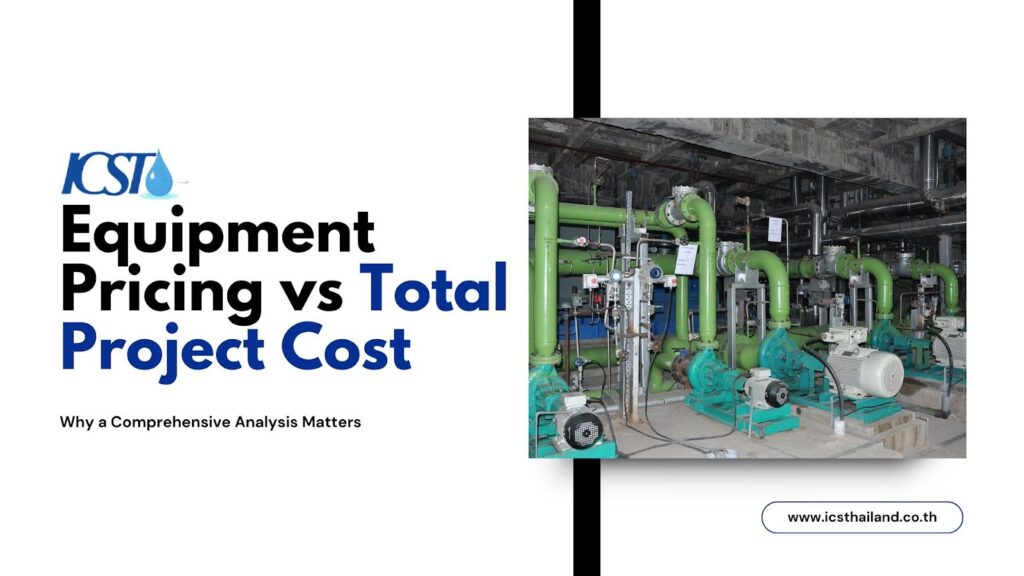
Many facility managers focus solely on equipment pricing without considering the full industrial cooling system cost, which includes all expenses required to install and operate the system. Understanding the difference between equipment cost and total cooling system cost helps prevent budget shortfalls and ensures a successful implementation.
Equipment Cost
The equipment cost includes the core components of the cooling system. This is the price typically listed in manufacturer quotes and vendor proposals. For most projects, equipment accounts for 40 to 60 percent of the total investment.
The main components included are:
- Cooling tower or chiller
- Pumps
- Fans
- Motors
- Control systems
Total Project Cost
The total project cost covers everything needed to make the cooling system fully operational. While equipment cost is the most visible expense, it’s the additional installation and infrastructure costs that determine the project’s true budget. Factoring in these elements from the start is crucial for a realistic financial plan.
This goes beyond the main equipment and includes:
- Civil Works: Concrete foundations and structural support to ensure stability and vibration prevention.
- Piping Networks: Connecting the cooling system to heat sources, including valves, fittings, and insulation.
- Electrical Infrastructure: Powering the pumps, fans, and control systems.
- Automation Systems: Enabling monitoring and optimization of the cooling system.
- Water Treatment Systems: Preventing scaling, corrosion, and biological growth in the system.
- Crane Rental and Installation Labor: For positioning large equipment.
- Engineering Services: Ensuring proper design, load calculations, and compliance with building codes.
- Commissioning: Verifying the system operates according to specifications.
Why a Comprehensive Analysis Matters
Ignoring these additional costs can lead to unrealistic budgets and project delays. To avoid surprises, a thorough investment analysis should account for all expenses, from design and installation to startup.
Installation and Infrastructure Costs
Installing an industrial cooling system involves more than just the equipment—it comes with additional infrastructure expenses. The overall industrial cooling system cost depends on factors like site conditions, the size of the system, and the complexity of its design.
- Structural support and concrete basins provide a stable foundation for cooling towers. Heavy equipment requires reinforced concrete pads capable of supporting thousands of pounds. Basins collect and distribute water, and their size depends on system capacity and water treatment requirements.
- Piping networks transport water between cooling towers, heat exchangers, and process equipment. Large-diameter pipes, valves, and fittings add substantial costs. Insulation prevents heat loss and condensation. Facilities with long pipe runs or complex layouts face higher installation expenses.
- Electrical and automation integration supplies power to pumps, fans, and controls. Electrical panels, wiring, and transformers must meet local codes and safety standards. Advanced automation systems enable remote monitoring, predictive maintenance, and energy optimization.
- Vibration and noise control measures protect nearby equipment and comply with environmental regulations. Anti-vibration pads, flexible connectors, and acoustic enclosures reduce noise pollution and extend equipment life.
Operating and Maintenance Costs
Operating costs often exceed initial equipment pricing over the system’s lifespan. Facility managers must account for energy consumption, water usage, chemical treatment, and routine maintenance when evaluating total investment.
- Energy consumption: This is the largest operating expense, as pumps and fans consume electricity around the clock. You can reduce consumption with energy-efficient motors, variable-frequency drives, and optimized control strategies, which is especially beneficial in regions with high electricity rates.
- Water usage: This includes water lost to evaporation, blowdown (removing concentrated minerals), and makeup water. Operating costs are higher in water-scarce regions, making air-cooled or hybrid systems a better choice.
- Chemical treatment: Regular chemical dosing and water testing are essential to prevent scaling, corrosion, and biological growth, typically costing between $500 and $5,000 annually. Without treatment, you risk damaging heat exchangers, clogging fill media, and reducing system performance.
- Routine maintenance: This involves regular inspections, filter replacements, and cleaning, with annual maintenance contracts ranging from $1,000 to $10,000 or more, depending on system complexity. A good preventive maintenance program is crucial to minimize downtime, avoid costly repairs, and extend the system’s lifespan.
Understanding these cost factors helps facility managers budget accurately and prioritize lifecycle value over initial price.
Cooling Tower vs Chiller System Cost Comparison
Choosing between cooling towers, chillers, and hybrid systems requires understanding their cost structures, operating characteristics, and suitability for different applications.
| System | Initial Cost | Operating Cost | Water Usage | Best For |
| Cooling Tower | Lower | Low | High | Industrial processes |
| Air-Cooled Chiller | Medium | Higher energy | Low | Water-scarce areas |
| Water-Cooled Chiller | Higher | Efficient | Moderate | Large facilities |
| Hybrid Systems | Highest | Optimized | Balanced | Sustainability goals |
Choosing the Right Cooling System for Your Facility
Choosing the right cooling system for your facility is a critical decision that impacts both operational efficiency and your bottom line. It’s about more than just the initial price tag; it’s about finding a solution that balances performance, long-term costs, and your specific site requirements.
To make an informed choice, consider the following key factors:
- Process Heat Load: This determines the cooling capacity required for safe operation. Calculating this accurately helps avoid the extra costs and inefficiencies of a system that’s too big or too small.
- Environmental Conditions: Ambient temperature, humidity, and altitude all impact performance. A system in a hot, humid climate will have different needs than one at a high elevation where air density is lower.
- Space Availability: The physical space at your site will dictate whether you can use large field-erected towers, more compact factory-assembled units, or chillers. Limited space might require more expensive rooftop or vertical designs.
When to Upgrade vs Replace a Cooling System
Facility managers often face the decision of whether to upgrade existing equipment or invest in a complete replacement. Both options have cost implications, and the right choice depends on system condition and performance requirements.
- Upgrade if the tower structure and foundation are sound, but components like fill media, fans, or motors show wear. Replacing worn parts and adding modern controls improves efficiency without the expense of a new system. Facilities with tight budgets or short-term needs benefit from targeted upgrades.
- Replace if the system is inefficient, repair costs are escalating, or capacity is insufficient for current demands. Old equipment consumes excessive energy, requires frequent downtime, and cannot meet performance standards. Replacement delivers better long-term value when operating costs exceed the investment in new equipment.
A thorough investment analysis compares the cost of ongoing repairs and inefficiency against the price of a new system. Facilities with aging infrastructure often find that replacement pays for itself through energy savings and reduced maintenance expenses.
Conclusion
To understand your industrial cooling system cost, you must evaluate equipment pricing, installation, and long-term operating costs. Focusing only on upfront savings can lead to higher energy bills and frequent repairs down the line.
A thorough analysis should account for lifecycle value, energy efficiency, and maintenance to ensure operational reliability. The right system balances initial price with long-term savings.
Whether planning a new installation or an upgrade, professional guidance ensures better financial outcomes. For expert cooling tower maintenance and service to protect your investment and optimize performance, visit the ICS Thailand website today.
Take control of your cooling investment by partnering with experienced engineers who prioritize quality and proactive care for your facility’s profitability and continuity.
Frequently Asked Questions
How much does a cooling tower cost?
Cooling tower price ranges from $15,000 for small factory-assembled units to over $5 million for large field-erected systems. Capacity, materials, and design complexity drive pricing. Total project cost includes installation, infrastructure, and auxiliary systems.
What factors affect the cooling system cost the most?
System capacity, materials of construction, and energy efficiency requirements have the greatest impact on industrial cooling system cost. Location, water quality, and redundancy needs also influence total project expenses.
Is a cooling tower cheaper than a chiller?
Cooling towers typically have lower equipment pricing and operating costs compared to chillers. However, chillers provide precise temperature control and work better in water-scarce regions. Hybrid systems offer a balance between cost and performance.
What is the lifespan of an industrial cooling system?
Industrial cooling systems last 15 to 30 years or more, depending on design quality, materials, and maintenance practices. Proper water treatment and preventive maintenance extend equipment life and protect your investment.