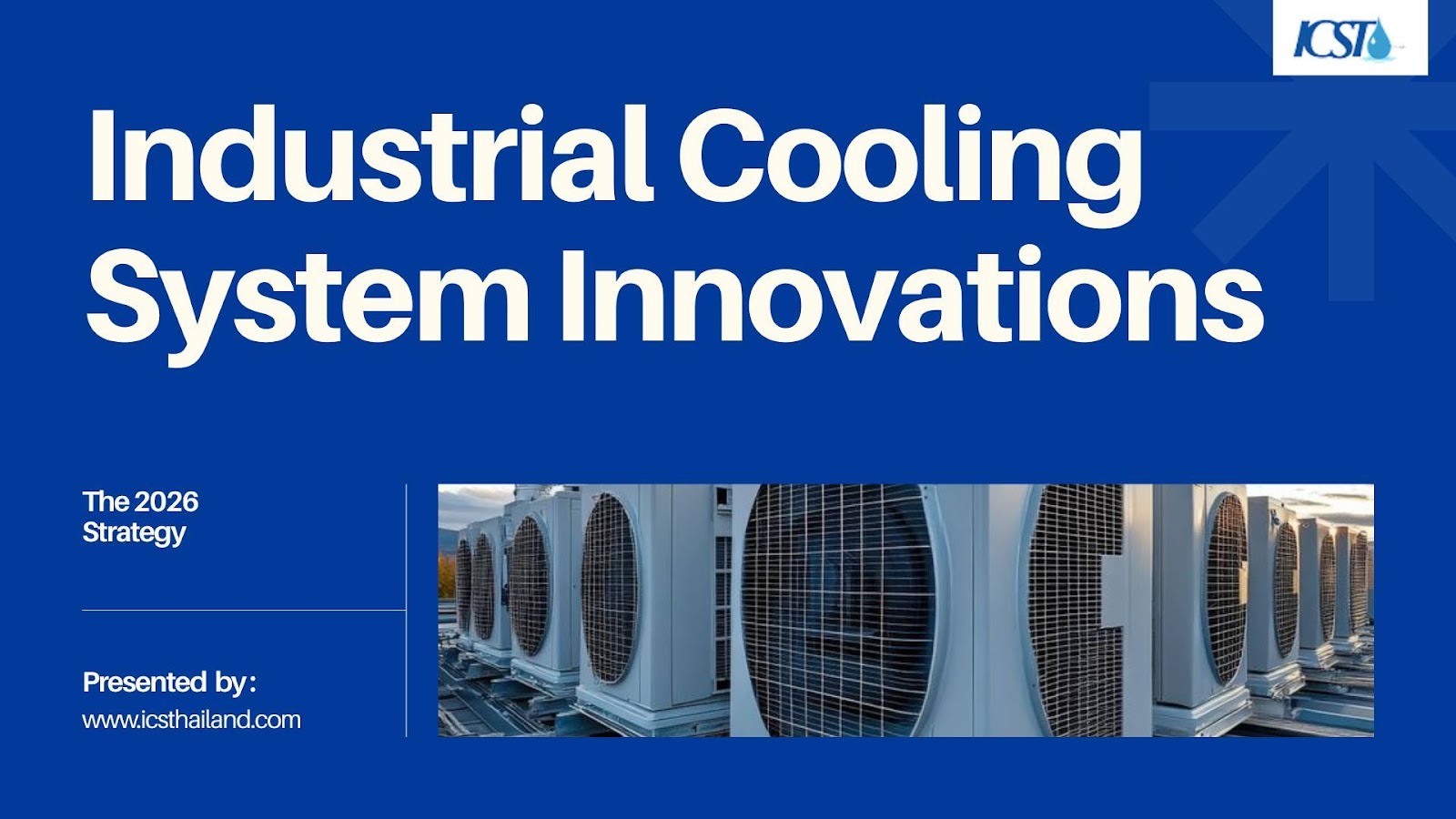
Industrial cooling system innovations are undergoing a radical transformation. The era of passive, energy-intensive systems is ending, driven by new regulations and the demand for higher performance.
Regulatory shifts across the European Union and Asia are phasing out high-GWP refrigerants and inefficient legacy towers. Simultaneously, industries like high-density computing and heavy manufacturing now view cooling as a performance enabler, not just a background cost. To stay competitive, facilities must embrace the next wave of cooling technology.
This post explores the key innovations defining industrial cooling in 2026. We will cover AI-driven design, advanced materials, and next-generation system architectures that are setting new standards for efficiency, longevity, and sustainability.
Smart Cooling Design: Industrial cooling system innovations
In 2026, the most powerful component of a cooling system is its software. Intelligent, predictive code now manages operations with a level of precision that manual controls could never achieve. This shift toward smart design is revolutionizing how facilities manage thermal loads and maintain equipment.
- AI-Driven Thermal Load Forecasting: Modern systems use machine learning algorithms to predict operational demands. By analyzing data on factory production schedules and upcoming weather patterns, these systems can anticipate heat spikes. They proactively adjust fan speeds and pump cycles before the heat arrives, optimizing energy use and preventing thermal overloads.
- Digital Twins for Predictive Maintenance: A digital twin is a virtual replica of a physical cooling system. In 2026, these models use computational fluid dynamics (CFD) and thermal stress simulations to forecast equipment behavior. This allows for predictive maintenance that can identify potential component failures up to 60 days in advance, moving from reactive repairs to proactive uptime assurance.
- Automated Water Chemistry: IoT-enabled sensors now provide real-time management of water quality. These smart systems continuously monitor and adjust pH, conductivity, and biocide levels. This automation drastically reduces blowdown waste, minimizes chemical consumption, and prevents the buildup of scale and corrosion that damages equipment.
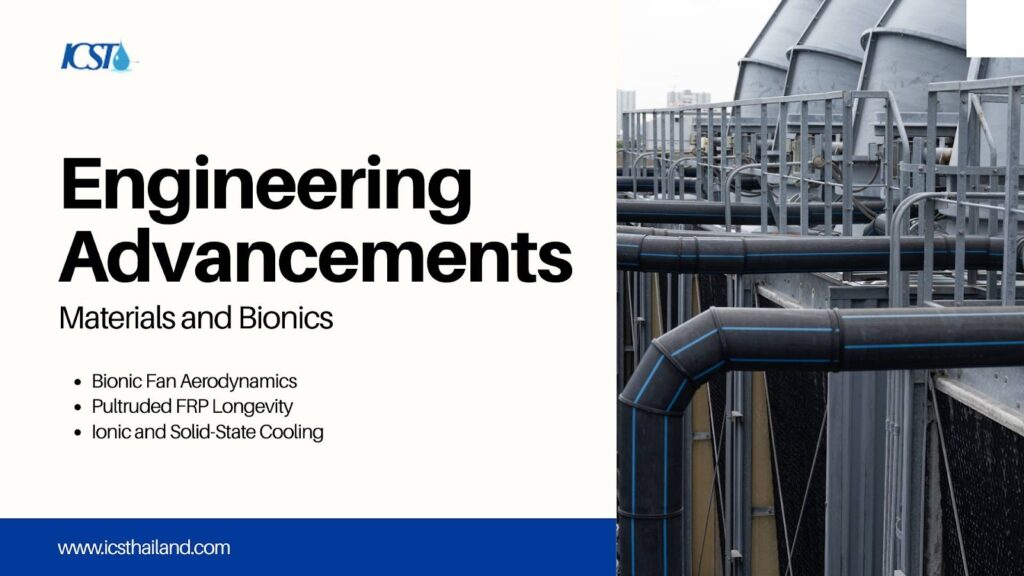
Engineering Advancements: Materials and Bionics
Breakthroughs in materials science and bio-inspired engineering are creating cooling components that are more efficient, durable, and quieter than ever before. These advancements directly address the physical limitations of traditional systems.
Bionic Fan Aerodynamics
Engineers have taken inspiration from the natural world to redesign a fundamental component: the fan.
New fan blades feature serrated edges, a design modeled after the wings of an owl. This aerodynamic innovation allows them to move more air while consuming 15–20% less energy. A significant side benefit is a substantial reduction in operational noise, a critical factor for facilities near residential or urban areas.
Pultruded FRP Longevity
The industry is moving beyond galvanized steel, which is susceptible to rust and corrosion. High-performance composites, particularly pultruded Fiber-Reinforced Polymer (FRP), are becoming the new standard.
FRP offers superior resistance to corrosion from saltwater, acidic process water, and harsh chemicals. This resilience ensures a system lifecycle of 30 years or more, dramatically extending the value of the investment.
Ionic and Solid-State Cooling
For specialized applications, a new cooling paradigm is emerging. Ionic and solid-state systems offer “Direct-Source” cooling for critical electronics. Instead of using mechanical fans to circulate air, these technologies use the movement of ions to remove heat with extreme precision. This fanless approach is ideal for high-intensity industrial processors where reliability and targeted heat removal are paramount.
Next-Generation Cooling Architectures
The very structure of cooling systems is evolving to meet modern demands for water conservation and efficiency. Hybrid designs, liquid cooling, and closed-loop water management are becoming baseline requirements for new and retrofitted facilities.
- Hybrid and Adiabatic Mastery: These advanced systems intelligently switch between “dry” (air-cooled) and “wet” (evaporative) modes. The operational mode is determined automatically based on ambient humidity and temperature. In dry conditions, they function as air-cooled heat exchangers, conserving water. During peak heat, they introduce a small amount of water to pre-cool the air, boosting efficiency. This dual-mode capability can save thousands of gallons of water per month compared to purely evaporative systems.
- Liquid and Immersion Baselines: As processing power increases, air is no longer a sufficient cooling medium. The transition to liquid-to-chip cooling is well underway for high-intensity industrial processors and AI data racks. In these setups, a liquid coolant circulates through cold plates mounted directly to heat-generating components, offering far superior thermal conductivity than air.
- Zero Liquid Discharge (ZLD): For facilities in water-stressed regions, ZLD is becoming a regulatory and operational necessity. These are fully closed-loop systems that treat and recycle 100% of their process water. By eliminating wastewater discharge, ZLD systems achieve maximum water sustainability and comply with the strictest environmental regulations.
Innovation Benchmark: 2020 vs. 2026 Standards
The evolution of industrial cooling technology has delivered measurable improvements in every key performance area. A direct comparison between a traditional system from 2020 and an innovative 2026 model highlights the dramatic impact on operations and budget.
| Feature | Traditional (2020) | Innovative (2026) | Operational Impact |
| Control Logic | Static / Manual | AI-Native Predictive | 30–40% Reduction in Energy Use |
| Materials | Galvanized Steel / Wood | Generative Composites / FRP | +15 Year Lifespan Extension |
| Monitoring | Reactive (Alarm-based) | Digital Twin / IoT Edge | 99.9% Guaranteed Uptime |
| Water Strategy | High Evaporation | Hybrid / Zero Discharge | 50% Reduction in Water Consumption |
| Maintenance | Calendar-based | Condition-based (Sensors) | 25% Reduction in Maintenance OPEX |
Specialized Solutions for Critical Requirements
Modern cooling systems must adapt to their environment, not the other way around. Recent innovations have focused on solving persistent challenges related to extreme water conditions and strict environmental compliance.
Geothermal and Seawater Scaling
Using geothermal or seawater for cooling presents a major challenge: biofouling and mineral scaling, which insulate heat exchanger surfaces and cripple efficiency. New, advanced coatings create ultra-smooth, non-porous surfaces that prevent microorganisms and mineral deposits from attaching. This technology ensures consistent thermal performance even when using the most difficult water sources.
Low Plume and Noise Compliance
Industrial facilities located in urban “Green Zones” or populated areas face strict rules regarding visible steam plumes and audible noise. Advanced system designs now incorporate plume abatement coils and bionic fans to operate invisibly and silently. These innovations allow essential industrial operations to coexist harmoniously with their communities.
Conclusion: Designing for the 2030 Horizon
The industrial cooling system innovations of 2026 are more than just incremental improvements; they are foundational elements for a sustainable and competitive future. By integrating AI-powered controls, bionic fans, and durable pultruded FRP materials, facilities can move beyond mere compliance.
They can build resilient, high-performance infrastructures prepared for the demands of 2030 and beyond. This strategic adoption of technology secures a competitive edge by lowering operational costs, maximizing uptime, and ensuring long-term sustainability.
Are you ready to future-proof your operations? Explore more about cutting-edge industrial cooling solutions thailand and consider implementing these proven innovations in your facility. Harness the latest technology to drive efficiency, sustainability, and growth. Reach out to our experts today to begin your transformation.
Frequently Asked Questions (FAQs)
What are the latest innovations in industrial cooling systems?
The latest innovations include AI-driven thermal load forecasting, digital twins for predictive maintenance, and hybrid cooling systems that optimize energy and water use.
How does AI improve industrial cooling efficiency?
AI predicts thermal loads, adjusts operations proactively, and reduces energy consumption by up to 40%, ensuring optimal performance and uptime.
What is Zero Liquid Discharge (ZLD) in cooling systems?
ZLD is a closed-loop system that recycles 100% of process water, eliminating wastewater discharge and conserving water in industrial facilities.
Why are bionic fans important for cooling systems?
Bionic fans, inspired by owl wings, reduce energy use by 15–20% and operate with significantly lower noise levels, enhancing efficiency and compliance.
What materials are used in modern cooling systems?
Advanced materials like pultruded FRP resist corrosion, extend system lifespans by 15+ years, and perform well in harsh environments like seawater cooling.
How do smart cooling systems improve energy efficiency?
Smart industrial cooling systems use real-time IoT monitoring, AI analytics, adaptive load control, and automated fault detection to optimize cooling output, reduce power usage, prevent waste, extend equipment life, lower energy costs, and ensure reliable performance.
What are the latest industrial cooling system innovations?
Industrial cooling system innovations include AI-enabled control, IoT sensors, variable-speed drives, adiabatic cooling, and magnetic bearing chillers, improving energy efficiency, predictive maintenance, automated optimization, reduced operating costs, lower emissions, and enhanced performance in modern industrial environments.