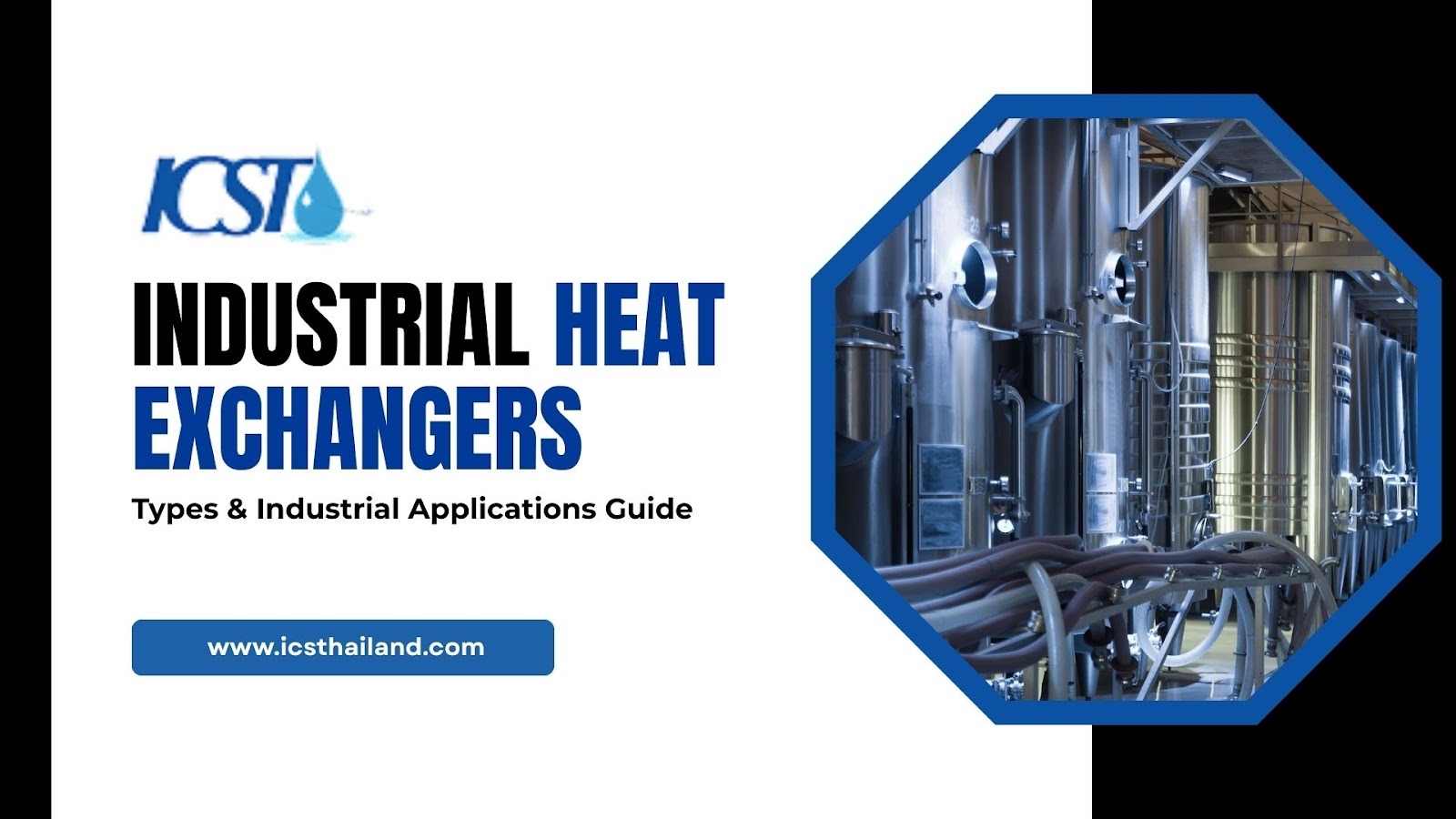
Heat management is the silent workhorse of modern industry. From keeping massive turbines cool to pasteurizing the milk in your fridge, thermal regulation is critical for safety, efficiency, and product quality. At the heart of this process lies the industrial heat exchangers, a device that transfers heat between two or more fluids without mixing them.
These systems are more than just metal boxes with pipes; they are sophisticated engineering solutions that directly impact energy bills and carbon footprints. As industries strive for better process control and higher energy efficiency, understanding heat transfer equipment becomes vital.
This guide explores the various types of heat exchangers, their applications, and how to select the right one for your facility. We’ll cover the essentials of selection, maintenance, and the latest technological advancements for everything from high-viscosity fluids to high-pressure steam.
What Is an Industrial Heat Exchanger?
At its core, a heat exchanger is a device designed for efficient heat transfer between two media. In an industrial context, this usually involves a hot fluid (liquid or gas) transferring its thermal energy to a cooler fluid. This exchange happens through solid walls (like metal plates or tubes) so the fluids never make direct contact, preventing contamination.
The effectiveness of these units relies on three key performance metrics:
- Heat Transfer Rate: The rate at which thermal energy moves between fluids.
- Effectiveness: The ratio of actual heat transfer to the maximum possible heat transfer.
- Pressure Drop: The loss of pressure as fluid moves through the system, which impacts pump energy requirements.
Key Design Considerations for Industrial Heat Exchangers
Designing or selecting a heat exchanger isn’t a “one size fits all” process. Engineers must calculate specific thermal loads while balancing physical constraints. If you choose a unit that is too small, your process overheats; if it’s too large, you waste capital and floor space.
Before committing to a specific model, you must evaluate several critical design factors:
Thermal Performance & Fluid Properties
You must understand the fluids involved. Viscosity plays a huge role; a thick oil transfers heat differently than water. You also need to account for the specific temperature delta required and the operating pressure.
Space & Maintenance Constraints
Factories often have limited real estate. A vertical unit might be necessary where floor space is tight. Furthermore, the design must allow for maintenance accessibility. If a technician cannot reach the tube bundle to clean it, efficiency will plummet over time.
Materials & Lifecycle Cost
Compatibility is non-negotiable. If you are processing acidic fluids, standard carbon steel will fail rapidly due to corrosion or erosion. While exotic materials like titanium increase the upfront price, they often result in lower lifecycle costs by extending the lifespan of the unit.
Major Types of Industrial Heat Exchangers
There is a vast array of thermal exchanger types available, each engineered to solve specific thermal challenges. Understanding the mechanical differences between them is the first step in optimizing your system.
Shell and Tube Heat Exchanger
The shell and tube design is the most common type of heat exchanger found in heavy industries like oil refining and chemical processing. As the name suggests, it consists of a large cylindrical shell with a bundle of tubes inside. One fluid runs through the tubes, and another flows over the tubes (inside the shell) to transfer heat.
This robust design is favored for high-pressure and high-temperature applications where durability is non-negotiable.
- Advantages: Extremely rugged, capable of handling high pressures, and relatively easy to maintain by removing the tube bundle.
- Limitations: They require a large footprint and can be susceptible to fouling if flow rates aren’t optimized.
- Common Applications: Oil & gas refining, petrochemical processing, and power plant condensers.
Plate Heat Exchanger
A plate heat exchanger uses a series of thin, corrugated metal plates stacked together to create channels for fluid flow. The large surface area of the plates allows for incredibly efficient heat transfer in a very compact frame.
Because the plates are thin, they respond quickly to temperature changes, making them ideal for precise process control.
- Advantages: High heat transfer coefficient (U-value), compact design, and easy to disassemble for cleaning.
- Limitations: Gaskets limit the pressure and temperature range compared to welded designs.
- Common Applications: Food & beverage pasteurization, pharmaceutical manufacturing, and HVAC systems.
Air Cooled Heat Exchanger
Sometimes, water isn’t available or practical for cooling. Air-cooled exchangers use ambient air forced over finned tubes to reject heat. You will often see these in remote locations or atop industrial buildings where water conservation is a priority.
These units function similarly to a car radiator but on a massive industrial scale.
- Advantages: Eliminates the need for cooling water and associated pumps/piping.
- Limitations: Requires a large physical footprint and can generate significant noise from fans.
- Common Applications: Remote natural gas compression stations and gas turbine cooling.
Cooling Coil Heat Exchanger
A cooling coil is perhaps the simplest form of heat exchange, often consisting of tubing submerged in a tank or placed within an air stream. The fluid inside the coil absorbs or releases heat to the surrounding environment.
While less efficient than plate or shell designs, they are cost-effective for straightforward applications.
- Advantages: Simple construction, low cost, and versatile installation options.
- Limitations: Generally limited to low-pressure applications and lower heat transfer rates.
- Common Applications: Industrial drying, air conditioning units, and small-scale refrigeration.
Plate-and-Frame & Spiral Heat Exchangers
For specialized applications involving sludge or heavy fluids, engineers turn to spiral or heavy-duty plate-and-frame designs. Spiral exchangers feature a single long channel wrapped in a coil, which creates a “self-cleaning” turbulent flow.
These are the problem-solvers for difficult fluids that would clog a standard tube bundle.
- Advantages: Spiral designs are excellent for handling high-solids fluids (slurries) without clogging.
- Limitations: Manufacturing costs are higher, and they can be difficult to repair if damaged.
- Common Applications: Wastewater treatment digesters and mineral processing.
Heat Exchanger Performance Parameters
To ensure your industrial heat exchangers operate efficiently, you need to monitor specific engineering parameters. Ignoring these can lead to energy waste or catastrophic equipment failure.
- Overall Heat Transfer Coefficient (U-value): This measures how well heat moves across the exchanger materials. A higher U-value means better efficiency.
- Effectiveness (NTU): The Number of Transfer Units (NTU) method helps determine the heat exchanger’s effectiveness based on its size and flow capacity.
- Fouling Factor: Over time, minerals or biological matter build up on surfaces, creating insulation that blocks heat transfer. This “fouling factor” must be calculated during the design phase.
Industrial Applications by Sector
Different industries have unique demands, ranging from extreme hygiene standards to explosive environments. Here is how various sectors utilize heat transfer equipment:
Petrochemical & Oil & Gas
In refineries, heat is both a product and a tool. Exchangers are used in crude preheat trains to raise the oil’s temperature before it hits the furnace, saving massive amounts of fuel. They also serve as condensers in distillation columns to separate different hydrocarbon fractions.
Power Generation
Power plants rely on huge condensers to turn steam back into water after it passes through a turbine. This cycle creates a vacuum that improves turbine efficiency. Additionally, boiler feedwater preheating uses waste heat to warm water before it enters the boiler, improving overall plant thermal efficiency.
Chemical Processing
Chemical reactions often produce or require heat. Reactor jacket cooling prevents runaway reactions (explosions) by removing excess heat immediately. Conversely, exchangers provide the necessary thermal energy to jumpstart endothermic processes.
Food & Beverage Industry
Sanitation is king here. Plate heat exchangers are standard for pasteurization because they can rapidly heat milk or juice to kill bacteria and then cool it down just as fast to preserve flavor. They are also used for Clean-in-Place (CIP) systems to heat cleaning solutions.
HVAC & Building Systems
Large commercial buildings use cooling towers to regulate temperature. Heat exchangers are often used in “economizer” cycles, using cool outside air to chill water naturally, reducing the load on energy-hungry chillers.
Materials for Industrial Heat Exchangers
The longevity of a heat exchanger depends almost entirely on material selection. If you run saltwater through a standard carbon steel unit, it will leak within weeks due to corrosion.
- Stainless Steel: The industry standard for food, pharmaceutical, and mild chemical applications due to its corrosion resistance and cleanability.
- Carbon Steel: Used primarily in oil and gas or non-corrosive steam applications where cost is a major factor.
- Copper Alloys: Frequently used in cooling water applications because copper conducts heat exceptionally well.
- Titanium: Essential for marine applications or highly aggressive acids, where other metals would fail instantly.
Selection Guide: How to Choose the Right Heat Exchanger
Selecting the correct unit involves balancing process requirements with budget and maintenance capabilities. A cheap unit that fouls every week will cost more in the long run than a premium “self-cleaning” design.
Follow these steps to narrow down your choices:
Define Your Process Requirements:
Start by clearly establishing your operational parameters. What are the required inlet and outlet temperatures for both the hot and cold fluids? What are the maximum operating pressures and the necessary flow rates? This foundational data is crucial for sizing the unit correctly.
Evaluate Fluid Properties:
Understanding the nature of your fluids is key.
- Viscosity: Is the fluid thick and slow-moving? Highly viscous fluids require specific designs to ensure proper flow and heat transfer.
- Solids Content: Does the fluid contain suspended solids or particles? This can lead to blockages (fouling) and may necessitate a design with wider channels or self-cleaning features.
- Corrosiveness: Is the fluid corrosive? The materials of construction (like stainless steel, titanium, etc.) must be compatible to prevent rapid degradation and failure.
Assess Space and Installation Constraints:
Consider the physical location where the heat exchanger will be installed. Do you have limited floor space, making a compact plate heat exchanger a better choice? Or do you have vertical space available, which might suit a shell and tube design? Consider piping connections and access for future maintenance.
Consider Future Maintenance Needs:
How much downtime can you afford? Some designs, like plate heat exchangers, are easier to open, inspect, and clean than others, like welded shell and tube units. Your maintenance team’s capabilities and your production schedule should influence this choice.
Analyze Lifecycle Costs, Not Just the Purchase Price:
A comprehensive cost analysis goes beyond the initial price tag. Compare the upfront cost with the long-term operational expenses. This includes:
- Energy Consumption: How efficient is the unit? A more efficient unit will save on energy bills over its lifetime.
- Maintenance & Cleaning Costs: Factor in the cost of labor, chemicals, and potential downtime required for cleaning over a 10-year period. A cheaper unit that requires frequent, costly cleaning may not be the most economical choice in the long run.
Conclusion
From the massive shell and tube units in refineries to the compact plate heat exchangers in a dairy plant, thermal management is essential for modern production. Choosing the right industrial heat exchangers requires a careful analysis of your specific process needs, fluid properties, and long-term maintenance goals.
By moving away from “gut feeling” selection and toward data-driven engineering, you can ensure your facility runs efficiently and safely. Whether you are upgrading a cooling coil or designing a new chemical plant, prioritizing the right thermal exchanger types is an investment that pays dividends in energy savings and reliability.
Visit the ICST website to learn more.
Frequently Asked Questions (FAQs)
What are industrial heat exchangers used for?
They are used to transfer heat between fluids for heating, cooling, condensation, or evaporation in industries like oil & gas, food processing, power generation, and chemical manufacturing.
What’s the difference between shell and tube and plate heat exchangers?
Shell and tube units are robust, handle high pressures, and are used for heavy-duty applications. Plate heat exchangers are compact, offer higher heat transfer efficiency, and are easier to clean, but have lower pressure limits.
How do I prevent fouling in a heat exchanger?
Fouling can be minimized by maintaining high fluid velocities (to create turbulence), selecting the right materials to prevent corrosion, and implementing a regular cleaning schedule.
Which heat exchanger type is best for high temperatures?
The shell and tube heat exchanger is typically best for very high temperatures because its welded construction can withstand thermal stress better than gasketed plate designs.