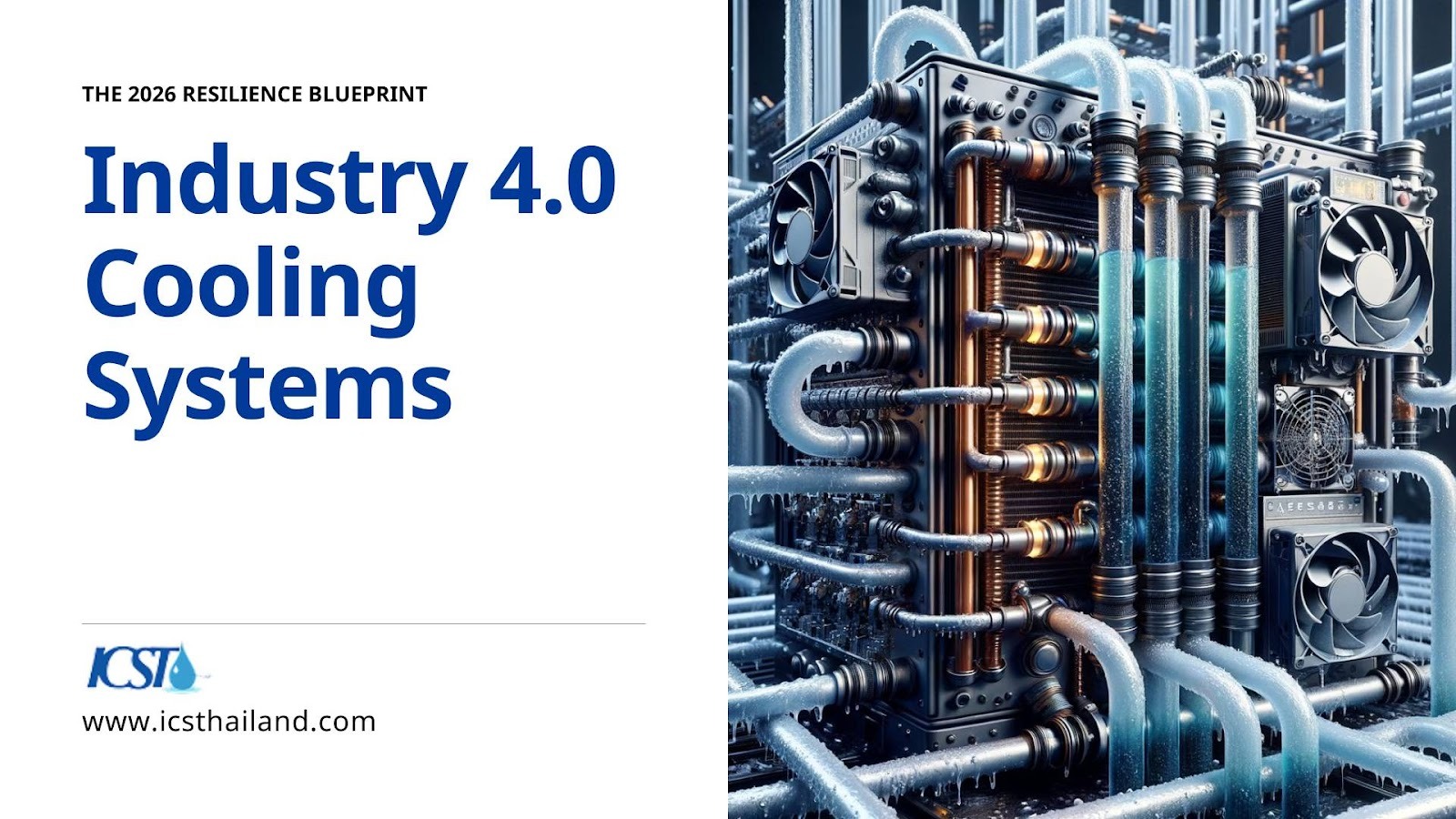
The year 2026 marks a critical pivot in industrial history. We have witnessed a cooling transition from a basic facility utility to a workload-aligned system. This shift drives the adoption of Industry 4.0 cooling systems powered by artificial intelligence and agentic AI.
In the past, factory operators viewed cooling as a static necessity. Today, it is a dynamic component of industrial automation. Smart cooling systems now dictate the operational efficiency of the entire plant. At ICST, our mission is clear. We engineer efficient cooling solutions that are financially feasible and cyber-resilient.
We understand the stakes for global industrial operations. A single thermal failure can halt production. To combat this, we maintain our Bangkok Strategic Dispatch. This provides a 24-hour response capability to troubleshoot smart OT (Operational Technology) failures across Asian and Middle Eastern corridors. We ensure system reliability when you need it most.
Connectivity & Data Interoperability: Breaking the Silos
Data silos are the enemy of Industry 4.0. Traditional cooling systems often operate in isolation. This limits your ability to optimize energy consumption and reduce operational costs. We break these silos through advanced connectivity.
Unified Namespace (UNS)
We implement a Unified Namespace (UNS). This acts as a single source of truth for all thermal data. It allows your cooling towers to communicate directly with ERP and MES systems. This integration ensures that real-time data flows freely across your enterprise.
FAIR Data Standards
Data must be usable to be valuable. We adhere to FAIR standards. We ensure your cooling data is Findable, Accessible, Interoperable, and Reusable. This is a critical aspect for AI auditing in 2026. It allows machine learning algorithms to process data efficiently.
Edge vs. Cloud
We prioritize Edge Computing for immediate valve adjustments. This reduces latency and enhances system performance. Conversely, we utilize cloud computing and cloud storage for long-term “Thermal Health” analytics. This hybrid approach optimizes energy management and data accessibility.
2026 Industry 4.0 Cooling System Matrix
The leap from legacy infrastructure to smart technologies is substantial. The following matrix outlines the evolution from 2020 standards to the 2026 smart factory ecosystem.
| Industry 4.0 Pillar | Legacy Systems (2020) | Smart Factory Systems (2026) |
| Maintenance | Scheduled / Reactive | Agentic Predictive Maintenance |
| Control Logic | Static PID Loops | Dynamic AI Orchestration |
| Energy Strategy | High Power Consumption | Low Power Optimization |
| Cyber Security | Air-Gapped (Physical) | Zero-Trust Cyber OT |
| Connectivity | Isolated (Stand-alone) | Integrated (API/ERP Linked) |
This evolution helps industrial facilities prioritize energy efficiency and reduce maintenance costs.
Cyber Security: Protecting the Thermal Entry Point
The 2026 threat landscape is hostile. Cooling systems are now targeted entry points for industrial ransomware. Attackers know that if they disable your thermal management, they disable your production.
We employ a Zero-Trust Architecture. We harden smart cooling controllers to ensure that an infected sensor cannot compromise the entire factory floor. This enhances safety and secures your industrial processes.
We also implement Autonomous Fallback Modes. This proprietary logic ensures your cooling maintains “Safe-State” operations even if the network is lost. Local edge logic takes over to prevent catastrophic failure. This level of security is vital for critical components in enterprise environments.
Smart Factory Integration: The ICST Roadmap
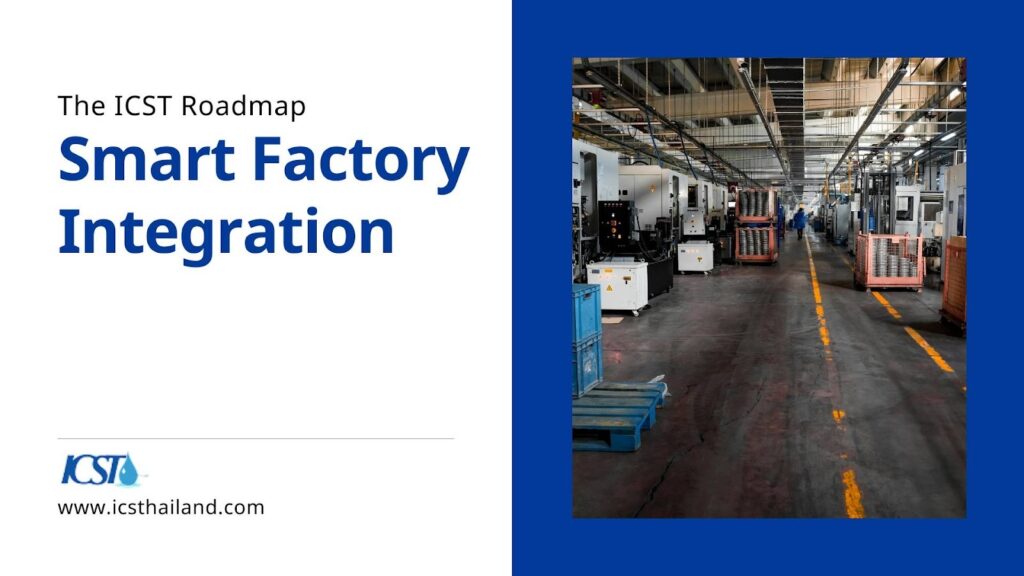
Smart factory integration goes beyond simple monitoring. It involves active, intelligent participation by the cooling infrastructure.
Agentic AI & Big Data
We are moving beyond systems that merely flag issues. We deploy AI agents capable of autonomous action. These agents reroute flow or adjust fan pitch to compensate for fouling without human intervention. This utilizes big data analytics and neural networks to maintain optimal performance.
Digital Twin Synchronization
We use digital twin technology to create real-time virtual replicas of your system. This allows us to simulate “What-If” scenarios. For example, we can predict how HVAC systems will react to a 50°C heatwave in the Middle East before it occurs. This helps in reducing energy consumption and preventing energy waste.
Workforce Training 4.0
Technology requires skilled operators. We use Augmented Reality (AR) to guide on-site staff. They receive real-time verification from our Bangkok office during complex smart-valving repairs. This bridges the gap between technological advancements and the workforce.
Critical Engineering for Smart Environments
Smart cooling systems must survive in harsh conditions. Standard electronics often fail in industrial facilities dealing with acidic water or seawater.
Hardened Smart Sensors
We develop connectivity solutions that resist corrosion and fouling. These sensors provide reliable data collection even in dirty water environments. Accurate data collection methods are essential for fault detection and operational optimization.
Low Noise & Low Drift
Urban environments have stringent environmental regulations. We use AI-driven variable speed control to meet the 2026 “Acoustic Harmony” codes. This reduces noise pollution while maintaining overall system performance.
Retrofitting for the Future
You do not always need new hardware. We specialize in retrofitting. We turn 15-year-old assets into smart-ready nodes. This extends the life of your equipment and reduces the need for new raw materials, contributing to environmental sustainability.
Review the technical competencies required for modern systems in our CTI Standards overview.
Conclusion: Securing Your License to Operate
In 2026, cooling is no longer just a utility. It is a strategic data asset. It is essential for sustainable manufacturing and reducing carbon emissions. The fourth industrial revolution demands that we treat thermal management with the same seriousness as production logic.
ICST bridges the gap between heavy-duty engineering and high-speed digital intelligence. We help you navigate rising demand and varying environmental conditions. Our solutions allow you to prioritize energy efficiency and integrate renewable energy systems like solar power.
Is your cooling infrastructure ready for the 2026 Smart Factory audit? Contact ICST’s Bangkok office for an Industry 4.0 cooling system Readiness Assessment and future-proof your assets today.
Frequently Asked Questions (FAQs)
What are Industry 4.0 cooling systems?
Industry 4.0 cooling systems are advanced, AI-driven solutions designed to optimize energy efficiency, reduce operational costs, and enhance system performance in smart factories.
How do smart cooling systems improve energy efficiency?
Smart cooling systems use real-time data, machine learning algorithms, and predictive maintenance to minimize energy waste and optimize thermal management.
Why is cybersecurity important for cooling systems?
Cooling systems are critical components in industrial facilities and can be targeted by ransomware. Zero-Trust architecture and autonomous fallback modes ensure operational safety and data security.
What is the role of digital twins in cooling systems?
Digital twins create virtual replicas of cooling systems, enabling real-time simulations to predict performance under varying environmental conditions and optimize energy utilization.
Can legacy cooling systems be upgraded for Industry 4.0?
Yes, retrofitting solutions can transform older cooling systems into smart-ready nodes, improving energy efficiency and extending their operational lifespan.