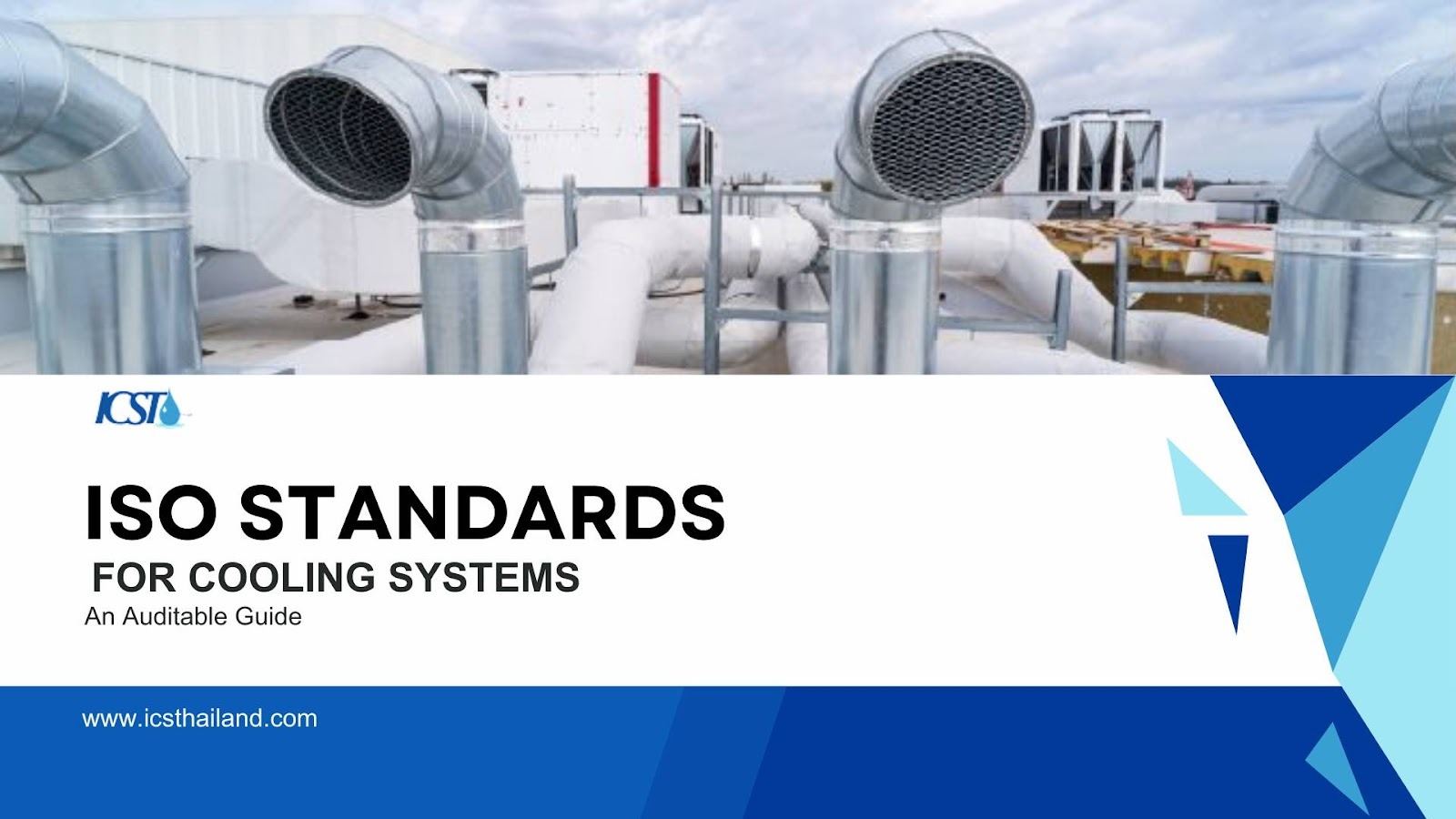
An ISO-compliant cooling system, built according to ISO standards’ cooling systems requirements, is more than a set of documents. It is a strategic asset that delivers verifiable, auditable performance. For facility managers and compliance officers, understanding how high-level management standards connect to technical requirements is crucial.
This guide bridges the gap between ISO 9001, 14001, and 50001 and the technical proof offered by ISO 16345, turning compliance obligations into a powerful competitive advantage. We will explore the features of ISO Standards for Cooling Systems, the benefits of compliance, and actionable strategies for optimizing your cooling operations.
Quick-Start Compliance: Core Features and Key Tips
Achieving compliance begins with understanding the tangible characteristics of a system built on ISO standards. It is not about paperwork, but about an integrated operational strategy that drives efficiency and quality.
What Does an ISO-Compliant Cooling System Look Like?
An effective system incorporates specific features that enable continuous monitoring, quality assurance, and auditable performance.
- Integrated Data Collection: All critical cooling tower metrics are continuously logged. This includes water flow, hot water temperature (THW), cold water temperature (TCW), and wet-bulb temperature (TWB). This data feeds directly into the Energy Management System (EnMS) as required by ISO 50001.
- Calibrated Monitoring Points: Sensors, flow meters, and other measurement components are certified and traceable. This satisfies ISO 9001 Quality Management System (QMS) requirements for measurement integrity and ensures your data is reliable for both operational control and compliance audits.
- Auditable Performance Baseline: The system has a foundational document created through ISO 16345 testing. This document formally defines the guaranteed thermal performance, including the tower’s Capability and Approach under specific design conditions.
How ISO Standards Work: The P-D-C-A Strategy
ISO compliance is not a static achievement but a continuous improvement loop known as the Plan-Do-Check-Act (P-D-C-A) cycle. This framework ensures your Cooling Control Systems evolve and adapt.
- Plan: Establish your energy baselines and performance indicators (EnPIs) according to ISO 50001. This involves defining what your Significant Energy Use (SEU) is for cooling operations.
- Do: Implement control strategies to meet your targets. This can include installing Variable Frequency Drives (VFDs) on fans and pumps or implementing advanced PID control loops to optimize the thermal environment.
- Check: Verify system performance using the rigorous methodology outlined in ISO 16345. This step provides objective data to confirm whether your implemented strategies are delivering the expected energy efficiency.
- Act: Analyze the data from the “Check” phase. Correct any deviations from the plan, document the changes, and update the Energy Management System. This action becomes the foundation for the next planning cycle.
Pro Tip: The Pre-Test Agreement Advantage
ISO 16345 (Clause 4.3.2) requires all parties to agree on the test’s Tolerance and Uncertainty (ITEMP) before testing begins. Do not accept a manufacturer’s standard, generic tolerance.
Use the standard as leverage to negotiate tighter tolerances before you sign a contract. This forces the delivery of higher-quality equipment and provides your ISO 9001 Quality Management System with a superior benchmark for ongoing performance.
Why ISO Compliance is Critical: 5 Key Benefits
Integrating ISO standards into your cooling system strategy moves beyond regulatory necessity. It provides a strategic return on investment by mitigating risks and unlocking significant operational advantages.
- Guaranteed Energy Savings: ISO 50001 mandates continuous improvement in energy performance. By establishing an energy baseline and tracking key metrics like kW/ton, you can identify and implement strategies that directly reduce energy consumption and lower operating costs.
- Extended Equipment Lifespan: An ISO 9001 framework requires structured maintenance protocols and diligent record-keeping. This proactive approach to operation and maintenance reduces premature wear and tear on pumps, heat exchangers, and other critical components, maximizing their service life.
- Regulatory Risk Mitigation: Proper documentation under ISO 14001 provides a strong defense against environmental fines. Managing elements like water quality, chemical blowdown, and discharge temperatures helps you stay within regulatory limits and demonstrate due diligence.
- Enhanced Competitive Advantage: For many corporate and government contracts, certified compliance with international standards is a non-negotiable prerequisite. An ISO-certified operation can open doors to new business opportunities in regulated environments.
- Optimized Operator Performance: Standardized procedures for operation and maintenance reduce the risk of human error. This leads to greater consistency in system performance, from maintaining thermal comfort to ensuring precise temperature control for industrial processes.
The ISO Cooling Standards Compliance Matrix
Understanding how each standard applies to your cooling system is key to a holistic compliance strategy. This matrix breaks down the focus of each ISO standard and its direct application.
| ISO Standard | Focus Area | Cooling System Strategy | Key Documentation Requirement |
| ISO 9001 | Quality Management | Calibrated monitoring, documented maintenance, consistent thermal output (TCW). | Calibration logs, maintenance records, and non-conformance reports. |
| ISO 14001 | Environmental Management | Managing drift loss, chemical blowdown, and regulatory discharge limits. | Effluent water quality reports, waste management records. |
| ISO 50001 | Energy Management (EnMS) | Establishing a Significant Energy Use (SEU) baseline and tracking kW/ton performance improvement. | Energy baseline data, energy performance indicators (EnPIs). |
| ISO 16345 | Technical Performance | Defines the mandatory test procedure for verifying thermal output and pumping head. | Final Performance Test Report, Pre-Test Agreements (Tolerance). |
The Three Management Pillars: Strategies and Requirements
Effective compliance relies on dedicated strategies for energy, quality, and environmental management. These three pillars provide the structure for your entire cooling system program.
ISO 50001: Optimizing Energy Efficiency
Your Energy Management System is the core of optimizing your cooling system’s energy use. A primary strategy is implementing Wet-Bulb Reset controls. This allows the system to adjust its output based on ambient conditions, operating only as hard as necessary to meet the cooling load.
This approach maximizes energy savings. You must define your baseline EnPI (e.g., 0.05 kW/ton of cooling) and set measurable targets for continuous improvement to track progress effectively.
ISO 9001: Ensuring Quality Control
The Quality Management System mandate focuses on consistency. This requires training the cooling operator to execute standardized procedures, such as water treatment schedules and fan speed adjustments, to ensure consistent thermal output.
A critical part of ISO 9001 is documentation. All non-conformances, like unexpected spikes in cold water temperature, must be logged, investigated, and corrected to satisfy QMS requirements and prevent recurrence.
ISO 14001: Demonstrating Environmental Stewardship
For environmental compliance, the blowdown protocol is essential. Implementing automated Total Dissolved Solids (TDS) control and documenting the blowdown rate helps minimize water consumption. This practice not only conserves a valuable resource but also ensures your facility complies with local regulations regarding water discharge, reducing environmental impact.
The Audit Crucible: Technical Validation with ISO 16345
ISO 16345 is the standard that provides the technical “proof” for your management systems. It defines how to conduct a valid thermal performance test, ensuring the data is accurate, repeatable, and defensible during an audit.
Key Performance Indicators (KPIs) in ISO 16345
This standard defines the specific metrics used to evaluate a cooling tower’s performance.
- Approach (2.3): The temperature difference between the cold water leaving the tower and the ambient wet-bulb temperature. A smaller approach indicates a more efficient tower.
- Cooling Range (2.17): The temperature difference between the hot water entering the tower and the cold water leaving it. This directly measures the heat load being removed by the system.
- Capability (CCAP) (2.12): The final measure of the tower’s thermal capacity as a percentage of its design specification (e.g., 98% CCAP). This is the ultimate indicator of whether the equipment meets its promised performance criteria.
Pro Tip: The Capability vs. Approach Strategy
ISO 16345 (Clause 4.3.5) allows parties to agree on the test evaluation method: either Capability (CCAP) or Approach Deviation (TApp). Always insist on CCAP (Capability) as the pass/fail metric for contractual acceptance.
While Approach Deviation measures accuracy at a single design point, CCAP measures the tower’s full thermal load potential. This provides a much stronger and more comprehensive guarantee of system performance for your ISO 9001 and ISO 50001 compliance programs.
Conclusion: Turn Compliance into Competitive Advantage
An ISO-compliant cooling system is not about fulfilling a checklist. It is about creating a robust, efficient, and reliable operation built on verifiable data. By linking the managerial frameworks of ISO 9001, 14001, and 50001 with the technical validation of ISO 16345, you transform a regulatory burden into a source of strategic value. This integrated approach to ISO Standards for Cooling Systems reduces energy consumption, lowers operational risk, and provides the auditable proof needed to demonstrate superior system performance.
Ready to take your compliance to the next level? Visit our ICST and ensure your cooling system stands up to any audit.
Frequently Asked Questions
What are the ISO standards for cooling systems?
They are cooling infrastructures managed under international frameworks like ISO 9001 (Quality), ISO 14001 (Environment), and ISO 50001 (Energy). These standards ensure your system operates efficiently, meets regulatory requirements, and delivers verifiable performance.
Which specific ISO standards apply to cooling towers?
The four main pillars are:
- ISO 9001: For quality management and maintenance consistency.
- ISO 14001: For environmental safety and water discharge.
- ISO 50001: For energy management and efficiency tracking.
- ISO 16345: For technical verification of thermal performance.
How does ISO 16345 verify performance?
ISO 16345 is the “truth test” for cooling towers. It defines the mandatory procedures for measuring thermal output and water flow, proving whether the equipment actually delivers the cooling capacity promised by the manufacturer.
Will following ISO standards save me money?
Yes. By using ISO Standards for Cooling Systems, specifically the ISO 50001 framework, you actively monitor energy baselines and implement efficiency improvements. This directly lowers electricity consumption and extends equipment lifespan, reducing long-term costs.
Why is ISO compliance important?**
ISO compliance ensures that your organization is operating under globally recognized standards, making it easier for you to communicate and conduct business with international partners. Furthermore, ISO compliance helps establish a reputation for quality and efficiency, attracting potential customers and improving overall customer satisfaction.