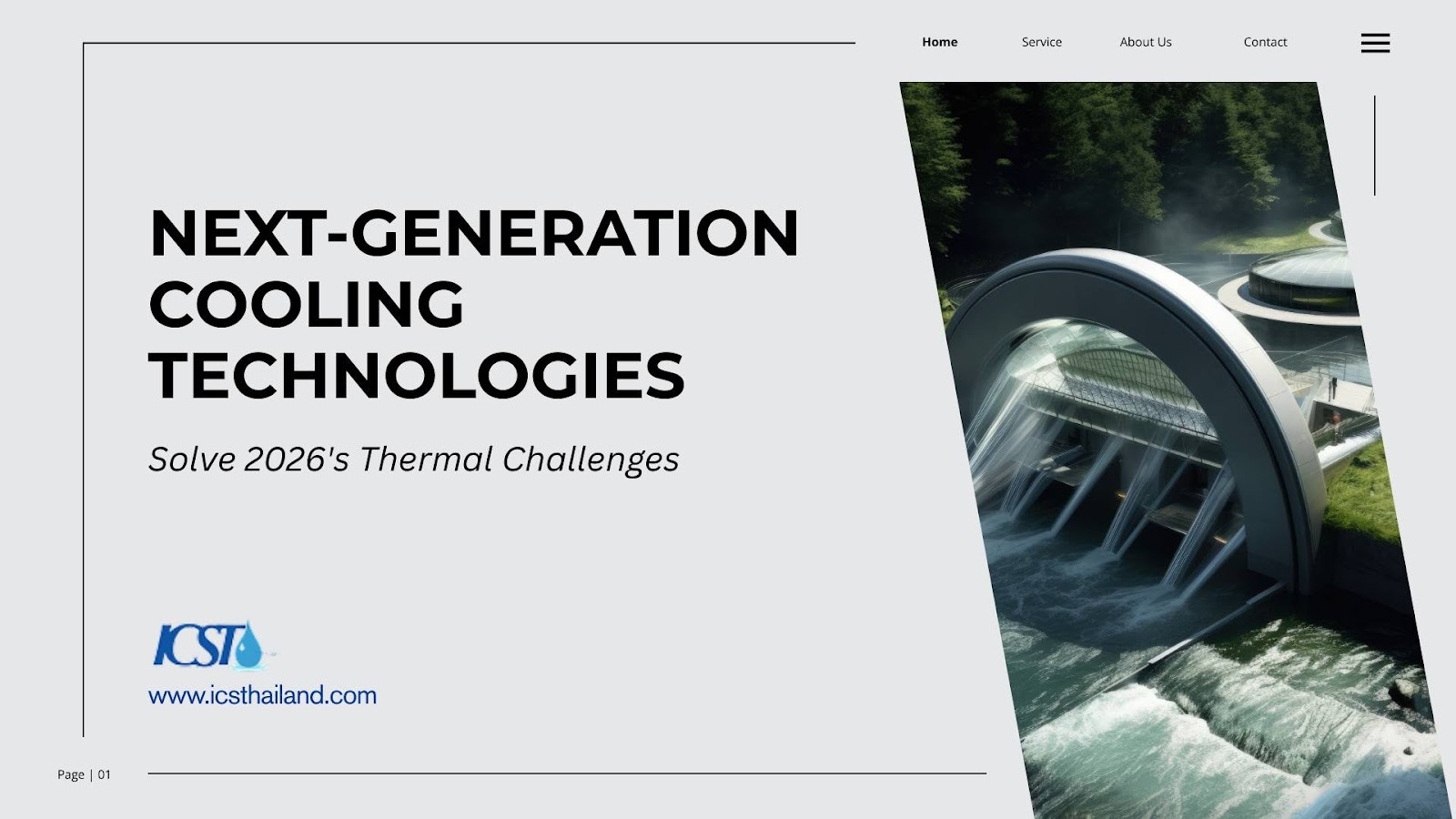
Industrial cooling has reached a crucial turning point. As data centers and manufacturing facilities grow more complex and AI workloads climb, the old vapor compression systems simply cannot keep up. Stricter Net-Zero regulations and soaring temperatures do not make things easier. This is where next-generation cooling technologies come into play. These innovative solutions are designed to tackle unprecedented heat loads and environmental concerns head-on, offering far greater energy efficiency and reliability than traditional methods.
You need a cooling strategy that meets the demands of 2026 and beyond. With advances in materials like graphene and the integration of AI, companies can now achieve precise, sustainable thermal management no matter where they operate. By reading on, you will discover how these next-generation technologies are reshaping thermal management, minimizing operational costs, and ensuring your business thrives in the new era of cooling.
Solid-State & Caloric Revolutions: No Pipes, No Leaks
The future of thermal management systems is solid. Emerging technologies are removing the need for refrigerants, pipes, and compressors, which eliminates the primary sources of leaks and mechanical failure in traditional cooling systems.
- Magnetocaloric Systems (MC): We see MC as the 2026 “gold standard” for quiet, refrigerant-free cooling. These advanced cooling technologies use magnetic fields to induce temperature changes in specialized solid alloys. With no moving parts, they offer unparalleled reliability and efficiency for precise applications.
- Thermoelectric (Peltier) Evolution: New bismuth-telluride composites are transforming thermoelectric cooling. This technology is now a viable and cost-effective mainstream solution for high-density industrial electronic enclosures, offering superior cooling efficiency in compact forms.
The advantage of having no moving parts represents a significant transformation. We recommend solid-state systems for acidic, corrosive, and aggressive environments where the risk of mechanical failure from traditional air-based methods is unacceptably high. This technology ensures effective cooling and long-term thermal performance.
2026 Technology Matrix: The Next-Gen Cooling Landscape
The landscape of efficient cooling systems is diverse and rapidly evolving. Understanding the mechanism and ideal use-case for each technology is key to designing resilient thermal management solutions.
| Technology | Mechanism | 2026 Status | ICST Specialized Use-Case |
| Magnetocaloric | Magnetic Field Entropy | Commercial Pilot | Precise Medical & Lab Cooling |
| Graphene Sheets | Ultra-High Conductivity | Standard Layering | Hot-Spot Mitigation in AI Racks |
| Biomimicry | Fractal Geometry Airflow | Design Integrated | Urban Noise Reduction Designs |
| Quantum Cooling | Laser/Phonon Absorption | Sub-Cryogenic | Quantum Computing Baselines |
| AI-Driven Control | Predictive Load Matching | Mandatory | Regional Energy Optimization |
Advanced Materials: The Graphene & Biomimicry Edge
Technological advancements in materials science are unlocking new levels of heat dissipation and efficiency. Two areas showing immense promise are graphene and biomimicry.
Graphene heat spreaders are a game-changer for thermal management. These carbon lattices conduct heat more than ten times better than copper. This allows them to reduce “hot spot” temperatures in high-performance computing (HPC) environments by as much as 13°C in seconds, preventing thermal throttling and equipment damage.

We also use biomimicry in fan and coil design. By studying the fractal geometry found in natural structures like leaf veins and coral, we design systems that maximize surface area for heat transfer. This approach minimizes pump head requirements, which helps to save energy and reduce operational costs. These sustainable cooling solutions can also leverage phase-change materials (PCMs) that “store” cold energy during off-peak hours to reduce cooling demands during the day.
Smart Systems: AI-Driven Thermal Orchestration
Modern cooling is no longer a simple “on/off” function. The integration of artificial intelligence is enabling a more dynamic and predictive approach to thermal management, which is essential for modern data centers and industrial facilities.
Active thermal feedback is now a core component of any efficient cooling system. ICST’s smart sensors continuously monitor workloads and environmental conditions. This data allows the cooling system to match its output to the real-time thermal load, improving energy efficiency and preventing wasted power.
We also use Digital Twins and predictive maintenance. This technology allows us to model “what-if” scenarios, such as extreme heatwaves in the Middle East, before they occur. By simulating thermal challenges, we can optimize system responses and prevent downtime. Furthermore, AI-driven autonomous leak detection monitors for pressure variations and gas concentrations, enabling localized intervention that prevents environmental contamination before it starts.
Regional Resilience: The Bangkok Support Hub
Developing next-generation cooling technologies is only half the battle. Ensuring they perform reliably in the most demanding environments is critical. That is why ICST’s Bangkok headquarters serves as the ideal “stress test” facility. We test our innovations in a tropical climate to guarantee their resilience and performance.
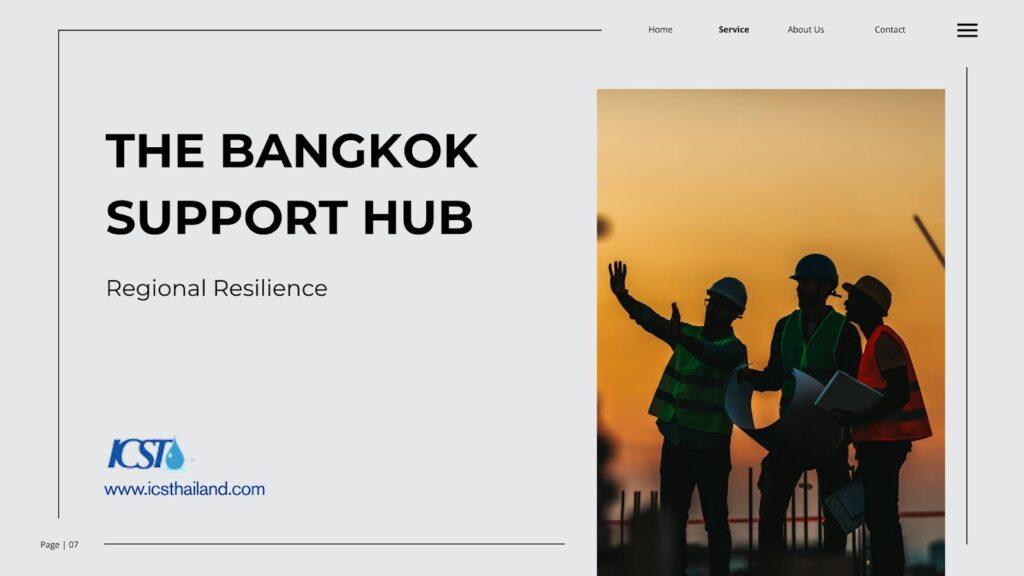
This strategic location also enables our rapid dispatch field support. We ensure that even the most advanced or experimental systems remain fully operational across the Asian region. Our teams can provide support in hours, not days, to maintain uptime and protect our clients’ investments.
Conclusion Future-Proofing for 2030 and Beyond
The future of cooling is solid, smart, and sustainable. The rapid adoption of liquid cooling, solid-state systems, and AI-driven controls represents a fundamental shift away from the limitations of traditional air cooling. These emerging technologies are gaining traction because they offer a clear path to managing the growing demand for effective cooling in a carbon-neutral world.
At ICST, we do not just supply equipment; we engineer the next generation of industrial longevity. We are committed to providing our clients with the advanced cooling technologies they need to improve efficiency, reduce their environmental impact, and future-proof their operations. Next-generation cooling technologies are at the core of our mission to deliver superior thermal management for modern business needs.
Is your cooling system stuck in the 20th century? Contact ICST for a Next-Gen Technology Audit and bridge the gap to 2026 resilience today.
Frequently Asked Questions
What are next-generation cooling technologies?
Next-generation cooling technologies include advanced systems like liquid cooling, solid-state cooling, and AI-driven thermal management, designed to improve energy efficiency and reduce environmental impact.
How do liquid cooling systems improve energy efficiency?
Liquid cooling systems transfer heat more effectively than traditional air cooling methods, reducing power usage and enhancing thermal performance in data centers and industrial applications.
Why is thermal management important for modern data centers?
Effective thermal management ensures optimal performance, prevents overheating, and reduces operational costs in high-density server racks and AI-driven workloads.
What is the role of AI in cooling systems?
AI enables predictive load matching, real-time thermal feedback, and autonomous leak detection, making cooling systems more efficient and reliable.
How can sustainable cooling systems reduce environmental impact?
Sustainable cooling systems, such as those using phase-change materials and renewable energy sources, minimize waste heat and reliance on fossil fuels, supporting carbon-neutral operations.