Relying on reactive maintenance for industrial cooling systems is a risky gamble you can’t afford to take. When a critical component fails, it means unplanned downtime, skyrocketing repair costs, and complete operational disruption. Even traditional preventive maintenance based on rigid schedules falls short of keeping things efficient. There is a smarter way forward.
This approach often results in over-maintenance of healthy components or, worse, fails to catch impending issues, leaving your facility vulnerable to the very failures it aims to prevent. The consequences are severe: prolonged downtime, soaring energy bills from inefficient systems, accelerated component wear, and unpredictable budgets.
This is where predictive analytics cooling maintenance offers a superior alternative. By moving from a calendar-based to a condition-based strategy, you can anticipate failures before they occur.
Here’s how to leverage predictive analytics and transform your cooling system maintenance from a reactive liability into a proactive, data-driven asset. In this guide, we’ll break down the technology, its benefits, and a step-by-step implementation plan.
What is Predictive Analytics for Cooling Maintenance?
Predictive analytics for cooling maintenance is a sophisticated strategy that uses real-time data and advanced algorithms to forecast equipment failures before they happen. Instead of reacting to breakdowns or performing scheduled maintenance on a fixed calendar, this approach allows you to intervene precisely when needed.
It involves collecting continuous data from sensors on your cooling equipment, analyzing this information with machine learning models, and using the resulting insights to predict when a component is likely to fail or require service.
What are the core elements that make this possible?
- IoT Sensors: These devices are installed on critical components to monitor key operational metrics like temperature, pressure, vibration, and energy use.
- Real-Time Data Flow: Data from these sensors is streamed continuously to a central platform for immediate analysis.
- Historical Logs: Past performance data, maintenance records, and failure histories provide context and help train the predictive models.
- Analytics Platform / ML Model: This is the brain of the system, where machine learning models analyze the data to detect anomalies and forecast future maintenance needs.
How Predictive Analytics Works: From Data to Maintenance Scheduling

Step 1: Data Collection | Sensors & Monitoring
The foundation of any predictive analytics system is robust data collection. This involves deploying a network of sensors across the cooling infrastructure to capture real-time operational data.
Which sensors are most critical for monitoring cooling systems? The right combination of sensors provides a holistic view of the system’s health, enabling the predictive models to function accurately.
- Temperature Sensors: Track coolant and water temperatures to identify inefficiencies in heat exchange. Use this data to optimize system performance, prevent overheating, and improve overall efficiency.
- Pressure Sensors: Monitor pressure within pipes and coolant circuits to detect leaks or blockages before they cause costly damage. This ensures consistent operation and safeguards equipment durability.
- Vibration Sensors: Measure vibrations in components like fans and motors to predict bearing wear or imbalance, minimizing downtime through early maintenance and extending component lifespan.
- Energy/Power Usage Meters: Analyze power consumption to spot compressor inefficiencies or overwork, helping reduce energy costs while improving system reliability.
- Coolant Flow Meters: Track the circulation rate to identify pump issues or degraded performance, ensuring consistent cooling capacity and preventing system failures. .
Step 2: Data Aggregation & Historical Benchmarking
Once collected, the sensor data must be aggregated and contextualized. This step involves compiling historical performance data, including records of past failures and all maintenance activities.
These logs are crucial for building a baseline of “normal behavior.” By comparing real-time data against this established baseline, the system can identify subtle deviations that indicate degradation or an emerging fault.
Step 3: Machine Learning Models & Failure Forecasting
This is where the predictive power comes to life. Machine learning models, such as those described in frameworks from MDPI, analyze the aggregated data to detect anomalies or predict the Remaining Useful Life (RUL) of components. What methodologies make this failure forecasting possible?
- Decision Tree-Based Models: These models use a series of if-then rules to classify operational states and predict potential failures.
- Anomaly Detection: Algorithms identify data points that deviate significantly from the established normal patterns, signaling a potential issue.
- Pattern Recognition: Models learn to recognize specific data signatures that have historically preceded component failures.
Step 4: Alerting & Maintenance Scheduling System
When a model predicts a potential fault or a component nears the end of its useful life, it automatically generates an alert. This alert triggers a proactive maintenance scheduling process.
This proactive approach also optimizes resource management significantly:
- Inventory Control: By predicting when cooling tower parts will be needed, you can move from a “just-in-case” to a “just-in-time” inventory model. This reduces the costs associated with storing excess parts and minimizes the risk of stockouts during critical failures.
- Resource Allocation: Maintenance teams and technicians can be scheduled more efficiently. Instead of responding to unpredictable emergencies, their work can be planned, ensuring the right skills are available at the right time without overstaffing.
Step 5: Continuous Learning & Feedback Loop
A predictive maintenance system is not static; it becomes smarter over time. After a maintenance intervention, the results, whether a repair or a replacement, are fed back into the model.
This feedback loop helps the system learn and refine its predictions, continuously improving the accuracy of its failure forecasting. This cycle fosters a culture of data-driven decisions, where maintenance strategies evolve based on evidence and outcomes, not assumptions.
Key Benefits of Predictive Analytics Cooling Maintenance (for Cooling Towers)
Adopting predictive analytics for cooling towers, chillers, and HVAC plants delivers substantial operational and financial advantages. Instead of reacting to problems, this data-driven approach allows you to anticipate them, turning maintenance from a reactive chore into a strategic asset. So, what are the most significant benefits of making this switch?
Reduced Unplanned Downtime:
By predicting failures before they occur, facilities can avoid costly, unplanned shutdowns. According to industry reports from sources like TheFieldWeb.com and Exergenics, this is one of the biggest cost-saving benefits.
Extended Component & Equipment Lifespan:
Proactive maintenance addresses issues before they cause catastrophic damage, extending the component lifespan and delaying premature replacements, a point emphasized by experts at HVACInformed.com and Airgas Refrigerants.
Energy Efficiency & Lower Utility Costs:
The system can detect inefficiencies, such as refrigerant leaks or poor heat exchange, early on. Correcting these issues leads to significant energy savings and lower utility bills, as noted by sources like Aeropg.com.
Optimized Maintenance Scheduling & Resource Allocation:
Maintenance is performed only when necessary, eliminating wasted labor on redundant inspections and optimizing resource use. This efficiency gain is highlighted by field service software providers.
Predictable Maintenance Budgets:
Moving from reactive surprises to stable, predictable maintenance cycles allows for better financial planning and budget control.
What to Monitor: Critical Metrics & Failure Indicators for Cooling Systems
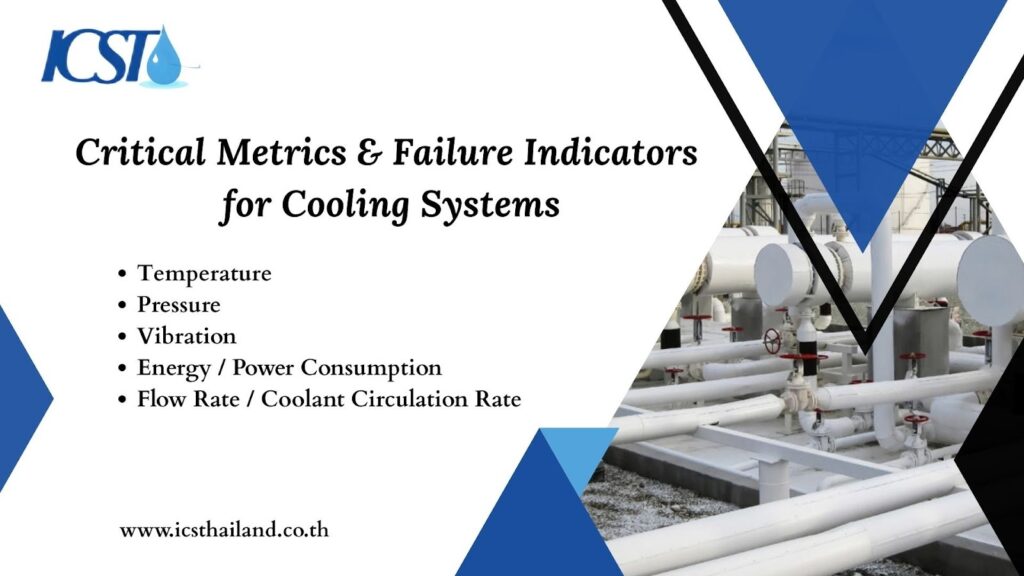
Tracking the right metrics is essential for effective failure forecasting. For cooling systems, this means monitoring a combination of operational parameters to spot anomalies before they lead to breakdowns.
By establishing a baseline of normal performance, even slight deviations in key sensor data can act as early warning signs. What do these deviations in key sensor parameters indicate?
- Temperature: A growing difference between inlet and outlet temperatures can signal heat-exchanger inefficiency, scaling, or coolant issues.
- Pressure: Spikes or drops in pressure often point to blockages, leaks, or problems with coolant flow.
- Vibration: Increased vibration levels are a classic indicator of fan imbalance, misalignment, or bearing wear, especially in cooling towers.
- Energy / Power Consumption: A gradual or sudden rise in power draw can indicate compressor inefficiency, motor strain, or a component working harder to compensate for a problem.
- Flow Rate / Coolant Circulation Rate: A decrease in flow rate suggests pump issues, blockages in the system, or degraded circulation efficiency.
By carefully monitoring these indicators, maintenance teams can accurately forecast failures and extend component lifespan through timely, data-driven interventions.
Step-by-Step Implementation Plan: How to Deploy Predictive Analytics for Cooling Maintenance
Ready to transition from reactive to predictive maintenance? Implementing a predictive analytics program for your cooling systems doesn’t have to be complicated. Below is a practical, step-by-step guide to help facilities deploy a data-driven maintenance strategy.
- Step 1: Audit Existing Cooling Infrastructure & Maintenance History: Review your current systems, critical components, and past maintenance logs to identify recurring issues.
- Step 2: Install IoT Sensors on Critical Components: Equip key assets like compressors, pumps, fans, and motors with sensors to monitor temperature, vibration, pressure, and power usage.
- Step 3: Collect Baseline Data for 4–6 Weeks: Run the system under normal operating conditions to gather enough data to establish a reliable performance baseline.
- Step 4: Choose Analytics / ML Platform or Build Custom Model: Select a suitable platform that offers models for anomaly detection, decision-tree analysis, or RUL forecasting.
- Step 5: Define Thresholds, Alert Rules, Maintenance Triggers: Set specific parameters that, when breached, will automatically trigger a maintenance alert.
- Step 6: Integrate Alerting System & Maintenance Scheduling Mechanism: Connect the analytics platform to your CMMS or scheduling software to automate work order generation.
- Step 7: Train Maintenance Team on Interpreting Data & Acting on Alerts: Equip your staff with the skills to understand the data and respond effectively to predictive alerts.
- Step 8: Monitor, Log Interventions, Feed Outcomes Back: Close the feedback loop by continuously logging maintenance actions and their results to refine the model’s accuracy.
Cost vs. Benefit Analysis: What You Gain vs. What You Invest
While implementing a predictive analytics program requires an upfront investment, the long-term benefits often justify the initial spending.
Initial Investment:
- Costs: This includes expenses for sensors, data infrastructure, analytics software/platforms, and team training.
- Benefits: Gains include better decision-making, increased efficiency, and a higher ROI.
Ongoing Expenses vs. Long-Term Gains:
- Costs: Expect recurring fees for data storage, sensor maintenance, and software subscriptions or in-house data science support.
- Benefits: You’ll see quantifiable advantages like reduced downtime, lower emergency repair bills, significant energy savings, extended equipment life, and fewer costly emergency call-outs.
By weighing these factors, you can determine if predictive analytics is the right strategic move for your business.
The return on investment (ROI) timeline can be surprisingly short. Many organizations report a payback period of less than two years, with savings accumulating significantly thereafter.
Common Challenges & How to Overcome Them
Transitioning to predictive analytics comes with its challenges. From data accuracy to implementation hurdles, obstacles can arise. Learn how to overcome them effectively.
- High Upfront Investment: Justify the cost by starting with a pilot project on the most critical systems to demonstrate clear ROI before scaling.
- Data Quality Issues: Overcome this by ensuring proper sensor calibration and using proven machine learning models that can filter out false positives.
- Complexity of Building Reliable ML Models: Partner with a vendor that has domain expertise or use a proven analytics platform rather than trying to build a model from scratch without the necessary skills.
- Change Management: Address resistance from staff by providing thorough training, demonstrating the benefits of the new system, and building a culture that values data-driven decisions.
- Ongoing Data Governance: Establish clear protocols for systematic data logging and governance to ensure the integrity and long-term value of your data.
Conclusion
The evidence is clear: predictive analytics for cooling maintenance is no longer an optional upgrade but an essential strategy for any modern industrial facility. By moving beyond costly reactive and preventive maintenance, you can harness real-time sensor data and AI to forecast equipment failures before they occur.
This predictive analytics cooling maintenance approach delivers significant benefits, including reduced downtime, cost savings, improved energy efficiency, and extended equipment lifespan.
To embrace this transformative strategy, all you need are the right sensors, a reliable analytics platform, and well-defined processes for your maintenance team. Shifting from a reactive or calendar-based approach to a data-driven one allows you to achieve unprecedented levels of reliability and cost control.
Ready to position your organization for a more predictable and profitable future? Visit the ICS Thailand to learn how our solutions can help you embrace a data-driven maintenance strategy.
Frequently Asked Questions
What types of cooling systems are suitable for predictive analytics
Predictive analytics is suitable for nearly any critical cooling system, including industrial chillers, large-scale cooling towers, and commercial HVAC plants. Any system where downtime is costly and components can be monitored with sensors, is an ideal candidate.
How long before I see ROI when switching to predictive maintenance?
The ROI timeline varies depending on the initial investment, the criticality of the equipment, and the previous frequency of failures. However, many organizations report a payback period between 12 and 24 months due to significant savings in downtime, repairs, and energy costs.
What sensors are essential vs optional?
Essential sensors typically include those for temperature, pressure, vibration, and power consumption on critical components like compressors and motors. Optional sensors might include those for humidity, refrigerant levels, or water quality, which can provide additional context for more advanced analytics.
Can predictive analytics predict any type of failure?
Predictive analytics is highly effective at predicting failures that are preceded by detectable changes in operational data, such as those caused by mechanical wear or degradation. It is less effective at predicting sudden, random failures caused by external events or hidden defects that do not produce a data signature.