Is your facility outgrowing its current cooling infrastructure? Many engineers face the same hurdle: expanding capacity without costly downtime or starting from scratch. When production ramps up, a static cooling approach leads to bottlenecks and reliability issues.
The solution is a scalable cooling system design. By prioritizing modularity and future-proofing, you can transform cooling from a fixed utility into a flexible asset that grows with your business.
In this blog, we will explore how to build a dynamic thermal management system, covering modular expansion strategies, capacity planning, and flexible controls to ensure long-term operational success.
What Is a Scalable Cooling System Design?
Scalable cooling system design refers to an engineering methodology that anticipates future load increases and integrates the ability to expand capacity seamlessly. Unlike conventional designs that size equipment for a fixed maximum load, scalable systems utilize flexible frameworks. This allows operators to add cooling power incrementally without disrupting existing operations.
This design philosophy is built on three core attributes:
- Modularity: Utilizing standardized components that can be added or replaced easily.
- Flexibility: Allowing the system to adapt to changing thermal loads and floor plans.
- Extensibility: Using pre-planned integration points to expand capacity without disrupting existing operations.
Understanding Growth Drivers in Industrial Operations
Several key business factors drive the need for expandable infrastructure. As businesses grow, so do their technology requirements, increasing the demand for servers, storage, and other heat-generating equipment.
This natural expansion leads to higher energy consumption and heat loads, making a Scalable Cooling System Design essential for maintaining operational stability and supporting future growth.
- Increased Production: Higher throughput on existing lines generates additional heat that baseline systems cannot manage.
- New Product Lines: The introduction of new manufacturing processes often introduces unique thermal load profiles.
- Expanded Facilities: Physical plant expansions require extended piping loops and additional centralized cooling power.
- Regulatory Targets: Stricter energy efficiency mandates often require upgrading to modern, variable-capacity equipment.
Reactive upgrades frequently fail because they rely on hasty, patchwork solutions. These “band-aid” fixes often result in hydraulic imbalances and control conflicts. A proactive approach anticipates these drivers before they impact production.
Core Principles of Scalable Cooling Design
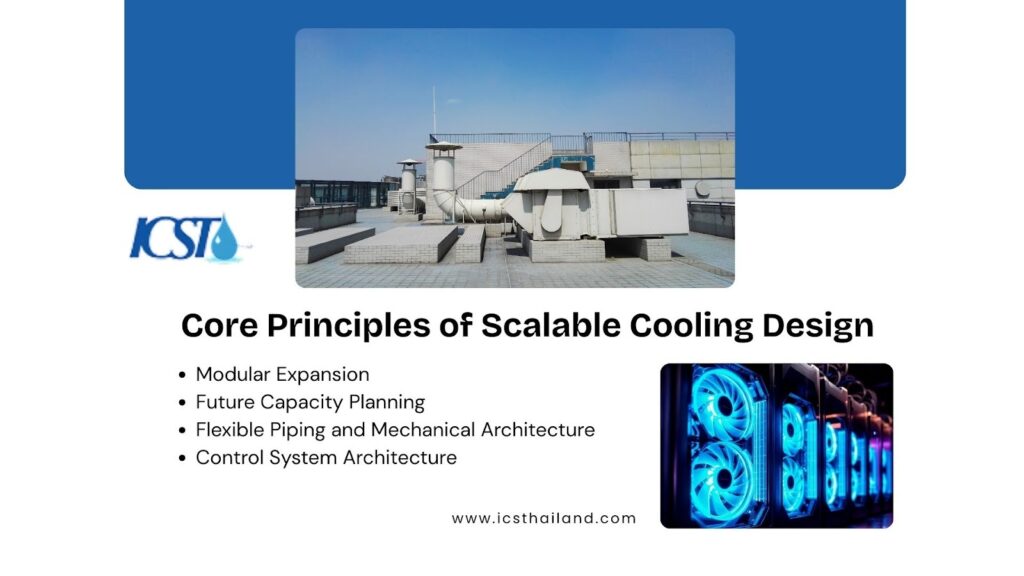
Successful scalability relies on specific engineering principles that govern how systems integrate and expand. With a focus on scalable cooling system design, prioritizing modularity and future-proofing ensures your cooling infrastructure can grow seamlessly alongside your production demands.
The following sections will break down the essential strategies for maintaining hydraulic balance and thermal efficiency during expansion. Use these core principles as a roadmap to transition from reactive patchwork to a resilient, high-performance cooling strategy.
Modular Expansion
Modular expansion serves as the cornerstone of scalable infrastructure. Instead of installing a single massive chiller that operates inefficiently at partial load, engineers utilize smaller, parallel units. This allows the facility to bring additional capacity online only when the load requires it.
Here are the benefits of adopting a modular approach:
- Reduces risk: With a modular approach, if one unit needs maintenance, the others can continue to support the load, significantly reducing the risk of a total system failure.
- Simplifies spending: It allows you to align equipment purchases with actual demand instead of relying on speculative forecasts, making capital expenditure more manageable.
Future Capacity Planning
Engineers must look beyond current requirements to ensure long-term viability. How does a design team accurately predict the needs of a facility five or ten years from now? It starts with understanding future trends, collaborating closely with stakeholders, and building flexibility into designs.
- Predictive Load Profiling: Analysts model potential growth scenarios to determine necessary “headroom” in the initial design.
- Allowable Headroom: Designers size main headers and infrastructure to handle maximum future capacity flows, not just current flows.
- Redundancy Tolerance: The system architecture includes specific allowances for N+1 redundancy even after full expansion occurs.
Flexible Piping and Mechanical Architecture
The physical piping network often presents the hardest barrier to expansion. Does the layout permit easy additions without requiring a complete plant shutdown? To ensure long-term scalability, engineers must prioritize modular layouts and accessible tie-in points during the initial build.
- Extension-Ready Layouts: Flexible piping designs leave physical space and connection points for future equipment.
- Hoop Stress Allowances: Pipes are specified to handle the pressure and flow rates of the fully expanded system.
- Valve Configurations: Isolation valves are strategically placed to allow new equipment tie-ins while the rest of the system remains live.
Control System Architecture
Hardware is useless without a control system that can recognize and manage it. A scalable control system architecture adapts to new inputs without requiring a complete software rewrite.
- Hierarchical Logic: The use of PLC or SCADA systems that support distributed control allows for easy integration of new nodes.
- Expandable I/O: Control panels include spare Input/Output slots and wiring terminals for future sensors.
- Interoperable Protocols: Adopting open communication standards like MQTT or OPC UA ensures that new hardware from different vendors can communicate seamlessly with existing infrastructure.
- Remote Monitoring and Diagnostics: Scalable systems utilize cloud-integrated platforms to manage increasing data loads and provide performance insights as the facility grows.
Phased Investment Strategies
Securing funding for a fully built-out system at the start of a project is rarely feasible. Organizations often face the challenge of balancing limited budgets with ambitious long-term growth goals.
One effective approach is to start small by focusing on critical needs and implementing scalable solutions that can grow over time.
- Budgeting for Staged Expansions: Allocate funds for the “skeleton” infrastructure initially, while deferring the cost of “muscle” (chillers/towers) until needed.
- ROI Analysis: Demonstrate how phased investment prevents capital from being tied up in underutilized assets.
- Hedging Risks: This strategy protects the company from overinvestment if projected growth targets do not materialize immediately.
| Phase | Typical Scope | Cost Category | Benefit |
| Initial | Base capacity | Lower upfront cost | Fast deployment |
| Mid Expansion | Additional chillers/towers | Medium | Match growth needs |
| Full Scale | Redundant systems + controls | Higher | Maximum reliability |
Design Strategies for Expandable Piping Systems
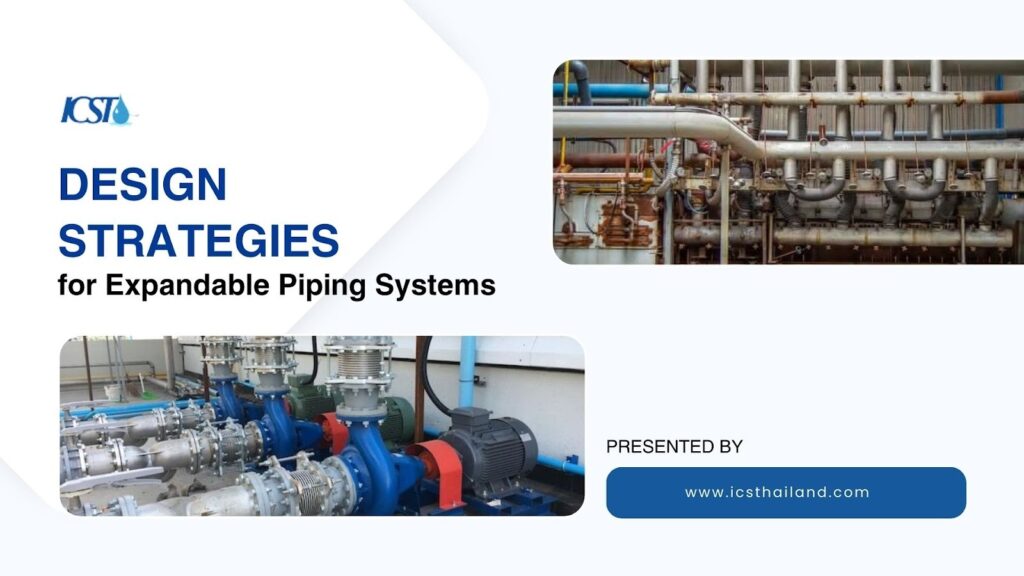
The mechanical backbone of any cooling system requires careful detailing to support growth. What specific design choices prevent the piping network from becoming a bottleneck?
- Headers and Manifolds: Designers utilize oversized supply and return headers with capped flanges for future connections.
- Quick-Connect Points: The integration of pre-valved connection points enables rapid deployment of rental cooling or permanent additions.
- Dynamic Load Handling: Flexible piping arrangements account for thermal expansion and hydraulic shock that may occur under different load scenarios.
- Retrofit Avoidance: Proper planning eliminates the need for hot-tapping or draining the system to add capacity later.
Control System Architecture for Scalability
Controls engineering must parallel mechanical engineering in its flexibility.
Distributed vs Centralized Control
Centralized systems often become sluggish or obsolete as complexity grows. A control system architecture that utilizes distributed processing power allows each module to manage its own operation while reporting to a central supervisor. This reduces the processing burden on the main CPU and simplifies troubleshooting.
Sensor & I/O Planning
A common oversight involves failing to run necessary conduit and wire pathways during initial construction. Engineers should specify wiring standards that mandate spare capacity in cable trays and control panels. This ensures that future sensors integrate seamlessly into the existing data network.
Expandable Logic and Analytics Modules
Modern SCADA systems allow for modular programming. By using object-oriented programming standards, engineers can simply “instantiate” a new chiller or pump in the software code rather than writing new logic from scratch. This drastically reduces commissioning time for new equipment.
Modular Equipment Selection
Selecting the right hardware is essential for a scalable cooling system design. Does the equipment manufacturer offer units designed to work in tandem? When evaluating vendors, prioritize those with documented plug-and-play compatibility and standardized communication protocols to ensure your cooling system can scale effectively.
This ensures that adding a second or third unit later won’t require a total system overhaul or custom integration work. Look for “frame-ready” options that allow for rapid mechanical and electrical expansion as your facility’s load grows.
- Chillers: Units with capacity staging or magnetic bearing compressors offer excellent part-load efficiency suitable for modular expansion.
- Cooling Towers: Cell-by-cell designs allow facility managers to add distinct cooling tower cells as heat rejection needs rise.
- Pumps: Variable Frequency Drives (VFDs) enable pumps to adjust flow rates dynamically, accommodating a wide range of system pressures.
| Component | Scalable Option | Advantage |
| Chillers | Staged capacity units | Incremental growth |
| Cooling Towers | Cell-by-cell design | Downtime reduction |
| Pumps | VFD + bypass | Dynamic flow flexibility |
| Controls | Modular PLC | Easy software scaling |
Metrics & KPIs for Scalable Design
Data drives successful capacity planning by providing a clear roadmap for infrastructure growth. Engineers utilize specific key performance indicators to monitor system strain and determine exactly when to trigger the next phase of capital investment.
- Capacity Margin: Tracking the percentage of available cooling capacity versus peak load indicates when the system approaches its limit.
- Redundancy Coverage: Monitoring whether the system maintains N+1 safety margins ensures reliability does not degrade as load increases.
- Future Peak Load Headroom: Engineers calculate future capacity requirements based on trending data to forecast expansion dates.
- ROI vs. Downtime: Comparing the cost of expansion against the potential revenue loss from overheating events validates the investment.
Common Pitfalls and How to Avoid Them
Understanding the most common errors in Scalable Cooling System Design is the first step toward avoiding them. By recognizing these potential pitfalls early on, engineers can build more robust, future-proof systems that expand seamlessly as demand grows.
Here are some of the frequent mistakes that can derail a project, and discuss how to steer clear of them.
- Overbuilding Too Early: Installing full capacity immediately ties up capital and leads to efficiency losses from equipment short-cycling.
- Ignoring Control Upgrades: Expanding mechanical systems without updating the control logic leads to inefficient, disjointed operation.
- Piping Bottlenecks: Failing to oversize the main headers prevents adequate flow to new equipment.
- Non-Modular Choices: selecting proprietary equipment that does not integrate well with other brands limits future options.
Conclusion
Scalable cooling system design turns industrial thermal management into a dynamic asset. By embracing modularity and planning for future expansion, businesses can grow without costly disruptions.
This avoids common pitfalls like overbuilding too early, using non-modular equipment, creating piping bottlenecks, or neglecting control system upgrades. A scalable approach ensures your infrastructure can support your business objectives at every stage. It allows for phased investments, maintaining high reliability and optimal efficiency throughout your growth journey.
Ready to design a cooling system that grows with you? Explore customized, scalable solutions at the Industrial Cooling Solutions Thailand (ICST) website and future-proof your operations today.
Frequently Asked Question
Why is scalability important in industrial cooling systems?
Industrial operations rarely stay at the same load. Scalable systems prevent downtime, reduce capital risk, and support long-term growth without major disruptions.
How does modular cooling support future expansion?
Modular systems use parallel chillers, pumps, or cooling tower cells. This lets facilities add capacity only when needed while maintaining efficiency and reliability.
What equipment is best suited for scalable cooling systems?
Staged-capacity chillers, cell-based cooling towers, and VFD-driven pumps work best. These components adapt easily to changing loads.
How do scalable designs reduce capital expenditure risk?
They enable phased investments instead of large upfront spending. Facilities only purchase additional equipment when growth actually occurs.
Is scalable cooling suitable for all industrial facilities?
Yes, especially facilities expecting production growth, technology upgrades, or regulatory changes. It offers flexibility across industries and plant sizes.