Why Tropical Cooling Towers Face Year-Round Stress
Cooling towers in tropical regions do not get long cool seasons or dry air. They run under heat, moisture, rain, and sunlight for most of the year. This changes how engineers must plan thermal performance, materials, and maintenance.
The pressures on a tropical tower stack up fast. Understanding them helps plant teams make better design and procurement choices. The most important factors include:
- Constant heat load: Tropical towers face year-round heat rejection demand with little seasonal relief.
- High humidity limits: Moist air absorbs less water vapor, which lowers evaporative cooling efficiency.
- Wet-bulb priority: Tropical wet bulb temperature controls performance more than dry-bulb temperature.
- Active biology: Warm water and moisture encourage biological growth all year.
- Monsoon disruption: Heavy rain adds debris, dilution, overflow, and treatment instability.
What Makes Tropical Climate Cooling Tower Design Different?
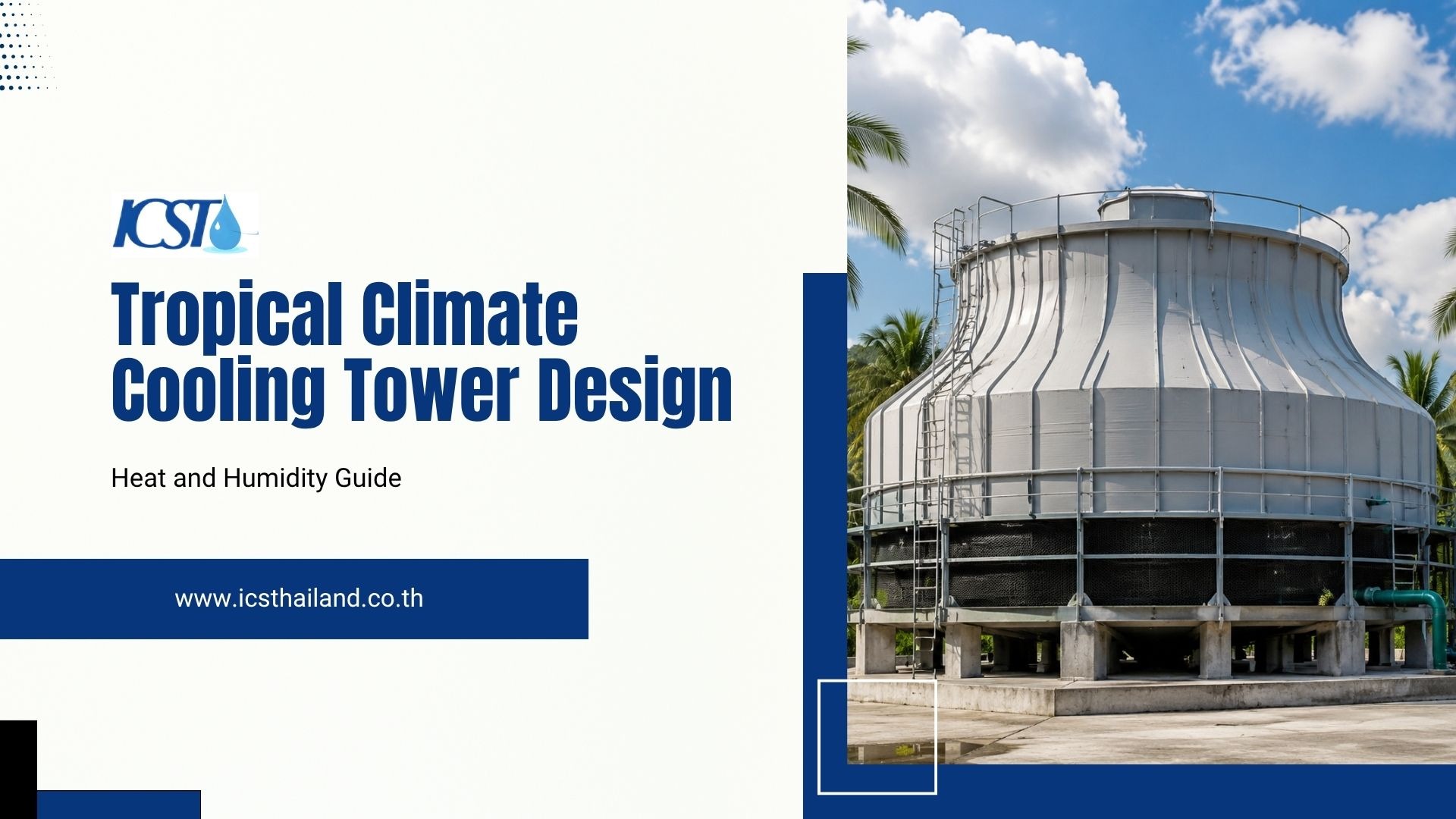
Tropical climate cooling tower design means designing cooling towers for hot, humid, wet, biologically active, and UV-exposed conditions. These towers must handle high wet-bulb temperatures, warm recirculating water, heavy rainfall, year-round microbial risk, and accelerated material aging.
Why Standard Cooling Tower Design May Fall Short
A generic design uses climate data that may not match a tropical site. Small errors in those assumptions create large problems over time. Plant teams pay for this through poor cooling and higher maintenance costs.
Before approving any standard design, check how well it fits local conditions. The common weak points include:
- Wrong climate data: Generic design may use temperate wet-bulb values that overstate cooling capacity.
- Reduced evaporation: High humidity cuts evaporation potential, so cooling margin shrinks.
- Faster fouling: Warm water increases biological activity and speeds up fill fouling.
- Basin overload: Rain and airborne debris can overload basins and strainers.
- Material failure: Low-grade plastics or coatings crack and fade faster under strong sun.
- Poor access: Tight layouts make frequent tropical maintenance harder and slower.
Why Thailand Needs Tropical Design Thinking
Plants in the region need stable performance to protect production and equipment, making a robust tropical climate cooling tower design essential. A weak or unsuitable design puts both output and machinery at risk.
Local conditions raise the stakes for site planners. The factors that matter most include:
- Long hot seasons: Bangkok and surrounding provinces stay warm and humid for most months.
- Stable cooling demand: Plants in Rayong and Chonburi need reliable cooling for continuous operation.
- Corrosion exposure: Coastal and chemical sites face higher corrosion risk from salt and process chemicals.
- Monsoon swings: Heavy rain seasons change water quality and add debris.
- EEC growth: Eastern Economic Corridor facilities need dependable thermal performance to support expansion.
Tropical Wet Bulb: The First Design Constraint
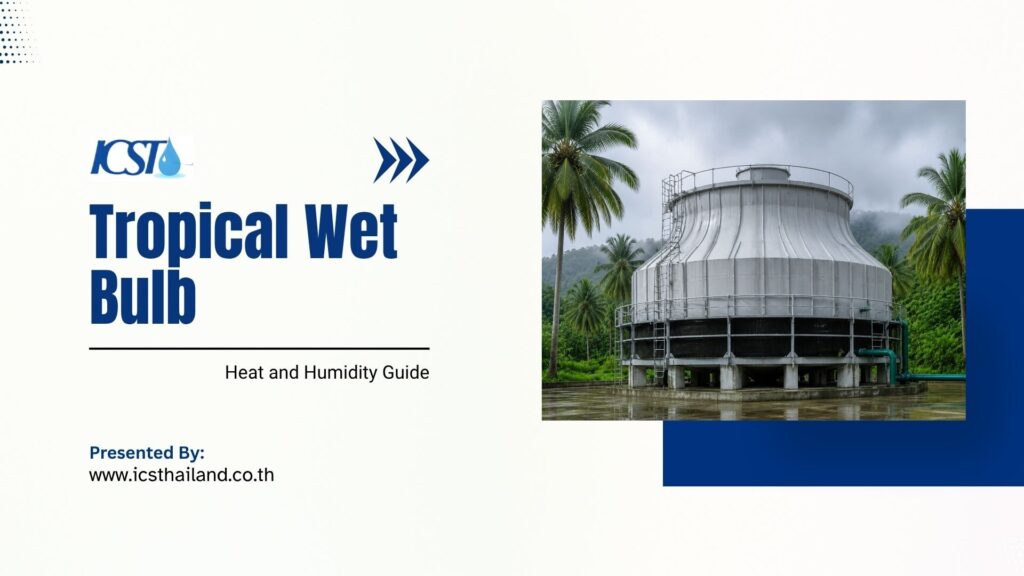
Tropical wet bulb is one of the most important design inputs for a cooling tower. A cooling tower cools water toward the wet-bulb temperature, not the dry-bulb temperature.
Wet-bulb temperature combines heat and humidity. In tropical climates, the wet bulb can stay high because the air already holds a lot of moisture. That limits how much additional evaporation can occur.
A DOE technical document defines cooling tower approach as the difference between the condenser water leaving temperature and the ambient wet-bulb temperature. This matters because a higher wet bulb raises the realistic cold-water temperature target.
High Humidity Design: Airflow, Fill, and Tower Sizing
High humidity design matters because moist air absorbs less extra water vapor. This makes airflow, fill selection, tower height, fan power, and water distribution far more important.
A tower that ignores humidity often runs hot even when the equipment looks healthy. Good sizing keeps performance stable across wet and dry seasons. The main design factors deserve close review.
Key Design Factors
Each part of the tower affects how well it sheds heat in humid air. Weak choices in one area can drag down the whole system. The factors that drive tropical performance include:
- Airflow rate: Enough air movement keeps heat transfer steady in moist conditions.
- Fill media type: The right fill balances efficiency against fouling risk.
- Water loading: Correct loading prevents dry spots and uneven cooling.
- Fan and motor sizing: Proper fan power supports cooling under humid loads.
- Drift eliminators: Good eliminators control droplet loss without excess pressure drop.
- Nozzle spray pattern: Even spray keeps the fill wet and working.
- Cell count and spacing: Enough cells and clearance reduce recirculation risk.
Design Risks in High-Humidity Regions
Humidity exposes weak design choices quickly. These risks often appear together and compound each other. Watch for the following problems:
- Poor airflow: Weak air movement raises the cold water temperature.
- Overloaded fill: Too much water on the fill cuts heat transfer.
- Hot air recirculation: Re-entering discharge air lowers tower capacity.
- Heavy plume: High humidity increases visible plume around the tower.
- Faster fouling: Warm, wet conditions foul fill quickly and reduce performance.
Biological Growth in Tropical Cooling Towers

Warm water, nutrients, sunlight, and moisture support algae, bacteria, slime, and biofilm. This biological growth lowers heat transfer and raises health and compliance risks. In tropical plants, the problem rarely slows down.
According to the CDC, sediment and biofilm are key Legionella growth factors in cooling towers, along with temperature, water age, and disinfectant residual. Tropical conditions make all of these factors worse.
Common Biological Problems
Biological problems start small and spread fast in warm water. Catching them early protects both performance and safety. The most common issues include:
- Algae and slime: Sunlight and warmth feed algae and slime on wet surfaces.
- Biofilm layers: Bacteria form biofilm that coats heat-transfer surfaces.
- Legionella risk: Warm, stagnant water raises Legionella health risk.
- Basin sediment: Settled debris creates low-flow zones that shelter bacteria.
- Clogged nozzles: Slime and debris block nozzles and reduce even spray.
- Fouled fill: Microbial buildup chokes fill passages and cuts cooling.
How Biological Growth Hurts Performance
Fouling does more than create maintenance work; it directly attacks cooling capacity and raises energy use, a critical concern for tropical climate cooling tower design. The chain of damage works like this:
- Surface coating: Biofilm coats heat-transfer surfaces and blocks heat flow.
- Reduced contact: Fouled fill lowers air-to-water contact.
- Flow blockage: Slime clogs nozzles and strainers.
- Dead zones: Basin sediment creates stagnant, low-flow areas.
- Higher approach: Biological fouling pushes the approach temperature up.
- More energy: Fans must work harder to hold the same cooling level.
Year-Round Biocide and Water Treatment Strategy
In tropical climates, biological control is not a short seasonal task. Warm, humid conditions support microbial activity throughout the year. A strong year-round biocide program keeps growth in check.
A full treatment plan blends chemistry, monitoring, and mechanical cleaning. The core elements include:
- Continuous dosing: Use a scheduled or continuous biocide program, not a seasonal one.
- Mixed biocides: Rotate oxidizing and non-oxidizing biocides to prevent resistance.
- Automated control: Use automated dosing for steady chemical levels.
- Residual checks: Monitor disinfectant residual and adjust as needed.
- Water balance: Control pH, conductivity, and blowdown to protect the system.
- Filtration and cleaning: Add side-stream filtration and routine basin cleaning.
UV Degradation and Tropical Material Selection
A key consideration in tropical climate cooling tower design is the intense sunlight, which speeds up aging in exposed plastics, coatings, FRP parts, louvers, fan stacks, and fill media.
UV degradation can turn flexible parts brittle and weaken structural panels. Material selection must plan for long-term solar exposure.
Components at Risk
Many exposed parts sit in direct sun for years. Knowing which parts fail first guides better material specs and inspection plans. The components most at risk include:
- FRP panels and fan stacks: Surfaces chalk and crack under constant sun.
- Louvers and fill media: Plastic parts grow brittle and break.
- Drift eliminators: Thin plastic warps or cracks over time.
- Coatings and sealants: Protective layers fade and lose strength.
- Exposed fasteners: Sun and weather speed corrosion on hardware.
Design and Material Protection
The right materials and habits extend service life in tropical sun. These choices reduce repairs and unplanned downtime. Focus on the following protections:
- UV-stabilized plastics: Specify plastics rated for high solar exposure.
- Quality FRP resins: Choose resin systems and gelcoats built for outdoor service.
- Corrosion-resistant fasteners: Use hardware suited to humid, coastal, or chemical sites.
- Protective coatings: Apply chemical-resistant coatings where needed.
- Routine inspection: Check for cracking, chalking, fading, and brittleness on a set schedule.
Tropical Design Challenges and Engineering Responses
A clear understanding of risks and engineering responses is key to successful tropical climate cooling tower design. Use the table below as a quick reference during design reviews to link each challenge to its impact and the best solution.
| Tropical Challenge | Design Risk | Cooling Tower Impact | Best Design Response | Expert Recommendation |
| High wet-bulb temperature | Lower evaporation margin | Higher cold water temperature | Use realistic local wet-bulb data | Avoid undersized tower selection |
| High humidity | Reduced air moisture capacity | Larger tower or airflow demand | Optimize fill, airflow, and fan sizing | Check approach temperature carefully |
| Biological growth | Biofilm, slime, algae, Legionella risk | Fouled fill and poor heat transfer | Year-round water treatment | Combine biocide with cleaning |
| UV exposure | Plastic and FRP aging | Brittle louvers, fill, fan stacks | Use UV-resistant materials | Inspect exposed components regularly |
| Monsoon rain | Debris and water-quality swings | Basin contamination and treatment dilution | Improve filtration and basin access | Increase inspection during rainy season |
| Coastal or chemical exposure | Corrosion risk | Shorter component life | Use suitable materials and coatings | Match materials to site chemistry |
Monsoon Rain, Debris, and Water Quality Changes
Tropical climates bring heavy seasonal rainfall. Rain can dilute treatment chemistry, add debris, overload drains, and shift basin water quality. These changes test even a well-built tower.
Plant teams should plan for rainy-season stress before it arrives. The main effects to manage include:
- Chemical dilution: Heavy rain waters down treatment chemistry.
- Debris load: Leaves, dust, and airborne dirt enter the basin.
- Overflow risk: Rising water can overflow the basin.
- Strainer blockage: Debris clogs strainers and screens.
- Conductivity swings: Rain changes conductivity and forces feed adjustments.
- More cleaning: Wet seasons demand more frequent cleaning.
Air Recirculation and Plume Issues in Humid Weather
Hot, moist discharge air can flow back into the tower when layout, wind, nearby structures, or weak fan discharge allow it. This recirculation steals capacity. Humid air also makes plume more visible.
Recirculation often hides as a mystery performance loss. The tower looks fine, yet it cannot hit its targets. The factors to review include:
- Hot air recirculation: Re-entering discharge air raises the entering wet-bulb.
- Short-circuiting air: Poor layout lets discharge air loop back fast.
- Nearby structures: Walls and buildings trap and redirect hot air.
- Low discharge velocity: Weak fan discharge fails to push air clear.
- Tight spacing: Towers placed too close interfere with each other.
- Visible plume: Humid air makes plume more noticeable near the site.
How ICST Can Support Tropical Cooling Tower Projects
ICST can support tropical cooling tower projects by helping facilities review design assumptions, inspect existing tower conditions, select suitable parts, and plan maintenance for Thailand and regional operating conditions.
ICST support can include:
- Cooling tower design review
- New cooling tower construction
- Cooling tower maintenance
- Thermal performance evaluation
- Fill media selection
- Fan, motor, gearbox, and nozzle support
- Water distribution review
- Cooling tower replacement
- Thermal upgrades
- Disaster recovery
This support helps industrial facilities reduce performance loss, unplanned downtime, and weather-related operating risk.
Summary
Tropical climate cooling tower design must account for heat, humidity, wet-bulb temperature, rain, sunlight, and biological activity. Tropical wet bulb affects cold-water temperature, approach, airflow, and tower sizing.
High-humidity design needs careful airflow, fill, approach, and recirculation planning. Biological growth can increase fouling, health risk, chemical demand, and maintenance cost. Year-round biocide control and mechanical cleaning matter in warm climates. UV degradation makes material selection and routine inspection critical.
Frequently Asked Questions
What is tropical climate cooling tower design?
Tropical climate cooling tower design means designing cooling towers for hot, humid, rainy, biologically active, and UV-exposed environments. It uses realistic wet-bulb data, proper airflow, suitable fill, corrosion-resistant materials, water treatment, and strong maintenance access. This design approach helps towers perform reliably in Thailand and other humid industrial regions.
Why does tropical wet bulb matter in cooling tower design?
Tropical wet bulb matters because cooling towers cool water toward wet-bulb temperature, not dry-bulb temperature. High tropical wet-bulb reduces the cooling margin and makes approach temperature harder to achieve. It affects tower sizing, fan power, fill area, airflow, and whether the tower can meet the required cold-water temperature.
How does biological growth affect cooling towers in tropical climates?
Biological growth can create algae, biofilm, slime, and Legionella risk in warm cooling tower water. It can foul fill media, clog nozzles, increase basin sediment, reduce heat transfer, and raise maintenance demand. If operators ignore it, the tower may need more fan energy while still delivering weaker cooling performance.
Why do tropical cooling towers need year-round biocide?
Tropical cooling towers need year-round biocide because warm water and humid conditions can support microbial activity throughout the year. Biocide should work with basin cleaning, filtration, residual monitoring, pH control, conductivity control, and water testing. Chemical treatment alone cannot control heavy sludge, debris, or protected biofilm.
How does UV degradation affect cooling tower materials?
UV degradation can damage exposed FRP, plastic fill, louvers, drift eliminators, coatings, fan stacks, and sealants. Strong sunlight can cause cracking, chalking, fading, brittleness, and surface wear. Tropical designs should use UV-resistant materials, suitable resin systems, protective coatings, and regular inspection of exposed components.