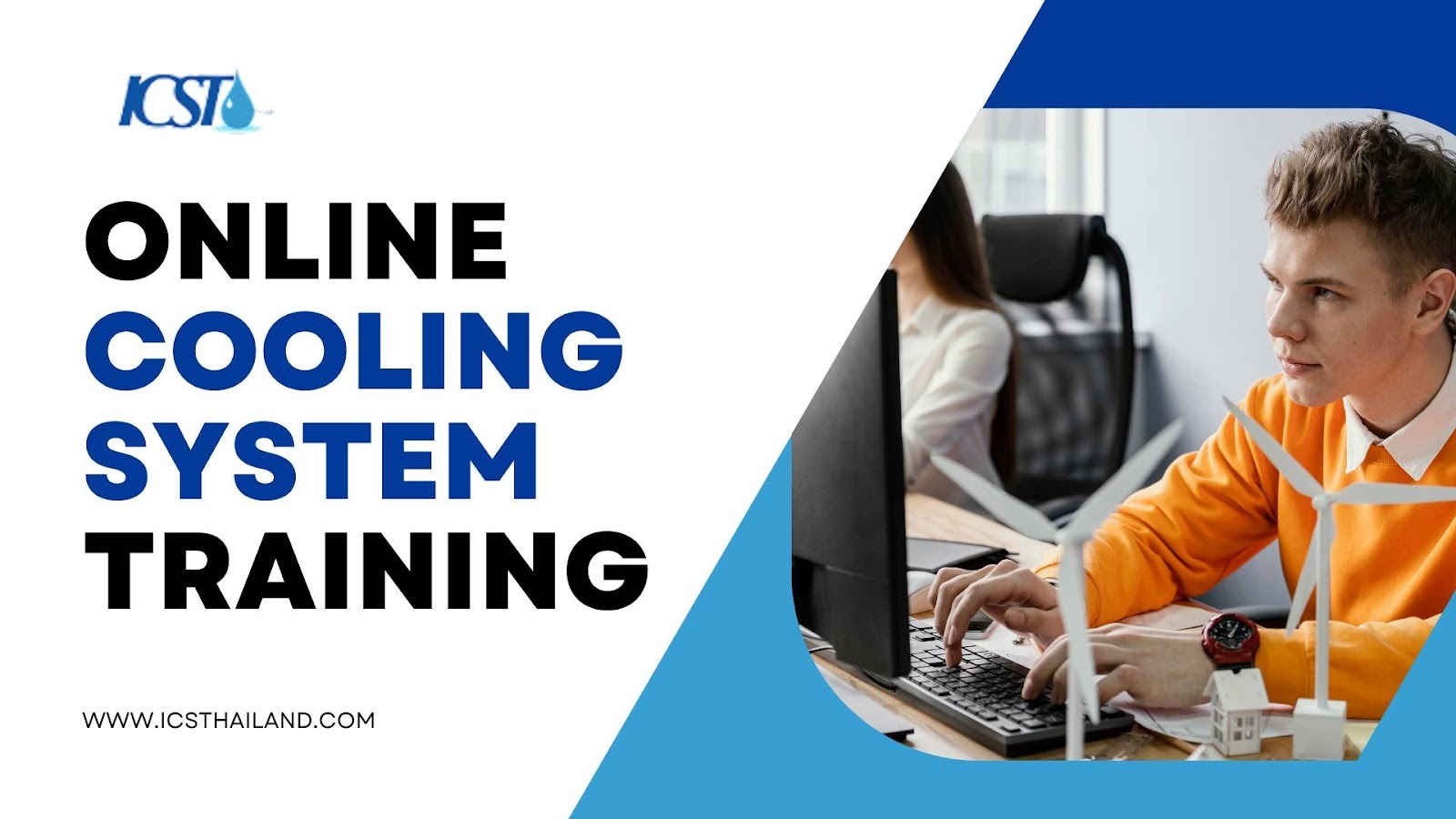
In 2026, efficient cooling systems are not just a matter of comfort; they are critical for industrial uptime, energy efficiency, and complying with global Environmental, Social, and Governance (ESG) goals. Modern facilities must streamline cooling and air conditioning systems to remain competitive, reduce costs, and meet environmental standards.
International Cooling Solutions (Thailand) delivers world-class online cooling system training, engineered to provide technically and financially feasible solutions for commercial buildings throughout Asia and the Middle East.
If you seek mastery in industrial cooling, HVAC systems, and sustainable cooling technologies, you need comprehensive, actionable knowledge. This guide will show you how online courses in cooling systems and HVAC fundamentals provide the skills required for optimal system components operation, troubleshooting, and maintenance, all with practical, real-world applications.
Why Invest in an Industrial Cooling System Course?
Technicians may have working knowledge of basic air conditioning systems. However, advancing to large-scale, energy-efficient commercial HVAC systems and chilled water systems takes much more expertise.
- Bridge the Skill Gap: Move from entry-level HVAC technician training to industrial system optimization. Learn about basic components, the refrigeration cycle, and variable refrigerant flow systems.
- Achieve Financial Impact: Training programs focus on reducing low pumphead resistance, which dramatically decreases electricity bills and operating costs in industrial chilled water systems and cooling towers.
- Ensure Safety & Compliance: Online cooling system training helps your team meet ASHRAE, Environmental Protection Agency, and local regulatory standards, including Legionella prevention protocols. This ensures compliance in ventilation systems and indoor air quality management.
Core Modules: From Thermodynamics to Advanced Operations
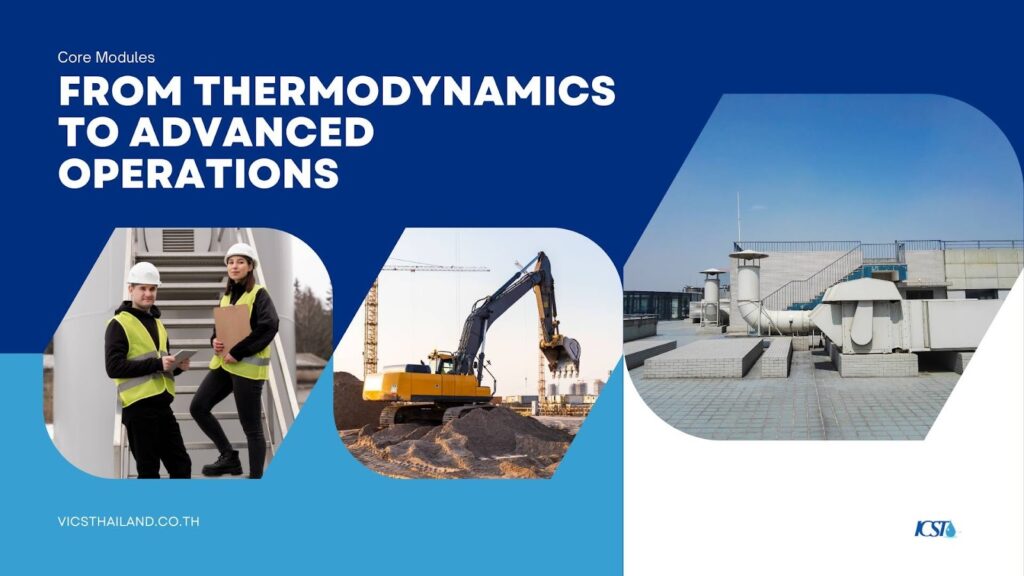
A robust training program for HVAC industry professionals builds from foundational concepts to advanced, specialized applications.
1. HVAC Fundamentals and Refrigeration Training
Understanding heat transfer, basic components, and system efficiency forms the core of effective training. This module includes:
- Essential principles of thermodynamics
- The complete refrigeration cycle
- The function and operation of evaporators, compressors, and condensers
These skills are vital for all HVAC tech and service technician roles.
2. Cooling Tower Operation Training
- Perform detailed comparison of open-circuit and closed-circuit cooling towers.
- Manage heat exchangers for optimal system efficiency and equipment longevity.
- Apply free cooling and hybrid cooling technologies to reduce overall energy consumption.
3. Chiller System Management
- Identify and deploy centrifugal, screw, and scroll chillers for the right industrial applications.
- Optimize the operation of primary and secondary pumping loops in chilled water systems to maximize energy efficiency.
Specialized Training for Extreme Environments (The ICST Edge)
Conventional solutions often fail in harsh or unique environments. Specialized training offers a competitive edge in the international HVAC market:
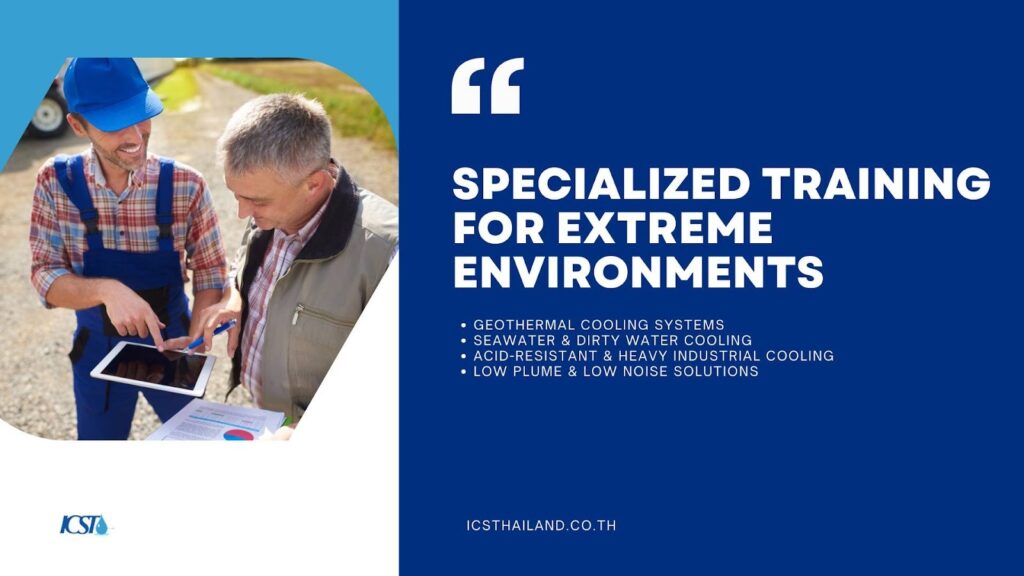
- Geothermal Cooling Systems: Handle mineral scaling and thermal load challenges found in geothermal heat pumps.
- Seawater and Contaminated Water Cooling: Choose appropriate system materials, like titanium or stainless steel, to prevent corrosion and maintain dependable performance in fluctuating water quality conditions.
- Acid-Resistant and Industrial Cooling Solutions: Develop durable air conditioning systems tailored for chemical and power generation industries, capable of enduring harsh operational environments and corrosive processes.
- Low Plume & Low Noise Solutions: Implement innovative solutions in densely populated or sensitive locations without compromising on performance or air quality.
Cooling System Maintenance Training and Certification
Maintaining peak performance in commercial HVAC courses means shifting from reactive repairs to proactive maintenance and troubleshooting:
- Preventive vs. Predictive Maintenance: Use vibration sensors, thermal imaging, and digital tools to anticipate failures before downtime occurs.
- Water Treatment and Chemistry: Learn to interpret the Langelier Saturation Index (LSI) to effectively manage scaling, enhancing the durability and performance of refrigeration and chilled water systems.
- Comprehensive Troubleshooting: Detect and resolve low drift and fan assembly malfunctions with hands-on, real-world scenarios and digital twin simulations.
Obtain industry certifications online. Training and certification programs are tailored to include Environmental Protection Agency guidelines, ensuring both safety and regulatory compliance.
Comparison of Online Training Options
Selecting the right training program is essential for both entry-level and experienced technicians:
| Feature | Standard Online HVAC Training | ICST Industrial Optimization Course |
| Primary Focus | Residential/Commercial AC | Heavy Industrial & Process Cooling Systems |
| Specializations | Basic Refrigerants | Geothermal, Seawater, Acid-Resistant |
| Efficiency Goal | “Make it run.” | Minimize Power Use & Maximize System Efficiency |
| Regional Context | Global/Generic | Asia & Middle East Specific |
| Support | Self-paced Only | Rapid Field Technical Assistance and Real World Applications |
Sustainability and the Future of Industrial Refrigeration
Modern cooling technologies must align with worldwide environmental, corporate, and energy objectives. The best online cooling system training addresses these needs:
- Low-GWP Refrigerants: Learn about refrigerants that minimize global warming potential while maintaining system performance.
- Optimized Footprint: Master solutions to enhance equipment performance and maximize capacity in high-density industrial hubs.
- Decarbonization: Align your plant’s operation with corporate and global emissions reduction targets, supporting sustainable cooling.
Conclusion: Elevate Your Team from Maintenance to Engineering
Technical knowledge delivers the highest return on investment for plant managers. Transforming an HVAC technician into a skilled engineer takes more than just basic components training; it requires comprehensive, industry-focused knowledge in system operation, efficiency, and maintenance. Reliable cooling drives modern industry, and the right training offers your team the skills and certifications they need for long-term success.
Ready to achieve peak performance in your cooling and air conditioning systems? Contact International Cooling Solutions (Thailand) today. Our experts in Bangkok deliver international, industry-leading online cooling system training as well as technical assistance and guidance to keep your HVAC systems running at the highest efficiency level.
Frequently Asked Questions (FAQs)
What is online cooling system training?
Online cooling system training provides comprehensive courses on HVAC fundamentals, refrigeration systems, and advanced cooling technologies. It helps technicians enhance their skills in system efficiency, maintenance, and troubleshooting.
How does HVAC training improve energy efficiency?
HVAC courses teach techniques like optimizing variable refrigerant flow systems, managing chilled water systems, and improving heat transfer. These methods reduce energy consumption in commercial HVAC systems.
Can I get certified in cooling system maintenance online?
Yes, many online courses offer industry certifications covering maintenance, troubleshooting, and compliance with Environmental Protection Agency standards.
What is the difference between HVAC and industrial cooling systems?
HVAC systems focus on indoor air quality and comfort, while industrial cooling systems prioritize high-capacity heat removal and process stability in commercial buildings.
Do online HVAC courses include hands-on training?
Advanced training programs use real-world scenarios, VR simulations, and digital twins to provide practical experience in system components and maintenance.