Most industrial facilities treat cooling water chemistry as a routine necessity, but the substances involved are often hazardous by design. Industrial biocides must kill biological life, and scale inhibitors must alter aggressive chemical environments. When you introduce these potent compounds into a system that relies on circulation, heat transfer, and evaporation, the potential for exposure increases significantly.
Proper cooling water chemical safety requires more than just wearing gloves or reading a label. It demands a systematic approach that accounts for the aggressive nature of the chemicals and the specific dynamics of cooling towers.
A single lapse in judgment can lead to severe operator injuries, environmental violations, or catastrophic system failures. This guide explores the essential components of managing these risks, including storage, handling, exposure prevention, and emergency response, to ensure your facility maintains the highest standards of safety.
Common Chemicals Used in Cooling Water Systems
Cooling water treatment relies on a specific suite of chemicals to maintain efficiency and prevent equipment damage. While they are vital for operations, understanding their specific hazards is the first step toward safe management.
- Biocides (oxidizing and non-oxidizing): Used to control biological growth like algae and Legionella. Oxidizers (like chlorine) can cause severe respiratory and skin irritation, while non-oxidizers are often toxic by ingestion or absorption.
- Corrosion inhibitors: These compounds form protective films on metal surfaces. They often contain phosphates or zinc, which can be environmental hazards if released improperly.
- Scale inhibitors: These prevent mineral deposits that block heat transfer. Many are acidic or based on phosphonates, requiring careful handling to prevent eye and skin damage.
- pH adjusters (acids and alkalis): Sulfuric acid or caustic soda are commonly used to control pH. These are highly corrosive and can cause immediate, severe thermal and chemical burns upon contact.
- Dispersants and specialty treatment chemicals: These help keep suspended solids from settling. While generally less aggressive, they can still irritate and contribute to chemical incompatibility issues.
Understanding Chemical Risk in Cooling Water Systems
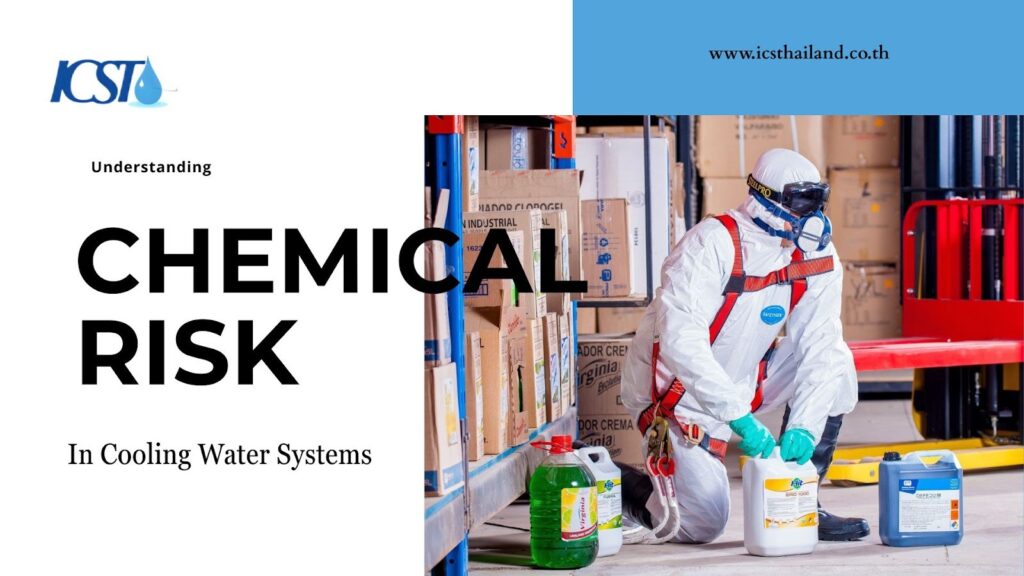
Why do cooling systems amplify the dangers of standard industrial chemicals? The answer lies in the operational environment itself, which transforms how chemicals behave and how operators interact with them.
- Amplified hazards: Cooling towers generate heat, mist, and airflow, which can vaporize volatile chemicals or create hazardous aerosols that travel far beyond the dosing point.
- Operational dynamics: As water evaporates, dissolved solids concentrate. If chemical control fails, the water itself can become a hazardous substance.
- Storage vs. Operation: Risk exists not just in static storage tanks but actively in the lines, pumps, and drift eliminators where chemicals are in motion and under pressure.
- Automation limits: Automated dosing pumps reduce manual handling but introduce risks of line leaks, over-feeding, and pump failures that require maintenance personnel to intervene in hazardous zones.
Where Chemical Exposure Occurs in Cooling Water Operations
Identifying where risks are highest allows safety managers to implement targeted controls. Exposure does not happen randomly; it typically occurs at specific interaction points within the system.
- Chemical delivery and offloading points: Bulk transfers involve high volumes and pressures, increasing the risk of major spills or connection failures.
- Storage tanks and containment areas: Leaks, fumes, and structural failures in containment bunds can create silent hazards for inspection teams.
- Dosing pumps, injection lines, and skids: These are high-pressure points where seals fail and tubing bursts, often spraying chemicals onto nearby personnel.
- Cooling tower basins, drift zones, and blowdown systems: Operators working near basins may inhale chemically treated drift or come into contact with concentrated blowdown water.
- Maintenance, cleaning, and inspection activities: The highest risk often occurs when systems are opened for repair, exposing technicians to residual chemicals trapped in lines or pumps.
Hazard Identification & Risk Mapping
You cannot manage what you do not measure or map. Hazard identification involves moving beyond generic safety protocols to pinpoint exactly where and when cooling water chemical safety is compromised.
- Task differentiation: Distinguish between routine monitoring (low risk) and line breaking or pump replacement (high risk).
- Exposure scenarios: Map out potential splash zones, vapor accumulation points, and areas where wind drift might carry chemical mists.
- Frequency and severity: Rank risks by how often a task is performed versus the potential severity of an accident. Frequent, low-severity tasks often cause complacency.
- Location mapping: Physically mark high-hazard zones on site plans and install signage at the specific equipment locations.
- Integration: Ensure these risk maps are not just paper documents but are integrated into daily work permits and safety briefings.
Safety Data Sheet (SDS) Management for Cooling Water Chemicals
Effective SDS management is the backbone of chemical compliance. These documents provide the critical data needed to handle emergencies and daily operations safely.
- Criticality: In cooling systems, chemicals interact. The SDS reveals incompatibility data that prevent dangerous reactions, such as mixing acid with bleach.
- Currency: Maintain the most current version of the SDS. Manufacturers update formulations and hazard data, and relying on old sheets is a compliance violation.
- Emergency utility: Ensure SDSs are immediately available to first responders. In a medical emergency, a doctor needs the exact chemical composition to treat the patient effectively.
- Access: Contractors and temporary technicians need the same access to SDS information as full-time employees.
- Format: While digital systems are efficient, physical backups are essential during power outages or system failures.
Safe Handling Practices for Cooling Water Treatment Chemicals
Safe handling is about procedure and discipline. It involves following detailed guidelines to ensure safety in every step of a task. Adhering to strict protocols not only reduces the likelihood of acute exposure during routine tasks but also helps prevent long-term health risks, protects equipment, and ensures compliance with safety regulations.
- Receiving transfers: Verify connection points twice before offloading begins. Ensure the receiving tank has sufficient capacity to prevent overflow.
- Incompatibility: Store and handle acids and oxidizers separately. If these mix in a drain or containment area, they can release deadly chlorine gas.
- Manual vs. Automated: While automation is safer, manual handling requires specific tools like drum dollies and bonding cables to prevent static discharge.
- Training: Workers must be trained not just on “chemical safety,” but on the specific handling requirements of the exact brands and concentrations used in their tower.
Chemical Storage Requirements in Cooling Water Facilities
Proper storage requirements prevent accidents before they happen. The physical layout of your chemical storage area acts as the first line of defense against environmental contamination and personnel injury.
- Segregation: Physically separate incompatible chemicals. Acids, bases, and oxidizers should have distinct containment areas to prevent mixing during a leak.
- Secondary containment: Tanks must sit within bunds or berms capable of holding at least 110% of the largest tank’s volume to capture catastrophic failures.
- Ventilation: Chemical vapors can accumulate in enclosed pump rooms. Ensure adequate ventilation and temperature control to prevent degradation of the chemicals or buildup of fumes.
- Labeling: Every tank, line, and valve must be clearly labeled with the chemical name and hazard class. Color-coding injection lines helps prevent maintenance errors.
- Inventory: frequent inspections should check for tank integrity, bullying, and the condition of piping. Keep inventory levels optimized to avoid storing excess hazardous materials.
Exposure Limits and Health Protection
Understanding exposure limits is vital for selecting the right protective equipment and defining safe working durations. You must respect the biological boundaries of the human body when working with aggressive chemistry.
- Occupational Exposure Limits (OELs): Know the OELs for every chemical on site. These legal limits dictate the maximum airborne concentration a worker can be exposed to.
- Routes of entry: Recognize that some inhibitors penetrate the skin, while biocides often pose inhalation risks. Defenses must cover all routes of entry.
- Chronic vs. Acute: Acute exposure causes immediate burns, but chronic exposure to low levels of certain biocides can lead to sensitization or long-term respiratory issues.
- Monitoring: Use fixed or portable gas detectors in high-risk areas, specifically for chlorine or chlorine dioxide, to warn operators of leaks.
- Medical response: Establish clear protocols for immediate medical attention, including the location of safety showers and eye wash stations relative to the hazard.
Spill Response and Emergency Preparedness
Even with the best prevention measures in place, chemical spills can and do happen. When they occur, a rapid and well-organized spill response is crucial. Having a clear, practiced emergency plan is not just a regulatory requirement; it’s essential for protecting personnel, minimizing damage to infrastructure, and preventing environmental contamination.
- Scenarios: Prepare for common events like a dosing line fracture, a drum puncture, or a tank overflow during filling.
- Priorities: Life safety always comes first. Evacuate the immediate area and secure the perimeter before attempting to address the spill.
- Containment: Use neutralizers and absorbent dikes to stop the spread. Prevent chemicals from entering storm drains or the cooling tower basin itself.
- Protection: Never approach a spill without the PPE specified in the SDS. Responders often require a higher level of protection than daily operators.
- Reporting: Document the incident immediately. Investigate the root cause to implement corrective actions that prevent recurrence.
Preventive Measures for Long-Term Chemical Safety
Cooling Water Chemical Safety is a continuous journey, not a destination. Robust preventive measures are the bedrock of any chemical safety program, ensuring your facility remains secure even as equipment ages, chemical formulations evolve, and personnel change.
By moving from a reactive to a proactive stance, you can identify latent hazards before they escalate into critical failures.
- Routine inspections: Schedule weekly checks of all storage tanks, dosing lines, and containment structures.
- Leak detection: Install automated leak detection sensors in containment bunds and double-walled piping to catch failures early.
- Automation safeguards: Program logic controls to prevent pump operation if flow is lost or if sensors detect conflicting chemical parameters.
- Audits: Conduct regular internal and external safety audits to verify that practices match written procedures.
- Environmental alignment: Ensure that your chemical safety program supports your environmental compliance goals, particularly regarding discharge and waste disposal.
Conclusion
Cooling water chemical safety is more than a checklist; it is an operational philosophy that protects your people and your plant. By respecting the aggressive nature of these chemicals and implementing rigorous controls, you ensure long-term operational continuity. True safety relies on integrating SDS management, comprehensive training, proper storage, and rapid spill response.
When operators understand the “why” behind every protocol, compliance becomes second nature. Effective management requires constant vigilance, regularly reviewing hazards and mapping risks to ensure every team member respects the chemistry powering your cooling process. Prioritizing these standards today prevents costly failures tomorrow.
Ready to elevate your facility’s safety standards? Visit the ICST website today for expert resources and industry-leading guidance.
Frequently Asked Questions
What is cooling water chemical safety?
Cooling water chemical safety involves the policies, procedures, and physical controls used to manage the hazardous chemicals required for treating cooling towers. It encompasses safe storage, handling, transport, and disposal to prevent injury and environmental harm.
Why is chemical safety critical in cooling water systems?
These systems use aggressive chemicals like biocides and acids to prevent scaling and biological growth. Because cooling towers use heat, aeration, and circulation, the risk of vaporizing these chemicals or creating hazardous mists is high, requiring strict safety protocols.
What chemicals pose the highest risk in cooling towers?
Oxidizing biocides (like chlorine and bromine) and concentrated acids (like sulfuric acid) pose the highest immediate risks. They can cause severe respiratory distress, chemical burns, and dangerous reactions if mixed improperly.
How should cooling water treatment chemicals be stored safely?
Chemicals must be stored in dedicated, chemically resistant tanks within secondary containment bunds. Incompatible chemicals, such as acids and bleach, must be physically segregated to prevent dangerous reactions in the event of a leak.
What PPE is required when handling cooling water chemicals?
Required PPE typically includes chemical-resistant gloves (nitrile or neoprene), chemical splash goggles, face shields, and protective aprons or suits. Respiratory protection is often required during high-risk tasks like line breaking or spill cleanup.