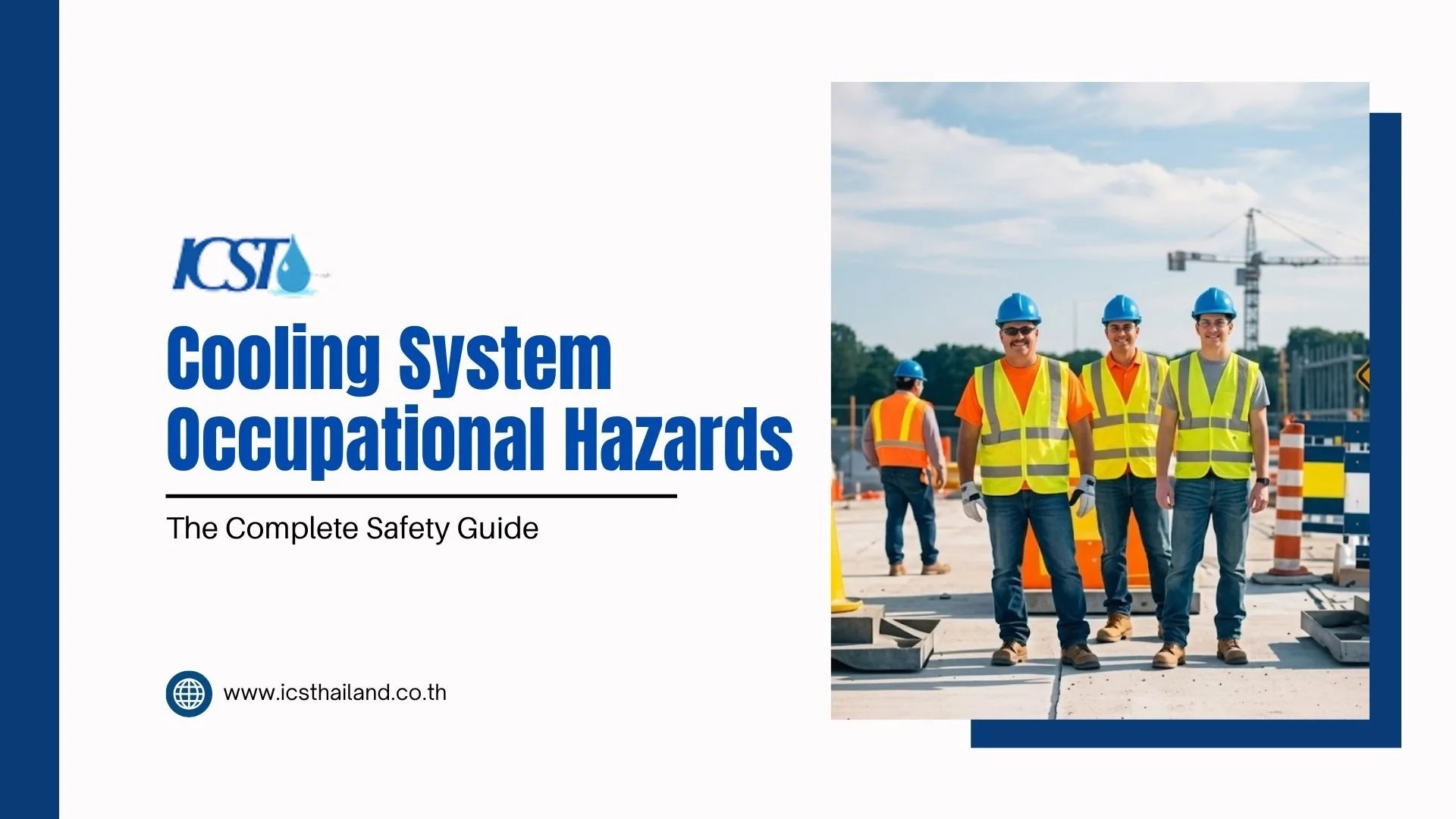
Cooling system occupational hazards cover the chemical, electrical, mechanical, heat-related, and biological risks technicians face while operating and maintaining cooling towers, chillers, and heat exchangers.
A single shift can expose a worker to concentrated biocides, live panels, rotating fans, and hot environments all at once, threatening health and safety if any control fails. Recognizing each category and applying the right controls keeps operations running without injury.
What Are Cooling System Occupational Hazards?
Cooling system occupational hazards refer to the specific dangers workers face during the operation, maintenance, and inspection of industrial cooling infrastructure. These differ from general warehouse or factory risks because they often involve a simultaneous convergence of energy sources.
A single task might expose a technician to high-voltage electricity, pressurized water, and toxic biological agents all at once.
- Roles most at risk: facility operators, HVAC technicians, and water treatment contractors.
- These roles often involve working alone or in environments with limited exits.
- Such conditions increase the severity of potential incidents.
- Acknowledging these risks is crucial for an effective safety program.
Hazard Identification & Risk Assessment
Before any tool touches a bolt, a comprehensive assessment must occur. How do you ensure that every potential danger is accounted for before work begins? A structured approach moves beyond guesswork and creates a verifiable safety record.
- Job Safety Analysis (JSA): Break down every maintenance task into individual steps. Analyze each step to identify potential hazards, such as slippery surfaces or exposure to hot pipes, and determine the necessary controls before the technician approaches the equipment.
- Structured Risk Rating: Assign a probability and severity score to identified risks. This matrix helps prioritize which hazards require immediate engineering controls and which can be managed through administrative changes or Personal Protective Equipment (PPE).
- Continuous Re-evaluation: Risk assessment is not a one-time documentation event. Conditions change, such as weather affecting roof access or equipment wear altering noise levels, requiring a dynamic approach to hazard identification.
Chemical Exposure Risks and Controls
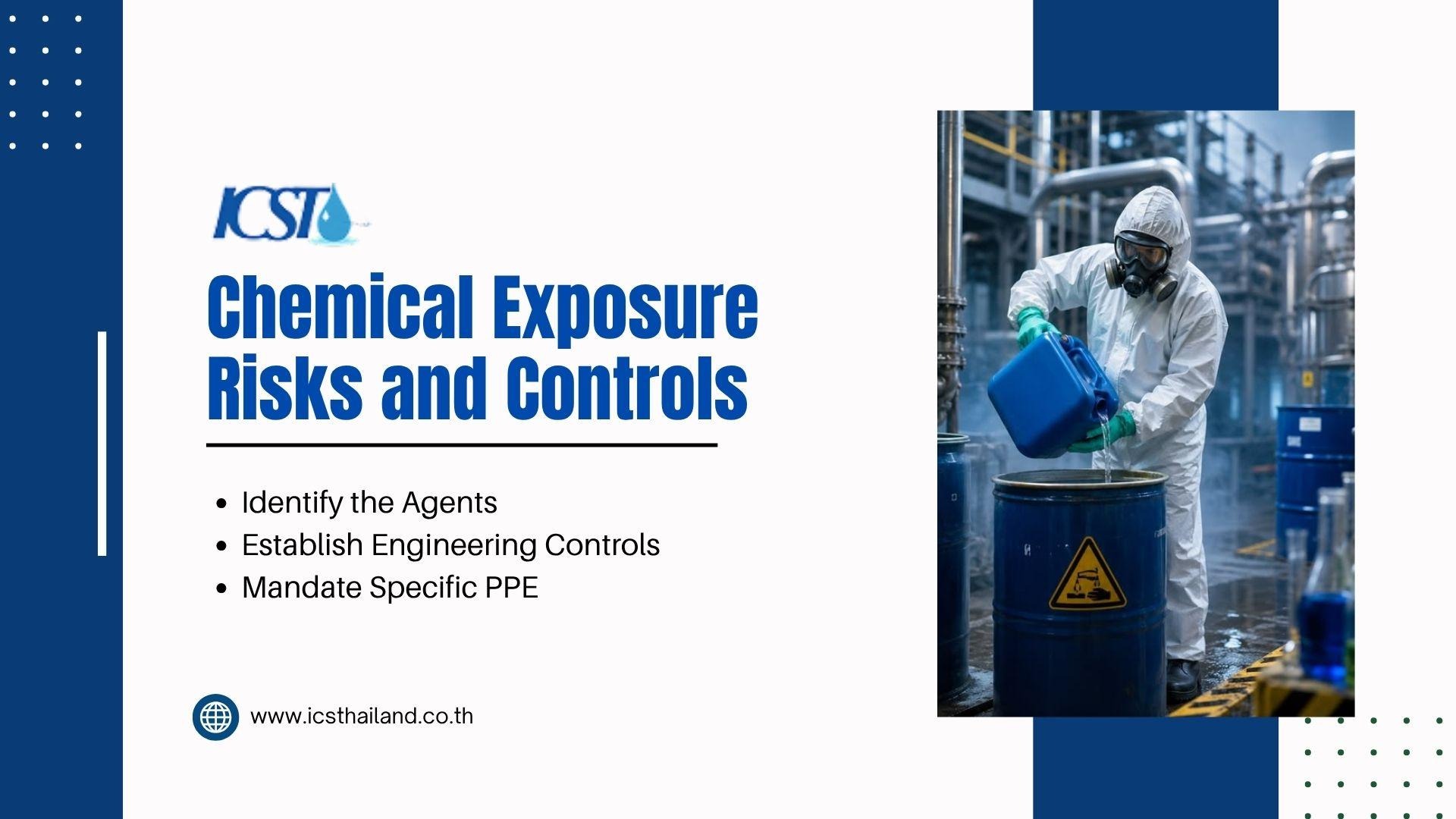
Chemical exposure ranks among the most serious cooling system occupational hazards. Cooling systems depend on biocides and corrosion inhibitors for water treatment, but that same chemical strength threatens the people handling it.
The aggressive nature of biocides and corrosion inhibitors makes chemical exposure a leading cause of injury in cooling system operations.
- Identify the Agents: Facilities typically use oxidizing biocides like chlorine or bromine, along with strong acids for pH control. Operators must review Safety Data Sheets (SDS) for every substance to understand specific health effects, such as respiratory distress or chemical burns.
- Establish Engineering Controls: Automated dosing systems reduce the need for manual handling of concentrated chemicals. Installing containment berms and splash guards adds a physical layer of protection between the worker and the hazardous liquid.
- Mandate Specific PPE: Standard safety glasses are often insufficient. Handling concentrated treatment chemicals requires face shields, chemical-resistant aprons, and specific gloves made of nitrile or neoprene, depending on the substance.
Electrical Shock & Arc Flash Hazards
The combination of high-voltage equipment and water makes electrical safety paramount in cooling operations. Do your technicians understand the catastrophic potential of an arc flash event? Electrical shock is a persistent threat when working on pump motors, variable frequency drives (VFDs), and control panels.
- Verify Zero Energy: Never assume a system is de-energized based on a switch position alone. Technicians must use a rated voltage tester to verify that electrical energy is absent before touching any conductive part.
- Arc Flash Boundaries: Label all electrical panels with their specific arc flash hazard category. This labeling informs workers of the approach boundaries and the required caloric rating for their arc-rated clothing.
- Water Ingress Prevention: Inspect electrical enclosures regularly for compromised seals. Moisture inside a control panel significantly increases the risk of a short circuit or electrical shock during operation.
Mechanical Hazards | Rotating Machinery
Cooling towers are a critical part of industrial operations, but come with significant cooling system occupational hazards. These systems move massive volumes of air and water using powerful mechanical components, and without proper safeguards, the risks can be life-altering.
The sheer kinetic energy of rotating machinery increases the danger of entanglement and crushing, making robust safety measures essential.
- Guard Integrity: Fans, belt drives, and exposed shafts must have rigid, fixed guards. These barriers prevent accidental contact and require tools to remove, ensuring they are not bypassed casually.
- Loose Clothing Protocol: The draft created by large fans can pull loose items into the machinery. Strict dress codes must prohibit loose sleeves, jewelry, and unconfined long hair when working near these components.
- Safe Start Procedures: Before energizing any motor, operators must visually verify that the equipment is clear of personnel and tools. Blind spots in large cooling towers necessitate a robust “clear to start” signal system.
Heat Stress and Heat-Related Illness Hazards
Cooling equipment often sits near boiler rooms, rooftops, or steel mills, where heat sources push ambient temperatures well past comfortable working limits. Heat stress belongs on every hazard list because it builds quietly and escalates fast.
The body generates its own internal heat, called metabolic heat, through physical activity, and normally sheds that load through sweat evaporation and radiant heat loss. In equipment rooms with high relative humidity, sweat cannot evaporate efficiently, so excess heat builds inside the body faster than the body’s ability to manage heat dissipation can keep up.
- Recognize Early Signs: Heavy sweating, muscle cramps, and dizziness signal heat exhaustion, an early stage of heat related illness that responds well to rest, shade, and fluids.
- Watch for Severe Symptoms: Confusion, a hot, dry complexion, and a rapid pulse indicate heat stroke, a medical emergency that raises core body temperature to dangerous levels and requires immediate medical attention.
- Manage the Heat Load: Schedule demanding tasks for cooler hours, rotate workers on heavy exertion jobs, and provide shaded rest areas to offset heat gain from both the equipment and the body’s own metabolic heat.
Workers developing heat related illnesses rarely recover well once symptoms go left untreated. Training crews to recognize the full range of heat illness symptoms, from mild fatigue to loss of consciousness, keeps a hot shift from turning into an emergency.
Fall Hazards | Working at Heights
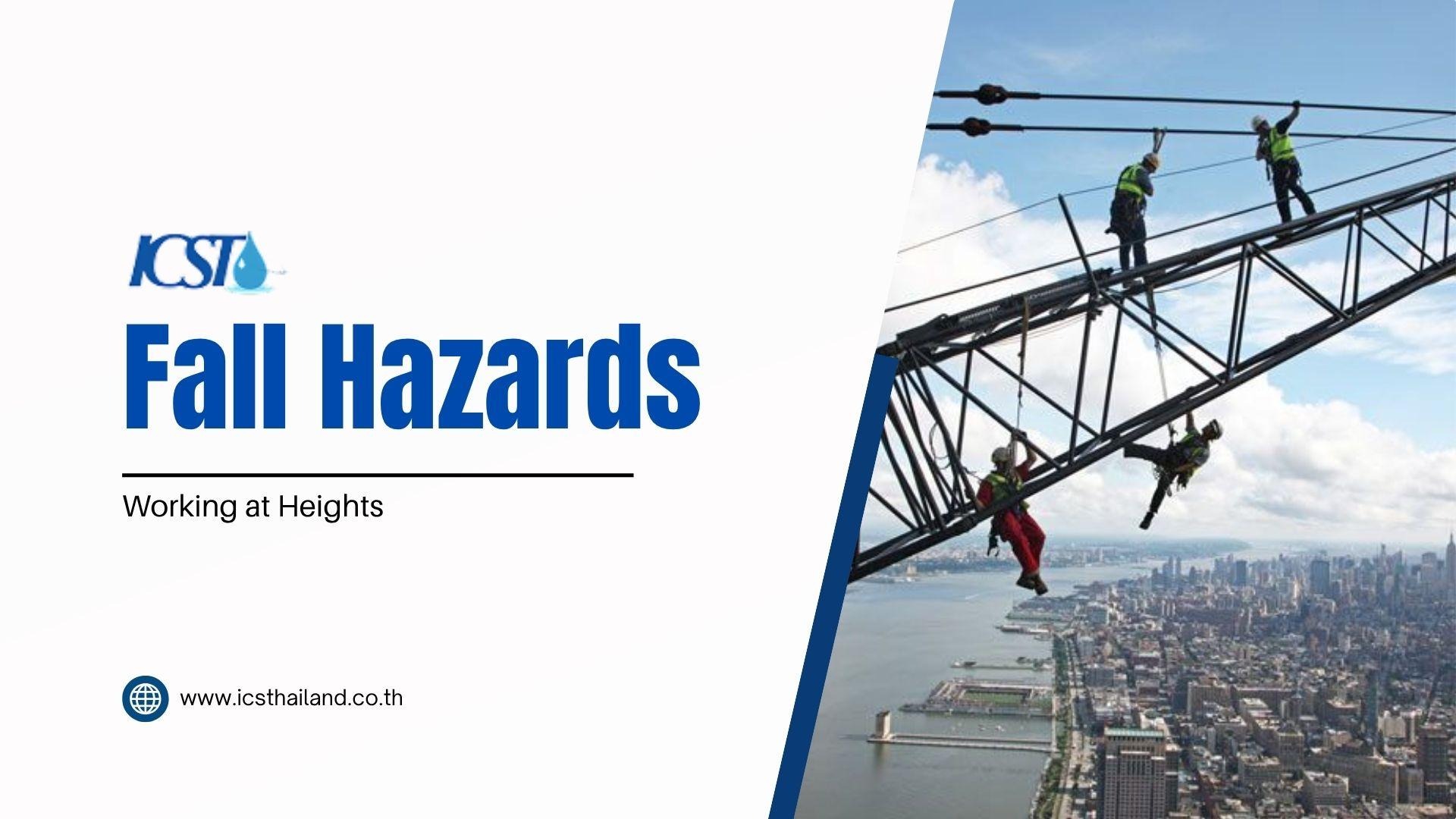
Many cooling components reside on rooftops or elevated platforms to maximize airflow. How do you protect workers when their primary workspace is thirty feet in the air? Falls from height account for a significant percentage of severe industrial accidents and require stringent prevention strategies.
- Passive Fall Protection: Prioritize the installation of permanent guardrails and toe boards around all elevated work platforms and roof edges. Passive systems protect workers without requiring active engagement or equipment.
- Active Restraint Systems: When guardrails are not feasible, workers must utilize personal fall arrest systems. This includes a full-body harness, a shock-absorbing lanyard, and a certified anchor point capable of supporting the required load.
- Access Ladder Safety: Inspect fixed ladders for corrosion and stability. Ensure that ladders exceeding specific heights have cages or integrated safety climb systems to mitigate falls from height during ascent and descent.
Confined Space Risks
Cooling tower basins and sump pits often meet the criteria for permit-required confined spaces. Do your teams recognize the invisible dangers lurking in these restricted areas? Confined spaces can trap toxic gases or become oxygen-deficient, turning a routine inspection into a fatality.
- Atmospheric Testing: Never enter a basin or sump without testing the air first. Use a calibrated multi-gas monitor to check for oxygen levels, hydrogen sulfide, and combustible gases before and during entry.
- Permit Required Entry: Implement a strict permit system that authorizes entry only after all safety conditions are met. This document tracks who enters, the duration of the work, and the specific hazards present.
- Attendant Presence: A trained attendant must remain outside the confined space at all times. Their sole responsibility is to monitor the entrant and initiate emergency procedures if necessary, never to enter the space themselves.
Biological Hazards and Respiratory Protection
Cooling towers create warm, moist conditions that let bacteria multiply if water treatment lapses. Legionnaires disease, caused by bacteria breeding in poorly maintained basins, ranks among the most serious biological hazards tied to cooling system operation.
- Respiratory Exposure: Mist and drift can carry bacteria and airborne contaminants directly into a technician’s respiratory system, especially during basin cleaning or high-pressure washdowns.
- Water Treatment Verification: Confirm biocide dosing and system flushing follow a documented schedule, since gaps let bacterial colonies establish inside sumps and fill media.
- Illness Recognition: Flu-like symptoms, fever, and chest congestion within two weeks of tower exposure warrant prompt evaluation, since early treatment changes the outcome significantly.
Hazard Comparison at a Glance
Each hazard category calls for a different first response, and mixing up the controls wastes precious time during an actual incident. The table below lines up warning signs and immediate actions side by side so crews can react correctly under pressure.
| Hazard Category | Primary Risk | Warning Signs | Immediate Control | Required PPE |
| Chemical Exposure | Burns to exposed tissue and respiratory irritation | Irritation, coughing, chemical odor | Automated dosing, containment berms | Face shield, chemical-resistant apron, nitrile gloves |
| Electrical | Shock or arc flash near panels and VFDs | Warm panel covers, flickering controls | Verified LOTO, voltage testing | Arc-rated clothing, insulated gloves |
| Mechanical | Entanglement or crushing near fans and belts | Missing guards, debris near machinery | Fixed guarding, clear-to-start signal | Close-fitting clothing, no loose jewelry |
| Heat Stress | Progressive overheating during exertion | Heavy sweating, confusion, flushed complexion | Rest breaks, shade, fluids | Breathable clothing, cooling vests |
| Biological (Legionella) | Respiratory infection from contaminated mist | Flu-like symptoms after tower exposure | Verified biocide dosing, basin flushing | Respirator during basin cleaning |
Lockout/Tagout and Energy Isolation
Energy isolation is the backbone of maintenance safety. Is your Lockout/Tagout (LOTO) procedure robust enough to prevent accidental re-energization? Effective LOTO goes beyond simple padlocks; it addresses every source of hazardous energy found in cooling system occupational hazards.
- Identify All Sources: Cooling systems often have multiple energy inputs, including electrical power, hydraulic fluid, and pressurized water lines. A single lock on an electrical breaker is rarely sufficient to make the system safe.
- Written Procedures: Develop machine-specific LOTO procedures that detail exactly which valves to close and which breakers to flip. Ambiguity in these instructions leads to critical errors during isolation.
- Verification Step: The “try” in “lock, tag, try” is crucial. After applying locks, attempt to start the equipment to verify that isolation is successful and that no stored energy remains.
PPE and Safety Equipment for Cooling System Operations
Personal Protective Equipment is the final line of defense against injury. Does your facility provide the specific gear required for the diverse hazards of cooling systems? Generic safety gear often fails to protect against specific threats like chemical exposure or arc flashes.
- Respiratory Protection: When performing tasks that generate mists or involve strong vapors, workers may require respirators. Fit testing and medical clearance are mandatory for any personnel using respiratory protection.
- Hearing Conservation: Cooling towers and chiller rooms are notoriously loud. Provide high-quality earplugs or earmuffs and conduct noise mapping to identify areas where double hearing protection is necessary.
- Arc-Rated Gear: For electrical tasks, ensure technicians have access to arc-rated face shields and balaclavas. This specialized gear prevents severe burns during an electrical fault.
Training Requirements and Competency Standards
Safety equipment is useless without the knowledge to use it correctly. How current is the training for your operators and contractors? Comprehensive education programs ensure that staff can recognize and mitigate risks associated with rotating machinery and other hazards.
- Role-Specific Curriculum: Tailor training programs to the specific duties of the worker. An electrical contractor needs deep knowledge of arc flash protocols, while a water treatment specialist requires intensive HazCom training.
- Hands-On Verification: Classroom learning is insufficient for physical tasks. Require workers to demonstrate their competency in applying LOTO or inspecting fall protection gear before certifying them for independent work.
- Contractor Management: Do not assume external contractors know your site-specific risks. Mandate a safety orientation that covers your facility’s unique hazards and emergency procedures before they begin work.
Emergency Response Planning
When preventative measures fail, the speed and quality of the response determine the outcome. Is your team ready to handle a chemical spill or a medical emergency at heights? A well-rehearsed plan minimizes the impact of an incident.
- Spill Containment: Keep spill kits stocked and accessible near chemical storage areas. Train personnel on how to deploy absorbents and neutralize spills without endangering themselves.
- Eyewash and Showers: Ensure emergency eyewash stations and safety showers are functional and located within 10 seconds of travel from chemical hazards. Test these weekly to verify water pressure and temperature.
Inspection, Audits & Compliance Checkpoints
Complacency undermines even strong programs. Regular audits close the gap between written procedure and daily practice, catching corrosion issues or worn guards before they cause a component failure.
- Daily Visual Checks: Operators should scan the area during rounds, looking for leaks, loose guards, or blocked exits that could compromise safety during a shift.
- Track Wear Patterns: Schedule regular inspection of pumps, fan belts, and electrical enclosures, and log findings so wear surfaces before equipment fails.
- Regulatory Alignment: Review protocols against OSHA, NFPA, and local environmental agency standards annually, since compliance requirements evolve.
Common Errors in Cooling System Safety Programs
Even well-intentioned programs have blind spots. Are you making these common mistakes that undermine safety efforts? Identifying these pitfalls early prevents them from contributing to a serious incident.
- Incomplete LOTO: Failing to isolate water pressure or gravity-fed lines is a frequent oversight. Workers must recognize that non-electrical energy sources can be just as deadly.
- Normalization of Deviance: This occurs when shortcuts become the standard way of working. If technicians routinely step over a guardrail rather than using a gate, management must intervene immediately to reset the safety culture.
- Ignoring Near Misses: A near miss is a free lesson. Failing to report and investigate close calls regarding confined spaces or electrical slips loses valuable data that could prevent a future fatality.
- Poor Communication: Miscommunication or lack of clarity in instructions can lead to dangerous assumptions and mistakes. Clear, concise communication is vital to ensuring everyone is on the same page.
- Improper Use of PPE: Using the wrong personal protective equipment or failing to use it at all leaves workers at unnecessary risk. Proper training and enforcement are critical to avoid injuries.
Conclusion
Managing cooling system occupational hazards is about more than just following a manual; it demands a proactive safety culture. From the risks of chemical burns and electrical slips to the dangers of working in confined spaces, a vigilant approach is crucial.
Preventing accidents means addressing issues head-on, such as technicians ignoring safety protocols, failing to report near misses, and using incorrect PPE. When every team member, from apprentice to manager, takes ownership of safety, you protect your workforce and ensure operational reliability.
Don’t let near misses become accidents. For expert cooling tower services and safety consultations, visit the ICST website today and fortify your facility’s defenses.
Frequently Asked Questions
What are common cooling system occupational hazards?
Workers face risks such as chemical exposure, electrical shock, rotating machinery, falls from height, and confined space hazards.
How can chemical exposure be prevented in cooling systems?
Using proper PPE like gloves, face shields, and respirators, along with automated dosing systems, minimizes the risk.
What safety measures protect workers from electrical hazards?
Lockout/Tagout procedures, arc flash-rated gear, and verification of zero energy before working on equipment reduce electrical shock risks.
How does rotating machinery pose a hazard in cooling towers?
Fans, motors, and driveshafts in cooling towers pose serious risks of entanglement or crushing. Injuries occur if protective guards are missing or safety protocols are ignored during operation or maintenance.