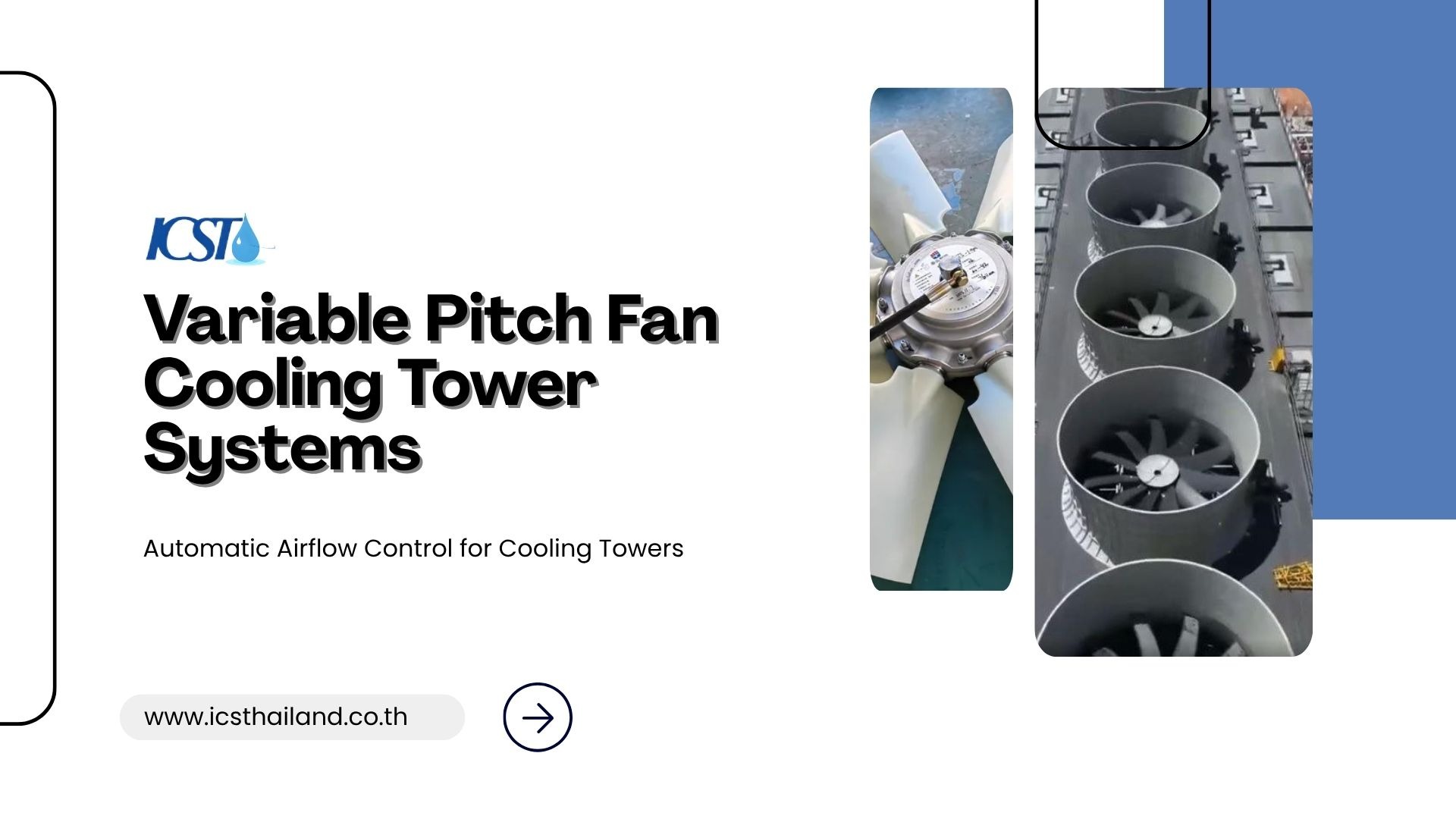
A variable pitch fan cooling tower system automatically adjusts the blade angle control of fan blades to regulate airflow based on real-time thermal demand. Unlike fixed systems, auto-variable pitch technology maintains constant motor speed while optimizing air movement.
This process improves thermal control, maximizes energy savings, and boosts system efficiency. By responding dynamically to load changes, these systems support demand response strategies, reduce power consumption, and ensure stable cooling performance in industrial applications.
The Hidden Problem: Why Fixed Airflow Control Limits Cooling Efficiency
Most cooling towers operate inefficiently under changing loads. Traditional systems cannot adapt to real-time conditions. This limitation creates a cascade of operational failures.
- They provide fixed airflow regardless of demand.
- They create massive energy waste during low-load periods.
- They cause unstable cooling during peak demand hours.
- They lead to higher operational costs due to inefficient energy use.
- They struggle to maintain optimal process temperatures under fluctuating conditions.
What Is a Variable Pitch Fan System?
Variable pitch systems change airflow without changing motor speed. It controls airflow at the blade level rather than the motor level. A variable pitch fan cooling tower uses smart mechanisms to achieve this precise regulation.
- The blade angle adjusts dynamically during active operation.
- The airflow increases or decreases instantly based on facility need.
How Variable Pitch Control Works
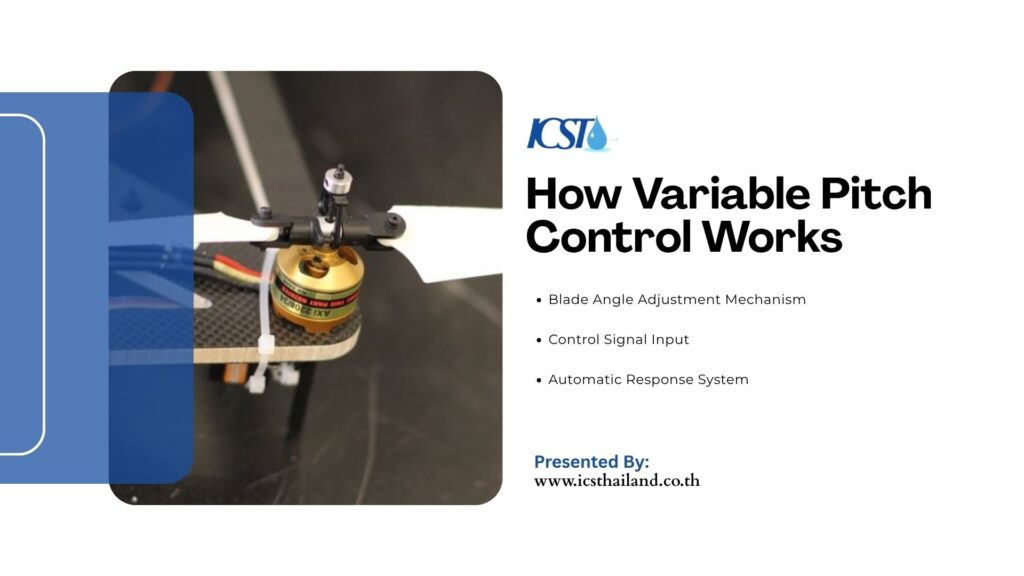
Understanding the control mechanism remains key to grasping the system value. This advanced setup creates a closed-loop thermal control environment.
Blade Angle Adjustment Mechanism
Specialized actuators move the blades instantly to control air volume. The exact angle of the blades determines the amount of air that flows through the tower.
- Hydraulic or electric actuators drive the blade movement.
- They change pitch during active operation without stopping the fan.
- This precise mechanical action ensures immediate response to cooling demands.
Control Signal Input
The system relies on accurate data from sensors that constantly monitor the internal and external environment. This data streams directly to the central processing unit, providing a real-time overview of operational conditions.
- Temperature feedback dictates the required cooling capacity.
- Process load data informs the system of current industrial demands.
- Ambient weather conditions, like air temperature and humidity, are also factored in.
Automatic Response System
The control unit reacts instantly to the data it receives, ensuring optimal performance without human intervention. The system adjusts fan performance to match the exact cooling needs of the facility at any given moment.
- It increases airflow when the process load or ambient temperature rises.
- It reduces airflow during periods of low demand to conserve energy.
- The system can predict and preemptively adjust for cyclical loads.
Core Components of a Variable Pitch Fan Cooling Tower
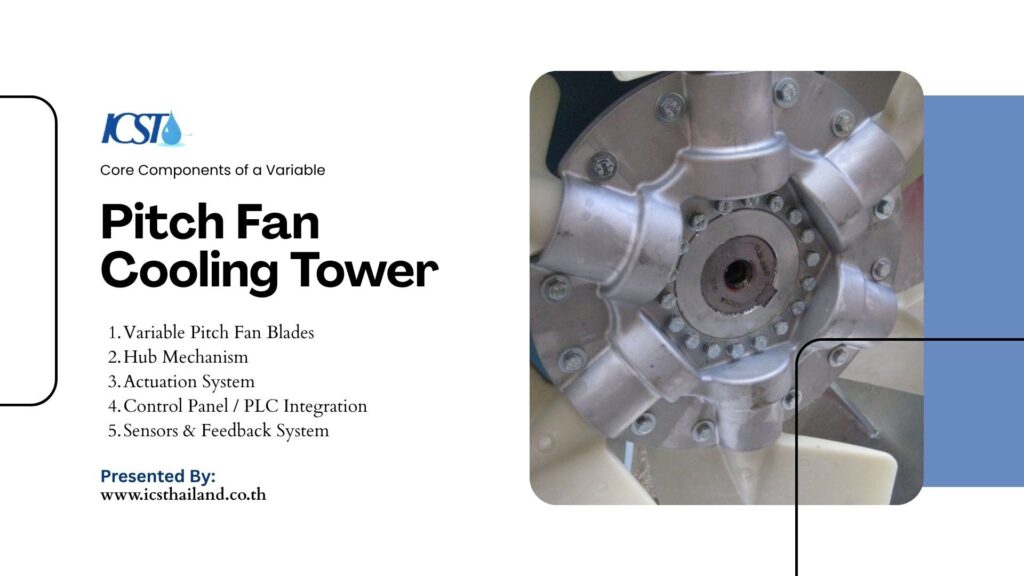
A variable pitch fan cooling tower relies on a sophisticated hybrid of mechanical and control systems. Each component is meticulously engineered to work in concert, ensuring precise airflow optimization.
This integration allows the tower to dynamically adapt to changing thermal loads, maximizing cooling efficiency while minimizing energy consumption.
Variable Pitch Fan Blades
The blades are the primary component responsible for moving air through the tower. Their aerodynamic design allows for an adjustable pitch, enabling them to modulate airflow with precision.
- Aerodynamic Profile: Shaped to capture and move air with maximum efficiency, reducing drag and energy use.
- Material Composition: Typically constructed from lightweight, durable composites to withstand continuous operation and environmental stress.
- Adjustable Pitch: Can rotate on its axis to change the angle of attack, directly controlling the volume of airflow.
Hub Mechanism
The hub is the central component that connects the fan blades to the drive shaft and actuation system. It ensures the synchronized movement of all blades for balanced and effective airflow control, which is critical to the performance of a variable pitch fan cooling tower.
- Blade Mounting: Provides a secure connection point for each blade, holding it firmly in place during rotation.
- Precision Control: Translates the signals from the actuation system into precise mechanical adjustments of the blade pitch.
- Structural Integrity: Engineered to handle the immense centrifugal forces and operational stress generated during fan operation.
Actuation System
This system provides the mechanical force needed to adjust the pitch of the fan blades. It can be either hydraulic or electric, responding to signals from the control panel to execute changes seamlessly.
- Power Source: Utilizes hydraulic pressure or electric motors to generate the force required for blade movement.
- Responsive Movement: Enables quick and smooth adjustments to the blade pitch in response to real-time cooling demands.
- Fail-Safe Features: Often includes mechanisms to return the blades to a default safe position in case of power failure.
Control Panel / PLC Integration
Acting as the brain of the operation, the control panel or Programmable Logic Controller (PLC) houses the automation logic. It processes data from sensors to make intelligent, real-time adjustments to the fan’s pitch.
- Automation Logic: Contains the pre-programmed algorithms that determine how the fan responds to different thermal loads and ambient conditions.
- User Interface: Provides operators with a way to monitor performance, adjust settings, and diagnose any issues.
- System Integration: Connects with other plant control systems, allowing for coordinated operation and overall process optimization.
Sensors & Feedback System
Sensors act as the eyes and ears of the cooling system. They provide continuous temperature and load monitoring to the main controller.
Key Benefits of Variable Pitch Fan Systems
This section is where the variable pitch fan cooling tower truly validates its worth in the field, with energy savings increasing significantly under partial load conditions.
Real-Time Airflow Optimization
The system matches thermal demand instantly. It eliminates the lag time found in traditional motor-based setups.
Significant Energy Savings
Auto-variable pitch mechanisms prevent expensive energy waste. They adjust to the exact required cooling load. This precision stops unnecessary power drain.
- They avoid overcooling the process water.
- They reduce unnecessary airflow during cooler months.
Improved Thermal Stability
The system maintains a highly consistent outlet temperature. It protects sensitive industrial processes from dangerous thermal shock.
Reduced Mechanical Wear
The system promotes smoother operation across the entire cooling tower. It places far less stress on internal drive components.
Demand Response Capability
The system adapts to plant load changes perfectly. It supports facility-wide demand response initiatives by lowering power draw during peak grid events.
When Should You Use Variable Pitch Fans?
A variable pitch fan cooling tower isn’t a one-size-fits-all solution, but it’s a game-changer for facilities with dynamic loads. Traditional fixed-pitch fans struggle to adapt to fluctuating demands, wasting energy and providing inconsistent cooling.
- Large Industrial Cooling Towers: Seamlessly adapts to frequent and fluctuating loads, ensuring optimal performance under dynamic conditions.
- Power Plants & Process Industries: Provides precise temperature control critical for maintaining operational stability and efficiency in these demanding environments.
- High Energy Cost Environments: Significantly lowers operational expenses through efficiency optimization, making it ideal for facilities in expensive energy markets.
Final Thoughts
Variable pitch serves as a critical step toward complete facility automation. The future points clearly toward self-adjusting cooling systems. By implementing a variable pitch fan cooling tower, facilities can integrate seamlessly with smart monitoring platforms.
This technology enables predictive optimization, ensuring strict thermal control and massive energy savings. Mastering blade angle control today prepares your facility for the strict demand response requirements of tomorrow.
Ready to future-proof your cooling systems and unlock significant energy savings? Contact the ICST today to design a custom variable pitch fan solution for your facility.
Frequently Asked Questions
What is a variable pitch fan in a cooling tower?
A variable pitch fan in a cooling tower is a mechanical system that adjusts the angle of the fan blades during operation to control airflow. This mechanism allows for precise cooling based on real-time thermal demand.
How does blade angle control improve efficiency?
By adjusting airflow without changing motor speed, blade angle control reduces unnecessary energy use. It ensures that the system produces only the required cooling output for the current load.
Is a variable pitch fan better than a VFD?
Variable-pitch fans provide faster, more precise airflow control, while VFDs adjust motor speed. In many cases, combining both systems delivers the absolute best efficiency and control.
Where are variable pitch cooling tower systems used?
Power plants, large industrial facilities, and process cooling systems commonly use them. They thrive in environments where thermal loads vary frequently and require precise temperature control.
Do variable-pitch fans require more maintenance?
They require proper calibration and periodic inspection. However, when technicians maintain them correctly, they reduce overall mechanical stress and extend equipment lifespan significantly.