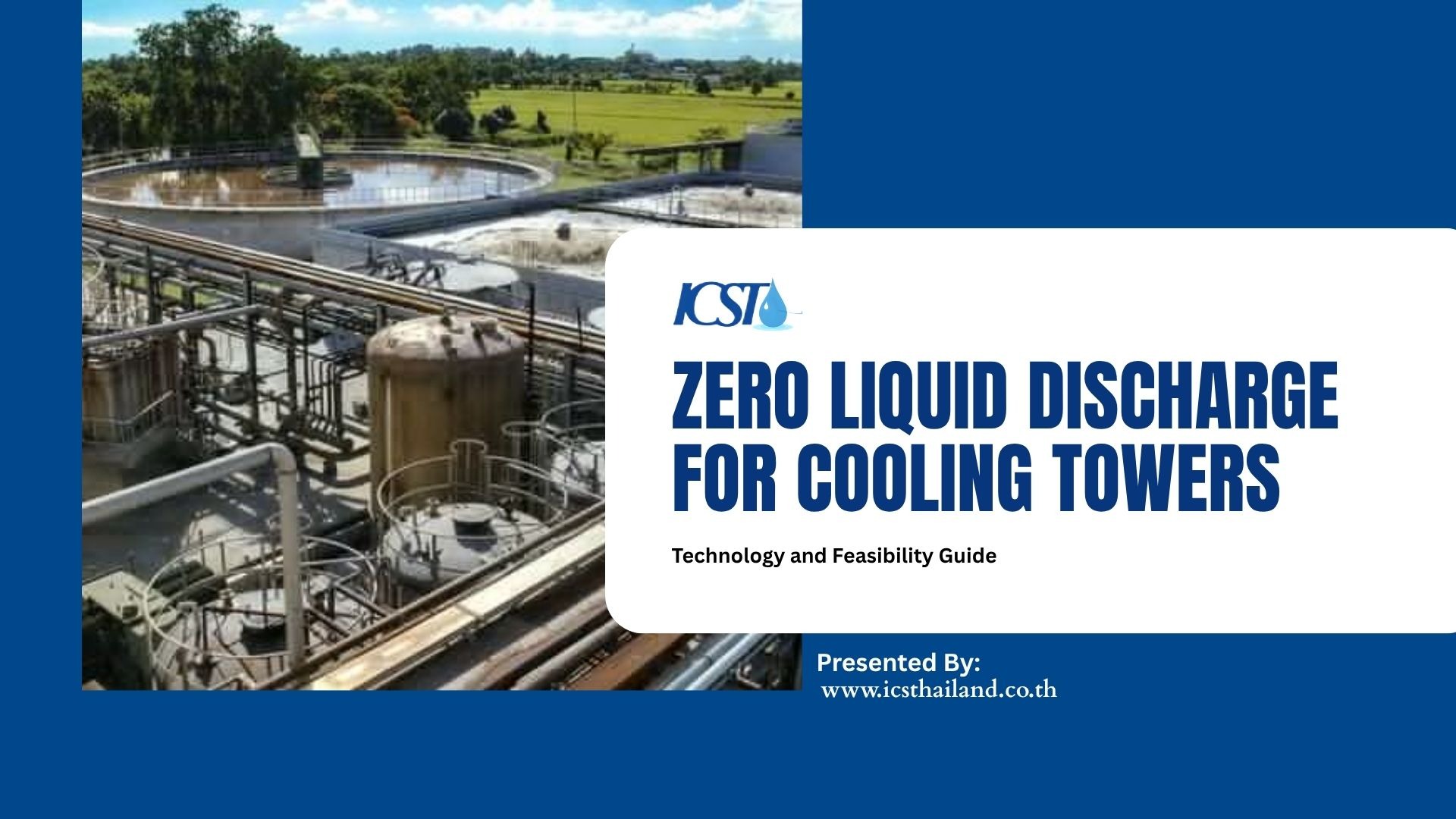
The strategy of zero liquid discharge for cooling tower operations eliminates all liquid waste by recovering and reusing water internally. Instead of draining blowdown water, industrial plants route it through reverse osmosis and thermal processing.
Engineers achieve complete wastewater elimination by converting residual salts into solid waste. You extract pure water for reuse during this process. Only solid residue remains at the end of the cycle. This approach ensures significant water reuse and strict regulatory compliance.
How Zero Liquid Discharge for a Cooling Tower Actually Works
To achieve zero liquid discharge for a cooling tower, plant operators rely on a specific multi-stage treatment flow. The cooling tower concentrates water via evaporation during normal cycles of concentration, but instead of discharging the blowdown water to a municipal drain, the system processes it further.
Pumps direct this high mineral fluid to a dedicated treatment train. The cooling tower acts as the first concentration stage. The remaining equipment handles the high total dissolved solids brine.
How does the fluid move through the exact stages? Are you ready to see the exact flow path?
- Pretreatment: In the initial stage, suspended solids are filtered out, and the water chemistry is stabilized to prepare it for the next steps.
- Membrane Recovery: Next, the majority of the usable water is recovered using membrane filtration, separating pure water from the mineral-rich solution.
- Brine Concentration: The remaining fluid, now a concentrated brine, is processed to significantly increase the density of total dissolved solids.
- Thermal Evaporation: Following this, thermal evaporators are used to boil off any remaining water from the now thick, syrupy liquid.
- Crystallization: In the final step, a crystallizer processes the waste, converting it into solid, transportable salts for disposal, achieving Zero Liquid Discharge.
Core Technologies Used in ZLD Cooling Tower Systems
To achieve zero liquid discharge for cooling towers, engineers divide the water recovery process into distinct phases. Each phase targets a specific concentration level and requires dedicated equipment to complete the step.
Reverse Osmosis in Cooling Tower ZLD
Reverse osmosis serves as the primary pre-concentration stage. High-pressure pumps force water through semipermeable membranes. The output includes clean permeate and highly concentrated reject brine.
Here’s what happens to the clean permeate and the reject brine:
- Permeate: Returns directly to the cooling tower basin for reuse.
- Reject brine: Moves forward to the thermal stages for further processing.
Operators must carefully monitor for membrane fouling, as scale buildup can quickly reduce water recovery rates. Strict pretreatment protocols are essential to prevent this.
Brine Concentrators and Evaporators
Brine concentrators increase total dissolved solids from around 20,000 parts per million to over 60,000 parts per million. These units use extreme thermal energy to reduce the liquid volume.
The extreme heat boils off the water, creating vapor that is then captured by condensers and converted back into pure distilled water. This phase is highly energy-intensive, requiring plant managers to account for high electrical or steam costs in their budgets.
Crystallizers
Crystallizers represent the final, critical phase in achieving true zero liquid discharge (ZLD). After the brine concentrators have significantly reduced the liquid volume, this equipment takes the remaining thick sludge and transforms it into dry, manageable solids.
This last step ensures that your facility produces absolutely no wastewater, creating a closed-loop system.
- Waste Transformation: Crystallizers convert the dense brine sludge into dry, solid salts through an evaporation process.
- Achieving ZLD: Completing this stage is essential for meeting true zero liquid discharge standards, as it eliminates all liquid waste from the facility.
- Solid Waste Management: The resulting dry solids are collected in bins or bags for safe and compliant disposal in approved landfills.
Why Industries Adopt Zero Liquid Discharge in Cooling Towers
Modern facilities face mounting pressure to eliminate wastewater entirely. Implementing zero liquid discharge for cooling towers is a key strategy plant managers use to solve critical operational bottlenecks.
Why do heavy industries spend millions on this technology? What specific problems do these systems solve?
- Compliance with regulations: Stricter environmental laws require facilities to eliminate wastewater discharge, making ZLD a necessary solution for legal compliance.
- Water conservation: In areas where water is scarce, ZLD systems allow facilities to recycle and reuse water, ensuring operational continuity even during droughts.
- Cost savings: By recycling water, plants can significantly reduce their reliance on municipal water sources, leading to lower utility bills.
- Risk mitigation: ZLD systems prevent the accidental spill of toxic chemicals into the environment, protecting local ecosystems and avoiding potential legal liabilities.
Data shows this technology reduces total water withdrawal by almost 18 percent. This reduction provides massive operational security during severe droughts.
Engineering Challenges in ZLD Cooling Tower Implementation
Achieving zero liquid discharge for cooling towers presents several engineering hurdles. Complex thermodynamic calculations are necessary for system design, and the commissioning process often encounters significant roadblocks.
What hurdles will your engineering team face? How do these problems impact daily operations?
- High Capital Costs: The initial investment required for ZLD systems can be a significant financial barrier for many facilities.
- High Energy Consumption: Evaporation processes are energy-intensive, which can strain a plant’s power resources and increase operational costs.
- Membrane Fouling: Scale-forming minerals can damage expensive reverse osmosis membranes, leading to costly replacements and system downtime.
- Water Recovery Limitations: The presence of minerals like silica and calcium can limit the amount of water that can be effectively recovered, impacting overall efficiency.
- Operational Complexity: ZLD systems require a highly skilled team for operation and maintenance, which can increase labor costs.
ZLD vs Conventional Cooling Tower Blowdown Systems
When evaluating cooling tower blowdown treatment, engineers must weigh traditional methods against advanced recovery systems. A clear view of the structural and financial trade-offs is necessary to determine if zero liquid discharge for cooling tower operations is the right approach.
| Parameter | Conventional System | Partial ZLD | Full ZLD System | Engineering Insight |
| Blowdown | Discharged to drain | Partially recycled | Completely eliminated | Full elimination removes environmental liability. |
| Water usage | Extremely high | Moderate | Very low | Maximum reuse improves facility sustainability metrics. |
| Capex | Very low | Medium | Very high | Cost creates a major barrier for small plants. |
| Complexity | Simple to operate | Moderate complexity | Complex multi stage | Advanced systems require skilled control room operators. |
| Waste type | Liquid waste only | Sludge and liquid | Solid dry waste | Solid salts offer easier regulatory handling. |
When ZLD Is Technically Feasible
Before committing to ZLD equipment, plant managers must evaluate several technical and economic factors. Installing these complex systems without a thorough analysis can lead to poor outcomes.
Water Quality Factors
- High Total Dissolved Solids (TDS): Influent water with high TDS concentrations requires larger, more complex thermal units to handle the load, significantly impacting the system’s design and cost.
- Silica Limits: Silica is a major constraint for membrane-based recovery systems, as it can cause scaling and fouling. Overcoming these limits often requires additional pre-treatment steps.
Plant Size
- Large Industrial Plants: Larger facilities typically have the necessary budget, physical space, and skilled operators to successfully implement and manage a ZLD system.
- Small Plants: For smaller operations, the high capital expenditure and operational complexity often make ZLD technology completely uneconomical.
When You Should NOT Use ZLD in Cooling Towers
While zero liquid discharge for cooling tower systems can offer significant benefits, some facilities waste money forcing full recovery designs. It’s crucial to recognize when a standard blowdown protocol is the more practical and economical choice.
When should your engineering team reject a zero liquid discharge proposal? Which conditions make these projects fail?
- Low Water Costs: If water is inexpensive in your region, the savings from a ZLD system won’t justify its high cost, resulting in a poor return on investment.
- Lenient Environmental Regulations: In areas where environmental rules are not strict, ZLD is often an unnecessary expense rather than a requirement for compliance.
- Small Cooling Systems: The significant initial investment for ZLD equipment is usually too high for smaller cooling systems to justify financially.
- Poor Feedwater Quality: If your water source is of low quality, it can lead to severe scaling and frequent equipment breakdowns, making ZLD impractical and costly to maintain.
Cost Structure and Economic Feasibility of ZLD Systems
When implementing zero liquid discharge for cooling tower systems, the cost structure is broken down into two main categories: capital expenditure (CapEx) and operational expenditure (OpEx).
CapEx Components:
- Reverse Osmosis (RO) systems: These are crucial for the initial water treatment phase.
- Evaporators: Massive evaporators are required to concentrate the brine left after the RO process.
- Crystallizers: Complex crystallizers are used to turn the concentrated brine into solid crystals.
These physical assets represent a significant upfront investment, often costing millions of dollars to install.
OpEx Factors:
- Energy consumption: This is the single largest cost driver for ZLD systems, as evaporators and crystallizers are highly energy-intensive.
- Chemical dosing: Continuous chemical treatment is needed to manage water quality and prevent scaling.
- Maintenance: Routine maintenance is essential to keep the complex equipment running efficiently.
These ongoing operational costs determine the long-term viability of the project. In some extreme cases, implementing a complete ZLD system can even double your facility’s total water cost.
Conclusion
Zero liquid discharge (ZLD) cooling towers maximize water sustainability by eliminating wastewater from your industrial site. Although the initial investment is high, the long-term advantages of regulatory compliance and water conservation in arid regions often validate the expense.
Successful implementation of a zero liquid discharge for a cooling tower system requires evaluating your plant’s water chemistry, selecting appropriate treatment technologies, and ensuring proper operational oversight.
Ultimately, choosing a ZLD system is a strategic decision that balances cost against environmental stewardship. When you’re ready to engineer a compliant and efficient water treatment solution, contact the experts at Industrial Cooling Solution Thailand to discuss your project today.
Frequently Asked Questions
What is zero liquid discharge in cooling towers?
This technology eliminates liquid waste from an industrial facility. Operators recycle the cooling tower blowdown back into clean water. The process removes all dissolved minerals. You only discard a dry solid block of salt at the very end.
How does reverse osmosis support ZLD?
Reverse osmosis acts as the crucial first step in volume reduction. High-pressure pumps push water through fine membranes. This step recovers up to 80 percent of the water. The remaining concentrated brine moves to thermal evaporators.
Is ZLD expensive for cooling systems?
Yes, the capital expenditure requires millions of dollars for specialized thermal equipment. Operating the evaporators consumes massive amounts of electricity and steam. Plants only absorb this high cost when regulations strictly forbid liquid discharge.
What are the main challenges in ZLD systems?
Engineers battle constant mineral scaling inside the pipes. Membrane fouling destroys expensive filters rapidly. The extreme operational cost demands constant optimization. You must hire specialized operators to manage the complex chemistry.
Can all cooling towers achieve ZLD?
No, severe limitations prevent widespread adoption. Small systems cannot support the required capital investment. Extremely poor water quality makes the treatment process impossible. Facilities need adequate space and cheap energy to make it work.