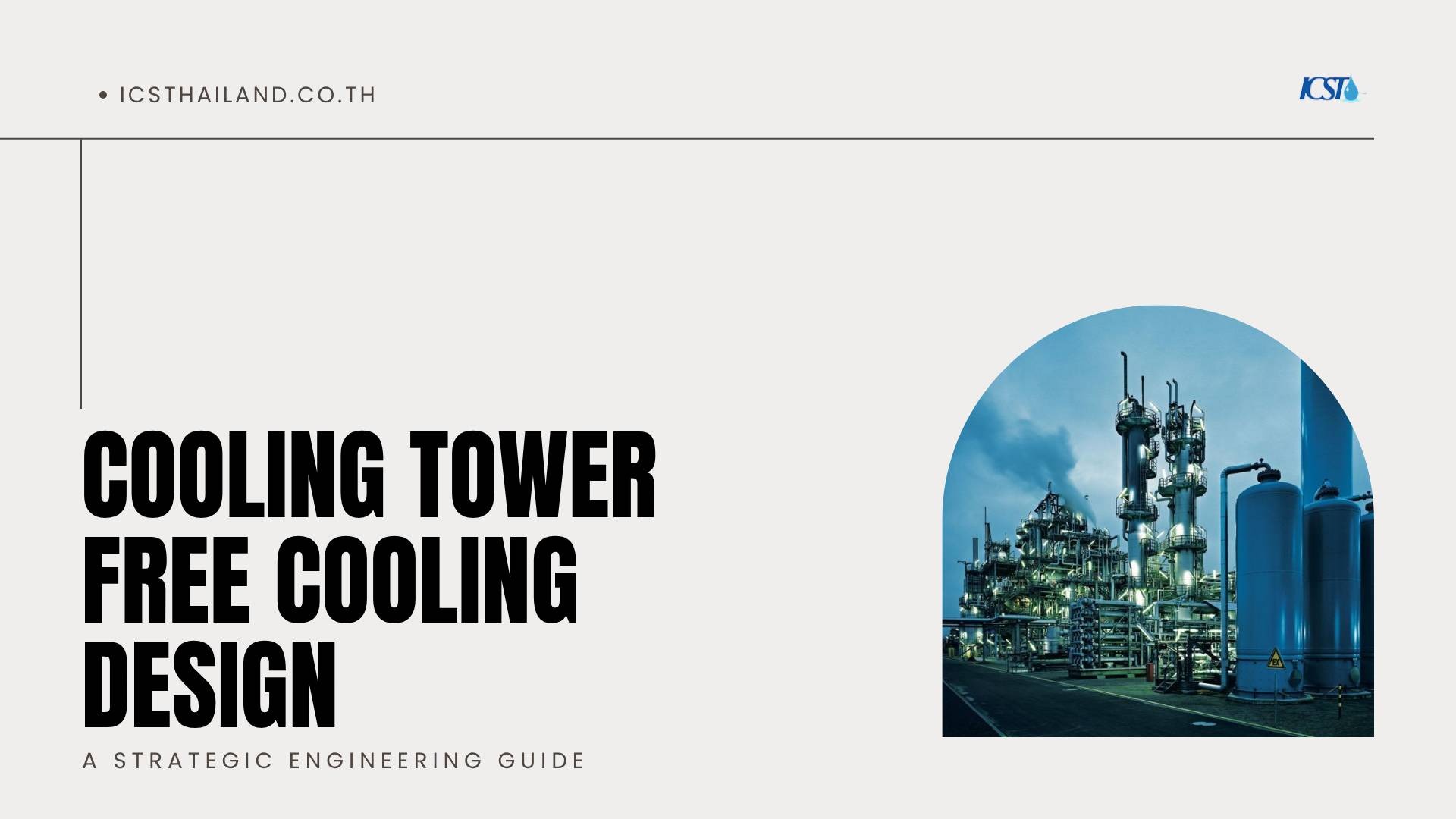
Cooling tower free cooling design leverages ambient wet-bulb temperatures to reduce reliance on mechanical chillers, significantly lowering energy consumption. By using waterside economizers, the system transfers heat from the chilled water loop to the cooling tower, bypassing energy-intensive compressors.
Key components include plate heat exchangers, optimized bypass valves, and advanced control systems. This design is most effective in climates with frequent low wet-bulb conditions, offering substantial energy savings, reduced operational costs, and improved sustainability for facilities aiming to maximize thermal efficiency.
This guide breaks down the core engineering principles of free cooling systems. You will learn how to evaluate different architectural layouts, optimize technical requirements, and implement robust control sequences. We will also cover essential maintenance practices to ensure long-term thermal efficiency.
The Principles of Cooling Tower Free Cooling
To understand free cooling, engineers must look beyond the mechanical chiller. The strategy relies on utilizing ambient environmental conditions to reject building heat directly.
The “Waterside Economizer” Concept
A waterside economizer operates on a simple but powerful premise. When ambient wet-bulb temperatures drop low enough, the cooling tower can produce chilled water at the required setpoint without mechanical intervention. The system routes this naturally cooled water to the chilled water loop. This directly displaces the need to run the mechanical chiller compressors.
Understanding the Economic Value
Many refer to this process as “free cooling,” but the term requires clarification. The cooling itself is not entirely free. Instead, the system strategically shifts the cooling load. You move the load from energy-intensive compressor motors to low-energy cooling tower fans and condenser water pumps. This load-shifting generates massive energy savings over an annual operating cycle.
Key Design Constraints
Local climate data dictates the viability of your design. Specifically, engineers must analyze annual wet-bulb temperature trends. Areas with extended periods of low wet-bulb temperatures yield the highest return on investment. If your local climate rarely experiences low wet-bulb conditions, a waterside economizer may not justify the initial capital expenditure.
Comparison: Cooling Tower Free Cooling Architectures
| Feature | Direct (Strainer Cycle) | Indirect (Plate Heat Exchanger) |
| System Complexity | Low | Moderate/High |
| Risk of Contamination | High | Minimal (Isolated loops) |
| Energy Transfer Efficiency | High | Moderate (Approach loss) |
| Maintenance Needs | High (Filter/Strainer) | Low (Periodic cleaning) |
Engineers generally choose between two primary system architectures. Each approach carries specific advantages, operational risks, and maintenance requirements.
Direct Systems (Strainer Cycle)
- System Complexity: Low
- Risk of Contamination: High (Cooling tower water mixes directly with the chilled water loop)
- Energy Transfer Efficiency: High (No intermediate heat exchanger required)
- Maintenance Needs: High (Requires intensive filter and strainer maintenance to protect interior coils)
Indirect Systems (Plate Heat Exchanger)
- System Complexity: Moderate to High
- Risk of Contamination: Minimal (The cooling tower loop and chilled water loop remain completely isolated)
- Energy Transfer Efficiency: Moderate (Incurs a slight approach temperature loss across the exchanger)
- Maintenance Needs: Low (Requires only periodic cleaning of the plate heat exchanger)
Most modern facilities opt for the indirect system to protect their critical chilled water coils from biological scaling and debris.
Technical Engineering Requirements
Success in cooling tower free cooling design depends on precision sizing and fluid dynamics. You must engineer the system to handle both mechanical and free-cooling modes seamlessly.
Optimizing Approach Temperature
In an indirect system, the plate heat exchanger dictates efficiency. Achieving a close approach temperature, typically between 1°C and 2°C, serves as the make-or-break factor. A tighter approach allows you to initiate free cooling at higher ambient wet-bulb temperatures. This maximizes your total economizer hours per year.
Chiller Bypass Configuration
Transitioning between mechanical cooling and free cooling requires a highly engineered bypass. Design a bypass that minimizes pressure drop across the piping network. The system must maintain stable flow rates during transition sequences to prevent nuisance chiller tripping.
Hydraulic Design
Hydraulic variations require careful planning. You must size pumps and piping to accommodate the high-flow requirements of mechanical modes, as well as the variable-flow conditions during economizer hours. Utilize variable frequency drives (VFDs) on your pumps to match system resistance accurately across all operating profiles.
Seasonal Optimization & Control Strategies
Hardware alone will not maximize energy savings. Your control sequences determine how effectively the system captures favorable weather windows.
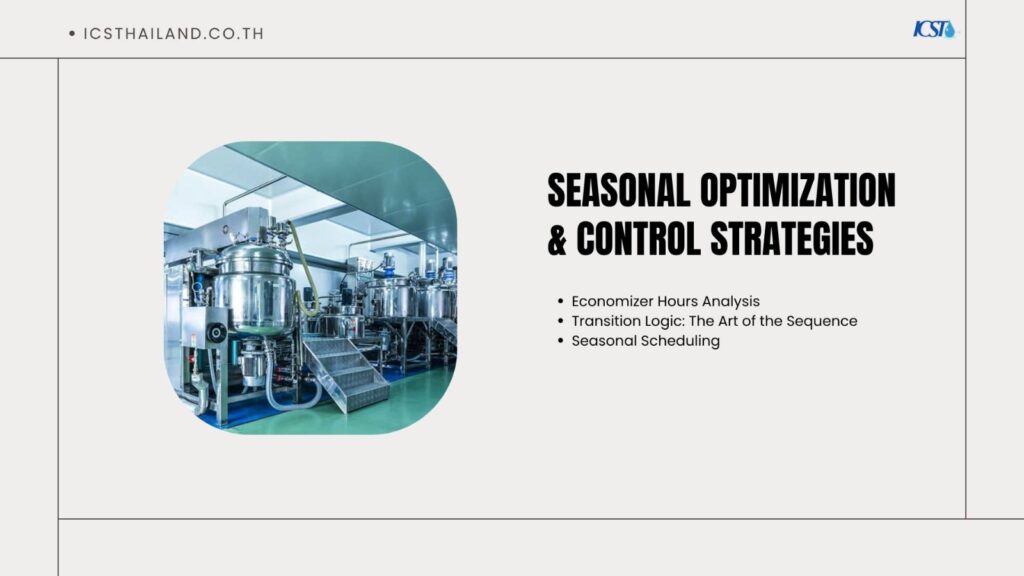
Economizer Hours Analysis
Engineers should not guess their potential savings. Use weather bin data to forecast annual economizer hours. Analyze local wet-bulb frequency bins to calculate exact transition points. This data allows you to estimate annual kilowatt-hour savings and prove the system’s return on investment.
Transition Logic: The Art of the Sequence
Transition logic separates a functional system from a highly optimized one.
- Entering Free Cooling: Initiate a staged unloading of the chiller. Gradually introduce the plate heat exchanger to prevent sudden thermal shock to the chilled water loop.
- Exiting Free Cooling: Manage the transition “hump” carefully. As wet-bulb temperatures rise, slowly stage the mechanical chiller back online. Avoid rapid chiller cycling, commonly known as hunting, which causes severe mechanical wear.
Seasonal Scheduling
Never rely on fixed calendar dates for transitions. Automate your control system to shift setpoints based entirely on real-time ambient trends. Unseasonably cool days in late spring can still offer valuable free-cooling hours if your system reacts automatically.
Operational Reliability & Maintenance
A robust cooling tower free cooling design must account for harsh operating environments. Preventive measures protect the equipment and sustain energy transfer rates.
Freeze Protection
Cold-start environments pose significant risks to cooling towers. Implement mandatory design features to prevent basin freezing and pipe ruptures. Install basin heaters and trace heating on exposed piping networks. Utilize VFD-managed fan sequences to prevent excessive subcooling of the tower water during freezing ambient conditions.
Water Quality Management
Open cooling towers capture airborne particulate matter continuously. A dedicated side-stream filter is essential for the cooling tower loop. This prevents debris from fouling the plate heat exchanger. Even a microscopic layer of biological growth or scale will ruin your approach temperature and destroy free-cooling efficiency.
Preventive Maintenance
Schedule comprehensive cleaning for your heat exchanger plates and cooling tower distribution nozzles. Regular maintenance ensures that the thermal approach does not degrade over time. Monitor pressure drops across the heat exchanger to determine exactly when cleaning is required.
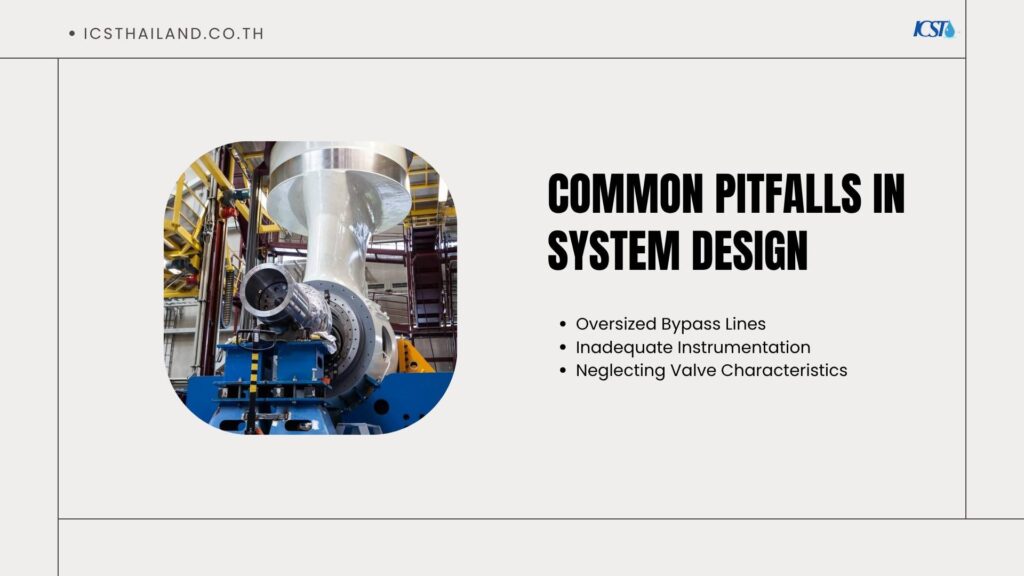
Common Pitfalls in System Design
Even experienced engineers can encounter operational issues if they overlook minor system details. Avoid these common design errors.
Oversized Bypass Lines
Oversizing your bypass lines creates severe hydraulic instability. In primary-secondary pumping systems, oversized lines often lead to unintended mixing of supply and return water. This destroys the temperature differential and forces the chiller to work harder.
Inadequate Instrumentation
Control logic relies entirely on accurate data. Cheap or poorly calibrated sensors lead to flawed control decisions. Install high-accuracy wet-bulb and dry-bulb sensors. Calibrate them frequently to ensure the building management system initiates free cooling at the exact optimal moment.
Neglecting Valve Characteristics
Transition phases require precise flow control. Non-linear butterfly valves often cause abrupt flow changes. These abrupt changes cause system instability and temperature spikes. Select high-performance control valves with equal-percentage flow characteristics for all critical bypass applications.
Conclusion: Achieving Sustainable Performance
Successful cooling tower free cooling design relies on strict harmony between mechanical equipment, intelligent control sequences, and robust water treatment. By optimizing your approach temperatures and refining your transition logic, you can drastically reduce your facility’s energy consumption. Prioritize accurate instrumentation and proactive maintenance to ensure your system performs efficiently year after year.
Is your facility operating at maximum thermal efficiency?
At International Cooling Solutions (Thailand), we provide specialized design and audit services for cooling tower free cooling integration. Let our engineers help you convert ambient conditions into year-round operational savings.
Frequently Asked Questions
What is a cooling tower free cooling design?
Cooling tower free cooling design is an energy-efficient strategy that uses ambient wet-bulb temperatures to cool water without relying on mechanical chillers. By leveraging waterside economizers, facilities can reduce energy consumption by shifting the cooling load to low-energy components like cooling tower fans and pumps. This approach is ideal for climates with extended periods of low wet-bulb temperatures.
How does a waterside economizer work in free cooling?
A waterside economizer enables free cooling by using cooling tower water to directly or indirectly cool the chilled water loop. When ambient wet-bulb temperatures are low, the system bypasses mechanical chillers, reducing energy use. Indirect systems use plate heat exchangers to isolate loops, while direct systems mix cooling tower water with the chilled water loop.
What are the benefits of a cooling tower free cooling design?
Cooling tower free cooling design reduces energy costs, lowers carbon emissions, and extends the lifespan of mechanical chillers. It shifts the cooling load to energy-efficient components, optimizing operational efficiency. Additionally, it provides significant savings in climates with frequent low wet-bulb conditions, making it a sustainable choice for facilities aiming to improve thermal efficiency.
What are the key components of a cooling tower free cooling system?
Key components include cooling towers, plate heat exchangers (for indirect systems), bypass valves, pumps, and advanced control systems. These elements work together to manage transitions between mechanical and free cooling modes, ensuring optimal performance. Proper hydraulic design and accurate instrumentation are critical for maintaining efficiency and reliability.
How do you optimize a cooling tower free cooling system?
Optimization involves precise hydraulic design, achieving a close approach temperature (1–2°C), and implementing advanced control sequences. Seasonal scheduling based on real-time wet-bulb trends maximizes economizer hours. Regular maintenance, such as cleaning heat exchanger plates and managing water quality, ensures long-term efficiency and reliability.