Cooling tower spare parts inventory is vital for ensuring uninterrupted operations and reducing downtime. Stocking critical components such as fan motors, gearboxes, and float valves helps mitigate lead-time risks and prevents costly shutdowns. Effective inventory management, guided by ABC analysis and lead-time assessments, ensures facilities maintain optimal performance and extend equipment life. This strategic approach balances cost efficiency with reliability, making it indispensable for industries relying on cooling towers.
This guide outlines the 2026 engineering standards for parts management. You will learn how to implement an ABC analysis, mitigate lead-time risk, and establish proper minimum stock levels. Implement these strategic solutions to guarantee reliability, optimize energy consumption, and secure your facility’s continuous uptime.
The Economics of Uptime: Why Inventory is Essential
Equipment downtime costs far more than the price of a replacement component. When a cooling tower fails, the entire production line or facility cooling system suffers. You cannot afford to wait weeks for a critical tower spare to arrive. A proactive approach to your spare parts list protects your bottom line and saves money.
The “Wait-Time” Penalty
Statistically, 23 percent of every repair event is spent simply waiting for parts to arrive. Technicians stand idle while administrative teams scramble to locate available components from different companies. This wait-time penalty drains your budget and extends facility outages unnecessarily. You must eliminate this delay by holding critical items on-site.
The Emergency Premium
Forced outages trigger a severe financial penalty. When you require immediate delivery for broken parts, you pay a hidden cost known as the 4.8x emergency premium. This includes rush shipping fees, premium vendor pricing, and after-hours logistical support. Proper planning eliminates these exorbitant emergency expenses.
Resilience Versus Overstocking
You must balance the cost of tied-up capital with the necessity for mission-critical asset protection. Overstocking ties up valuable warehouse space and company funds. However, the “just-in-case” necessity remains crucial for high-risk components. Strategic management ensures you hold exactly what you need to perform the job without wasting resources.
The ABC/XYZ Criticality Matrix
Not all components hold the same operational value. You must categorize your inventory to prioritize critical investments. An effective ABC analysis helps maintenance teams classify cooling tower parts based on their impact on system uptime. This matrix dictates your purchasing and stocking behavior.
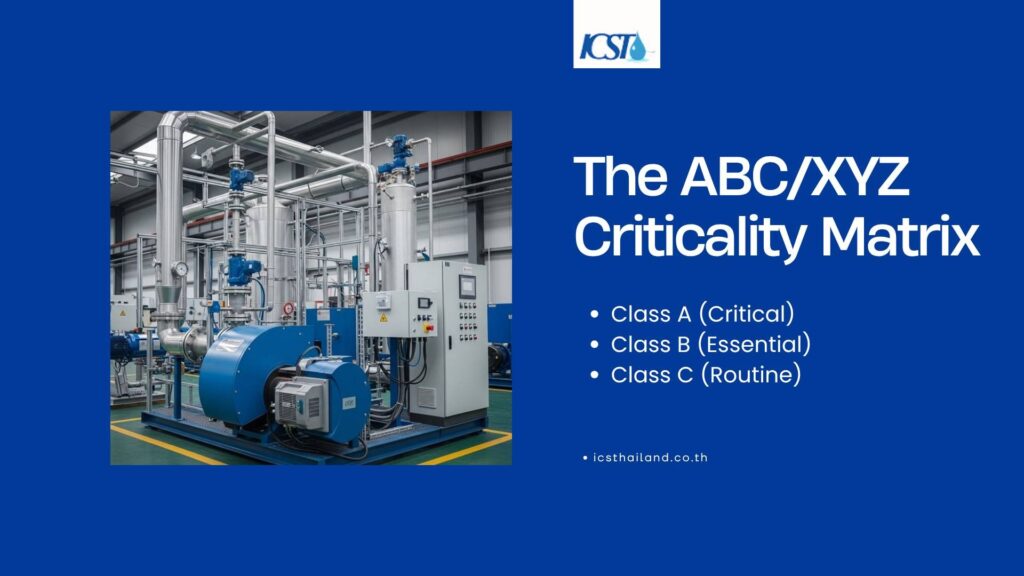
Class A (Critical)
Class A components represent the heart of your cooling tower. Failure of these parts results in an immediate loss of cooling capacity. This category includes main drive motors, gearboxes, and fan hubs. You must keep these items readily available or face extended shutdowns that compromise safety and performance.
Class B (Essential)
Class B components degrade predictably over time. While they do not fail instantly, ignoring their deterioration will eventually cause a system shutdown. This group includes bearings, drive belts, sheaves, and float valves. You should monitor these parts closely and stock them in moderate quantities to ensure consistent function.
Class C (Routine)
Class C items are low-cost consumables with brief lead times. These components include gaskets, standard fasteners, and sealants. You do not need to overthink these items. Maintain a small, automated replenishment cycle to keep these basic materials in stock.
Minimum Stocking Levels and Lead-Time Reality Table
The current market requires a realistic view of procurement timelines. This table provides the 2026 engineering standard for on-site inventory. Use this matrix to determine your exact minimum stock requirements and assess your lead-time risk.
| Component | Criticality | Recommended Minimum Stock | Lead-Time Risk |
| Fan Motor | High (Class A) | 1 Unit per Frame Size | 6–12 Weeks |
| Gearbox | High (Class A) | 1 Unit (or Seal Kit) | 8–16 Weeks |
| Fan Blade Stock | High (Class A) | 1 Full Set | 8–12 Weeks |
| Float Valve Kit | Medium (Class B) | 2 Complete Kits | 1–2 Weeks |
| Drive Belts | Medium (Class B) | 2 Matched Sets | 2–3 Days |
| Nozzles | Low (Class C) | 10% of Total Tower Count | 1 Week |
| Drift Eliminators | Low (Class C) | 5% of Surface Area | 6–10 Weeks |
Strategic Spare Parts Selection: Deep Dive
Understanding what to stock requires deep technical knowledge of your equipment. A standard list is insufficient to safeguard a sophisticated industrial system. You must evaluate the specific mechanical, water distribution, and instrumentation accessories that drive your cooling tower.
1. Mechanical Drive Components
The mechanical drive serves as the heart of your cooling operation. You must carefully manage your fan blade stock to ensure continuous airflow. Always stock blades in matched sets. Replacing a single blade disrupts the dynamic balance, which causes severe bridge vibration and secondary equipment damage.
Consider your strategy for a gearbox spare carefully. You must decide when to stock a complete replacement unit versus a comprehensive rebuild kit. A full unit allows for a rapid swap during a crisis. However, stocking input and output seals alongside bearings provides a cost-effective alternative if your team possesses advanced repair skills.
Do not forget about driveshafts and couplings. Many driveshafts qualify as project-manufactured items. You cannot buy these specialized components off the shelf at a local supply house. You must maintain at least one spare driveshaft tailored to your specific motor-to-gearbox distance to maintain optimal heat rejection.
2. Water Distribution and Control
Efficient thermal transfer relies entirely on proper water distribution. Float valves require proactive management. Move beyond simply stocking the plastic ball. You should hold the entire arm and valve mechanism to prevent catastrophic basin overflow events.
Nozzle orifices demand equal attention. You must ensure you have the correct flow coefficient spares on hand. The precise sizing of these nozzles maintains the required thermal cascade within the tower media. Incorrect nozzles disrupt water distribution and destroy cooling efficiency.
3. Instrumentation and Electrical
Modern cooling towers rely heavily on precise instrumentation. Vibration switches serve as the primary protector against catastrophic mechanical failure. When fans or gearboxes lose balance, the vibration switch shuts down the system before the tower destroys itself. You must always keep a spare switch calibrated and ready for installation.
Facilities located in colder climates must prioritize basin heaters and thermostats. A failed heater during a winter freeze will destroy the cold water basin. Stocking replacement heating elements and temperature control probes prevents costly structural damage caused by expanding ice. Pay attention to structural integrity components like steel supports and ladders as well.
2026 Inventory Best Practices: Storage and Tracking
Acquiring the right parts solves only half the equation. You must protect your investment through rigorous storage protocols. Improper parts storage destroys expensive components before they ever see operational use.

Parts Storage and Preservation
Climate control matters immensely for industrial components. Storing motors and gearboxes in high-humidity environments leads to rapid degradation. Moisture intrusion causes internal rust on precision surfaces. Furthermore, ambient warehouse vibrations can cause bearing brinelling. Store heavy mechanical components on vibration-absorbing mats in temperature-controlled spaces.
QR and RFID Integration
Modern facilities require absolute visibility over their inventory. You should integrate QR codes or RFID tags on all critical spares. Link these physical tags directly to your maintenance software. This setup ensures real-time stock deductions when technicians pull parts for a repair. Automated alerts will notify procurement when quantities dip below the required threshold.
Shaft Rotation Protocol
Large motors and gearboxes cannot sit idle for years. You must implement a strict shaft rotation protocol for all stored rotating equipment. Maintenance personnel should manually rotate the shafts of stored motors and gearboxes every 90 days. This practice redistributes internal lubrication and prevents flat spots from forming on the bearings.
Conclusion:
A reactive maintenance approach guarantees future failures. You must transition to a proactive, data-driven strategy to protect your cooling tower spare parts inventory and overall cooling infrastructure. Do not wait for a critical gearbox failure to discover your supplier requires a twelve-week lead time. You need a dedicated professional team to provide clarity.
At ICST, we do not just provide parts; we design reliability for various industries. Our experts understand the precise demands of heavy industrial cooling. We will help you eliminate guesswork, find the right product details, and build an inventory system designed for absolute resilience.
Contact our team today for a comprehensive Spare Parts Audit. We will analyze your current equipment, determine your custom minimum stocking levels, and secure your facility’s continuous uptime. Read our case studies online to see how we help clients upgrade their operations.
Frequently Asked Questions
What is a cooling tower spare parts inventory?
A cooling tower spare parts inventory is a strategic collection of essential components like motors, gearboxes, fan blades, and float valves. It ensures uninterrupted cooling tower performance by reducing downtime caused by part failures. Proper inventory management balances cost and reliability, helping industries maintain efficiency and extend equipment life.
Why is lead-time risk important in spare parts management?
Lead-time risk refers to the delay between ordering and receiving critical parts. For cooling tower spare parts, long lead times can cause costly downtime. By stocking high-risk components like fan motors and gearboxes, you mitigate this risk, ensuring your system operates without interruptions.
How does ABC analysis improve cooling tower parts management?
ABC analysis categorizes parts by criticality. Class A parts, like gearboxes, are vital for system uptime and require immediate availability. Class B and C parts, such as belts and gaskets, have lower criticality but still need strategic stocking. This method optimizes inventory costs while ensuring reliability.
What are the best practices for storing cooling tower spare parts?
Store parts in climate-controlled environments to prevent rust and degradation. Use QR or RFID tags for real-time tracking and implement shaft rotation protocols for motors and gearboxes. Proper storage preserves part quality, ensuring they are ready for use when needed.
How can I calculate minimum stock levels for cooling tower parts?
Minimum stock levels depend on part criticality and lead-time risk. For example, keep one fan motor per frame size and 10% of nozzles for the total tower count. Use historical data and vendor timelines to adjust stock levels, ensuring operational continuity without overstocking.