Cooling water chemistry is the balance of dissolved minerals, gases, and treatment chemicals in an industrial cooling system. It controls scale, corrosion, and fouling while protecting heat transfer.
Effective pH control depends on alkalinity management, hardness, conductivity, and water balance. You cannot manage pH alone. Every parameter connects, so operators must monitor water quality parameters together and adjust treatment based on real system conditions, not guesswork.
What Is Cooling Water Chemistry?
Understanding the basics gives you a foundation before the technical detail. This section defines the term and explains why control matters for facilities across Thailand and beyond.
Cooling Water Chemistry Definition
Cooling water chemistry describes the makeup, condition, and treatment of water inside a cooling system. It covers dissolved minerals, gases, suspended solids, and added chemicals.
Three water streams behave differently, and knowing them helps you manage the system correctly.
- Makeup water: Fresh water added to replace what the system loses through evaporation, drift, and blowdown.
- Circulating water: Water moving through the system, absorbing heat and picking up concentrated minerals.
- Blowdown water: Concentrated water removed on purpose to control the buildup of dissolved solids.
Industrial cooling systems need chemistry control because untreated water damages equipment fast. Scale, rust, and biofilm form quickly when minerals concentrate and no one manages the balance.
Why Cooling Water Chemistry Matters
Chemistry touches almost every part of cooling system performance. When you understand these links, you see why one bad reading affects the whole operation.
- Heat transfer: Deposits and biological fouling can create an insulating layer and reduce heat transfer efficiency.
- Scale: Concentrated minerals can precipitate onto heat-transfer surfaces.
- Corrosion: Unsuitable pH, dissolved salts, oxygen, and other conditions can accelerate corrosion and contribute to pitting corrosion.
- Fouling: Suspended solids and biological deposits restrict flow and heat exchange.
- Microbial control: Warm, nutrient-rich water can support microorganisms and biofilm.
- Equipment reliability: Poor chemistry can contribute to premature component deterioration and equipment failure.
- System efficiency: Deposits and fouling increase resistance to heat transfer and can increase energy and maintenance requirements.
- Water consumption: Proper chemistry control can allow a system to operate at an appropriate cycles-of-concentration target without unnecessary blowdown.
How Cooling Water Chemistry Changes During Operation
The operating cycle explains why chemistry changes over time.
Makeup water enters → water circulates → evaporation removes water → dissolved substances concentrate → chemistry changes → blowdown removes concentrated water → fresh makeup water replaces it.
Evaporation is especially important because the water leaves primarily as vapor while many dissolved substances remain in the circulating water. As concentration increases, operators must manage parameters such as pH, alkalinity, hardness, conductivity, and treatment residuals.
This is why water balance and chemical control cannot be treated as separate issues.
Why pH Balance Matters in Cooling Water
pH balance matters because it directly controls corrosion and scaling risk in cooling water. Low pH speeds up metal corrosion and can damage equipment. High pH encourages calcium carbonate scale and reduces heat transfer. Stable pH, managed alongside alkalinity management, keeps treatment chemicals effective and protects the whole cooling system.
What Does pH Mean in Cooling Water?
pH measures how acidic or basic water is on a scale from 0 to 14. A value of 7 is neutral. Below 7 is acidic, and above 7 is basic.
In a cooling system, pH shapes how minerals behave and how metals react. Small pH shifts change corrosion and scaling tendency, so operators track it closely as a core water quality parameter.
How Low pH Affects Cooling Systems
Acidic water attacks metal. Low pH strips away protective layers and speeds up damage across the system.
- Increased corrosion potential: Acidic conditions dissolve metal surfaces faster.
- Loss of metal protection: Protective oxide films break down at low pH.
- Treatment interference: Some corrosion inhibitors work poorly outside their pH range.
- Reduced equipment life: Ongoing acid attack shortens the life of tubes and pipes.
How High pH Affects Cooling Systems
Basic water swings the risk the other way. High pH pushes minerals to drop out of solution and stick to surfaces.
- Calcium carbonate scaling: High pH drives calcium and carbonate to form hard scale.
- Mineral precipitation: Other dissolved minerals settle onto heat-transfer surfaces.
- Reduced heat transfer: Scale layers insulate tubes and lower efficiency.
- Treatment imbalance: Scale inhibitors may not keep up when pH climbs too high.
Why There Is No Universal Ideal pH
Many articles give one pH number and call it correct. That advice fails because every system differs. The right operating range depends on real conditions, not a generic rule.
- Metallurgy: Different metals tolerate different pH ranges.
- Makeup-water chemistry: Source water sets the starting point.
- Calcium hardness: Higher hardness raises scaling risk at higher pH.
- Alkalinity: Buffering capacity affects how pH behaves.
- Temperature: Heat changes mineral solubility.
- TDS and conductivity: Concentration shifts chemical behavior.
- Chemical-treatment program: Each program has its own target window.
- System design: Flow, materials, and layout all matter.
pH vs. Alkalinity: What Is the Difference?
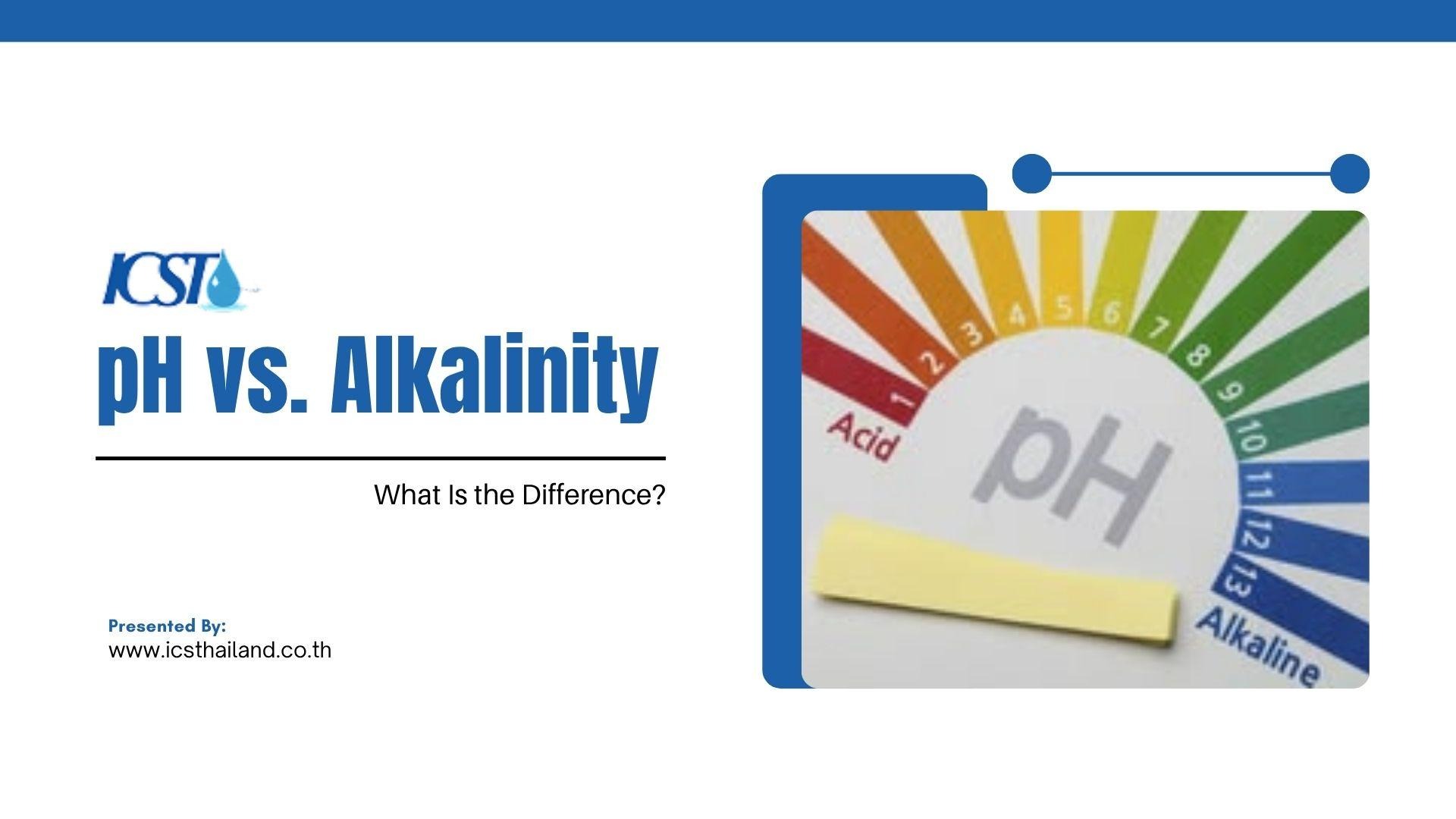
pH and alkalinity often get confused, yet they measure different things. Getting this right is central to good alkalinity management.
What Is Alkalinity?
Alkalinity measures the water’s buffering capacity, or its ability to resist pH change. It comes mostly from dissolved carbonate, bicarbonate, and hydroxide.
High alkalinity means the water fights pH shifts. Add acid, and buffered water resists change until you neutralize the buffer. This resistance shapes how you approach pH control.
How Alkalinity Affects pH Stability
Water with high buffering capacity holds pH steady even when you add treatment chemicals. That stability sounds good, but it also means you need more acid to move pH down.
Low-alkalinity water swings fast. Small chemical changes cause large pH shifts, which makes control harder in a different way.
How Alkalinity Contributes to Scale Formation
Scale forms when several factors line up. Alkalinity is a major driver because carbonate feeds calcium carbonate scale.
The scaling equation works like this: alkalinity plus calcium hardness plus rising pH plus higher temperature equals a strong scaling tendency. Raise any of these, and scale risk climbs.
Why pH and Alkalinity Must Be Managed Together
A normal-looking pH does not automatically mean the water is free from scaling risk.
For example, a system can have an acceptable pH while still carrying elevated calcium hardness and alkalinity. If concentration and temperature also favor precipitation, scale can form on a heat exchanger or other hot surface.
This is why professional water treatment programs evaluate multiple parameters rather than reacting to pH alone.
Key Cooling Water Quality Parameters to Monitor
You cannot control what you do not measure. The table below shows the core water quality parameters and why each one matters, so you can prioritize your testing program.
| Parameter | What it tells you | Why it matters |
| pH | Acidity/alkalinity | Scale and corrosion control |
| Alkalinity | Buffering capacity | pH stability |
| Conductivity | Dissolved ionic concentration | Blowdown/COC control |
| TDS | Dissolved solids | Concentration and deposition |
| Calcium hardness | Calcium concentration | Scaling potential |
| Silica | Silica concentration | Silica scaling |
| Chlorides | Chloride concentration | Corrosion risk |
| Temperature | Thermal condition | Scaling and chemical behavior |
| Microbial activity | Biological condition | Biofouling/health risk |
| Inhibitor residual | Treatment level | Corrosion/scale protection |
pH
Measure pH at a representative sample point using a calibrated meter. It signals whether your system leans toward corrosion or scaling and guides most treatment decisions.
Alkalinity
Test alkalinity to understand buffering and carbonate chemistry. It tells you how the water will respond to acid feed and how much scaling potential the carbonate contributes.
Conductivity and TDS
Conductivity and TDS both track dissolved mineral concentration. As water evaporates, dissolved solids rise, and conductivity climbs. Operators use conductivity to trigger blowdown and control cycles of concentration.
Calcium Hardness
Calcium hardness measures calcium in the water. High calcium raises the risk of calcium carbonate scale, especially at higher pH and temperature. Track it alongside alkalinity for a clear scaling picture.
Silica
Silica scaling is stubborn and hard to remove. Silica becomes difficult to control at higher concentrations because it forms deposits that resist standard treatment. Set a silica limit for your chemical balance and hold to it.
Chlorides and Other Dissolved Ions
Chlorides raise corrosion risk, especially for stainless steel. As water concentrates, chloride levels rise with it. Monitor chlorides to protect sensitive metals and to guide blowdown decisions.
Temperature
Temperature changes how chemicals behave. Higher heat lowers the solubility of calcium carbonate, so scale forms faster on hot surfaces. Always consider temperature when you judge scaling tendency.
Microbiological Activity
Biological growth causes serious problems in warm cooling water. Testing for microbial activity protects both equipment and health, which matters for facilities managing safety standards in Thailand and elsewhere.
- Biofilm: A slimy layer that insulates surfaces and shelters bacteria.
- Biofouling: Blocked flow and reduced heat transfer from biological buildup.
- Microbiologically influenced corrosion: Metal damage driven by bacterial activity.
- Legionella management: A public-health priority in any cooling tower.
Chemical Treatment Residuals
Residual testing confirms your treatment is present and working. If residuals drop, protection drops with them.
- Corrosion inhibitors: Protect metal surfaces; low residual means exposed metal.
- Scale inhibitors: Keep minerals in solution; low levels allow scale to form.
- Biocides: Control microbial growth; residual confirms dosing worked.
- Dispersants: Keep suspended solids moving; low levels let solids settle.
Cooling Water Chemical Balance: What Needs to Be Controlled?
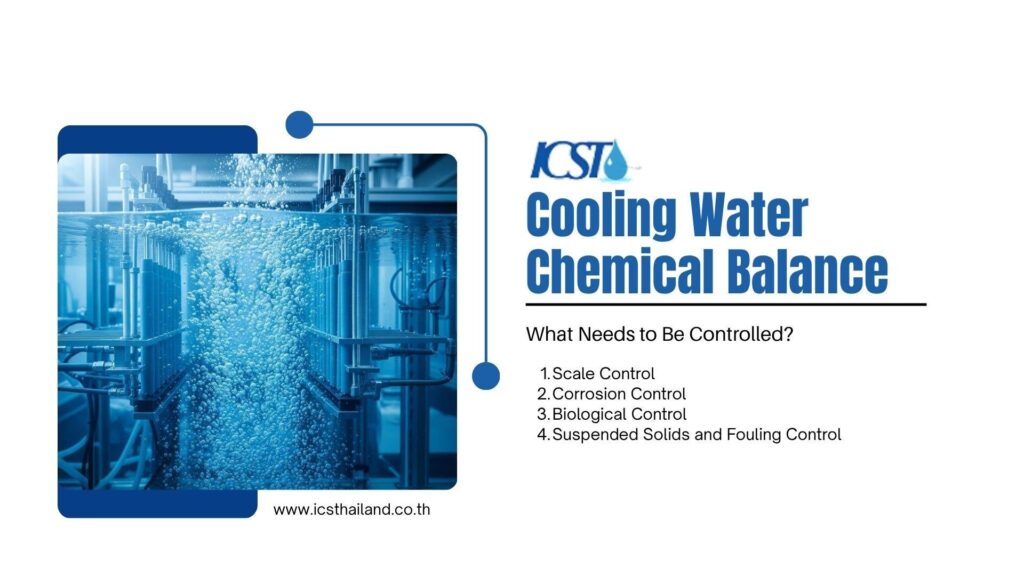
A treatment program manages several risks at once. Good chemical balance covers scale, corrosion, biology, and fouling together.
Scale Control
Scale forms when minerals drop out of solution. A control program keeps them dissolved and moving.
- Calcium carbonate: The most common scale; controlled with pH, alkalinity, and inhibitors.
- Silica: Managed with concentration limits and specialized treatment.
- Other deposits: Phosphate and other minerals need targeted control.
- Inhibitors and dispersants: Keep minerals in solution and suspended solids moving.
Corrosion Control
Corrosion destroys metal and shortens equipment life. Several factors decide how fast it happens.
- pH: Both low and unstable pH raise corrosion risk.
- Chlorides: High chloride levels attack sensitive metals.
- Dissolved oxygen: Oxygen drives many corrosion reactions.
- Corrosion inhibitors: Form protective films on metal surfaces.
- Metallurgy: Material choice sets the baseline for corrosion resistance.
Biological Control
Warm cooling water is ideal for microbial growth. A biological program keeps it in check and protects health.
- Microorganisms and bacteria: Controlled with regular biocide dosing.
- Biofilm: Removed and prevented with biocides and dispersants.
- Algae: Managed by limiting light and using treatment.
- Monitoring: Regular testing confirms the program works.
Suspended Solids and Fouling Control
Dirt and debris cause fouling that blocks flow. Physical removal supports the chemical program.
- Filtration and side-stream filtration: Remove suspended solids from a portion of the flow.
- Dirt and debris: Enter from air, makeup water, and process leaks.
- Sediment: Settles in low-flow areas and feeds biological growth.
- Fouling: Reduces heat transfer and increases pressure drop.
Cooling Water pH Control Methods
Several proven methods keep pH stable. The right mix depends on your system, so combine them to match your conditions.
Establish System-Specific pH Control Limits
Set limits based on your actual system, not a generic target. Limits should reflect system design, materials, water chemistry, treatment program, and operating conditions. Written limits give operators a clear reference point and support consistent decisions.
Control Makeup-Water Chemistry
Better makeup water makes chemistry control far easier. Pretreatment removes problem constituents before they reach the tower.
- Softening: Removes calcium and magnesium to lower scaling risk.
- Filtration: Removes suspended solids before they enter the system.
- Reverse osmosis: Reduces dissolved solids for demanding applications.
- Other conditioning: Targeted methods handle specific water problems.
Acid Dosing for pH and Alkalinity Control
Acid feed lowers pH and reduces alkalinity by neutralizing carbonate and bicarbonate. It is a common tool, but it needs care.
Acid dosing must be monitored closely with reliable instruments. Overfeeding drops pH too far and creates a corrosion problem in place of a scaling one. Only trained personnel should handle acids, and dosing should follow your treatment provider’s guidance. Never assume one chemical or dose fits every system.
Automated pH Monitoring and Chemical Dosing
Automation delivers faster, steadier control than manual methods alone. It also builds the data trail you need for good decisions.
- Sensors: Measure pH and conductivity continuously.
- Controllers: Act on readings and manage dosing.
- Dosing pumps: Deliver precise chemical amounts.
- Feedback loops: Adjust dosing as readings change.
- Alarm thresholds: Warn operators when values move out of range.
- Data logging: Record trends for review and troubleshooting.
Blowdown Control
Blowdown ties directly to concentration and water balance. As dissolved minerals rise, conductivity climbs. A controller opens the blowdown valve when conductivity hits its setpoint, draining concentrated water and holding COC steady.
How to Manage Cooling Water Chemistry Step by Step
A clear workflow keeps chemistry under control. Follow these steps in order for consistent results.
Step 1 — Test the Makeup Water
Start at the source. Test pH, alkalinity, hardness, conductivity or TDS, chlorides, silica, and other relevant parameters. Makeup water sets your baseline, so you cannot set good targets without it.
Step 2 — Establish System Chemistry Targets
Set targets that reflect your actual system conditions. Base them on makeup-water quality, metallurgy, and your treatment program, not on generic numbers copied from elsewhere.
Step 3 — Test Circulating Water
Test the circulating water and compare it to the makeup water. The difference shows how much the system has concentrated and whether chemistry is drifting.
Step 4 — Track Water Balance
Monitor makeup, evaporation, drift, blowdown, and COC. Water balance tracking explains why concentration rises and helps you spot problems early.
Step 5 — Adjust Chemical Treatment
Adjust treatment based on test results and program requirements. Make measured changes, and change one thing at a time so you can see the effect.
Step 6 — Verify the Change
Do not assume a dosing change worked. Retest after enough time has passed and watch the trend. Verification confirms the adjustment produced the result you wanted.
Step 7 — Record and Trend Chemistry Data
Log every reading and review the trends. A single number tells you little, but a trend reveals whether chemistry is stable, improving, or heading for trouble.
Conclusion
Effective cooling water chemistry management protects heat-transfer surfaces, equipment reliability, water efficiency, and operating costs. The key is to treat pH as one part of a larger system that includes alkalinity, hardness, conductivity, dissolved solids, temperature, biological control, chemical treatment, and water balance.
When these parameters are monitored together, operators can control scaling, corrosion, and fouling before they cause major performance losses or equipment failure. For industrial facilities, a properly designed cooling water treatment program should be based on actual makeup-water quality, operating conditions, system metallurgy, and treatment requirements rather than generic targets.
Frequently Asked Questions
1. What is cooling water chemistry?
Cooling water chemistry refers to the balance of dissolved minerals, gases, suspended solids, microorganisms, and treatment chemicals in an industrial cooling system. It affects scaling, corrosion, fouling, microbial growth, and heat transfer efficiency. Effective management involves monitoring pH, alkalinity, calcium hardness, conductivity, TDS, chlorides, silica, temperature, and chemical treatment residuals.
2. What pH should cooling water be?
There is no single pH value that works for every cooling system. The appropriate range depends on the system metallurgy, makeup-water quality, alkalinity, hardness, temperature, cycles of concentration, and treatment program. Effective pH control requires evaluating pH together with other water quality parameters rather than adjusting the pH based on a generic target.
3. What is the difference between pH and alkalinity in cooling water?
pH indicates the current acidic or alkaline condition of the water, while alkalinity measures its ability to neutralize acid and resist changes in pH. They are related but measure different properties. In cooling water chemistry, monitoring both is important because alkalinity affects pH stability and carbonate scaling potential, while pH influences corrosion and mineral precipitation.
4. How do you control pH in cooling water?
pH control can involve managing makeup-water quality, controlled acid dosing, automated pH monitoring, chemical dosing, and blowdown management. Treatment should be based on actual water-quality data and system conditions. Operators should evaluate alkalinity, hardness, conductivity, temperature, treatment residuals, and water balance alongside pH before making significant chemical adjustments.
5. How does cooling water chemistry affect corrosion and scaling?
Cooling water chemistry affects corrosion and scaling through the interaction of pH, alkalinity, calcium hardness, dissolved solids, temperature, chlorides, treatment chemicals, and system metallurgy. Poor control can produce mineral deposits that reduce heat transfer efficiency or create conditions that accelerate corrosion and contribute to equipment damage. Monitoring these parameters together helps maintain reliable cooling water treatment and system performance.